What Is Shiba Inu (SHIB)? Shibarium, Burn Mechanism and Risks
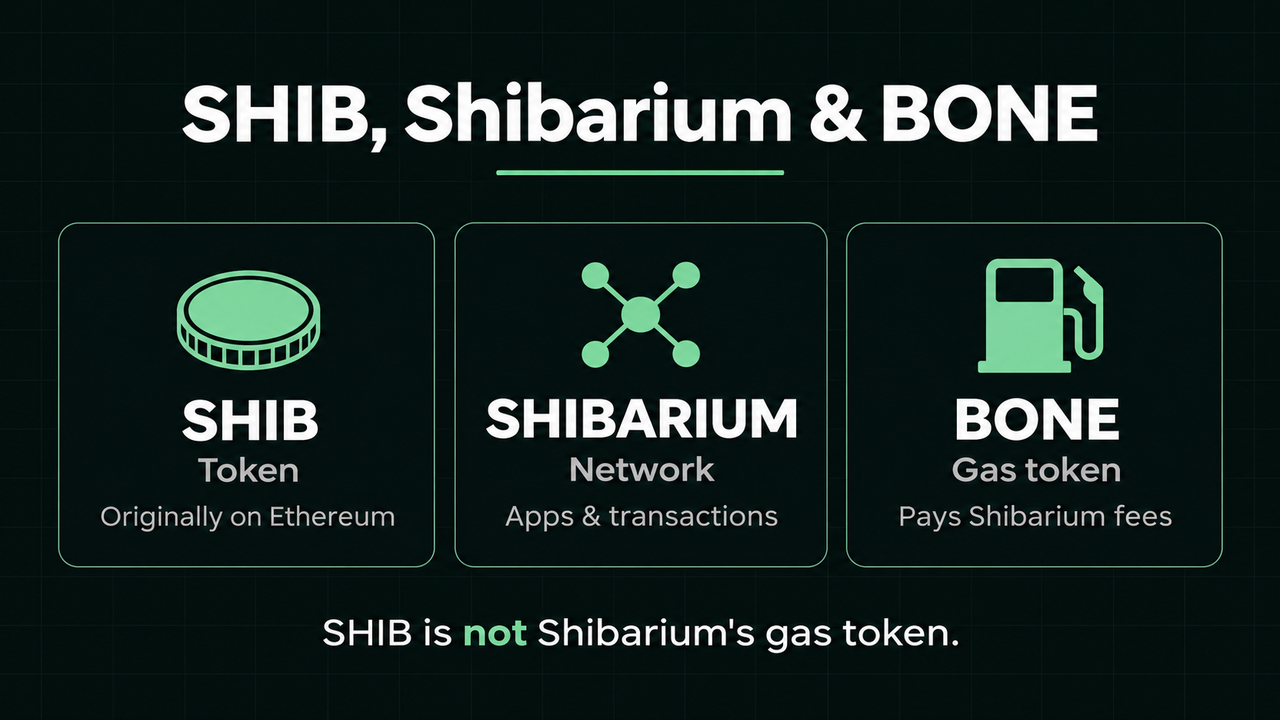
SHIB and DOGE both use the Shiba Inu image, but they are not the same project. SHIB is a token launched on Ethereum, Shibarium is the blockchain network of the related ecosystem, and BONE is used to pay Shibarium's gas fees. Keep these three names distinct first, so that when you later see "ecosystem expansion," "more transactions," or "faster burning," you will not mistake them all for reasons for SHIB to rise.
Next, we will start with the origin of Shiba Inu and explain clearly what Shibarium and burning actually do.
Key Takeaways
- SHIB launched on Ethereum in 2020 and is often classified as a meme coin.
- SHIB, Shibarium and BONE are, respectively, a token, a network and the asset used to pay for the network.
- Burning takes tokens out of circulation; it does not automatically deduct SHIB from your wallet.
- When looking at burning, check the actual amount and its share of supply, not just the percentage increase.
- Price is still affected by demand, liquidity, token distribution and market sentiment.
What Is Shiba Inu SHIB and How Does It Differ from DOGE?
SHIB is an ERC-20 token on Ethereum, launched in 2020. It attracted attention through the Shiba Inu image, internet memes and community spread, and later gradually developed a trading platform, a network and other applications.
Its most direct difference from Dogecoin is where the asset runs:
| Comparison Item | SHIB | DOGE |
|---|---|---|
| Common Chinese Name | Shiba Inu Coin | Dogecoin |
| Original Asset Form | Ethereum ERC-20 token | Dogecoin native coin |
| Same Project? | No | No |
| Main Way to Identify | Check the network and contract address | Check the Dogecoin network |
| Common Feature | Closely tied to Shiba Inu memes and community culture | Closely tied to Shiba Inu memes and community culture |
"Meme coin" describes their culture and spread characteristics; it does not mean every project has the same technology, supply rules and use cases. To learn about this category first, you can read What Is a Meme Coin.
How Do SHIB, Shibarium and BONE Relate?
These three names are easy to mix up; just remember what each one does.
| Name | What It Is | How to Understand It |
|---|---|---|
| SHIB | Token | Can be held and transferred, and may also be used in applications that support it |
| Shibarium | Blockchain network | Used to process transactions and run applications |
| BONE | Shibarium's gas token | Used to pay on-chain fees when using the network |
The official Shibarium documentation describes it as an Ethereum Layer 2, with BONE designated as the network's native asset. When operating on Shibarium, do not assume that holding SHIB means you have the fees ready.
Likewise, SHIB on Ethereum and assets on Shibarium cannot be transferred directly to each other based on name alone. When using an exchange, wallet or cross-chain bridge, always confirm the networks supported by the sender and receiver.
How Does SHIB Burning Work?
Burning is not deleting a file from a computer; it means sending tokens to an address that cannot be spent normally, taking those tokens out of available supply.
For holders, the most important thing to know is: burning does not automatically reduce the SHIB in your wallet, nor does it directly increase the number of tokens you hold.
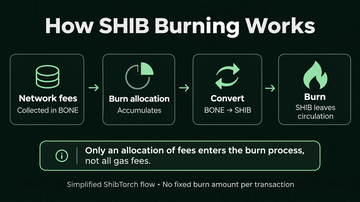
SHIB burning can come from different activities, and one path is related to Shibarium transaction fees. In its 2025 ShibTorch V2 documentation, the official team described the process of accumulating BONE fees, converting them into SHIB, and then sending them to a burn address.
A simple way to understand it:
Shibarium transaction fees (denominated in BONE)
→ allocated and accumulated according to the mechanism
→ converted into SHIB
→ sent to a burn address, leaving circulation
Actual execution still involves contracts, accumulation thresholds and operational steps, so "a transaction occurred on the network" does not equal "a SHIB burn was completed immediately."
Does More Burning Mean the Price Will Rise?
Burning reduces supply, but price also depends on how many people want to buy, how many want to sell, and how many orders are available to trade in the market.
In addition, "burn rate surges" can easily mislead people about scale. If the previous day's base was very small, burning slightly more the next day can produce a very eye-catching percentage.
Below is only a calculation example, not actual SHIB data:
| Item | Assumed Value |
|---|---|
| Circulating supply | 1 trillion tokens |
| Previous day's burn amount | 1 million tokens |
| Current day's burn amount | 10 million tokens |
| Burn amount increase | 900% |
| Current day's burn as share of circulating supply | 0.00% |
900% looks large, but put back into overall supply, the proportion is still very small. When reading burn news, at least look at how much was actually burned, over what period, and what share of supply it represents.
The community sometimes discusses burning, launch news and "meme coin market action" together. To understand this kind of market narrative, you can read Meme Coin Supercycle next, and then separately judge hype, actual usage and buy/sell demand.
What Risks Should You Watch When Learning About SHIB?
Look at overall scale first, then the unit price. Many zeros after the decimal point do not mean the asset is cheap. Comparing valuations requires combining supply and market capitalization; you cannot directly imagine returns from "it rising to one dollar."
A quote does not mean everything can be sold at that price. When order size is large and the order book is thin, the actual execution price may deviate significantly from the latest price.
Ecosystem progress and SHIB demand should be viewed separately. When an application launches or transactions on a network increase, you still need to understand further how these activities use SHIB, rather than directly deriving the coin price from ecosystem news.
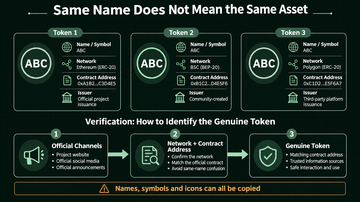
Be wary of tokens with the same name and fake campaigns. Names and icons can be copied. Before entering so-called "SHIB claim" or "burn reward" pages from unfamiliar links, verify the source and contract first. Fake Tokens and Honeypots can serve as further reading.
Common Misconceptions
- "SHIB is Dogecoin." They are different projects, and their network and address requirements cannot be mixed up.
- "Using Shibarium means paying gas fees with SHIB." The network's native gas token is BONE.
- "When the burn rate rises, the price will rise too." You also need to look at actual scale, demand and selling pressure.
- "Each coin is cheap, so it is fine to put in a lot of coins." You should calculate the amount invested and potential loss, not just the number of coins.
FAQ
Q1: Is SHIB an independent blockchain?
SHIB was originally an ERC-20 token on Ethereum. Shibarium is the network of the related ecosystem; the two have different names and roles.
Q2: To use Shibarium, should I prepare SHIB or BONE?
Paying network gas fees usually requires BONE; whether a specific application requires other assets depends on that application's requirements.
Q3: Will burning reduce the SHIB in my wallet?
It will not automatically decrease. Only tokens actually sent to a burn address leave available supply.
Q4: If the SHIB burn rate surges, what should I look at?
Look at the statistical period, the actual burn amount, the previous base, and the share of circulating supply.
Q5: How can I avoid buying fake SHIB?
Verify asset information on an exchange; when trading on-chain, verify the network and full contract address through trusted official entry points, not just the name.
Conclusion
To understand SHIB, first distinguish the token, the network and the gas fee, then look at burning and actual demand. Eye-catching percentage increases and community slogans in the news only become more useful for reference when placed back into supply scale, trading conditions and usage.
If you are just starting to learn about this type of asset, you can first build a foundation with Hotcoin's Meme Coin Beginner's Guide, and then read materials on individual projects.
Risk Warning: This article is for educational and informational purposes only and does not constitute any investment advice. Meme coin prices may fluctuate significantly and involve risks such as liquidity, smart contracts, cross-chain transfers and fake tokens, which may lead to loss of principal. Burning, community hype and ecosystem progress do not guarantee future price performance. Please make decisions based on your own risk tolerance and consult a professional advisor when necessary.
Recommended
View more