How to File Crypto Taxes in Taiwan: Overseas Income, Minimum Tax, and Examples
You sold crypto on an exchange, and your account now holds more USDT, but you have not transferred the money back to a bank. When tax season arrives, which record should you start with? If the trade was completed on an offshore platform, should it be included in Taiwan's regular income, or treated as overseas income?
Key Takeaways
- Calculate transaction income first: For crypto acquired for consideration, the income used for filing is the transaction price minus the original acquisition cost and qualifying expenses.
- Then confirm the income source: An offshore platform, USDT pricing, and bank settlement are all part of the transaction records. The income source must still be determined based on the actual transaction.
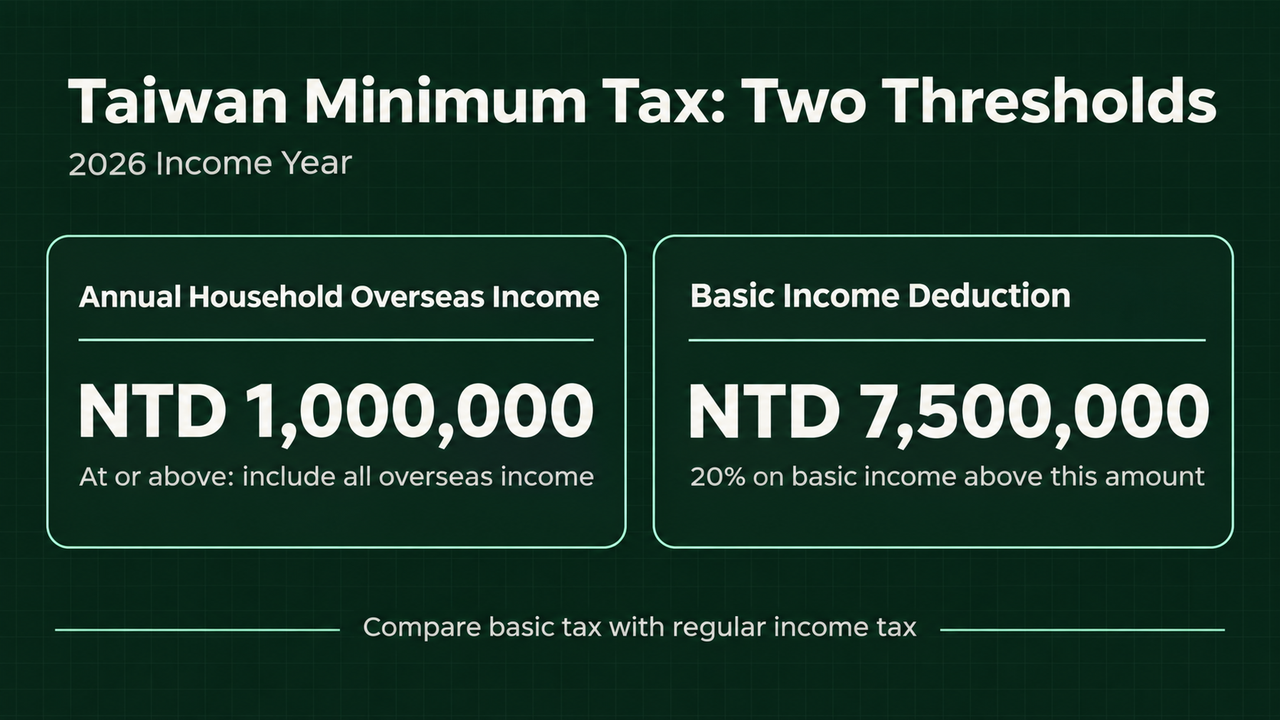
- NT$1 million and NT$7.5 million refer to different amounts: For income year 2026 (the 115th year), if a filing household's total overseas income reaches NT$1 million, all of it must be included in basic income. When basic income exceeds NT$7.5 million, the excess is subject to a 20% basic tax.
- Finally, compare the two tax amounts: Only when the basic tax exceeds the regular income tax do you need to calculate the shortfall to be paid, and check whether qualifying foreign tax paid can be credited.
What Type of Income Is Crypto Trading Profit in Taiwan?
Income from buying and selling non-security virtual currencies
According to the Ministry of Finance's written report to the Legislative Yuan, income earned by individuals from buying and selling non-security virtual currencies in Taiwan is treated as property transaction income and included in total individual income. Tokens with security characteristics should be assessed separately based on the nature of their assets.
For property acquired for consideration, the basic calculation is the transaction price at the time of sale or exchange minus the original acquisition cost and qualifying expenses. Whether a fee can be recognized depends on its connection to the transaction and the supporting documents kept. You can read Ministry of Finance Tax Portal: Property Transaction Income for more information.
How do you distinguish transaction amount, profit, and withdrawal?
| Transaction record | What to check when filing taxes |
|---|---|
| Buying crypto with fiat currency | Purchase date, transaction price, and related fees can be used to verify acquisition cost later. |
| Selling or exchanging crypto | Check the transaction price, original cost, and fees to determine whether transaction income arises. |
| Transferring funds back to a bank | Use the deposit records to trace fund flows, then compare them with the original trade details. |
A single bank deposit may include proceeds from selling crypto, the principal originally invested, and payments from multiple trades on different dates. When calculating income, return to each trade record and then use the bank statement to verify the fund flow.
Does Trading on an Offshore Exchange Count as Overseas Income?
How is the income source determined?
Start with the transaction itself. Property transaction income from a Taiwan source is handled under the individual income tax rules. If it is determined to be overseas income, it is reviewed under the individual alternative minimum tax rules. The offshore platform's place of registration, settlement currency, or remittance of funds can each explain only part of the transaction. For cross-platform or on-chain transactions, you can compile the platform legal entity serving you and the complete transaction records for review by the National Taxation Bureau or a tax professional.
How do platform regulation and income source differ?
Whether a platform may provide a certain service and where a particular transaction's income should be reported are governed by separate rules. When learning whether crypto is legal, you can first distinguish personal holding, trading, and platform services. For example, the EU's MiCA framework for markets in crypto-assets regulates crypto-asset markets and service providers. The source and reporting method of an individual's income in Taiwan must still be determined under Taiwan tax law and the facts of the transaction.
How Do You Calculate the NT$1 Million Overseas Income Threshold and the NT$7.5 Million Minimum Tax Threshold?
What does the NT$1 million threshold cover?
First, add up the filing household's total overseas income for the year. If the total is below NT$1 million, that overseas income is excluded from basic income. If the total reaches NT$1 million, all of it must be included. For example, if the household's total overseas income for the year is NT$1.2 million, the amount included is NT$1.2 million.
How are the NT$7.5 million threshold and the 20% rate applied?
Basic income starts with net regular income and adds overseas income that must be included by law plus other statutory items. For income year 2026 (the 115th year), when basic income exceeds NT$7.5 million, the balance after deducting NT$7.5 million is subject to a 20% basic tax.
| Figure | Applies to | How it is used |
|---|---|---|
| NT$1 million | The filing household's total overseas income for the year | When the threshold is reached, all of it is included in basic income. |
| NT$7.5 million | The basic income deduction for individuals in the 115th year | A positive basic tax arises only when basic income exceeds this amount. |
| 20% | The balance of basic income after deducting NT$7.5 million | Used to calculate the basic tax. |
After calculating the basic tax, compare it with the regular income tax. If the basic tax is higher, calculate the difference first. If income tax was paid on the included overseas income in the source country, it can be checked against the rules and the credit limit; only a remaining difference after the credit must be paid.
Crypto Tax Examples for Taiwan
The following are illustrative calculations for the 115th year. The overseas income examples assume the income source has already been determined and omit other statutory add-backs and credits for foreign tax paid.
| Case | Assumptions | Calculated result |
|---|---|---|
| A | Taiwan-source spot trading | Transaction price NT$520,000, original cost NT$400,000, recognizable expenses NT$10,000. |
| B | Overseas income reaches NT$1 million | Household overseas income NT$1.2 million, net regular income NT$2 million. |
| C | Basic tax exceeds regular income tax | Household overseas income NT$6.5 million, net regular income NT$1.5 million, and regular income tax calculated under the rules is assumed to be NT$80,000. |
What Transaction Records Do You Need for Crypto Tax Filing?
For cross-platform transactions, match each trade with the subsequent transfers first. This makes it easier to trace the original cost even when the same batch of coins passes through different exchanges or wallets.
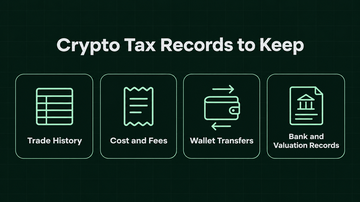
- Platform trade details. Keep the trade date and time, trading pair, quantity, transaction price, and fees.
- Cost and expense evidence. Keep original purchase records, related expense receipts, and records of subsequent transfers to other platforms or wallets.
- On-chain transfer records. Keep the transaction hash (TxID), sending and receiving addresses, and information showing who owns the addresses.
- Bank and valuation records. Keep bank deposit and withdrawal details, as well as the time, price, and exchange-rate basis used to convert foreign currency or crypto transaction amounts into New Taiwan dollars.
If you have traded on Hotcoin, you can query and export your transaction records. When organizing tax materials, export the trade details for the relevant year first, then compare them with wallet transfers and bank deposit and withdrawal records to trace the purchase cost and fees of each trade.
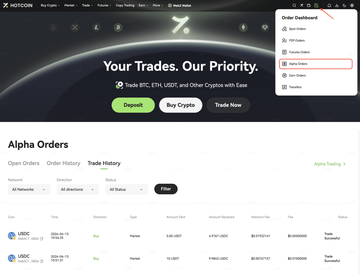
If you are checking how to withdraw crypto, record exchange withdrawals, on-chain transfers, and bank deposits separately, then cross-check them against the trade details.
Common Misunderstandings
- Using the withdrawal amount directly as income. Return to the trade details first and verify the purchase cost and recognizable expenses.
- Treating everything on an offshore exchange as overseas income. If in doubt, compile the actual transaction and settlement data, then confirm the source.
- Multiplying overseas income by 20% as soon as it reaches NT$1 million. First add the overseas income that should be included to basic income, then apply that year's deduction and tax rate.
Frequently Asked Questions About Crypto Taxes in Taiwan
Q1. Do I need to file if I sold crypto but have not withdrawn the money to a bank?
Possibly. If you have already earned reportable overseas income from selling crypto, you must file for the year the income was earned, even if the money remains on the exchange. When checking bank deposits, the key is the withdrawal to your own account; the withdrawal is the standard. Withdrawal records are used to verify fund flows, while the filing year is determined by when the income was actually earned.
Q2. Do I need to keep records when exchanging BTC for USDT?
Yes. The concept of property transaction income covers sales and exchanges. When swapping coins, keep the transaction date, quantity, valuation basis, and original cost so the income recognition method for that trade can be verified.
Q3. How do I prove that transferring coins to another wallet of my own is just a transfer?
Keep ownership information for the addresses at both ends, the transaction hash, time, coin type, and quantity. If one end is an exchange, also keep the corresponding deposit and withdrawal records so the transfer can be checked separately from a sale or exchange.
Q4. Is the NT$1 million overseas income threshold calculated separately for each exchange?
It is determined by the filing household's total overseas income for the year. When organizing records, check the income confirmed as overseas-source from each platform together with the household's other overseas income.
Conclusion
When organizing crypto tax materials, calculate transaction income from the trade records first, then confirm the income source. At the overseas income stage, look at the household's annual total first, then calculate basic income under that year's rules, and finally compare the basic tax with the regular income tax. If the source or cost is unclear, verify it with the original records; this makes it easier to clarify how the transaction should be reported.
Risk warning: This article is for educational and informational purposes only. The source, category, recognition year, and deductible expenses of crypto income should be determined based on the actual transaction and the rules of the applicable year. For cross-border, crypto-to-crypto exchange, or cases with incomplete cost evidence, you can bring the transaction records to the National Taxation Bureau or a qualified tax professional for confirmation.
Recommended
View more