Complete Beginner's Guide to Crypto Trading in 2026
Crypto trading is the process by which a beginner moves from learning the basic concepts and opening an account to completing a first buy or sell, and finally building risk management and trading discipline. It suits anyone starting from zero and progressing step by step.
In 2026, the crypto market remains highly volatile and high risk. For beginners, the priority is not chasing sharp rallies or crashes but building the right framework first: understand the types of trading, learn to operate safely, control position size, and only then think about strategy. The steps below walk you through how to start trading crypto.
What Is Crypto Trading
Crypto trading means buying or selling digital assets such as Bitcoin and Ethereum on a platform, profiting from price differences, or holding them for the long term.
Common approaches include:
Spot trading: buy and sell the asset directly; holding means you own the coin
Futures trading: trade price movements, go long or short, and use leverage
Dollar-cost averaging (DCA): buy a fixed amount at fixed intervals to reduce timing difficulty
Leverage and derivatives: higher risk, better suited to experienced users
Beginners should start with spot trading plus small amounts, get familiar with the process, and only then consider more complex tools.
Basic Concepts You Must Know Before Starting
Exchanges and wallets: exchanges are for buying and selling; wallets are for storage. Exchanges are convenient, while wallets put you more in control.
Order types:
- Market order: fills quickly at the current market price
- Limit order: waits at a price you specify
Price change, volume, market cap: used to gauge market interest and liquidity.
Fees and slippage: trading costs affect your actual returns, especially when you trade frequently.
Risk and volatility: crypto assets can rise sharply in a short time and can also fall sharply; your principal may lose value.
How to Start Trading: Step by Step
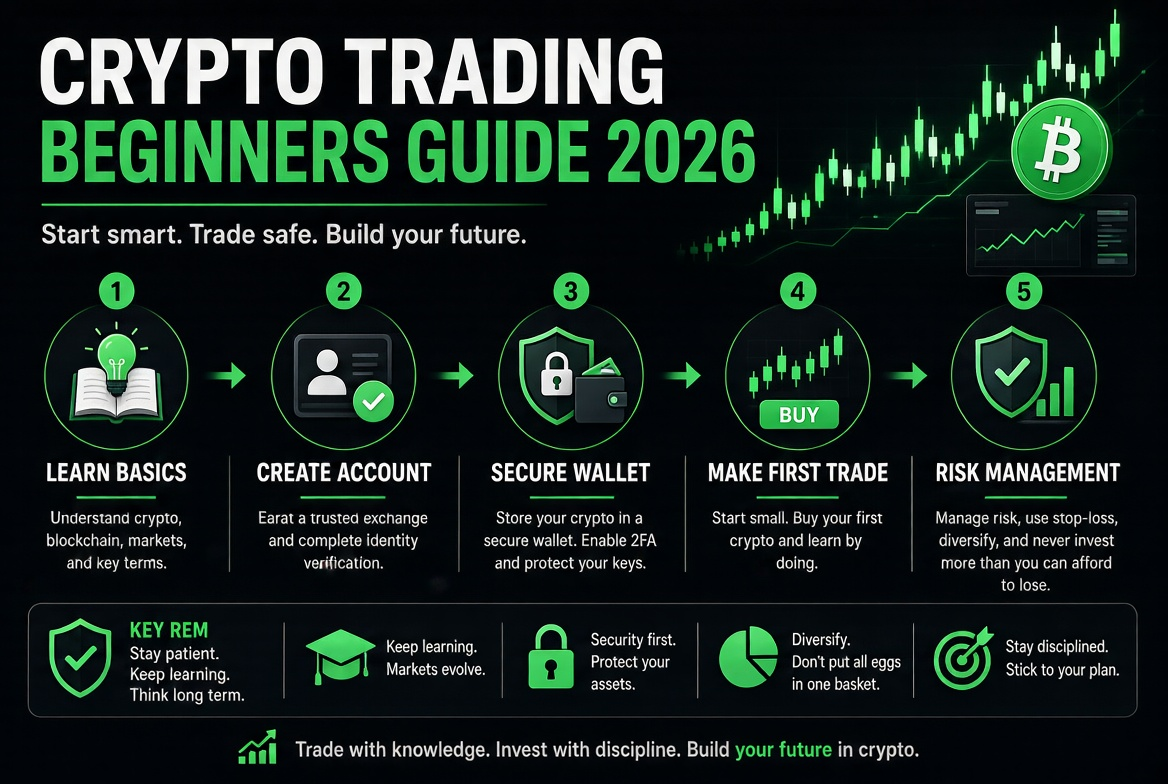
Step 1: Learn the basics and set a goal. Decide first whether you want long-term holding, swing trading, or short-term speculation. Different goals call for different methods.
Step 2: Choose a platform and register. Pick a platform that is secure, compliant and reasonably liquid, then complete registration and identity verification (KYC). Check whether your country or region is supported.
Step 3: Set up security properly
Enable two-factor authentication (2FA)
Use a strong password
Bind a secure email address and an anti-phishing code
Consider moving large holdings into your own wallet
Step 4: Deposit funds. Add funds through a supported deposit method. Start with a small test amount and confirm it arrives correctly.
Step 5: Complete your first spot trade
Choose a trading pair, such as BTC/USDT
Choose market or limit order
Enter the buy quantity
Confirm the fees and the fill result
Check your position on the assets page
Step 6: Learn to sell and keep records. The selling process is similar. Recording the reason and result of every trade makes review easier.
Step 7: Build your own rules. These include: the maximum loss you can accept, the cap on a single position, whether to use stop losses, and how often to review.
Choosing Among Common Trading Styles as a Beginner
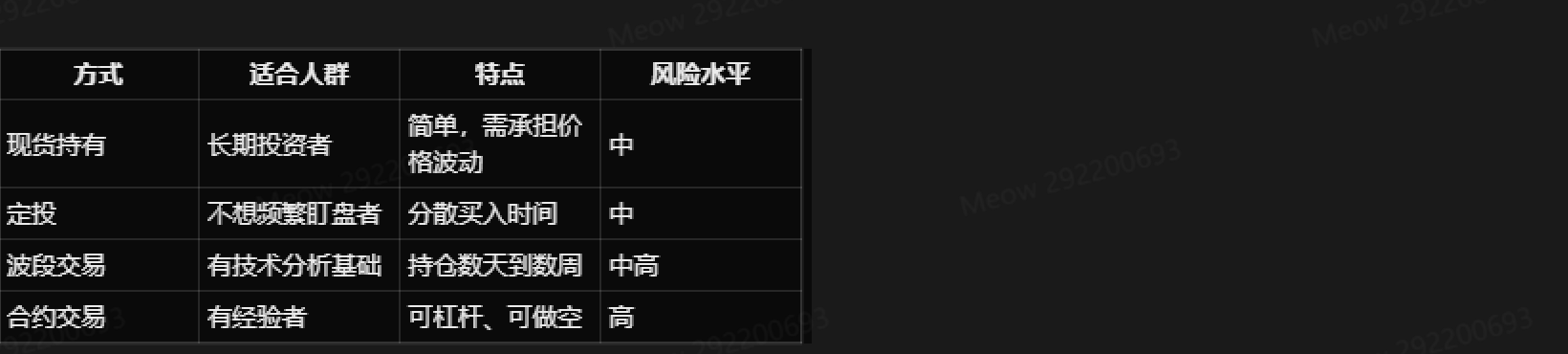
For most complete beginners, the usual order of priority is: spot trading and DCA first → then learn technical analysis → and only lastly consider futures.
Risk Management Matters More Than Strategy
Only invest money you can afford to lose — funds that do not affect your living expenses or essential spending.
Control single-position size — avoid concentrating in one trade and protect yourself from losing composure after a large drawdown.
Do not blindly chase pumps or dump in panic — emotional trading is one of the main causes of beginner losses.
Be wary of high-return promises — treat any claim of guaranteed profits or principal-protected high yields with extreme caution.
Guard against scams — never reveal your seed phrase or verification codes, and do not trust direct messages offering trade signals.
Survive first — staying in the market over the long run matters more than a short-term windfall.
What Else Beginners Should Watch in 2026
Regulatory and platform compliance requirements keep changing, so confirm regional support before registering
Network fees, withdrawal rules and stablecoin usage can all affect your experience
Information overload is severe; a small number of trustworthy sources is enough
Market narratives rotate quickly, so avoid treating a short-term trend as a long-term thesis
Common Mistakes
Using high leverage before understanding it
Placing impulsive orders based on group chat messages
Averaging down after a loss without any preset rules
Keeping all your funds on a single platform
Ignoring fees and security settings
Risk warning: Crypto trading is high risk and may lead to the loss of part or all of your principal. This article is educational only and does not constitute investment advice or any promise of returns. Make decisions carefully based on your own circumstances and comply with local laws and regulations.
FAQ
Q1: Can I start trading with no experience? A: Yes, but begin with learning and small spot trades, master the process and the risks first, and increase complexity gradually.
Q2: What should I buy in my first trade? A: Beginners usually start with highly liquid, widely recognized assets such as BTC or ETH, and keep the amount small.
Q3: Is spot or futures better for beginners? A: Spot is better suited to beginners. Futures involves leverage and liquidation mechanisms, which makes the risk significantly higher.
Q4: Do I need to watch the charts every day? A: Not necessarily. If you use DCA or hold for the medium to long term, frequent chart watching is not required; short-term trading is what demands a bigger time commitment.
Q5: How do I know I am ready? A: You are closer to being ready when you can clearly state your trading rationale and your maximum acceptable loss, and you have completed your security setup and a small test trade.
Recommended
View more