Cross Margin vs Isolated Margin: Differences and How to Choose
Cross margin and isolated margin are the two core margin modes in futures trading. They determine where the system takes funds from to support a position when it loses money, and how much you can lose in the worst case. In short: with isolated margin, risk is limited to the margin assigned to a single position, and a liquidation in one position does not touch the rest of your account. With cross margin, the entire available balance of the account serves as shared collateral for all positions, so one losing trade can drag down the whole account. If a beginner picks the wrong mode, even a correct directional call can still end in a loss because the risk structure itself is wrong.
Isolated Margin: The First Choice for Risk Isolation
The core logic of isolated margin is simple: each position uses its own separate margin, and the maximum loss is capped at the funds allocated to that position.
Here is an example: you have 1,000 USDT in your account and open a position using 100 USDT as isolated margin. In the worst case, that position is forcibly closed and you lose only that 100 USDT. The remaining 900 USDT in the account is completely unaffected.
The main advantage of isolated margin is risk isolation: profits and losses of multiple positions do not affect each other, and a liquidation in one position does not spill over into other positions or the account's available balance. The maximum loss is defined before you open the trade, which suits high-leverage short-term trading, volatile altcoin trading, and running several strategies in parallel.
Isolated margin suits:
Beginners — who want to protect the account by capping the loss on a single trade
High-leverage speculative trading — where the loss limit is locked in and core positions stay untouched
Multi-strategy traders — who run different strategies at the same time and need each position's risk kept separate
Experimental trades — where you test a new coin or a new strategy with limited capital

Cross Margin: The Double-Edged Sword of Capital Efficiency
Cross margin treats the entire available balance of the account as a shared collateral pool for all positions. When a position runs at a loss, the system automatically draws on idle funds in the account to top it up and delay liquidation.
The advantage of cross margin is higher capital efficiency: unrealized profits from winning positions automatically offset losing positions, and multiple positions share one pool instead of each locking up its own margin. For example, a long BTC position is losing money while a long ETH position is in profit — the $300 gain on ETH flows into the margin pool and covers the $200 loss on BTC, leaving the account healthy overall.
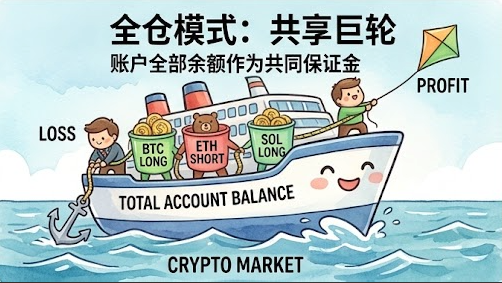
That efficiency, however, is a double-edged sword. In an extreme one-sided market where all assets fall together, the shared margin pool can be drained quickly, and all positions may be liquidated at the same time. During events such as the crash of 12 March 2020 and the collapse of Luna in 2022, cross margin wiped out the entire futures account of many traders.
Cross margin suits:
Experienced traders — who understand the liquidation mechanism and actively manage risk
Hedging traders — who go long and short on related assets at the same time so profits and losses offset each other
Complex strategies that need high capital efficiency — such as calendar spreads and cash-and-carry arbitrage
Large-account trend traders — who want a bigger balance to ride out short-term market noise
Isolated vs Cross Margin: Core Differences at a Glance
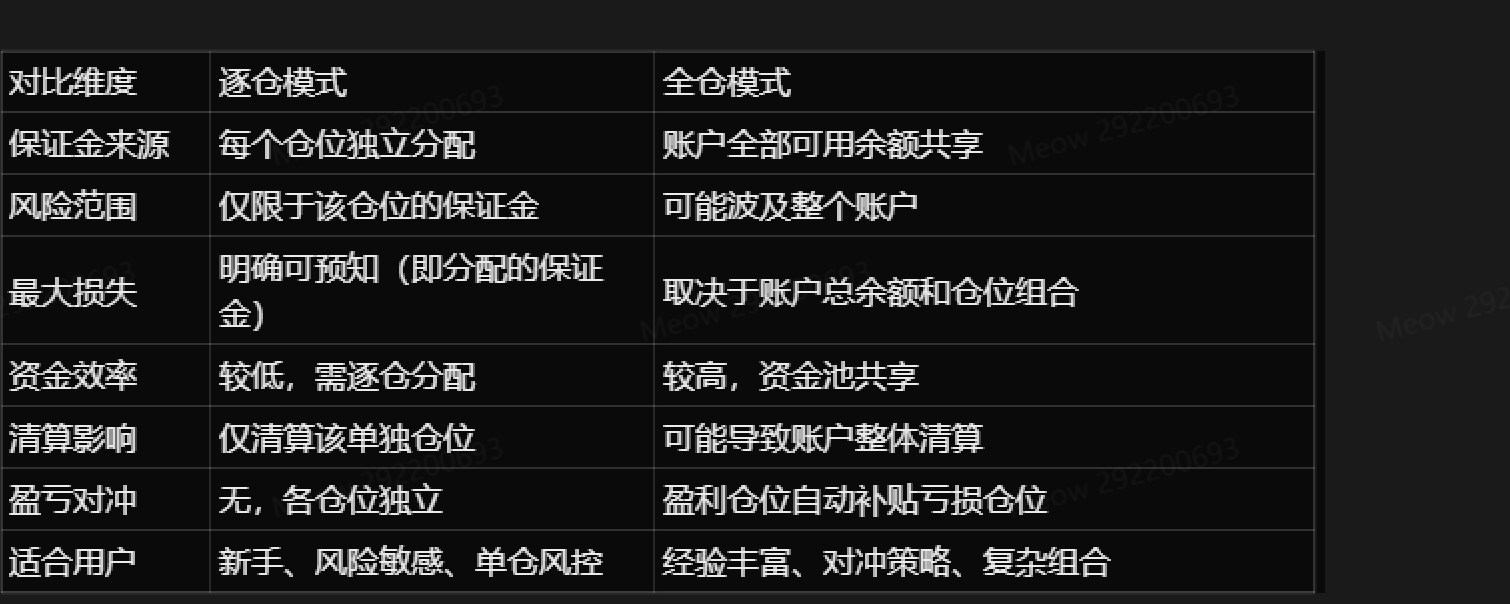
How to Choose: The Golden Rule for Beginners
When you are starting out, always use isolated margin. Educational content from exchanges such as Gate, Binance and BingX consistently makes the same point: isolated margin is a seatbelt that protects your account from being emptied by a single mistake while you are still getting used to market volatility.
Advanced usage:
When you run a hedging strategy (for example, long BTC and short ETH at the same time) and can monitor the account continuously, cross margin lets profits and losses cancel each other out
When you trade major coins (BTC, ETH) and have a clear plan for large adverse moves, cross margin can improve capital efficiency
When you hold several positions in different directions, cross margin helps keep the overall account stable
Key reminder: many beginners underestimate the risk of cross margin — an extreme move in a single position can swallow the entire account. If you cannot yet work out the liquidation price of a cross margin account in your head, stay with isolated margin.

Frequently Asked Questions (FAQ)
Q1: Can I switch margin mode after opening a position?
Some platforms allow switching while a position is open, but the rules differ from platform to platform. Most require all positions and open orders to be closed before you can switch. Confirm the mode you want before opening a trade to reduce operational mistakes.
Q2: Can I add margin to an isolated position?
Yes. Most platforms let you manually add margin to an isolated position before liquidation, which lowers liquidation risk or pushes the liquidation price further away. It does mean, however, that the funds actually committed go beyond the limit you originally set.
Q3: Is cross margin always riskier?
Not necessarily. For traders running hedging strategies, cross margin can actually reduce the chance of being liquidated by a single position. The level of risk depends on how the whole portfolio is designed, not on the mode itself.
Q4: Why can an unfamiliar margin mode turn a correct call into a loss?
Because futures trading is not a simple game of guessing direction; it is a risk management tool. Even if you correctly expect BTC to rise, holding other losing positions in cross margin, or using leverage so high that margin runs short, can still get you forcibly closed out before the trend really starts. The choice between isolated and cross margin often matters more than whether you use 10x or 20x leverage.
Related tutorials:
Complete Guide to Futures Trading: From Basics to Risk Control
Leverage Trading Explained: Amplifying Both Returns and Risks
What Is Futures Liquidation? The Forced-Liquidation Mechanism and Liquidation Price Calculation
Guide to Setting Stop-Loss and Take-Profit on Futures: A Must-Learn for Protecting Profits
What Is a Funding Rate? The Price-Anchoring Mechanism of Perpetual Futures
Recommended reading:
Recommended
View more