
What Is a Genesis Block? The Starting Point of a Blockchain
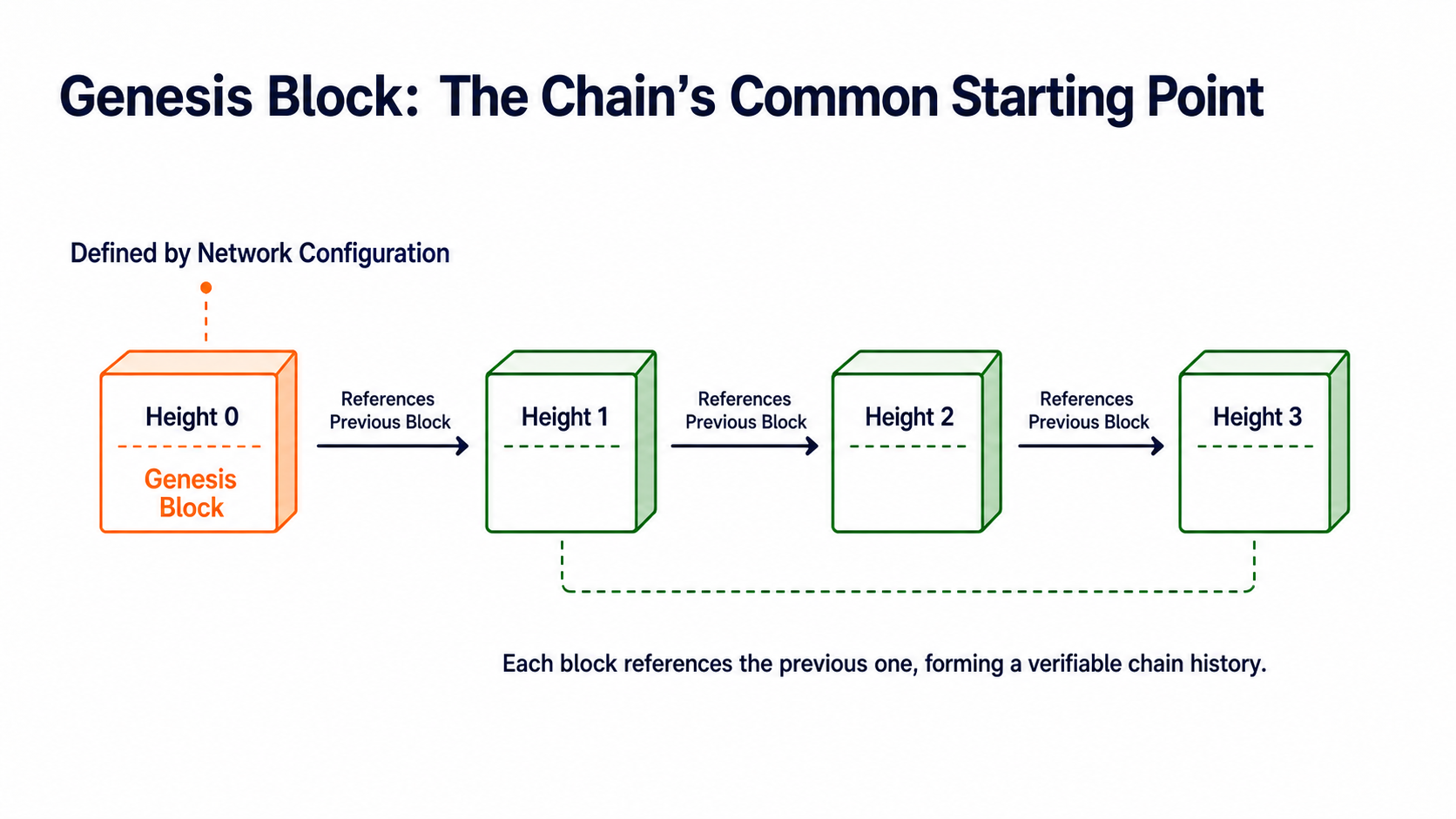
A genesis block is the predetermined first block of a blockchain, usually located at block height 0. It has no parent block in the conventional sense and provides a shared historical starting point for every block that follows.
Nodes must recognize the same genesis block to join the same chain. If the genesis block hash or network parameters differ, the software may be similar, but the nodes will form separate networks.
Why Is the Genesis Block Special?
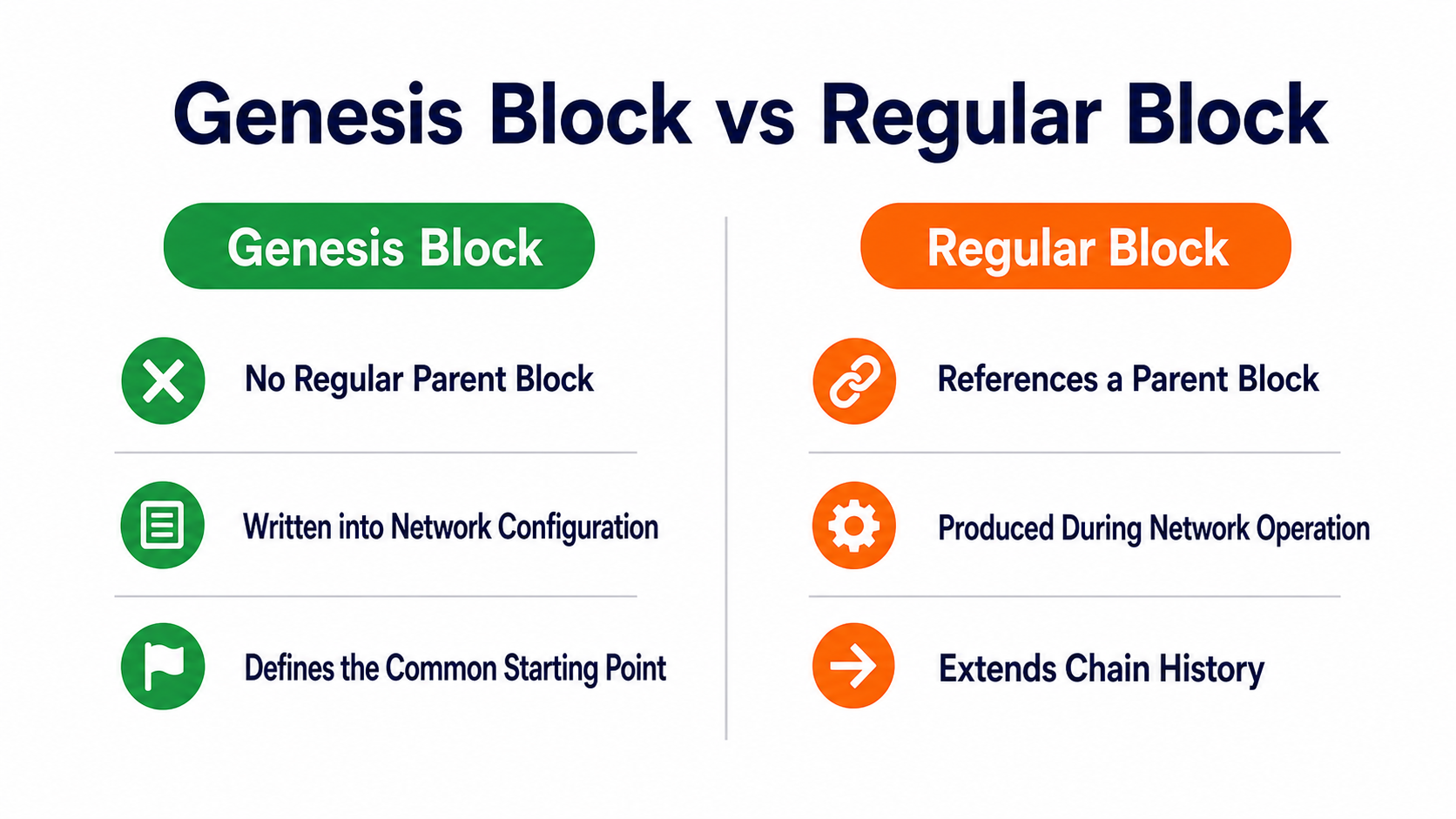
Ordinary blocks are produced while a network is running and reference an existing parent block. A genesis block has no earlier conventional block to reference. Protocol developers typically generate it in advance and embed its key fields or expected hash in the client configuration.
When a node starts, it builds the chain's history from this shared anchor. The genesis block is established directly by the software and network parameters rather than being proven by an earlier block. Later blocks extend the chain through hash references and the consensus process.
What Does the Bitcoin Genesis Block Contain?
The Bitcoin mainnet genesis block was generated with a timestamp corresponding to January 3, 2009. Its coinbase data includes text taken from a headline on the front page of that day's edition of The Times. The text provides historical context and reflects the discussion about the financial system surrounding Bitcoin's creation.
The genesis block includes a 50 BTC block reward output, but that output cannot be spent like an ordinary block reward. It should not be counted as circulating funds, and assets sent to an address associated with the genesis block should not be assumed to be normally recoverable by anyone.
Is the Genesis Block the First Bitcoin Transaction?
Not exactly. The genesis block contains a coinbase transaction that creates the block reward, but what is commonly called the first user-to-user Bitcoin transfer took place in a later block. Block creation, protocol rewards, and user transfers are distinct concepts.
Likewise, the genesis block's timestamp does not necessarily mark the public launch of the network, the first software release, or the first commercial transaction. When studying blockchain history, verify block timestamps, code release dates, and event records separately.
Does Every Blockchain Have a Genesis Block?
Chains with a linear block structure generally require a starting point, although its name, fields, and generation method may differ. Testnets, development networks, and private chains also have their own genesis configurations. Changing the chain ID, initial accounts, validator set, or genesis hash can create a new chain that is incompatible with the original network.
Some protocols use state snapshots or checkpoints to speed up synchronization for new nodes, but a checkpoint is not a genesis block. It is only a trusted reference point later in the chain's history; the original chain still has its own initial state.
How Can You View a Genesis Block in a Block Explorer?
Open a block explorer for the target network and search for block height 0, or enter the official genesis block hash published by the network. Check the block height, timestamp, parent-hash field, transaction count, and block hash.
Some explorers do not index the earliest blocks or use different height-display conventions. Cross-check important information against official client parameters or a second explorer. For step-by-step instructions, see the block explorer guide.
Can a Genesis Block Be Modified?
On an operating network, modifying the genesis block changes its hash, so the historical links of all subsequent blocks no longer match. A client that accepts the new genesis configuration is effectively joining another network rather than quietly rewriting the original chain's first block.
This differs from an ordinary chain reorganization, which typically occurs between recent competing branches. The genesis block is part of the network's identity. To understand how blocks receive confirmations step by step, read How Blockchain Works. For the broader technical context, return to the complete guide to blockchain's core concepts.
Frequently Asked Questions
Who Mined the Genesis Block?
It depends on the network. Satoshi Nakamoto created Bitcoin's genesis block. On other chains, a development team may generate it, or initial validators may create it together during a launch ceremony. Bitcoin's process should not be assumed to apply to every blockchain.
Can a Genesis Configuration Allocate Account Balances in Advance?
Yes. Some networks define initial accounts, balances, contracts, or validator sets in their genesis state. The specific protocol determines whether this is done, so Bitcoin's genesis block should not be used to infer how other chains are designed.
Do a Testnet and Mainnet Share the Same Genesis Block?
Usually not. They use different network parameters, chain identifiers, or genesis hashes to prevent nodes and transactions from entering the wrong network. Even if they use the same client code, they remain independent chains.
Must a New Node Download All Data Starting from the Genesis Block?
Full verification generally requires establishing a valid history from a trusted starting point to the current chain tip. Modern clients, however, can use snapshots, checkpoints, or pruning to synchronize faster and reduce storage requirements. The specific trust assumptions depend on the synchronization method.
読書をお勧めします
もっと見る

service hotcoin.com
producthotcoin.com
businesshotcoin.com
casecnhotcoin.com