
What is DID?
In the digital age, identity verification has become an essential part of online life. However, traditional identity authentication methods often rely on centralized institutions such as governments, banks, or social media platforms. These institutions not only control users' personal data but also pose security risks, including data breaches and identity theft.
Decentralized Identity (DID) is a new identity management model based on blockchain or distributed ledger technology, designed to give users full control over their own identities. Unlike traditional identity systems, DID does not depend on a single centralized entity. Instead, it leverages cryptographic techniques and decentralized networks, allowing users to create, manage, and verify their identities independently.
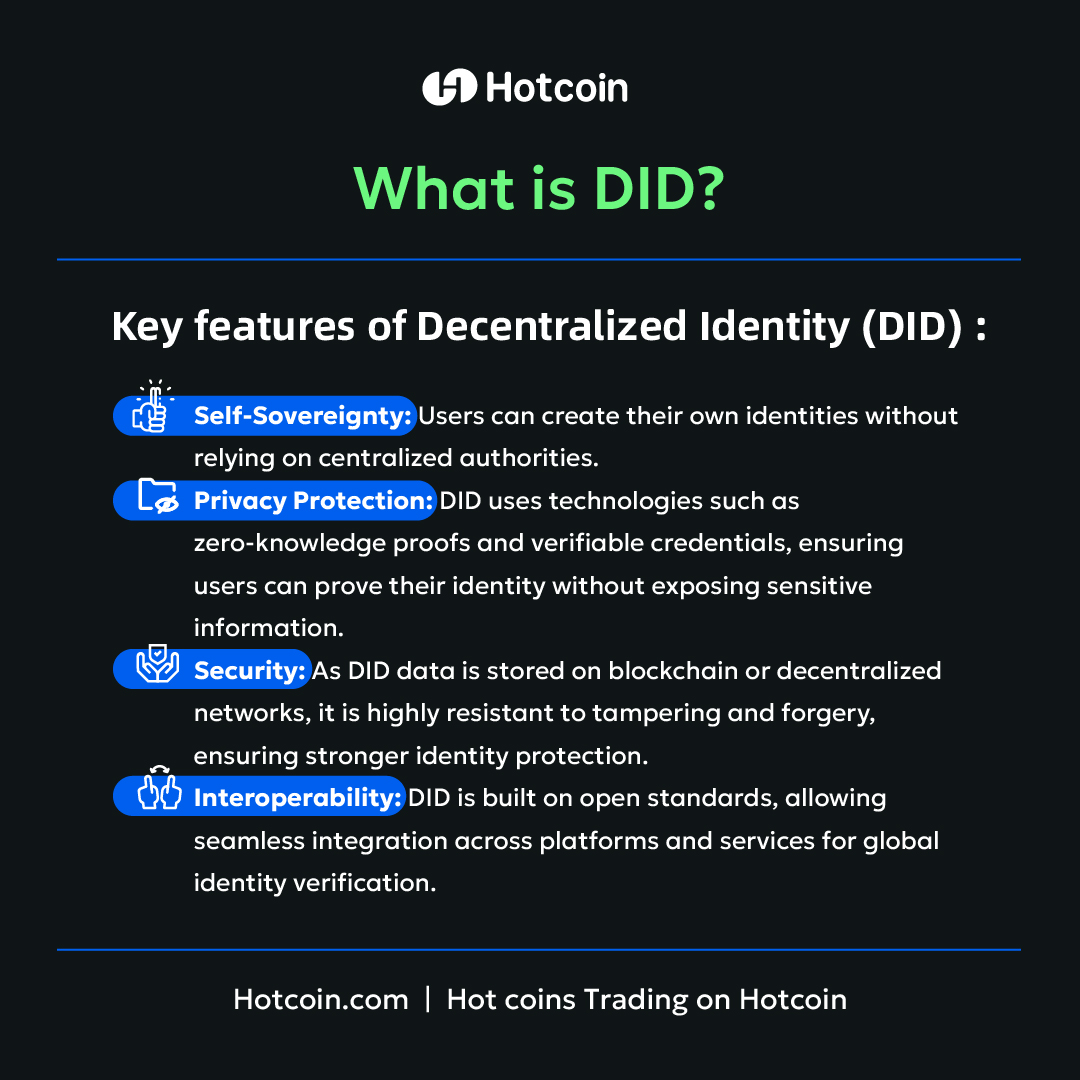
Key features of DID include:
Self-Sovereignty: Users can create their own identities without relying on centralized authorities.
Privacy Protection: DID uses technologies such as zero-knowledge proofs and verifiable credentials, ensuring users can prove their identity without exposing sensitive information.
Security: As DID data is stored on blockchain or decentralized networks, it is highly resistant to tampering and forgery, ensuring stronger identity protection.
Interoperability: DID is built on open standards, allowing seamless integration across platforms and services for global identity verification.
In practical applications, DID can be used in digital wallets, decentralized finance (DeFi), healthcare data sharing, cross-border payments, and more. For example, users can log in to services without passwords using DID, reducing the risk of credential leaks. They can also store and share credentials such as academic degrees and professional certifications without relying on third-party institutions for verification.
DID is built on open standards, allowing seamless integration across platforms and services for global identity verification. It not only grants individuals greater control over their identities but also reduces identity theft risks, offering a more secure and efficient authentication method for the digital world.
Lectura recomendada
Ver más
service hotcoin.com
producthotcoin.com
businesshotcoin.com
casecnhotcoin.com