What is edgeX (EDGE) and How to Buy It?
edgeX is a self-custodial decentralized trading platform focused on perpetual contracts, spot, and tokenized stocks and RWA. It uses its own EDGE Chain for settlement, with the settlement layer inheriting Ethereum security via Arbitrum.
EDGE is the platform token. edgeX's selling point is "centralized exchange speed + self-custody," but the price crash and refund controversy after its 2026 launch also remind us: high performance does not mean low risk.
Key Takeaways
- edgeX supports crypto perpetuals, spot, and tokenized stocks/RWA, emphasizing low latency, deep liquidity, and self-custody.
- The platform settles on EDGE Chain, with the settlement layer inheriting Ethereum security via Arbitrum; Circle Ventures participated and promotes USDC usage.
- EDGE is used for governance and incentives. After its March 2026 launch, it experienced an approximately 70% crash and refund controversy.
- Risks include token manipulation allegations, insufficient liquidity, regulation, and product complexity.
What is edgeX?
edgeX places order matching on an off-chain high-performance engine and settlement on-chain, balancing speed and self-custody. The official claims order latency below 100 milliseconds and peak throughput of up to 300,000 transactions per second, targeting high-frequency and professional traders.
In addition to crypto perpetuals, edgeX also offers tokenized stocks, commodities, and RWA, attempting to bring traditional asset trading scenarios on-chain. Such products involve securities compliance, custody, and cross-market settlement, with complexity far higher than ordinary DEXs.
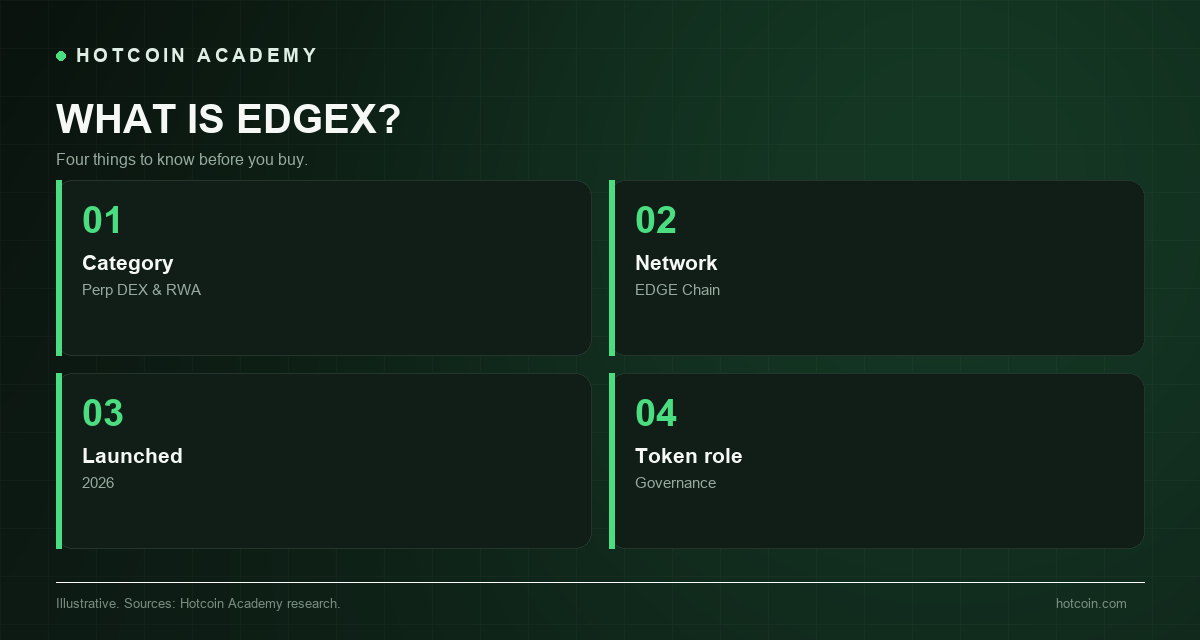
Figure: Four basic facts about edgeX.
Circle Ventures' investment and USDC integration provide edgeX with a compliant stablecoin and institutional narrative; however, the price manipulation controversy after the token launch shows that "institutional backing" cannot eliminate market risk.
How Does edgeX Work?
edgeX's operation can be broken down into three steps:
- Trading: Connect a wallet, deposit USDC, and choose a perpetual or spot market to open a position.
- Settlement: Orders are matched off-chain, and trades and funds are settled on EDGE Chain.
- Self-custody: Assets are controlled by the user's private keys, and withdrawals require user authorization.
EDGE Tokenomics
EDGE is edgeX's governance and incentive token, used for community governance, trading incentives, and ecosystem partnerships. The token price is related to platform trading volume, buyback/burn mechanisms, and market sentiment.
| Item | Data |
|---|---|
| Token Name | edgeX (EDGE) |
| Total Supply | 1 billion tokens |
| Circulating Supply | Approximately 350 million tokens |
| Market Cap | Approximately $135 million |
| Current Price | Approximately $0.387 |
| Drawdown from All-Time High | Approximately -75% |
Data from CoinGecko, November 11, 2026; volatility was extremely high in the early launch period.
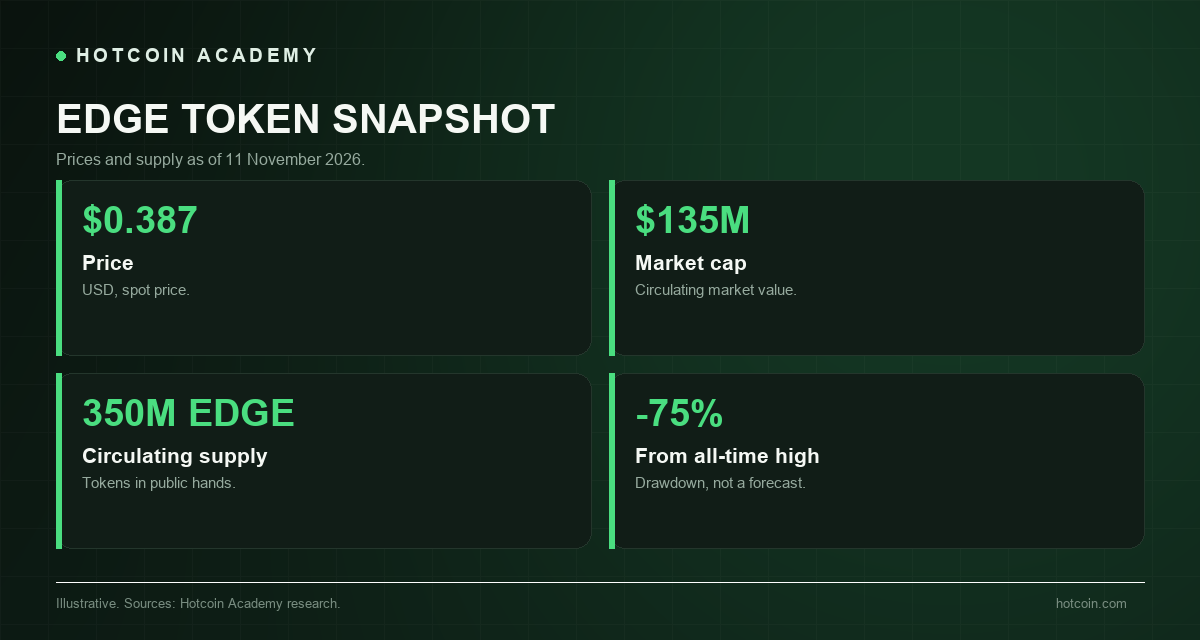
Figure: EDGE market data snapshot (November 11, 2026).
edgeX in 2026: Current Status and Risks
EDGE launched in March 2026, and its price subsequently crashed by approximately 70%. The project team promised refunds to some holders and denied involvement in the crash; on-chain detective ZachXBT alleged internal manipulation. The incident remains controversial.
For users, edgeX's product experience and liquidity still need time to be verified; for investors, EDGE's price history shows that the token distribution structure and market-making arrangements of newly launched tokens may affect short-term trends more than the whitepaper.
- Price manipulation and token concentration: Liquidity is thin in the early launch period of new coins, making them susceptible to large funds.
- Product complexity: Perpetuals, stock tokens, and RWA involve different regulatory and settlement risks.
- Fierce competition: The perpetual DEX track is crowded, and fee and incentive wars will compress profits.
- Refund and governance controversy: How the incident is handled will affect community trust.
How to Buy EDGE?
If you already understand edgeX's mechanics and risks and decide to participate with a small amount, you can follow these steps to buy EDGE on Hotcoin.
- Registration and KYC: Complete Hotcoin account registration and identity verification.
- Deposit: Deposit USDT, or use a supported fiat on-ramp.
- Search for the trading pair: Search for EDGE/USDT in the spot section.
- Place an order: Choose a market or limit order, confirm fees and slippage, and buy.
- Withdraw: For long-term holding, it is recommended to withdraw to a self-custodial wallet and verify the contract address.
Common Misconceptions
- Treating "Circle investment" as a price guarantee.
- Chasing highs on the first day of a new coin listing, ignoring market-making and unlock arrangements.
- Treating tokenized stocks as ordinary crypto assets, ignoring securities regulatory risks.
FAQ
What is edgeX? edgeX is a self-custodial perpetual and RWA trading platform that uses EDGE Chain for settlement and supports crypto perpetuals, spot, and tokenized stocks.
What is EDGE used for? It is used for governance, trading incentives, and ecosystem partnerships. The token value is related to platform trading volume and incentive design.
Is edgeX safe? The platform emphasizes self-custody and contract audits, but the new chain, new token, and complex products still bring technical and market risks. Historically, there have been post-launch crashes and refund controversies.
Is EDGE suitable for long-term holding? This article does not make a judgment. If considering holding, one should track the platform's real trading volume, token unlocks, and governance progress, and control position size.
Conclusion
edgeX attempts to bring the centralized exchange experience on-chain. The direction is clear, but execution is difficult: performance, liquidity, compliance, and token distribution—problems in any one of these will be reflected in the price.
For users, verify the product and withdrawal process first, then consider the token; for investors, EDGE's historical volatility is the best risk warning.
Risk warning: This article is for educational and informational purposes only and does not constitute investment advice. Crypto assets are highly volatile, and liquidity risks are higher for new coins and small-cap tokens. Investors may lose all their principal. Please do your own research and control your position size.
Recommended
View more