Emergency Response After Crypto Theft: Tracing, Freezing, and Legal Options
After crypto assets are stolen, protect any funds that have not yet been transferred and preserve both on-chain and device evidence. Public blockchains make fund movements traceable, but freezing assets usually requires cooperation from a platform, token issuer, or law-enforcement process.
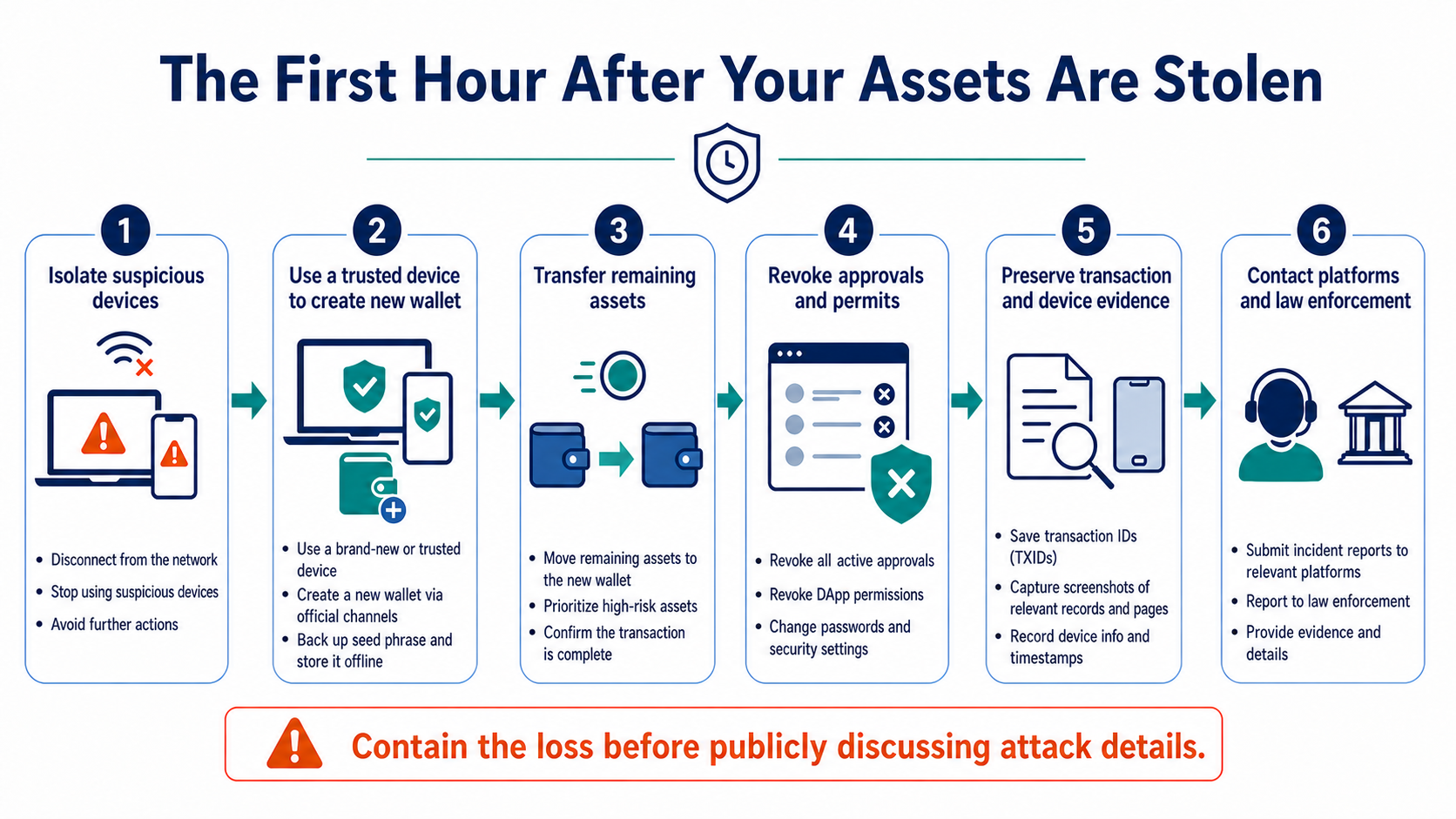
First Identify What Was Compromised
If an exchange account has been taken over, freeze the account, revoke active sessions and API access, and secure the associated email account. If only one token has left a self-custody wallet, a malicious approval may be responsible. If several assets are swept across different networks, the private key or seed phrase is more likely compromised.
If a device is infected, do not create a new wallet on that device or continue using it after changing passwords. Use a trusted device to generate a new seed phrase, transfer the remaining assets, and record every transaction you make.
What Can On-Chain Tracing Reveal?
Start with the theft transaction hash and document the destination addresses, tokens, cross-chain bridges, swaps, and exchange deposit addresses involved. Address labels can provide clues, but third-party labels may be wrong, so do not publicly accuse an unverified individual.
Do not send message tokens to the address or interact with suspicious contracts in an attempt to "test the scammer." Preserve the original data and timeline, then provide them to the relevant platform, analytics firm, or law-enforcement agency.
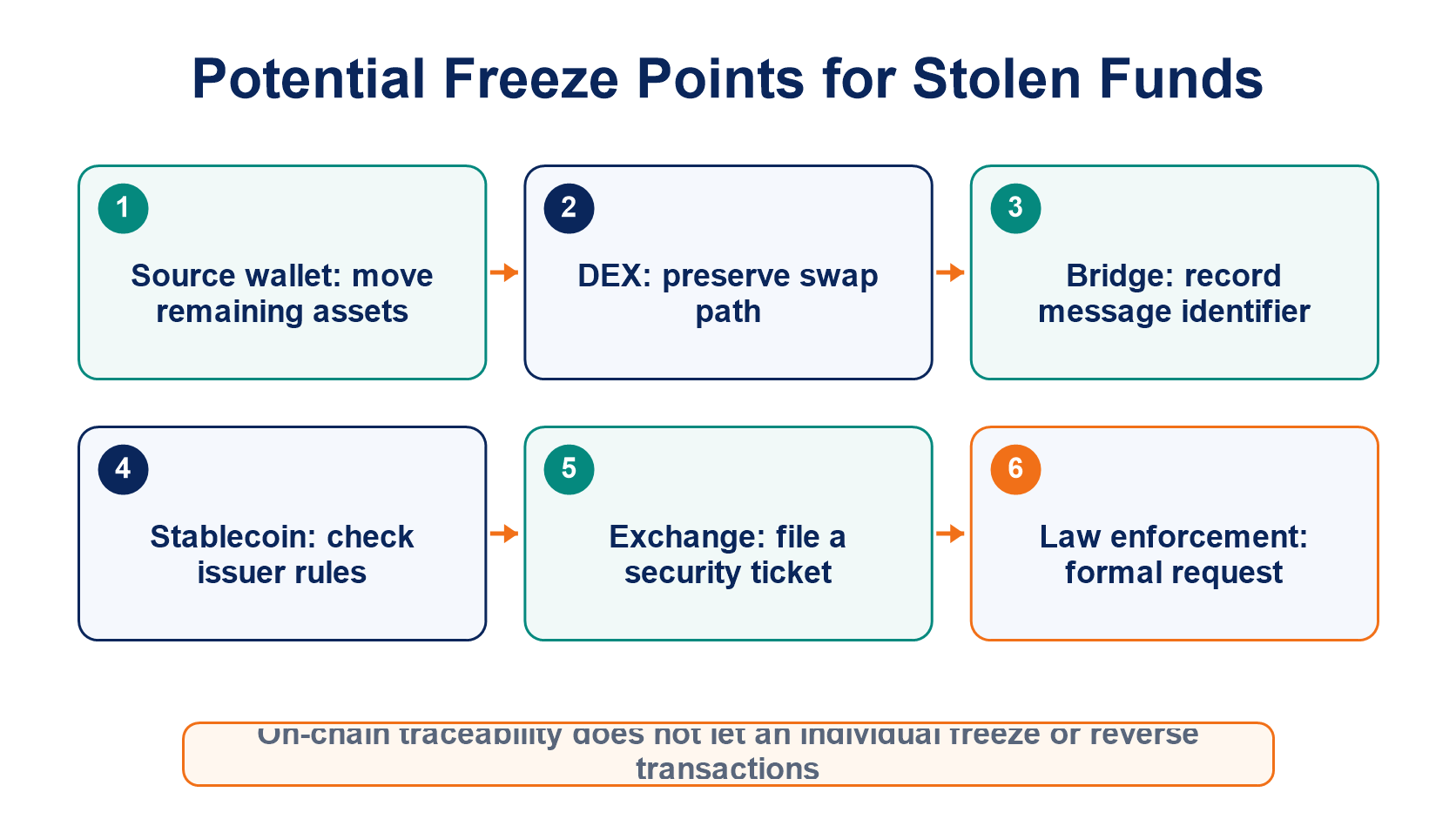
Who May Be Able to Freeze the Funds?
Centralized platforms may restrict assets held in their custody based on account information, judicial requests, and internal policies. Some stablecoin contracts can freeze addresses, but whether that function is used depends on the issuer's rules and applicable legal procedures.
Decentralized protocols, miners, and validators generally cannot reverse a confirmed transaction in response to an individual's request. Cross-chain bridges and mixing routes make tracing harder, and the longer the delay, the more likely the funds are to be dispersed further.
How Should You Prepare a Police Report and Legal Evidence?
Compile identification, proof of ownership, wallet addresses, transaction hashes, the amount involved, the method used to calculate its fiat value, chat records, websites, device logs, and platform support tickets. Report the incident to local police or the appropriate cybercrime authority and keep the case number.
For large or cross-border cases, consult a lawyer experienced in digital assets about evidence preservation, platform cooperation, and jurisdiction. Recovery is never guaranteed. Do not prepay crypto to anyone claiming they can privately freeze assets across the entire network.
For the general reporting process in scam cases, read What to Do After Being Scammed. For broader key-security guidance, see Private Keys and Seed Phrases.
Frequently Asked Questions
Can stolen funds still be traced after a hacker swaps them for another token?
On-chain swaps usually leave records, but cross-chain transfers, privacy tools, and off-chain platforms make attribution more difficult.
Will a stablecoin issuer freeze funds after seeing a screenshot of a police report?
Not necessarily. Issuers usually have their own evidentiary and legal requirements, so personal documentation should be submitted through formal platform or law-enforcement channels.
If the funds reach an exchange address, are they guaranteed to be recovered?
No. Recovery also depends on how quickly the funds are identified, whether they remain in the account, where the platform is located, the available evidence, and the applicable legal process.
Can I keep using the compromised wallet to watch the attacker?
You may monitor the address in read-only mode, but you should not deposit assets into it, sign transactions with it, or continue treating it as a secure account.
Recommended
View more