Multisig Wallets (Gnosis Safe): Managing Team Assets
The central value of a multisig wallet is that it replaces the single point of control created when one person holds all the keys with shared authorization that requires an agreed number of participants.
Safe is widely used smart-account infrastructure for EVM networks and was formerly known as Gnosis Safe. It lets a team define multiple Owners and a confirmation threshold. For example, a transaction from a Safe with three Owners may become executable only after at least two Owners confirm it. Assets remain at the Safe contract address; they are not divided among the members' individual wallets.
Multisig can reduce the risks created by one compromised private key, an employee mistake, or an unavailable team member. It does not automatically prevent blind signing, insider collusion, excessive module permissions, a hijacked front end, or weak operating procedures. A secure team treasury combines the contract threshold with clear responsibilities, independent devices, address verification, spending approvals, continuous monitoring, and tested recovery procedures.
If you are not yet familiar with wallet connections, block explorers, gas, approval management, and transaction verification, start with Essential Tools and Skills for Web3 On-Chain Activity.
What Is the Relationship Between Gnosis Safe and Safe?
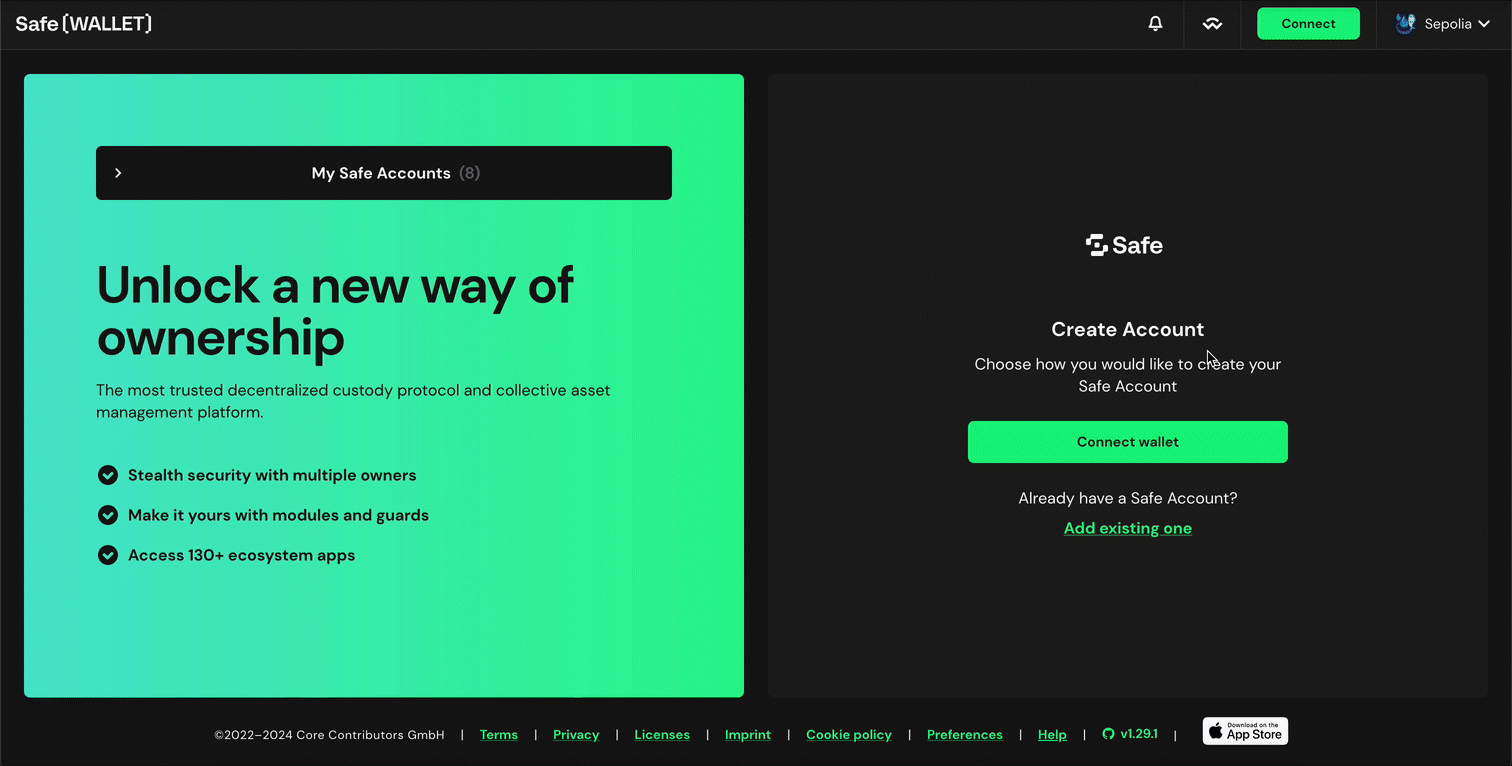
Gnosis Safe was the product's name before Safe became an independent brand in 2022. Current products are generally called Safe, Safe Smart Account, or Safe Wallet. The old Gnosis Safe name still appears in tutorials, governance systems, and on-chain labels, but that is not a reason to trust unfamiliar websites that use the former brand.
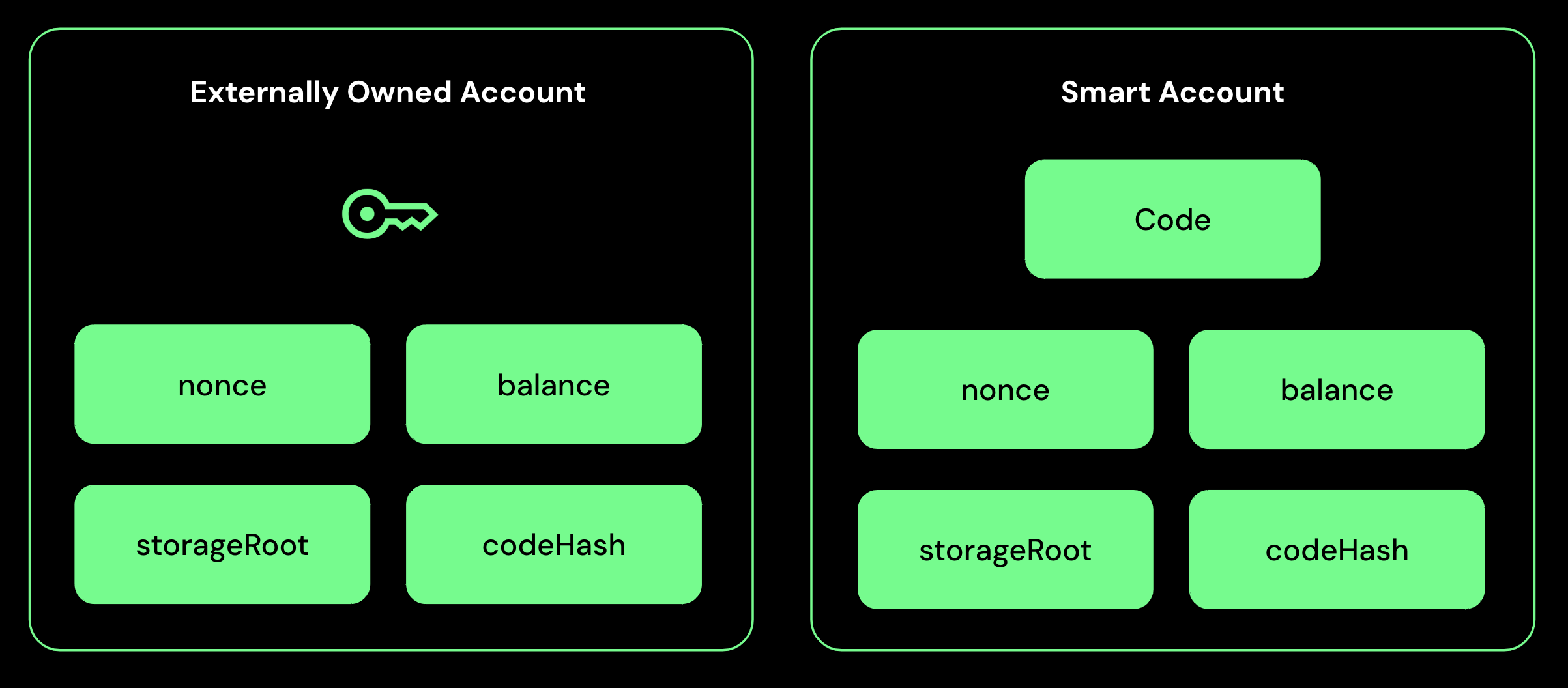
Safe is not an ordinary browser-extension wallet. It is a smart account deployed on a blockchain. Contract logic stores its Owner list, confirmation threshold, Nonce, modules, and other settings, then uses the collected signatures to decide whether a transfer or contract call can be executed.
The web interface is a tool for reading account state, preparing transactions, and collecting confirmations. The Safe contract address and its assets remain on-chain even if a front end or transaction service is temporarily unavailable. Direct contract interaction requires more technical skill, however, so teams should still maintain an alternative access plan.
How Does a Multisig Wallet Differ From a Regular Single-Signature Wallet?
A regular externally owned account is usually controlled by one private key. Anyone who obtains that key can independently sign valid transactions. If the only holder permanently loses the key, nobody else can restore access.
A Safe does not have one private key of its own. Instead, it registers multiple external accounts, hardware wallets, other smart accounts, or supported signing methods as Owners and verifies in the contract whether the threshold has been reached.
A 2-of-3 Safe, for example, has three Owners and requires at least two confirmations. An attacker who compromises one Owner generally cannot move the assets alone. If one Owner is lost, the other two can still approve a Safe transaction that replaces it.
Multisig improves fault tolerance and review, but it also adds coordination costs. More Owners and a higher threshold slow approvals. If the threshold equals the total Owner count, one unavailable person can freeze operations. The objective is not to maximize the number of signatures; it is to choose a defensible balance between resistance to attack and day-to-day availability.
What Are Owners, Signers, and Proposers in Safe?
An Owner is a controlling account recorded in the Safe contract. Owners can confirm transactions and jointly approve changes such as adding or removing an Owner, changing the threshold, or enabling a module.
A Signer is normally the person or wallet that controls an Owner address and produces a signature. Internal records should map every on-chain Owner address to a real-world responsible person. Labels such as “finance wallet” or “founder wallet” are inadequate if nobody can confirm who controls them.
A Proposer can prepare and submit a pending transaction without necessarily being an Owner. Proposal rights alone do not create a valid Owner confirmation. Separating proposal creation from signing lets a finance employee enter a payment while reviewers check it and authorized Owners sign it.
The ability to create a proposal is not the ability to spend funds, and a sufficient number of confirmations does not always mean a transaction has been executed on-chain. Team policy should separately assign responsibility for preparation, review, signing, execution, and reconciliation.
How Should the Confirmation Threshold Be Set?
The threshold is the minimum number of Owner confirmations required for a Safe transaction. A 1-of-3 setup has three Owners but still lets any one of them act alone. It mainly provides backup access and does not create genuine joint approval.
A 2-of-3 threshold is a common starting point for small teams: one compromised key cannot execute a transaction, while operations can continue if one member is unavailable. A team of four might select 3-of-4. Larger organizations may use layered Safes, role-based modules, or more detailed spending limits.
No single number suits every team. The appropriate threshold depends on asset value, payment frequency, staff stability, time zones, emergency response requirements, and internal trust. A high-frequency operating treasury and a long-term reserve treasury can use different Owners and thresholds instead of forcing every activity through one account.
The threshold should generally be greater than one and, for most ordinary situations, lower than the total Owner count so that one unavailable member does not lock the account forever. If regulation, a fund charter, or a custody policy requires every member to sign, the team also needs a recovery and business-continuity plan.
How Should Owners Be Distributed?
Multisig security depends on control being genuinely independent. If three Owners are derived from the same seed phrase, stored on one computer, or controlled by one person, an apparent 2-of-3 arrangement remains close to a single point of failure.
Owners should be spread across different people, devices, locations, and backup systems. A high-value treasury might combine hardware wallets from different vendors, dedicated signing devices, and controlled smart accounts to reduce the chance that one software or supply-chain flaw compromises a signing majority.
Do not store several seed phrases in the same cloud drive, password-vault note, or office drawer. Each Owner should maintain an independent backup and complete recovery drills. The organization should centrally record only the address, responsible person, device type, backup status, and rotation date—not private keys.
Teams must also prevent nominal separation that turns into delegated signing. A member should not hand a wallet to a supervisor or let another person operate it through screen sharing. Every Signer should independently understand and take responsibility for each confirmation.
How Is a Safe Account Created?
First, enter the web app through Safe's verified official domain and connect an external wallet that will be used to create and sign for the account. Do not enter through a search ad, group-chat link, or supposed customer-support message.
Second, choose the correct network and enter an account name. The name is mainly a local label; the Safe contract address is its actual on-chain identity. The same-looking address on different networks does not share balances or transaction state.
Third, add the Owner addresses and verify each one. Confirm full addresses through an offline or otherwise trusted channel. Do not compare only the first and last few characters, and do not copy an address directly from transaction history.
Fourth, set the confirmation threshold. The creator should show the network, Owner list, and threshold to every member, and each member should verify the configuration on an independent device.
Fifth, deploy or activate the account and retain the transaction hash. Deployment may require the network's native asset for gas. After creation, test a small deposit, proposal, confirmation, and withdrawal before transferring the team's main assets.
Why Run a Complete Small-Value Drill First?
Transferring a large balance into a new Safe can delay discovery of a mistyped Owner, an incompatible hardware wallet, an unreachable threshold, or team members who do not understand execution until the first withdrawal is needed.
At minimum, a drill should cover depositing a small amount of the native asset, creating a normal transfer, collecting confirmations from different Owners, executing it, checking the balance and events, replacing an incorrect test proposal, and confirming that every member can independently access the same Safe.
Test non-token operations as well, including updating the address book, connecting to commonly used DApps, revoking approvals, and reviewing modules. If the team may need to exit a protocol during an emergency, rehearse that path before a volatile market makes it urgent.
After the drill, turn the actual procedure into an internal runbook that records the interface version and official entry points. Have someone who did not write the instructions follow them once so hidden assumptions can be found.
What Stages Does a Safe Transaction Go Through?
The first stage is transaction creation. A Proposer or Owner enters the recipient, amount, token, or contract call data and creates a proposal with a specific Safe Nonce.
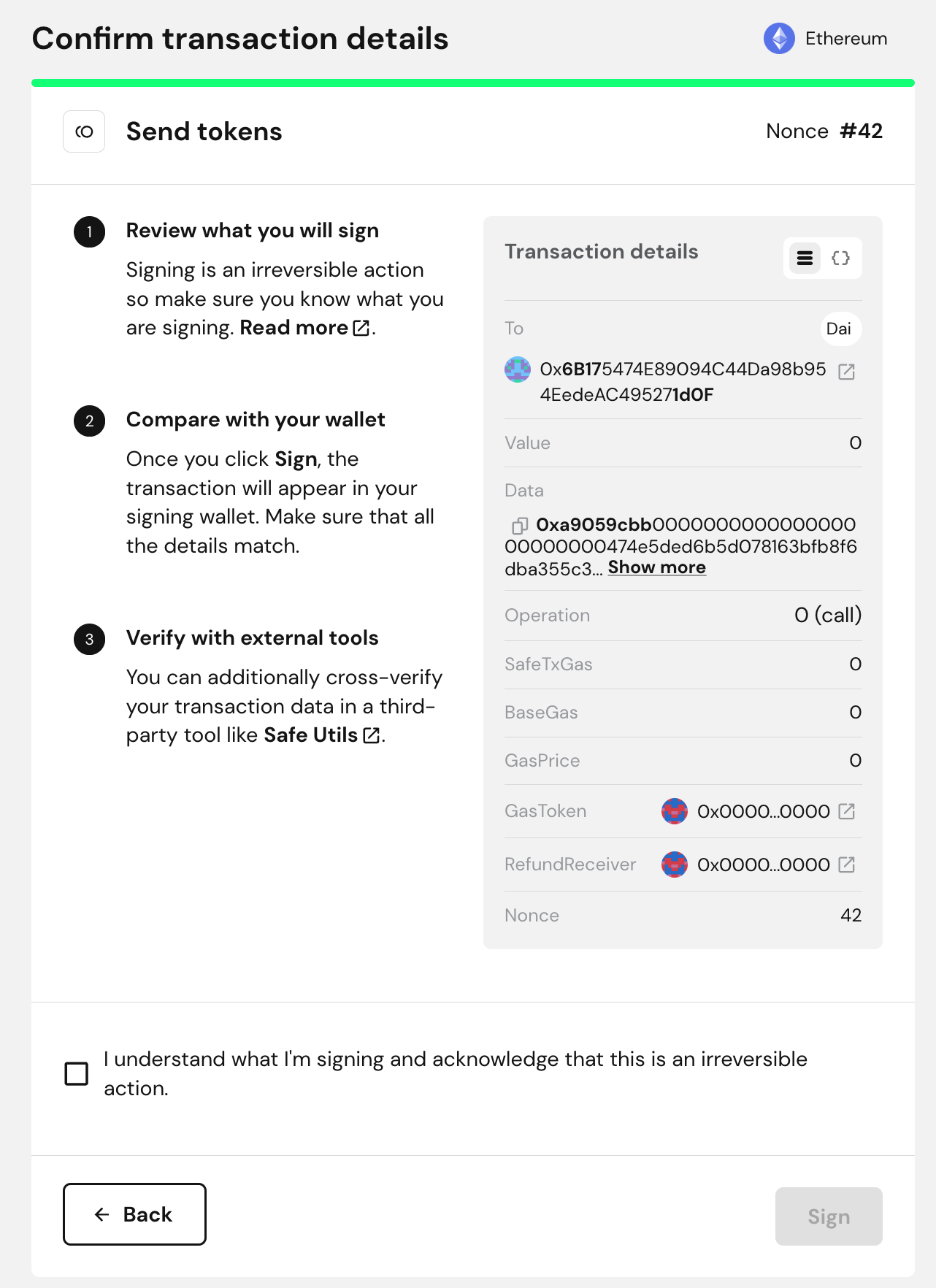
The second stage is collecting confirmations. Each Owner independently checks To, Value, Data, Operation, Nonce, and the expected asset changes before signing with their own wallet. Many confirmations can be collected off-chain, so producing a confirmation does not necessarily require gas.
The third stage is execution. Reaching the threshold only means the transaction has enough authorization. Someone still has to submit the transaction data and signatures for on-chain execution. The executor normally pays network fees unless the team has configured a relay or another fee mechanism.
The fourth stage is on-chain verification. Confirm the final status, events, actual asset changes, gas cost, and new Nonce. A web interface that shows “signed” or “ready to execute” is not proof that funds arrived.
For the security differences among proposals, message signatures, Owner confirmations, and on-chain transactions, see How to Interact Safely On-Chain: Signatures vs. Transactions.
What Must Be Checked Before Signing?
To is the asset recipient or the contract being called. In an ERC-20 transfer, To is often the token contract, while the actual recipient is encoded in Data. Checking only the top-level address is therefore insufficient.
Value is the amount of native asset sent with the call. It is often zero for a contract interaction, but zero Value does not mean zero risk; Data may still approve tokens or instruct a protocol to move assets.
Data defines the function and its parameters. For high-value operations, decode the method, recipient, amount, Spender, Token, slippage, and deadline. Do not sign unexplained hexadecimal data merely because a colleague says it is safe.
Operation should normally be a regular Call. Delegatecall executes external logic in the Safe's context and carries substantially greater risk. Approve it only after confirming the purpose, code, and official deployment.
Nonce determines the ordering of Safe transactions. Duplicate, skipped, or conflicting proposals can affect the queue, so every Signer must confirm that the transaction is the version currently intended for execution.
Why Must Every Owner Verify Independently?
Multisig does not help if several people repeat the same mistake. If the proposer pastes the wrong address and the other members inspect only the amount before clicking Confirm, a 2-of-3 Safe can still execute a fully authorized payment to the wrong recipient.
Each Owner should recheck the recipient, network, asset, amount, and business purpose from original records. For a large payment or new address, use a video call, phone call, corporate directory, or in-person verification, but do not rely solely on the same chat message used to initiate the transaction.
A hardware-wallet screen can reduce the risk of front-end tampering. If the device displays only a hash or incomplete data, however, the Signer may still be signing blindly. Use an independent decoder, simulation tool, and block explorer when necessary.
Approval records should explain what was checked rather than contain only an emoji or “OK.” If any member cannot understand the Data, Delegatecall, module change, or proxy upgrade, pause the transaction until a qualified technical reviewer explains it.
What Do the Safe Nonce and Transaction Queue Do?
The Safe Nonce is the contract account's own transaction sequence number, not the Nonce of an Owner's external wallet. It increments after a Safe transaction executes successfully.
Teams can prepare several transactions at once, but their order and conflicts must be understood. Two transactions with the same Safe Nonce generally cannot both execute as planned, while unresolved earlier transactions can affect those queued behind them.
Deleting a proposal from the web interface may remove it only from a transaction service's queue. It does not necessarily invalidate signatures that have already been collected. If somebody copied the complete transaction and enough valid signatures, it might still be submitted for execution.
When an on-chain rejection is required, follow the official process to create a conflicting or cancellation transaction and have enough Owners confirm and execute it. Deleting an interface record is not the same as revoking authorization.
Can Batch Transactions Improve Efficiency?
Safe can combine several operations in one batch, such as paying multiple suppliers, adjusting several protocol positions, or applying a group of governance changes.
Batching reduces repeated approvals and on-chain transactions, but it also makes Data more complicated. A single proposal may include multiple recipients, tokens, approvals, and contract calls. Signers must inspect every component instead of checking only the total value.
Failure and rollback behavior depends on how the batch and its calls are constructed. Simulate the complete result and understand each sub-call's failure conditions, asset changes, and approvals. Do not assume that every batch supports partial success.
Do not mix high-risk configuration changes with routine payments. Adding an Owner, lowering the threshold, enabling a module, and transferring assets should be reviewed separately so members can clearly see each change to account control.
How Should a Team Manage Routine Payments?
Maintain a verified address book that records the recipient name, full address, network, asset type, verifier, and effective date. New or changed addresses should receive two-person review and must not be copied from a similar-looking entry in transaction history.
Create approval tiers based on value. Small operating expenses may use a spending-limit module or separate operating Safe, while large payments continue through the high-threshold main treasury. Long-term reserves should not connect frequently to DApps.
Attach the invoice, contract, budget reference, and fiat-value estimate to each proposal. A blockchain can prove that an address received assets, but it cannot prove that the payment complied with company authorization or a real-world contract.
After execution, someone other than the proposer should reconcile the transaction hash, actual receipt, fees, and accounting record. Regularly scan for unknown tokens, NFTs, approvals, and module changes so that the interface's total asset value does not hide a persistent risk.
How Can a Safe Connect to DeFi and Other DApps Securely?
A Safe can connect to a DApp through an application interface, WalletConnect, or another supported method. A successful connection does not make the protocol trustworthy. Verify the domain, network, contract address, proxy, administrators, audits, and exit path.
Use a test Safe or a low-value operating Safe for the first interaction, then complete the full lifecycle: approval, deposit, reward claim, withdrawal, and approval revocation. Do not grant an unfamiliar protocol unlimited access to a long-term reserve Safe.
ERC-20 Approve permissions, NFT Operator permissions, Permit and Permit2 permissions belong to the Safe address, not to one Signer. Replacing an Owner or removing an employee does not automatically revoke permissions previously granted by the Safe.
Review permissions on every network regularly and reduce or revoke them when the business no longer needs them. For the practical steps, see Token Approval Management: Protect Your Wallet With revoke.cash.
What Are Safe Modules?
A Module is a smart contract authorized to execute specified logic on behalf of a Safe. Modules can support automated payments, spending limits, account abstraction, governance, and other custom workflows.
The key risk is that a module may, within its design, bypass the ordinary n-out-of-m Owner confirmation process. If a 3-of-5 Safe enables a powerful module callable by one address, its effective security boundary may no longer be 3-of-5.
Enabling a module requires the current threshold, but that does not mean every later module action requires the same confirmations. Before enabling one, Signers must understand who can invoke it, which assets it can move, its limits and target addresses, upgrade authority, pause controls, and removal procedure.
Install only modules with a clear source, verifiable code, sufficient audits, and a genuine business need. Query the on-chain enabled-module list regularly instead of relying solely on what the Safe app home page displays.
What Risks Do Guards and Fallback Handlers Create?
A Guard can perform checks before and after a Safe transaction, such as blocking certain calls, restricting addresses, or enforcing a policy. It adds constraints above the threshold and is not an ordinary Owner.
A faulty or malicious Guard can block transactions and create a denial of service that prevents the team from transferring assets or changing settings. Review the code, compatible versions, and removal path before enabling one.
A Fallback Handler extends functionality not handled directly by the Safe core contract and may affect signature verification or external function calls. It is not a harmless plugin; its full address and implementation logic must be verified.
Modules, Guards, and Handlers all change the attack surface of a basic Safe. The safest default configuration generally keeps only extensions that are necessary and can be maintained over time.
How Should Spending Limits Be Used?
A Spending Limit can let a designated address spend a specified token within an amount and period without collecting every Owner confirmation. It can be useful for payroll, reimbursements, and small operating expenses.
The efficiency comes with independent spending power for the Beneficiary within that allowance. Set the minimum necessary limit, and avoid granting large recurring allowances for volatile assets or long-term reserves.
Record the Beneficiary, token contract, allowance, reset period, purpose, and review date. Remove the limit immediately when an employee leaves, changes roles, or has a compromised device, and inspect previous spending.
Do not treat a Spending Limit like a normal address-book entry. It is authority to move Safe assets and should be audited like a module.
How Should a Multi-Chain Safe Be Managed?
The same Safe address may be deployed on several EVM networks, but each chain records its balances, Nonce, Owners, threshold, modules, and approvals separately.
Starting with the same configuration does not keep settings synchronized. If the team replaces a departing Owner on one chain, it must inspect every other Safe as well; otherwise, the former Owner may retain control over assets on another network.
The same address can also receive assets on a chain where the Safe has not yet been deployed. Before transferring, confirm the target network's deployment status, that the team still controls the initial Owners, and that the Safe contract version and network are officially supported.
Maintain a multi-chain inventory with at least the network, Safe address, deployment status, Owners, threshold, modules, native gas balance, approvals, and most recent review date.
How Can a Safe Be Verified With a Block Explorer?
First verify the network and complete Safe address. Check whether it is a contract and inspect its creation transaction, implementation or Singleton relationship, token holdings, and call history.
Then read the Owner list, threshold, Safe Nonce, enabled modules, Guard, and Handler. Interface labels may assist identification, but on-chain state is the final authority for account control.
For a payment, inspect the execTransaction target, Value, Data, Operation, events, and token transfers. A top-level call to the Safe contract does not mean the Safe itself is the final asset recipient.
For configuration changes, pay particular attention to events such as AddedOwner, RemovedOwner, ChangedThreshold, and EnabledModule. See The Complete Block Explorer Guide: Etherscan, Solscan, and More for detailed inspection methods.
What Should Happen When a Member Leaves or Changes Roles?
A staff change should trigger an on-chain Owner rotation, not merely removal from company chat or the return of a computer. As long as the old address remains an Owner, it still holds confirmation authority on-chain.
Verify the replacement Owner address and backup first. Then create a Safe transaction that replaces or removes the former Owner and assess whether the threshold must change. Confirm the result from on-chain events after execution.
Also revoke the former member's Proposer, notification, address-book, password-vault, device, and internal-system access. Check whether the person remains a Spending Limit Beneficiary, Recoverer, module administrator, or Owner of another Safe.
Avoid removing several critical Owners simultaneously during a rotation. A poor sequence can make the threshold unreachable or unintentionally reduce security during the transition.
What If One Owner's Private Key Is Lost?
If the remaining available Owners can still meet the threshold, they should promptly approve a transaction replacing the unavailable address after confirming that the new address has an independent backup.
If the available Owners cannot meet the threshold, the base multisig contract cannot bypass its rules because customer support reviewed an identity document or company record. A blockchain does not restore signing power based on real-world identity verification.
Design recovery before an incident. Options can include a redundant Owner, a carefully reviewed delayed-recovery module, or a nested Safe. Recovery permission is powerful and must be protected to the same or a higher standard than daily Owner keys.
Treat any supposed support agent who asks for a seed phrase, remote-control access, or a “verification fee” to recover a Safe as a likely scam.
What Are the Boundaries of Safe Recovery?
A recovery mechanism can predefine a Recoverer that may replace an Owner or adjust the threshold after satisfying specific rules and a delay. It handles unavailable Signers; it is not a backdoor that appears after an incident.
A Recoverer may be able to initiate ownership changes outside the normal threshold, so compromise of that key can enable account takeover. A delay gives existing Owners time to reject a malicious recovery only if the team is monitoring continuously.
Verify the recovery module, delay, and expiry conditions on-chain. Regularly rehearse how the team detects a request, who responds, how it is rejected, and how to check manually if monitoring services fail.
Do not confuse recovery with backups. Every Signer still needs to protect and back up their key; recovery is only one layer of business continuity.
How Should the Team Respond If a Signer May Be Compromised?
First, notify all Owners through an independent channel and stop processing unknown proposals. Do not publish the full response plan in a chat that may already be compromised.
Second, check the current Owners, threshold, pending transactions, modules, Guard, Handler, Spending Limits, and recovery requests. Prioritize searches for attempts to add an Owner, lower the threshold, or transfer assets.
Third, if trusted Owners can still meet the threshold, prioritize replacing the compromised Owner, removing abnormal permissions, and rejecting dangerous transactions. Simulate the action order so an attacker cannot exploit the same Nonce or execute first.
Fourth, revoke dangerous external-protocol approvals, exit suspicious positions, and move assets to a new Safe if necessary. Replacing one Signer does not repair a compromised module or unsafe DApp permission.
Fifth, preserve transaction hashes, logs, devices, and communication records, and contact relevant protocols and qualified security professionals. Do not trust asset-recovery services offered through unsolicited private messages.
What Problems Can a Multisig Wallet Not Solve?
It cannot stop a majority of Owners from colluding, nor can it protect a majority who are deceived by the same phishing page. The threshold verifies the number of signatures, not whether a business action is legitimate.
It does not eliminate smart-contract risk. Lending protocols, bridges, DEXs, staking systems, and tokens used by the Safe can still contain vulnerabilities, administrator risk, oracle failures, and market exposure.
It does not automatically provide privacy. Owners, transactions, assets, and approval results are commonly public, and analytics can correlate addresses through timing and fund flows.
It does not replace financial governance, accounting, tax, or legal review. Successful on-chain execution proves only a technical result, not compliance with company policy or applicable rules.
It also does not guarantee recovery. An unreachable threshold, blocking Guard, broken module, or simultaneous loss of all backups can make assets inaccessible.
Which Teams Are Good Candidates for Safe?
DAO treasuries, foundations, project reserves, corporate Web3 operations, pooled investment accounts, protocol administrators, and organizations that require multiple approvers for NFT or DeFi assets generally benefit more from multisig than from one person's hot wallet.
Individuals with high-value holdings may also use multisig across several devices, but they must manage deployment, gas, backup, and recovery complexity. For a small balance and a user who cannot maintain independent keys, a complicated configuration can increase lockout risk.
Before adopting Safe, confirm that members can verify transactions independently, maintain a reliable approval channel, and participate in regular drills. If everyone depends on one technical member to interpret every signature, the system has little practical independence.
Hotcoin's QUORUM Six-Dimension Multisig Check
This framework is intended for creating a Safe, approving high-value transactions, and conducting periodic reviews. It is not a security endorsement of Safe, any module, DApp, or asset.
26.1 Q: Quorum — Does the Threshold Balance Security and Availability?
Ensure the threshold prevents one-person control while remaining reachable during a reasonable member absence. Use separate treasuries for different purposes and asset tiers.
26.2 U: Unique Control — Is Control Truly Independent?
Owners should not share a seed phrase, device, cloud backup, or real controller. Every Signer should verify independently and protect their own key.
26.3 O: Operation — Has the Full Transaction Intent Been Verified?
Inspect To, Value, Data, Operation, Nonce, Token, Spender, and simulation results. Do not sign data that cannot be explained.
26.4 R: Roles — Are People and Permissions Clearly Defined?
Separate the Proposer, Reviewer, Owner, Executor, Beneficiary, and Recoverer roles. Perform on-chain rotation immediately when someone leaves or changes responsibilities.
26.5 U: Upgrades — Are Extensions and External Permissions Minimal?
Review Modules, Guards, Fallback Handlers, Spending Limits, proxy upgrades, and DApp approvals. Remove abilities that are no longer needed.
26.6 M: Monitoring — Are Emergency Response and Monitoring Continuously Effective?
Monitor pending transactions, Owner and module changes, recovery requests, and unusual asset flows. Regularly rehearse member absence, key compromise, front-end outages, and treasury migration.
Team Safe Launch Checklist
Confirm that every member has independently verified the official entry point, network, Safe address, Owners, and threshold.
Confirm that Owners use independent keys, separate devices, and reliable backups rather than accounts derived in bulk from one seed phrase.
Complete at least one small-value drill covering deposit, proposal, confirmation, execution, cancellation, Owner rotation, and exit from a DApp.
Separate daily operations, long-term reserves, and high-risk DeFi activity, and set tolerable per-transaction and periodic limits.
Ensure that the address book, invoice, business approval, transaction hash, and reconciliation record can be linked, and that Signers do not rely on the proposer's screenshot.
Assign an owner, purpose, audit source, and removal procedure to every Module, Guard, Handler, Spending Limit, Recoverer, and token approval.
Maintain an alternative front end or direct-contract procedure, and regularly test every Owner's device, backup, and availability.
Frequently Asked Questions
28.1 Are Safe and Gnosis Safe Two Different Wallets?
No. Gnosis Safe is the former brand name; the product is now generally called Safe. Verify the current official Safe domain, documentation, and contract deployments.
28.2 Can a 2-of-3 Safe Still Operate After One Owner Is Lost?
Usually yes. The other two Owners can still meet the threshold and jointly replace the lost Owner, but first check for additional restrictions imposed by a Guard or module.
28.3 Is a Transaction Complete Once the Signature Threshold Is Reached?
Not necessarily. The threshold makes the transaction executable, but it must still be submitted and confirmed on-chain. Verify the actual asset changes using the transaction hash.
28.4 Does Replacing an Owner Revoke Earlier Token Approvals?
No. Approvals belong to the Safe contract address. Replacing a Signer does not clear ERC-20, NFT, Permit, or module permissions; inspect and revoke them separately.
28.5 Is It Safe for Several Owners to Use the Same Seed Phrase?
No. An attacker who obtains that seed phrase may control several Owners at once, reducing the apparent multisig to a single point of control.
28.6 Can a Deleted Safe Transaction Proposal Still Be Executed?
Deleting it only from an interface or service may not invalidate signatures already collected. To reject it on-chain, follow the official conflicting-Nonce cancellation process and execute the cancellation with enough Owners.
28.7 Is Safe Multisig Completely Secure?
No. A majority of Signers may collude or sign blindly, and excessive module permissions, a faulty Guard, vulnerable DApps, residual approvals, or a compromised recovery process can still cause loss.
Conclusion: Multisig Depends on Independent Review, Not Just Signature Count
Safe moves team assets from one private key to verifiable shared authorization on-chain. Owners, thresholds, and the Nonce provide the base controls, while Proposers, batch transactions, Modules, Guards, Spending Limits, and Recovery add operational capabilities.
Each extension also makes the permission graph more complex. The security of a Safe labeled 3-of-5 depends on whether Owners are independent, members understand Data, modules can bypass the threshold, approvals remain active, and the team can reach a safe consensus during an incident.
A reliable team treasury distributes people and keys, requires independent transaction review, separates long-term reserves from routine operations, applies least privilege to every extension, continuously monitors settings and fund flows, and drills recovery procedures.
Multisig does not hand responsibility to a contract. It makes the allocation of responsibility, the approval process, and execution outcomes clearer. Establish the process before depositing assets, and complete small-value drills before handling high-value transactions.
To continue learning about wallets, explorers, gas, approvals, and team treasuries, return to Essential Tools and Skills for Web3 On-Chain Activity. To connect an independent wallet to Web3 applications, use Hotcoin Web3 Wallet. For mobile market and trading tools, download the Hotcoin App. Browse more educational content at Hotcoin.
Risk warning: This article is for education and information only and does not constitute investment, trading, cybersecurity, legal, accounting, or tax advice. Multisig wallets and smart accounts remain exposed to private-key compromise, insider collusion, blind signing, front-end and supply-chain attacks, malicious or faulty Modules, Guards, Fallback Handlers, recovery permissions, token approvals, smart-contract vulnerabilities, cross-chain risks, gas costs, asset-price volatility, and regulatory risks. Before creating an account or depositing assets, verify the latest official documentation, network, contract address, Owners, threshold, extension permissions, and recovery plan, and use only assets you can afford to lose.
Recommended
View more