What Does FOMO Mean? A Complete Guide to "Fear of Missing Out" in Crypto (FOMO / FUD / LFG / HODL)
When prices surge and your group chat is flooded with profit screenshots, do you feel "if I don't buy now, it will be too late"? In crypto, this anxiety is often called FOMO.
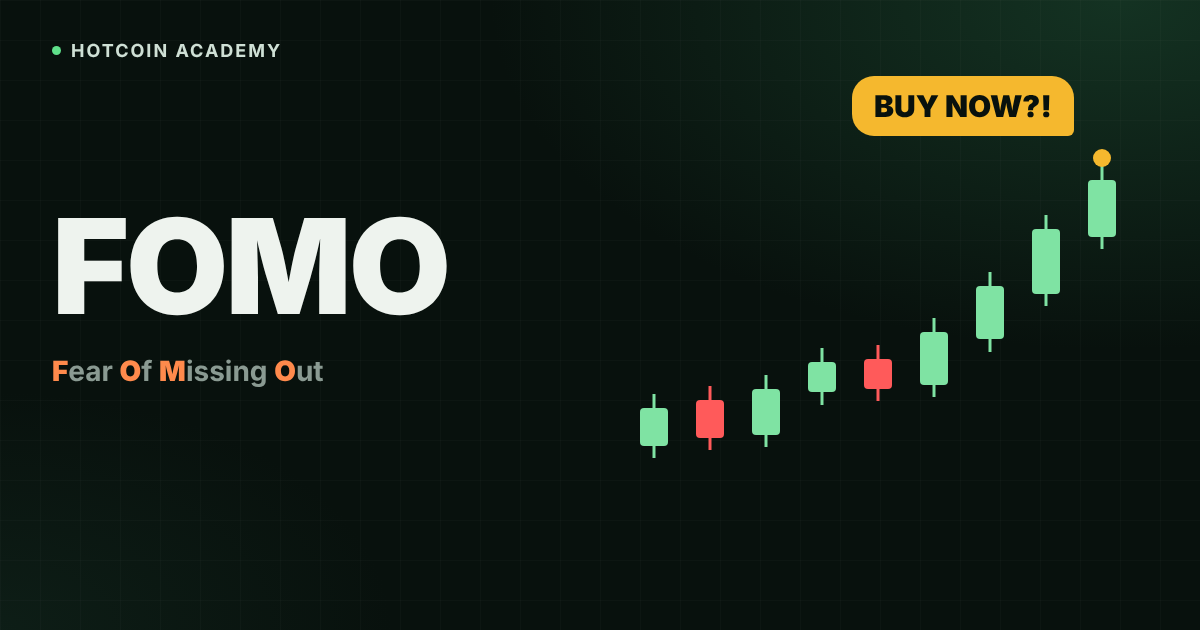
FOMO is short for Fear of Missing Out, often translated as "the fear of missing out" or "loss anxiety": the urge to chase a rally out of fear of missing out. It is not a technical indicator, and certainly not a buy or sell signal.
The same chat often includes FUD, LFG, and HODL. They are all expressions of emotion and stance. The key to understanding FOMO is recognizing when it is pushing you to place an order, and returning to your own position and plan.
Key Takeaways
- FOMO means Fear of Missing Out: when you see a sharp rally or others making profits, anxiety makes you want to follow immediately.
- Typical crypto scenarios are chasing highs, adding leverage, and skipping verification; it describes emotion and cannot be used alone as an entry basis.
- FUD, LFG, and HODL correspond to panic and doubt, hype slogans, and long-term holding; they belong to the same cluster of emotional terms as FOMO.
- Fighting FOMO relies on preset rules: position limits, scaling in, cooling-off periods, and not being led around by profit-sharing push notifications.
What Does FOMO Mean?
FOMO is short for Fear of Missing Out, literally "the fear of missing out." In crypto communities and trading contexts, it refers to: you have not entered yet (or your position is light), but you watch the price rise and community sentiment heat up, and an urgency appears in your mind that "if I miss it, there will never be another chance," so you shorten decision time and relax your original risk standards.
It can also be used as a verb, for example "I FOMO'd in," which usually means chasing a high driven by emotion rather than buying according to a plan. FOMO itself does not tell you where the price will go next; it only describes your current psychological state.
FOMO does not only happen before buying. People who have already sold may watch the price continue to rise and buy back at a higher price out of regret; those holding positions may fear missing a higher point and delay taking profit according to plan.
How Does FOMO Happen in Crypto?
Common triggers are simple: vertical green candles, gainers lists, friends or influencers sharing profits, copy like "last chance to get on board," new coin listings, or event countdowns. These signals make people feel the opportunity is fleeting, so they skip verification and place orders without exit conditions.
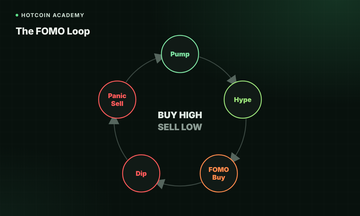
Consequences are often: entering only after the market has already moved a leg, with less upside and more downside; when the market turns, it is easy to panic exit, forming buy-high-sell-low behavior. What you see in communities is mostly profit screenshots; few losing traders post theirs, which also amplifies the illusion that "everyone is making money."
The first hour of a new coin listing, vertical moves in meme coins, and temporarily adding leverage on futures are all high-incidence FOMO windows—not that these scenarios must never be participated in, but that once emotion rises, people are more likely to forget verification and exit plans.
Why Is FOMO Especially Dangerous?
The danger is not in "being interested in the market," but in how it systematically damages decision quality. There are three common ways:
- Entering too late: What you buy is often the tail end of someone else's excitement.
- Risk control being temporarily rewritten: Position limits, leverage, and stop-losses you set in advance get opened up under the thought "if I don't get on now, it will be too late."
- Skipping safety checks: Not checking contracts, not checking liquidity, and not identifying fake markets are exactly why many people fall into scams when hype is at its peak.
FOMO is also often used to create fake heat—pump-and-dump or Rug Pull-style tactics rely on "everyone is making money" to push retail investors into taking the bag. The more urgent the feeling of "I can't miss this," the more you should stop first and verify sources and your own rules.
What Is the Difference Between FOMO, FUD, LFG, and HODL?
To understand at a glance, it is best to compare FOMO within the same group of emotional terms. You can also refer to the Top 10 Crypto Terms Every Beginner Should Know:
| Abbreviation | Full Form (Common) | One-Line Meaning | Typical Scenario |
|---|---|---|---|
| FOMO | Fear of Missing Out | Wanting to chase out of fear of missing out | Sharp rallies, profit sharing, rotating hot topics |
| FUD | Fear, Uncertainty, Doubt | Panic and questioning the narrative | Negative news, unverified rumors |
| LFG | Let’s Freaking/F***ing Go | Let's go, charge | Listings, breakouts, events kicking off |
| HODL | Hold (folk: Hold On for Dear Life) | Hold for the long term | Volatility, bear-market mindset reminders |
FOMO pushes you to "buy now"; FUD pushes you to "be afraid now"; LFG is a hype call; HODL leans toward holding discipline. When the market is hot and LFG floods the screen, FOMO is easier to ignite; when negative news spreads, you need to distinguish verifiable facts from FUD that is pushing a narrative.
How to View and Use FOMO?
The most practical approach is to "recognize triggers, slow down, and execute preset rules," rather than going all-in when you see a sharp rally. If you want to compare slogan sentiment with quantitative indicators, you can also read What Is the Crypto Market Sentiment Index?.
- First recognize physical and mental signals: Constantly refreshing charts, feeling restless, and looping "if I miss it, it's gone" in your head usually means you are already in FOMO. Pause before placing orders.
- Treat FOMO as emotion, not a signal: A sharp rally only shows short-term heat; it does not show whether valuation is reasonable, nor does it mean "it will definitely keep rising."
- Set guardrails before looking at the market: Write down your buy range, position limit, and stop-loss/take-profit; if conditions are not met, do not act. Single-trade position size should be capped in advance to avoid "adding more once it takes off." Rules written before placing orders are what can withstand the urging feeling of FOMO in the moment.
- Slow down with scaling in and cooling-off periods: You can split the planned position into 2–3 batches, or set a minimum wait from "seeing the news" to "placing the order" to verify announcements and sources, rather than chasing vertical candles.
- Reduce stimuli and beware of scam language: Turn down profit-sharing push notifications; stay skeptical of "guaranteed riches" and "last spot." For slogans and fake-market tactics, refer to the Complete Guide to Crypto Scams.
Common Misconceptions
- "Others making money is a reason I should buy immediately": That is social proof, not a research conclusion.
- "FOMO is just greed": It is closer to fear-based urgency; even when you rationally know the risks, anxiety can still push you.
- "If I miss this wave, there will never be another chance": The crypto market keeps trading; what is truly scarce is executable risk control, not a single candle.
- "Only by adding leverage can I catch up with FOMO": Amplifying leverage under emotional drive also amplifies drawdown and liquidation risk.
- "Buying when it rises is FOMO": The difference is whether there is a pre-written reason, position, and exit condition; buying according to plan is a decision, while buying only because it rose and finding reasons afterward is FOMO.
FAQ
Q1: What does FOMO mean? FOMO is short for Fear of Missing Out. In crypto, it refers to the psychology of impulsively chasing highs or hastily following in because you fear missing a rally or others' profits.
Q2: Is FOMO a buy signal? FOMO is not a buy signal. FOMO only describes anxiety and urgency and does not constitute trading advice. A more prudent approach is to check position limits, exit plans, and information sources, rather than heavily chasing a high all at once.
Q3: What is the difference between FOMO and FUD? FOMO is fear of missing a rally and tends to lead to chasing highs; FUD is fear, uncertainty, and doubt and tends to lead to panic selling or avoidance. Both are emotional states, and both require verifying facts before acting.
Q4: What is JOMO? Is it the opposite of FOMO? JOMO (Joy of Missing Out) means "the joy of missing out": consciously letting go of hype opportunities that do not fit your plan and feeling grounded about it. It is often used to contrast with FOMO, reminding people that discipline matters more than chasing hot topics.
Q5: How can I tell if I am in FOMO? If you change your plan mainly because of others' profit screenshots or "it's too late," want to add leverage, or refuse to set a stop-loss, you are very close to FOMO. Leave the market page for a few minutes, return to the rules on paper, and then decide whether to trade.
Conclusion
Understanding what FOMO means is about recognizing when "fear of missing out" is making decisions for you. Like FUD, LFG, and HODL, it is an emotional term: it can be a thermometer, but not an automatic buy/sell switch. Writing down position size, scaling in, and cooling-off periods is more useful than regretting chasing a high afterward.
To compare market sentiment and capital flows every day, you can read the Daily Crypto Market Report.
Risk warning: This article is for educational and informational purposes only and does not constitute any investment advice. The abbreviations in this article reflect community sentiment and language habits and cannot be used as a basis for buying, selling, or adding leverage. Crypto asset prices are highly volatile and may lead to loss of principal. Please make decisions based on your own risk tolerance and consult a professional advisor when necessary.
Recommended
View more