
Ethereum vs Solana: How to Compare Speed, Fees, and Ecosystem
Ethereum and Solana can both transfer funds, trade tokens, and run on-chain applications. But in practice, your concerns may come down to a few questions: How long will this take? How much will the fee be? Which chain does the app I want to use support?
There is another easy-to-miss point when comparing: Ethereum Mainnet and its Layer 2s also differ in fees and user experience. Comparing a single high gas fee on Ethereum Mainnet with an ordinary Solana transfer makes it hard to see the full picture.
If you are not yet familiar with the basic concepts, start with: Ethereum Deep Dive: The Technical Architecture of the World Computer, Crypto Asset Guide: From Token Categories to Valuation Methods, and What Is Blockchain: Technical Principles and Core Concepts.
Key Takeaways
- Ethereum Mainnet and Solana are different networks; Ethereum Layer 2s must also be identified separately.
- A wallet showing a submitted transaction does not mean the transaction is confirmed or the platform has credited it.
- Fees depend on the type of operation, network demand, and settings; you cannot apply one number over the long term.
- When choosing a network, first check asset, application, and recipient support, then compare costs.
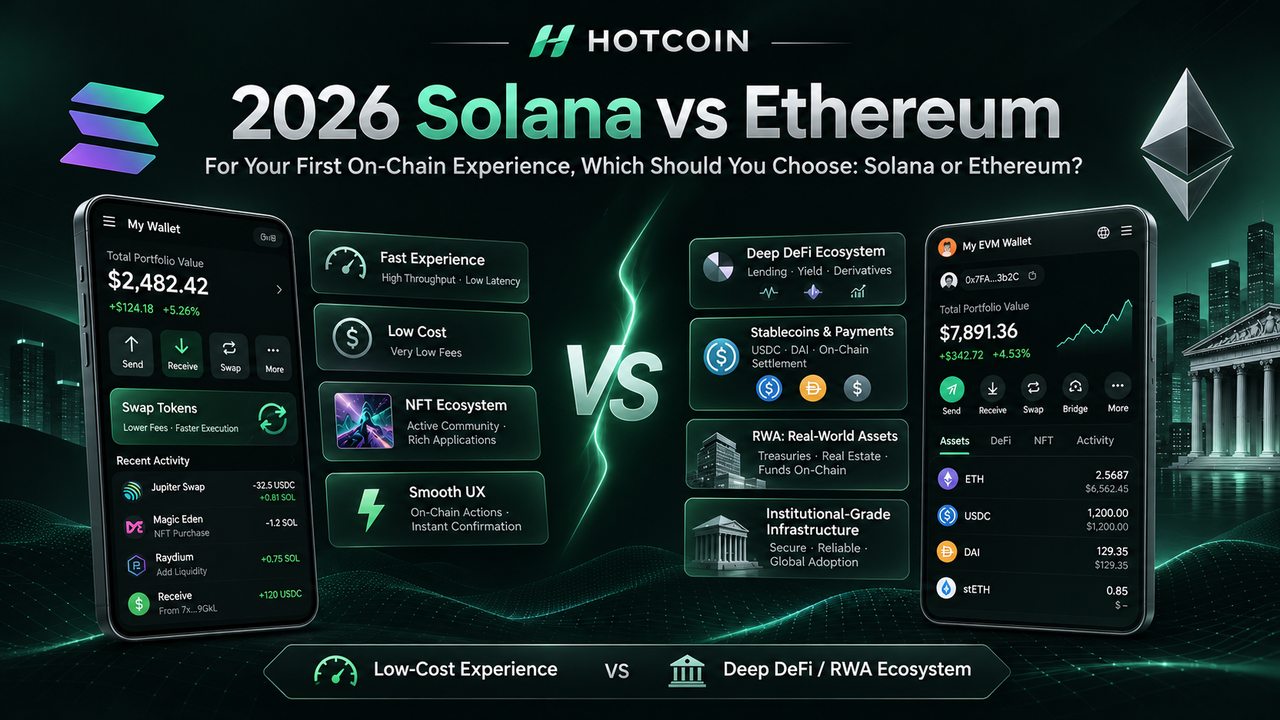
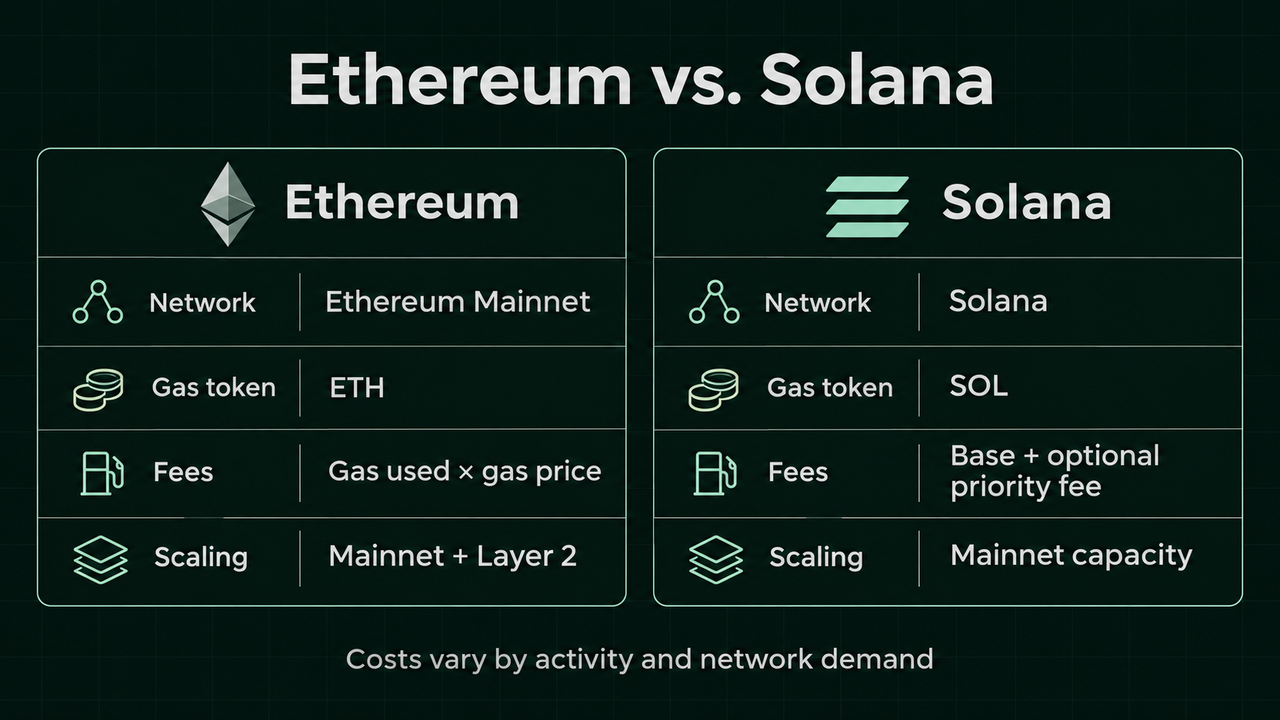
Start with the differences: Ethereum vs Solana comparison table
| Comparison item | Ethereum Mainnet | Solana |
|---|---|---|
| Native asset | ETH | SOL |
| Common on-chain fee asset | ETH | SOL |
| Fee structure | Gas used and per-unit gas price, etc. | Base fee plus optional priority fee |
| Common activities | Transfers, swaps, lending, NFTs, other applications | Transfers, swaps, lending, NFTs, other applications |
| Scaling approach | Ecosystem widely uses Layer 2 to offload transactions | Improving mainnet processing capacity is a key direction |
| What beginners should confirm first | Whether to use Mainnet or which L2 | Whether to use the Solana network and the corresponding assets |
Neither chain can only do the few things listed in the table. For ordinary users, what matters more is whether the assets, applications, and wallets you want to use are on that network.
To build up the basics first, you can read Hotcoin's Ethereum Deep Dive and Solana: A High-Performance Blockchain, then come back to compare.
Which is faster? First look at which step you are waiting for
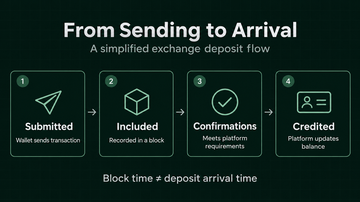
A transfer does not end all at once after you press send. You may encounter the following in sequence:
- The wallet has sent the transaction.
- The network has processed the transaction.
- The transaction has reached the confirmation level required by the recipient.
- The trading platform has completed its accounting.
This also explains why sometimes a block explorer already shows the transaction while the platform balance has not yet updated.
Take Solana as an example: official documentation distinguishes states such as processed, confirmed, and finalized. They represent different levels of confirmation and cannot all be translated as the same "completed."
Therefore, when comparing speed, first ask: Are you comparing block production, transaction confirmation, or exchange deposit crediting? If the objects being measured are different, putting the numbers together does not mean much.
How are fees charged? The same transfer can still cost different amounts
On Ethereum Mainnet, gas can be understood as the computational work required to execute an operation. A simple ETH transfer and a complex contract operation require different amounts of work, so the fees may naturally differ; when network demand rises, the price per unit of gas may also increase.
Solana's transaction fee includes a base fee and an optional priority fee. Priority fees help a transaction gain processing opportunities amid competition, so the base fee cannot be directly treated as the full cost of every transaction.
For a practical comparison, look at it this way:
| What you plan to do | What you should check |
|---|---|
| Transfer native coin | The network fee shown by the wallet |
| Transfer tokens | The network fee and whether additional costs such as account creation are involved |
| Swap on a DEX | Network fee, application fee, price impact, and slippage |
| Withdraw from an exchange | The withdrawal fee listed by the platform and available networks |
| Cross-chain | Source chain fee, cross-chain service fee, and recipient requirements |
On-chain fees, exchange trading fees, and withdrawal fees are different items. When checking costs on Hotcoin, you should also verify them separately according to the operation you are performing. To understand fee models such as Maker and Taker, see Crypto Trading Fees Explained.
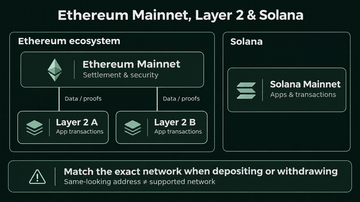
Why can't you leave out Layer 2 when comparing Ethereum?
Layer 2, often written as L2, is a scaling approach that moves part of transaction processing to another layer and then connects it to Ethereum Mainnet. The most direct impact for users is that some operations can be completed at lower cost.
However, L2 is not a single unified network. Different L2s differ in assets, applications, fees, and cross-chain arrangements.
For example, if you select a certain L2 on an exchange deposit page, you must also select the same supported network when sending. An address that looks the same does not mean the platform will credit it for you on all networks.
When comparing Ethereum and Solana, make the question more specific:
- Are you comparing Ethereum Mainnet or a certain L2?
- Are you transferring funds or using similar types of applications?
- Do you need to cross-chain first, and have you included the cross-chain cost?
This is more likely to yield a useful answer than simply asking "which one is always cheaper."
How do ecosystem differences affect ordinary users?
The ecosystem is not just the number of applications. What really affects the experience is usually whether what you need is there:
| Usage need | The actual question to confirm |
|---|---|
| Swapping tokens | Is there a target trading pair? Is liquidity deep enough? |
| Using stablecoins | Is it natively issued by the issuer or a cross-chain asset? |
| Lending | What are the collateral rules, interest rates, and liquidation conditions? |
| Using a wallet | Can it connect to applications, display assets, and interpret transactions? |
| Deposits and withdrawals | Does the platform support this asset and network combination? |
More overall funds on a chain does not mean every trading pair has better depth; a newer application does not mean it is necessarily faster or safer to use. What you need to compare is the service you will actually use.
Transfers, swaps, and using applications: how to choose?
Just transferring: first confirm the network supported by the recipient, then compare sending costs and estimated arrival time.
Frequent small transactions: include the total cost of multiple operations, and also consider deposit and cross-chain costs.
For a specific application: first see which network the application runs on, then confirm whether the wallet, assets, and fees are ready.
If you withdraw assets from Hotcoin to a personal wallet, recheck the network and address on the withdrawal page. Once the assets are in the wallet, subsequent on-chain operations usually still require the corresponding gas asset; do not prepare only the token you want to trade.
Common misconceptions
- "Ethereum gas fees are high, so all L2s are equally expensive." Fees on different networks must be viewed separately.
- "The transaction has been sent, so it has arrived." Network confirmation and platform accounting may still be needed.
- "Whichever chain is faster, all applications on that chain are better." Application security, depth, and usage limits still need to be confirmed separately.
FAQ
Q1: Is Solana always cheaper than Ethereum?
No fixed answer can cover all operations. You need to distinguish Ethereum Mainnet, L2s, operation types, and the fees at the time.
Q2: Are Ethereum L2 and Mainnet the same thing?
They are connected, but they are not deposit networks that can be mixed at will. Asset transfers and platform support need to be confirmed separately.
Q3: Can ETH be transferred directly to a Solana address?
An ordinary Ethereum transfer cannot be treated as a cross-chain transfer. Moving to another chain requires a supported platform or cross-chain service, and you need to identify the form of the received asset.
Q4: Why does the block explorer show the transaction but the platform has not credited it?
It may still be waiting for confirmation, platform processing, or deposit conditions. First check the transaction status and the platform's deposit records.
Q5: What fee assets should be prepared for each chain?
Ethereum Mainnet usually uses ETH, and Solana uses SOL; if an application offers arrangements such as fee sponsorship, check the specific rules.
Conclusion
The differences between Ethereum and Solana ultimately come down to what you want to do. Looking at the network, application, assets, and total cost together is usually more practical than chasing a single speed ranking.
Before you start, you can check the relevant assets and deposit/withdrawal networks on Hotcoin, then use Crypto Trading Fees Explained to distinguish different costs.
Risk Disclaimer: This article is for educational and informational purposes only and does not constitute any investment advice. Crypto assets involve risks such as price volatility, smart contracts, cross-chain transfers, wallet authorizations, and network operation, which may lead to loss of principal. Fees and platform rules may change; please verify the network, address, and estimated costs before operating, and make decisions based on your own risk tolerance.
Recommended
View more