What Is Dogecoin (DOGE)? Origins, Elon Musk and Investment Risks
Dogecoin often appears in trending searches because of the Shiba Inu memes and celebrity remarks, but neither of these phenomena alone explains what it is. DOGE is the native asset of the Dogecoin network, launched on December 6, 2013. It was originally created by Billy Markus and Jackson Palmer, inspired by the popular Doge meme of the time.
It is both a crypto asset that can be transferred and mined, and has long been classified as a meme coin. To understand DOGE, you should first look at its documented origins and issuance rules, then trace public figures' statements back to verifiable wording, rather than treating hype as investment logic.
Key Takeaways
- Dogecoin's official materials state that it was created by Billy Markus and Jackson Palmer in late 2013 and launched on December 6, 2013, with its visual identity drawn from the Doge meme featuring the Shiba Inu Kabosu.
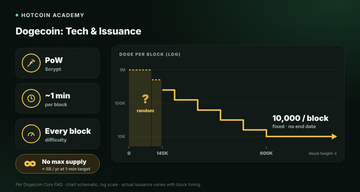
- DOGE has its own blockchain and uses proof of work. The official core documentation states that starting from block 600,000, each block carries a fixed reward of 10,000 DOGE, with no set end date for issuance.
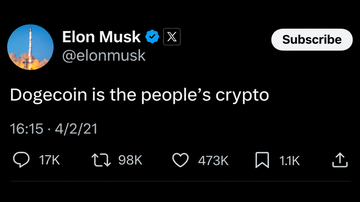
- Elon Musk has mentioned Dogecoin multiple times on public social platforms, for example posting "Dogecoin is the people's crypto" in February 2021. These statements can be verified, but they do not constitute endorsement, guarantee or buy/sell advice, nor can they alone serve as price logic.
- The high volatility, liquidity changes and sentiment-driven trading risks common to meme coins also apply to DOGE. A lower unit price does not mean lower risk.
- If you want to learn about the purchase process, use the buying guide already published on this site and rely on the rules shown on the trading page at the time. This article does not judge whether it is worth buying.
Where Dogecoin Came From
According to Dogecoin's official wiki, Billy Markus and Jackson Palmer created Dogecoin in late 2013. At the time, the two felt that cryptocurrencies were taken too seriously and wanted to build a lighter project. Jackson Palmer first set up the Dogecoin.com website, while Billy Markus handled development of the early software versions.
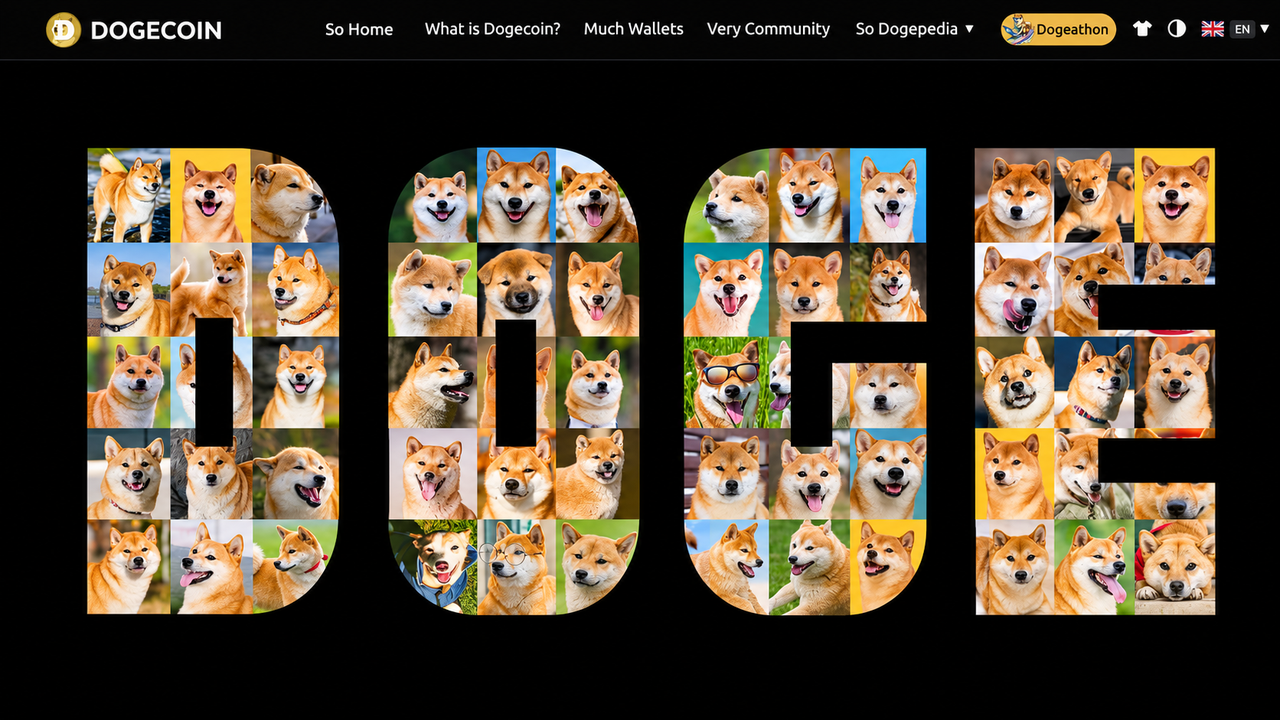
On December 6, 2013, Dogecoin officially launched. Its visual identity comes from the Doge meme formed by a 2010 photo of a Shiba Inu: the dog, named Kabosu, was adopted from a shelter in 2008 by kindergarten teacher Atsuko Satō. The official narrative treats the meme as the project's cultural origin, not a technical standard.
Official materials also note that soon after launch, the project was used for tipping in communities such as Reddit. In 2014, the two founders left development work, and the Dogecoin Core development team continued maintenance. The community also launched charitable fundraisers, such as raising Dogecoin in 2014 to fund the Jamaican bobsled team's trip to the Sochi Winter Olympics and to support clean water well projects in Kenya. These are community stories written down officially, showing that it had transfer and tipping uses early on, but they cannot be used to infer today's price or future demand.
In terms of classification, DOGE is often grouped as a meme coin because its spread is indeed built on memes and community culture; at the same time, it is a native coin on an independent chain, not a fungible token on some smart contract. For the definition of meme coins, reasons for volatility and how to verify them, see What Is a Meme Coin.

How Dogecoin's Technology and Issuance Rules Work
Dogecoin uses proof of work, with a hash algorithm that is a simplified variant of scrypt. The official core documentation states that the target block time is about 1 minute, and difficulty is adjusted after each block.
The issuance rules have been adjusted over time. Early block rewards in some ranges had a random cap; starting from block 145,000, rewards became fixed and the difficulty algorithm was adjusted. Starting from block 600,000, each block reward is fixed at 10,000 DOGE, no longer decreasing by range, and the protocol does not specify an end date for issuance.
This means Dogecoin does not have a total supply cap like some assets. Official explanations treat the annual new issuance as ongoing payment to miners to maintain network security. With a target block time of 1 minute, annual new issuance is on the order of nearly 5 billion coins; actual issuance varies with real block intervals, so a single estimate should not be written as a fixed "guaranteed annual increase" figure.
No total supply cap does not mean "issuance at will." The new amount per block is a fixed reward specified by the protocol. As existing supply grows, the same number of new coins issued each year will gradually decline as a proportion. This is a feature of the issuance structure, not a guarantee that the price will rise or fall.
When transferring, DOGE uses its own addresses and network. If withdrawing from a trading platform, you must select the network corresponding to DOGE and verify the receiving address. Mapped assets with the same name on other chains are not the same as native DOGE.
When identifying official information, prioritize the Dogecoin official website and core software documentation, rather than lookalike websites in search results or files in group chats. The official website will point to the core wallet and FAQs; when downloading a wallet or verifying its rules, follow the channels given officially. Any "official wallet" or "double exchange" link sent to you via direct message cannot replace entering through the official website yourself.
Dogecoin can be transferred, tipped and traded on trading platforms, but these uses do not mean it has stable cash flow conversion or fixed purchasing power. An active community and a long time online only show that it is known by more people; they cannot be used to infer demand and price in the next stage.
What Is Elon Musk's Relationship With Dogecoin
When talking about Dogecoin, Musk almost always shows up. He has posted DOGE memes, talked about Dogecoin on TV shows, and even replaced the blue bird on the Twitter web page with a Shiba Inu. This relationship is much discussed because every time he "plays with the meme," the trading market may also become lively.
On February 4, 2021, he posted "Dogecoin is the people's crypto" and other posts, giving the community a new slogan. Musk posted several DOGE-related tweets that day, and Reuters reported that Dogecoin rose by more than 60% at one point. A memorable phrase with a sense of community identity quickly attracted more attention after being shared. This round of price action also showed that celebrity attention can indeed bring in buyers within a short time.
But while everyone waited for him to deliver a surprise, the market may have poured cold water first. In May 2021, Musk hosted "Saturday Night Live," and DOGE holders had long been expecting what he would say. During and after the broadcast, Dogecoin fell sharply. In a comedy sketch he described DOGE with the word "hustle," which became a news focus at the time. Reuters recorded that the price fell from about 0.65 USD before the show to as low as 0.416 USD, a drop of about 36%. This move reminds people that the market trades on expectations in advance, and when the topic finally arrives, buyers may not keep chasing.
In April 2023, the Shiba Inu more directly "landed" on Twitter. After the blue bird logo on the web page was replaced with Doge, DOGE rose from about 0.077 USD to as high as 0.1046 USD, a gain of more than 35%. Musk then posted a related comic, letting the logo change event continue to develop. It is worth noting that the price had already risen before the comic was posted; what drove attention this time was the entire event. A few days later, the blue bird returned, and DOGE fell by about 8.2% at one point after related news appeared.
From these episodes, Musk is very good at making Dogecoin a topic again. From a trading perspective, his statements may attract new buyers, and may also give existing holders a chance to sell. So with the same "Musk mentions DOGE again," some see a rally, while others are taking over at the peak of hype. This is also why meme coin stories are entertaining but market moves are hard to guess. To further understand how community hype forms trading demand, see The Meme Coin Supercycle.
Volatility brought by celebrity topics can be fast. The rises and falls above use the observation windows of the respective reports at the time and cannot all be attributed to a single statement. When tracking news, also look at how far the price has already moved.
Where the Main Risks Lie When Investing in Dogecoin
DOGE has both transfer functionality and meme-spreading attributes, but when assessing risk, you should still return to price volatility, liquidity, supply structure and information sources, rather than looking only at unit price or hype.
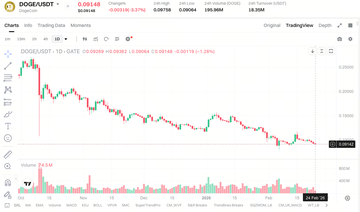
Price volatility can be large. When attention rises, buying can quickly push quotes higher; when attention falls or selling concentrates, prices can also fall quickly. A longer history does not mean future volatility will be smaller.
Liquidity is not the same as the latest traded price you see. A higher quote does not mean you can sell the quantity you want at the same price. When market depth thins, larger sells may see significant slippage.
Supply will continue to increase according to the protocol. No total supply cap is itself neither a label of advantage nor disadvantage, but when calculating valuation you must factor in continued new supply. Looking only at "one coin is cheap" will underestimate the corresponding overall scale.
Information transmission risk is also high. Same-name tokens, impersonation campaigns, screenshots and rumors can all lead people to buy the wrong asset or make decisions at the peak of emotion. Celebrity statements can be forwarded and reprocessed; following them without checking the original text further amplifies risk.
When reading related information, a very basic set of checks can reduce obvious mistakes:
- Confirm you are buying native DOGE, not a same-name token on another chain
- Look at supply rules and valuation basis together, not just how low the unit price is
- Assess whether the quantity you plan to trade could see significant slippage at current depth
- Trace celebrity statements back to verifiable original text, and do not treat forwarded screenshots as investment logic
- Decide how much loss you can bear before deciding whether to participate, rather than calculating afterward
These checks can reduce cases of buying the wrong asset or using hype as a basis, but they cannot prove that buying at a certain point is definitely safe. Unknown liquidity changes and subsequent attention usually cannot be ruled out in advance.
These risks describe how much you might lose and whether exiting will be smooth, not a conclusion about future rises or falls. The loss you can bear should be clear before buying.
If You Just Want to Learn How to Buy
The steps for buying DOGE already have a dedicated explanation on this site. You can read How to Buy DOGE to see how to prepare trading funds, identify trading pairs, choose limit orders or small test orders, and verify balances after a trade.
The actually tradable pairs, minimum order quantities, fees and withdrawal rules should all be based on the trading page at the time. The tutorial is meant to explain the process, not to recommend positions or timing.
After buying, you also need to separately decide whether to keep the asset in a trading account or withdraw it to a personal wallet. Keeping it on the platform is usually more convenient for later buying and selling, but you bear the risk of changes to platform accounts and withdrawal rules; withdrawing to a self-custody wallet means you manage the keys yourself and must reconfirm the network and address when transferring out. There is no uniform "safer" answer between the two arrangements; it depends on how you manage accounts and keys. Wherever it is kept, a low unit price does not mean position size can be ignored.
Common Misconceptions
- "The unit price is very low, so there is huge upside and less risk" — unit price must be viewed alongside supply; a cheap quote does not mean undervaluation, nor does it mean smaller volatility.
- "Musk posted about it, so the project has official endorsement" — verifiable public statements are not endorsement, guarantee or investment advice.
- "It has an independent blockchain, so it is not a meme coin and its risk is the same as other payment coins" — technical form and dissemination labels can coexist, and risk still needs separate assessment.
- "No total supply cap means it will definitely keep depreciating" — the protocol specifies a fixed block reward; the inflation ratio changes with total supply, but this is still not a price forecast.
FAQ
Q1: Who invented Dogecoin, and when did it launch?
Official records show it was created by Billy Markus and Jackson Palmer and launched on December 6, 2013, with its image from the Doge Shiba Inu meme.
Q2: Will DOGE be issued indefinitely?
Official rules do not set an end date for issuance, but starting from block 600,000, each block reward is a fixed 10,000 DOGE, not an arrangement for arbitrary issuance. The actual annual new issuance varies with block times.
Q3: Is Musk the founder or spokesperson of Dogecoin?
In public records, he is not the documented founder. He has publicly discussed DOGE many times, but these statements should not be understood as endorsement, guarantee or buy/sell advice.
Q4: Is Dogecoin suitable for long-term holding?
This article does not judge whether it is suitable to buy or hold long term. Whether you can accept large price swings, continued new supply and changes in hype needs to be judged according to your own situation.
Q5: What is most easily overlooked when buying DOGE?
A common problem is treating a same-name asset as native DOGE, or looking only at unit price without looking at supply and liquidity. When ordering and withdrawing, verify the trading pair, network and address.
Conclusion
Dogecoin is a native asset on an independent chain launched in 2013, with its cultural origin in the Doge meme, and its issuance rules specify continuous but fixed block rewards. Celebrity public statements can affect attention, but they cannot be treated as endorsement or price logic. After understanding the origins and technology, looking at volatility, liquidity and the losses you can bear will be more useful than only following trending searches.
If you want to check the purchase process step by step next, read How to Buy DOGE, and rely on the rules shown on the trading page at the time.
Risk warning: This article is for educational and informational reference only and does not constitute investment advice or asset recommendation. Dogecoin's price may fluctuate significantly, and there may be situations where it is difficult to sell at the expected price, with the risk of principal loss. Celebrity statements, community hype and historical stories cannot guarantee future performance. Please decide prudently based on your own risk tolerance, and rely on the project's official materials and the rules on the trading page at the time.
Recommended
View more