What to Do After a Crypto Scam: Emergency Loss Control and Reporting Guide
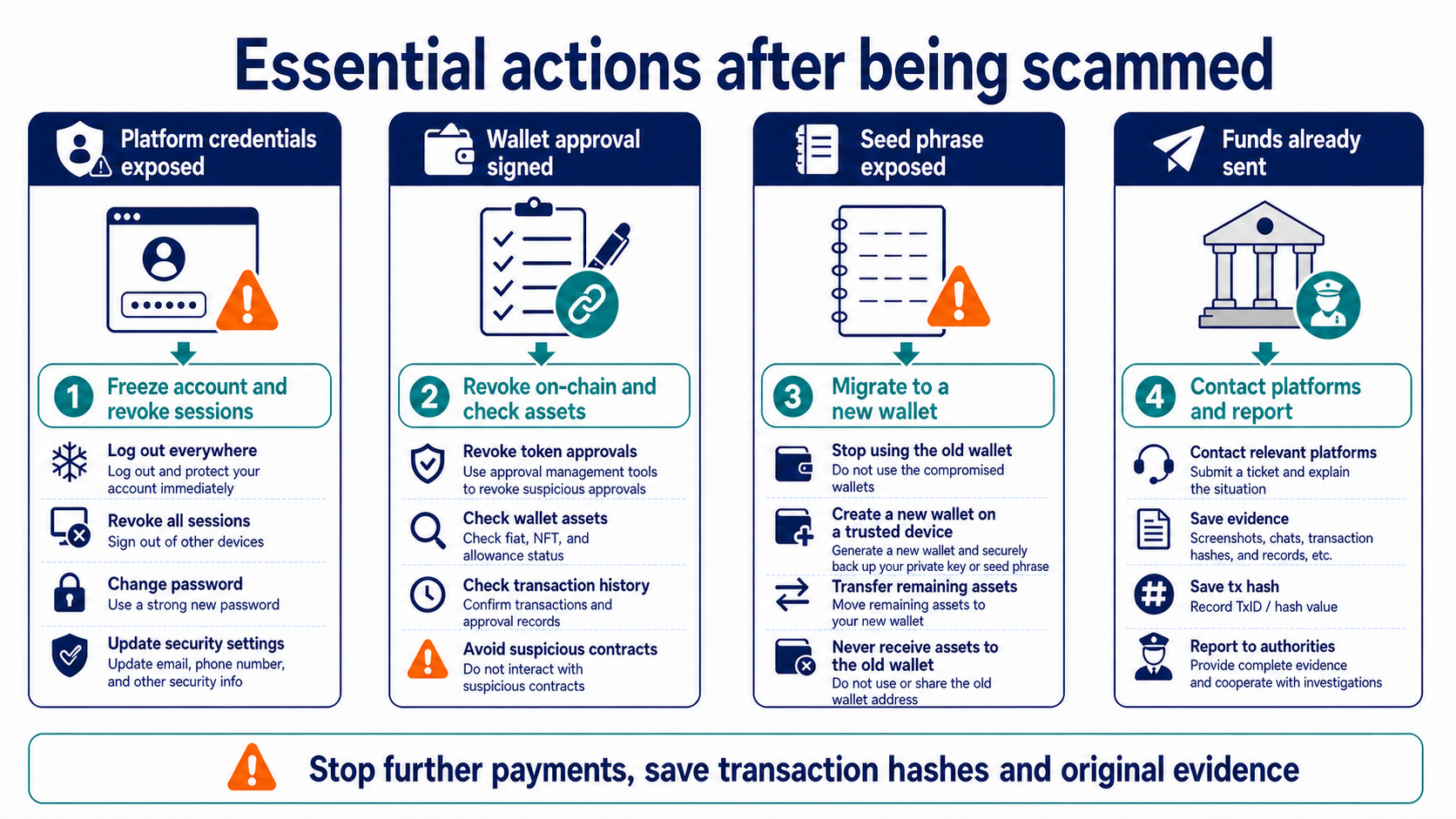
After discovering a scam, stop all payments and communication first. Then protect the remaining assets according to the type of loss, preserve evidence, and contact the relevant platforms and law enforcement agencies. On-chain transactions usually cannot be reversed, but acting quickly may still affect the chance of freezing funds.
Step 1: Stop Any Further Losses Immediately
Do not pay taxes, security deposits, unfreezing fees, or recovery fees, and do not warn the scammer that you are reporting the case. Save chats and webpages, exit any remote-control software, and use a different trusted device to secure your accounts.
If there is a risk of self-harm or a threat to personal safety, contact local emergency services and trusted family or friends first. Asset recovery measures are not a substitute for personal safety support.
Step 2: Respond According to the Compromised Access
| What happened | First action | What else to check |
|---|---|---|
| You entered a platform password or verification code | Freeze the account, change the email and platform passwords, and revoke active sessions | API keys, whitelists, orders, and withdrawals |
| You signed a token approval | Revoke the approval through a trusted tool | Executed transfers, other networks, and NFT operators |
| You exposed a seed phrase or private key | Create a new wallet on a clean device and transfer the assets | All derived accounts, cross-chain assets, and staked positions |
| You transferred funds to the scammer | Contact the sending platform, receiving platform, and law enforcement | Stablecoin issuers, address labels, and subsequent fund movements |
If the device may be infected, do not create the new wallet on that device. After preserving necessary evidence, disconnect it from the internet, reinstall the system if appropriate, and rebuild access to your email, password manager, and authenticator.
Step 3: Build an Evidence Package
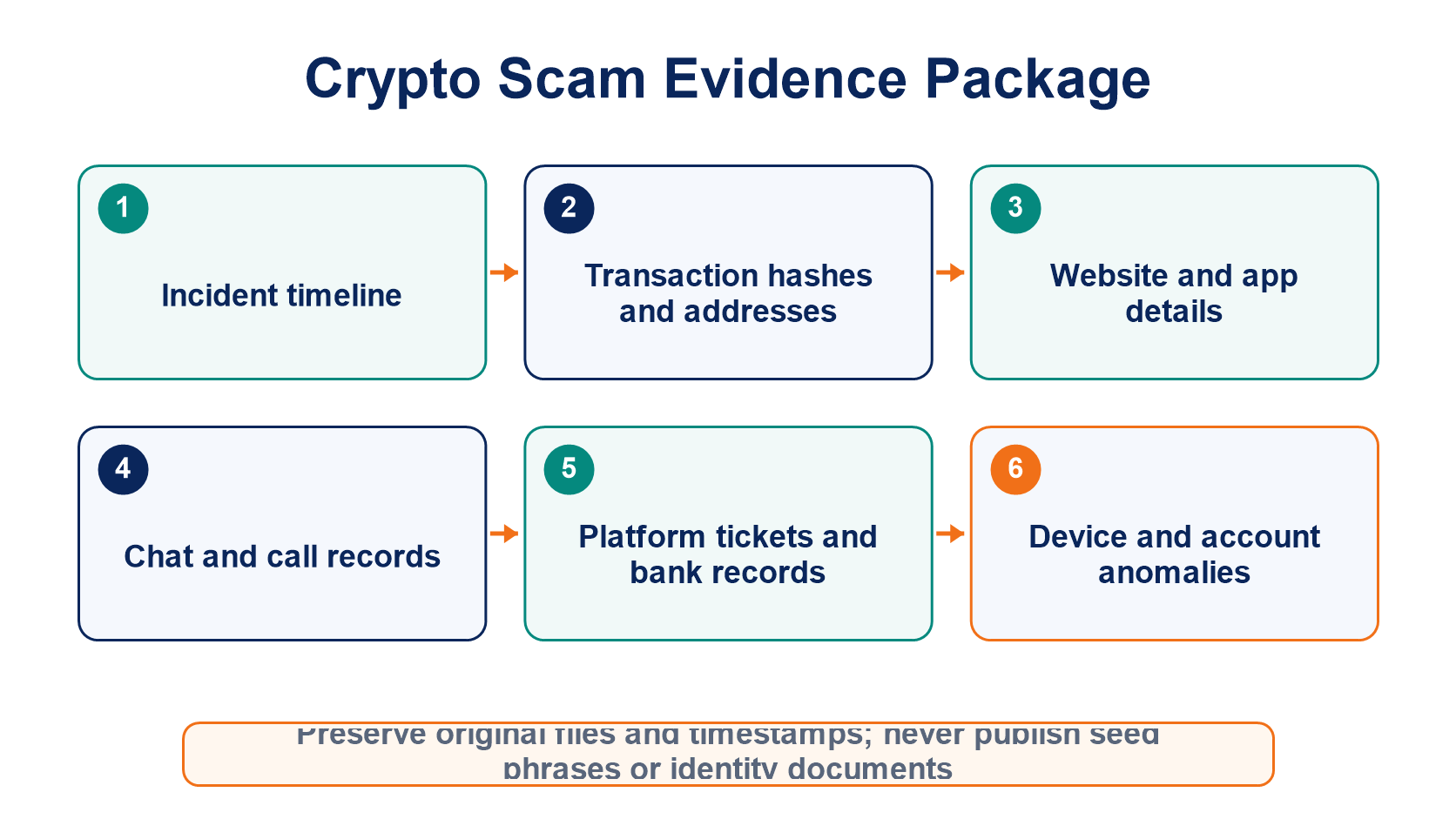
Record a timeline of the incident, every transaction hash, the blockchain, asset, amount, sending address, and receiving address. Save the complete website URL, app name and installation source, chat accounts, phone numbers, email addresses, advertisements, and support tickets.
Preserve exported files in their original formats with timestamps and metadata instead of keeping only selected screenshots. Never expose an ID document, recovery code, seed phrase, or full account information in a public post.
Step 4: Which Organizations Should You Contact?
Notify the security or compliance team of the sending exchange first, including the scam type, transaction hash, and time. If the funds entered another exchange, law enforcement may be able to send that platform a formal request for assistance or a freeze.
Some stablecoin issuers can freeze addresses, but the scope, evidence requirements, and legal process depend on their policies. An individual request does not guarantee success. Report the incident promptly to local police, an anti-fraud center, or a cybercrime reporting channel, and obtain a case or report number.
Wallet developers and blockchain networks generally cannot reverse confirmed transactions. Treat anyone claiming to offer hacking retaliation or an on-chain rollback in exchange for an upfront fee as high risk.
Step 5: Prevent Secondary Scams
Victim information may be reused for further fraud. Do not trust unsolicited lawyers, hackers, regulators, or asset recovery companies. Independently verify the organization, licenses, and contact details, then call back through an official channel.
If wallet keys were exposed, scammers may wait for future deposits or assets to unlock. Do not use the old address to receive funds after migrating, and notify anyone who may still send payments to it.
For wallet theft response steps, read Emergency Response After Crypto Assets Are Stolen. For a broader overview, return to the Complete Guide to Crypto Scams.
Frequently Asked Questions
Must I Confirm the Scammer's Real Identity Before Filing a Report?
No. Submit the accounts, addresses, transactions, and communications you currently have. The platforms and law enforcement agencies can investigate further.
Can I Keep Using the Same Wallet After Deleting the Malicious App?
You cannot safely assume so. If the seed phrase, private key, or screen contents may have been exposed, migrate the assets to a completely new wallet and clean the device.
Can a Blockchain Explorer Freeze the Scammer's Address?
No. A blockchain explorer mainly displays on-chain data. Freezing capability depends on the token contract, platform, and legal process.
Is a Recovery Service Trustworthy If It Charges Only After Success?
Its payment model alone is not proof. You must still verify the entity, credentials, contract, data access scope, and genuine case history, and remain alert to requests for private keys or additional transfers.
Recommended
View more