
What is an EIP?
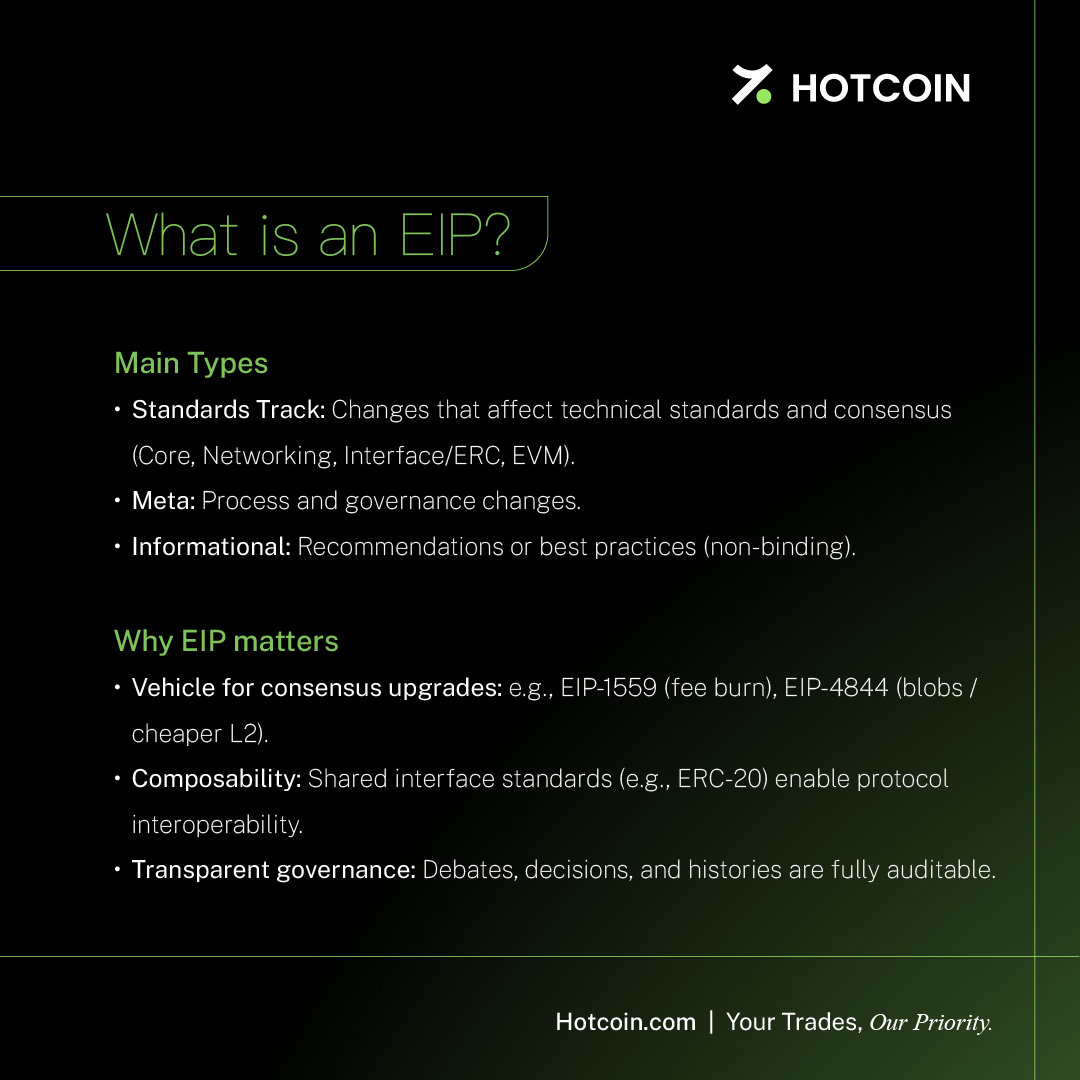
An EIP (Ethereum Improvement Proposal) is a public, standardized document that proposes changes to Ethereum’s protocol, interfaces, or processes. The workflow—defined originally in EIP-1—turns ideas into implementable, reviewable upgrades.
Main Types
Standards Track: Changes that affect technical standards and consensus (Core, Networking, Interface/ERC, EVM).
Meta: Process and governance changes.
Informational: Recommendations or best practices (non-binding).
Popular ERCs (e.g., ERC-20, ERC-721) are a subcategory under Interface/ERC.
EIP Lifecycle
The Ethereum Improvement Proposal (EIP) process follows a structured lifecycle:
Idea → Draft → Review → Last Call → Final/Active (or Withdrawn/Abandoned)
Throughout this process, proposals undergo rigorous review and community coordination, including:
GitHub pull request discussions
Ethereum Magicians forum debates
Feedback from client teams
Testnet trials and simulations
Alignment via AllCoreDevs meetings before mainnet activation
This collaborative, transparent process ensures Ethereum upgrades are carefully vetted and technically sound before going live.
Why EIP matters
Vehicle for Protocol Upgrades
EIPs serve as the formal pathway for Ethereum’s most important technical changes, such as:EIP-1559: Introduced fee burning, transforming ETH’s monetary policy
EIP-4844: Enabled blob transactions, reducing Layer 2 costs and improving scalability
Enabling Composability
EIPs define shared interface standards (e.g., ERC-20, ERC-721) that allow seamless interoperability across protocols and applications, powering Ethereum’s modular ecosystem.Transparent Governance
Every EIP is discussed, debated, and documented in public forums. The process is fully auditable, fostering trust and collective decision-making in Ethereum’s open development model.
How to participate
Read existing EIPs, join forum/repo discussions, submit drafts, and help with testnets and client reviews. EIPs let anyone propose auditable, actionable improvements to Ethereum’s future.
Recommended
View more



Service@hotcoin.com
Product@hotcoin.com
Business@hotcoin.com
Casecn@hotcoin.com