What is Beam Chain?
At the Devcon conference, Ethereum Foundation researcher Justin Drake proposed a consensus layer upgrade plan named “Beam Chain”, also known as Ethereum 3.0. This proposal aims to significantly upgrade the existing Beacon Chain to improve the performance, security, and sustainability of the Ethereum network.
Main Objectives
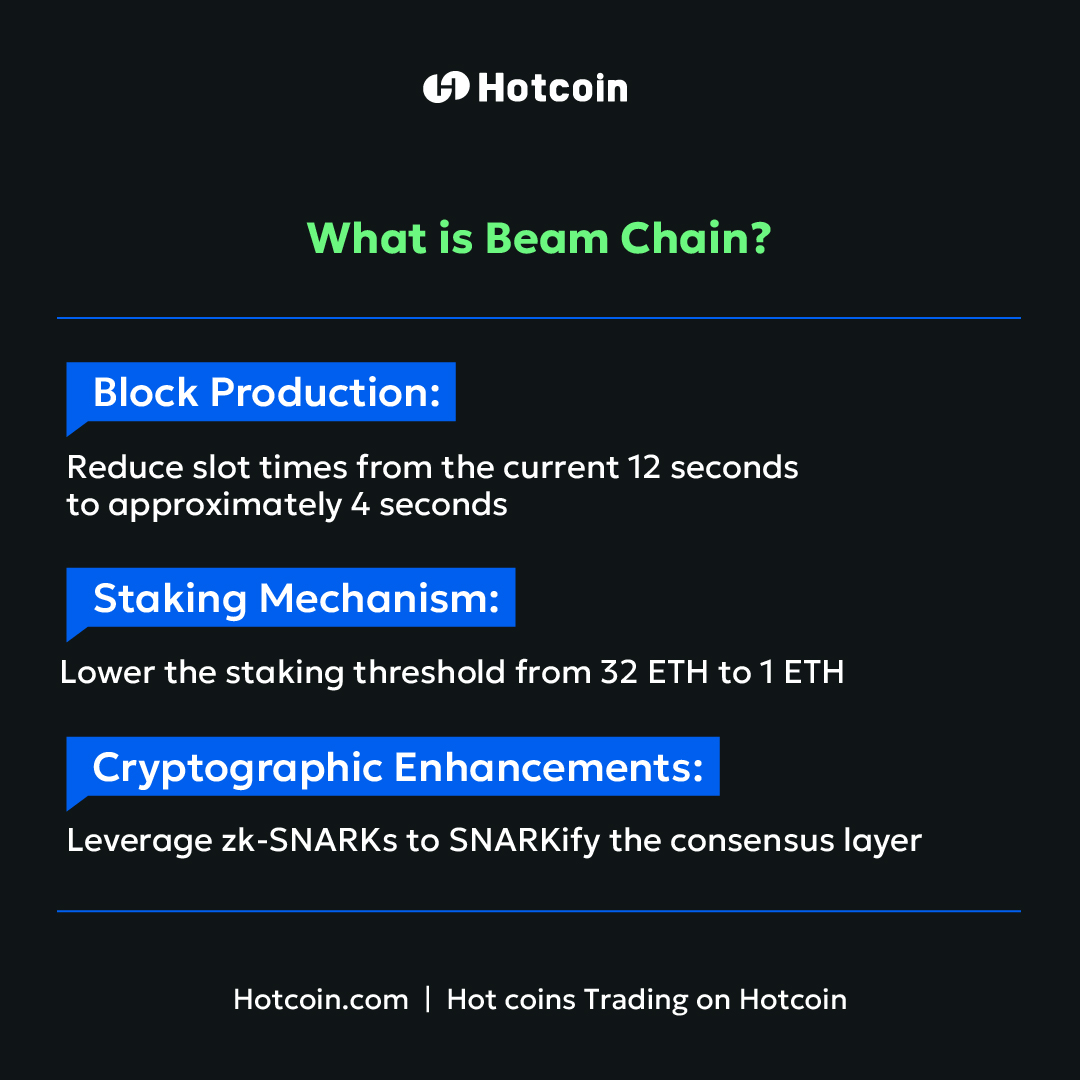
Block Production: Introduce inclusion lists to enhance censorship resistance.Implement Attester Proposer Separation (APS) to decouple block proposers from validators.Reduce slot times from the current 12 seconds to approximately 4 seconds, thereby increasing transaction throughput.
Staking Mechanism: Lower the staking threshold from 32 ETH to 1 ETH, encouraging more participants to become validators and enhancing the network’s decentralization.
Cryptographic Enhancements: Leverage zero-knowledge proof technology (zk-SNARKs) to SNARKify the consensus layer, improving both security and efficiency. Prepare the network to mitigate potential threats posed by future quantum computing advancements.
Implementation Plan
The development plan for Beam Chain is divided into the following stages:
2025: Drafting technical specifications.
2026: Starting development work.
2027: Conducting extensive testing.
Beam Chain is a critical proposal for the future development of Ethereum, aiming to comprehensively upgrade the consensus layer to enhance the network's performance, security, and decentralization. It is expected to launch as early as 2030.
Recommended
View more