
What Are Liquidators?
In decentralized finance (DeFi), liquidators are participants responsible for monitoring and executing liquidation processes to ensure the security and stability of lending protocols. DeFi platforms like Aave and Compound allow users to borrow funds using crypto assets as collateral, requiring the collateral’s value to exceed the loan amount by a specific collateralization ratio. When market volatility causes the collateral’s value to drop below the protocol’s liquidation threshold, liquidators step in to facilitate liquidation.
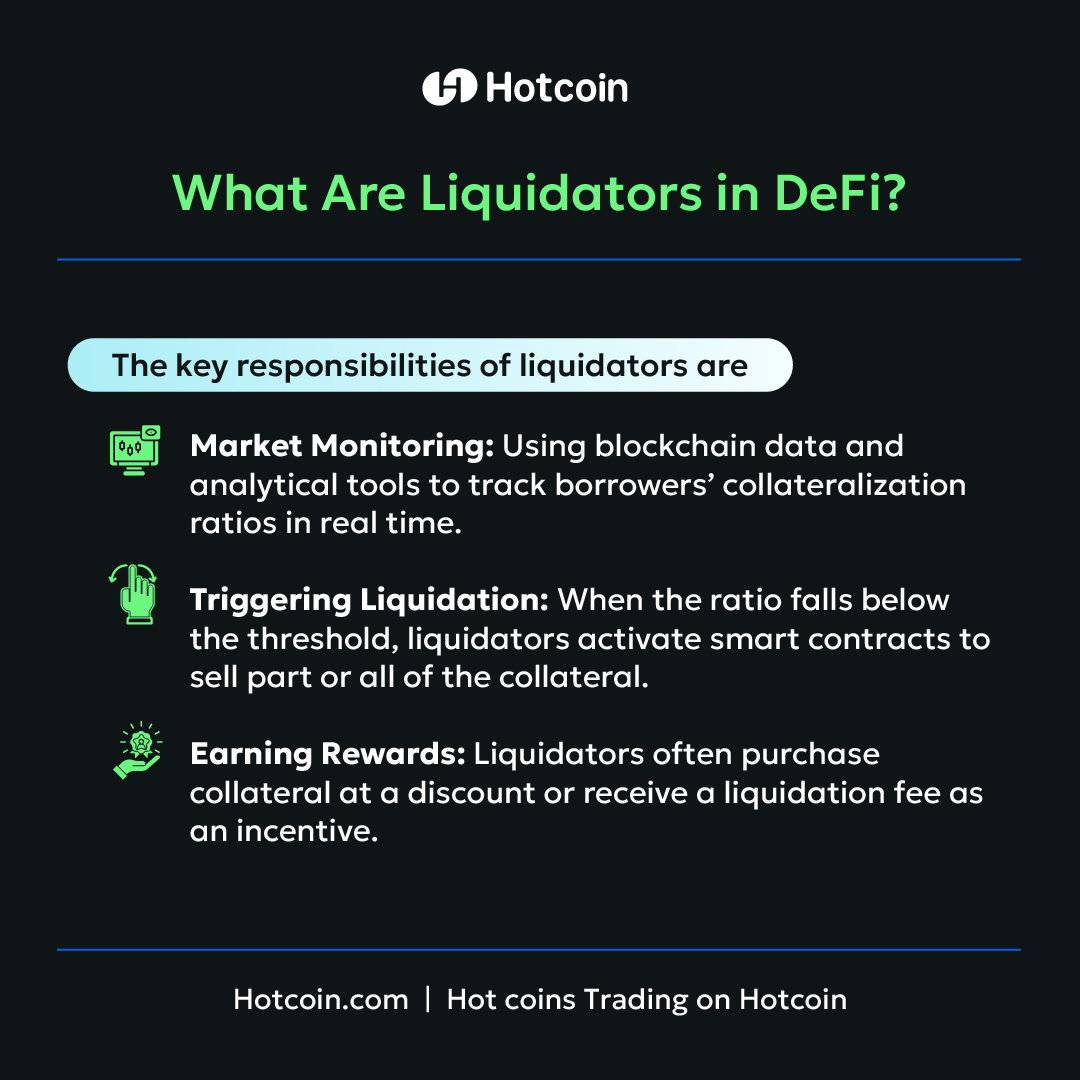
The key responsibilities of liquidators are:
Market Monitoring: Using blockchain data and analytical tools to track borrowers’ collateralization ratios in real time.
Triggering Liquidation: When the ratio falls below the threshold, liquidators activate smart contracts to sell part or all of the collateral.
Earning Rewards: Liquidators often purchase collateral at a discount or receive a liquidation fee as an incentive.
For example, if a user borrows $50 in stablecoins with $100 worth of ETH as collateral and the liquidation threshold is 150%, liquidation occurs if the ETH price drops to $70, which is below $75 ($50 × 150%). In this case, the liquidator sells the ETH, repays the debt, and earns a profit from the difference.
Liquidators serve as both risk managers and arbitrageurs. They help prevent bad debt accumulation, ensuring the platform remains solvent. However, liquidations can also exacerbate market volatility, particularly during sharp price drops, where mass liquidations may trigger cascading effects across the market.
Đề xuất đọc
Xem thêm



Service@hotcoin.com
Product@hotcoin.com
Business@hotcoin.com
Casecn@hotcoin.com