
Quickly Understand the Multi-Signature Verification Mechanism
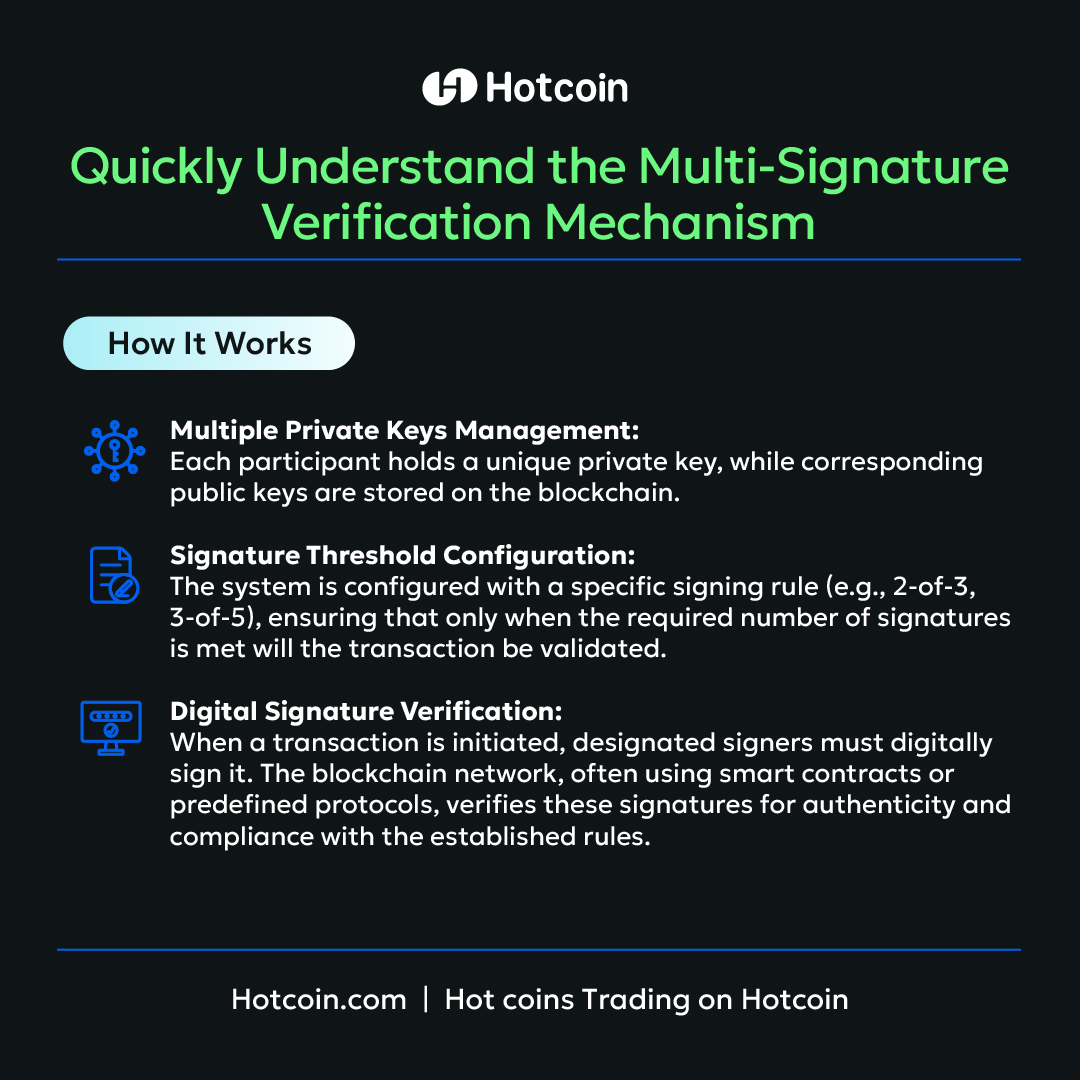
In the blockchain industry, the multi-signature (multi-sig) verification mechanism is a security technique that requires multiple signatures to authorize a transaction. By leveraging public key cryptography and digital signatures, this mechanism distributes risk among multiple participants, significantly enhancing the security of digital assets.
Definition
The multi-signature (multi-sig) mechanism mandates that a transaction must be approved by a predetermined number of independent signers before it can be executed. Typically, it operates under an "m-of-n" model, meaning that out of n authorized keys, at least m valid signatures are required.
How It Works
Multiple Private Keys Management: Each participant holds a unique private key, while corresponding public keys are stored on the blockchain.
Signature Threshold Configuration: The system is configured with a specific signing rule (e.g., 2-of-3, 3-of-5), ensuring that only when the required number of signatures is met will the transaction be validated.
Digital Signature Verification: When a transaction is initiated, designated signers must digitally sign it. The blockchain network, often using smart contracts or predefined protocols, verifies these signatures for authenticity and compliance with the established rules.
Applications
Digital Wallets: Multi-signature wallets offer higher security than traditional single-key wallets, protecting user assets against unauthorized access.
Institutional Asset Management: Organizations use multi-sig mechanisms to ensure large transactions require approval from multiple stakeholders, minimizing the risk of fraud or unauthorized transfers.
Smart Contracts and DeFi: In decentralized applications, multi-sig verification enhances transaction security and increases trust in automated contract execution.
Main Advantages
Enhanced Security: No single key can fully authorize a transaction, reducing the risk of asset theft or loss due to a compromised key.
Risk Diversification: The requirement for multiple approvals mitigates the risk of fraud or errors from a single participant.
Flexible Configuration: Signing thresholds can be customized for various use cases, including personal wallets, institutional fund management, and decentralized finance (DeFi) platforms.
Challenges
Coordination and Efficiency: Requiring multiple signatures may slow down transaction confirmations, affecting operational efficiency.
Technical Complexity: Deploying and maintaining a multi-sig system demands advanced technical expertise and robust risk management strategies.
The multi-signature verification mechanism is a critical security feature in blockchain technology. By requiring multiple approvals for transactions, it significantly strengthens the security and reliability of digital asset management. While challenges such as coordination and technical complexity remain, multi-sig continues to gain adoption as an essential tool for safeguarding assets in an increasingly decentralized world.
Đề xuất đọc
Xem thêm


Service@hotcoin.com
Product@hotcoin.com
Business@hotcoin.com
Casecn@hotcoin.com