Fake Tokens and Honeypot Scams: The Trap That Prevents You from Selling
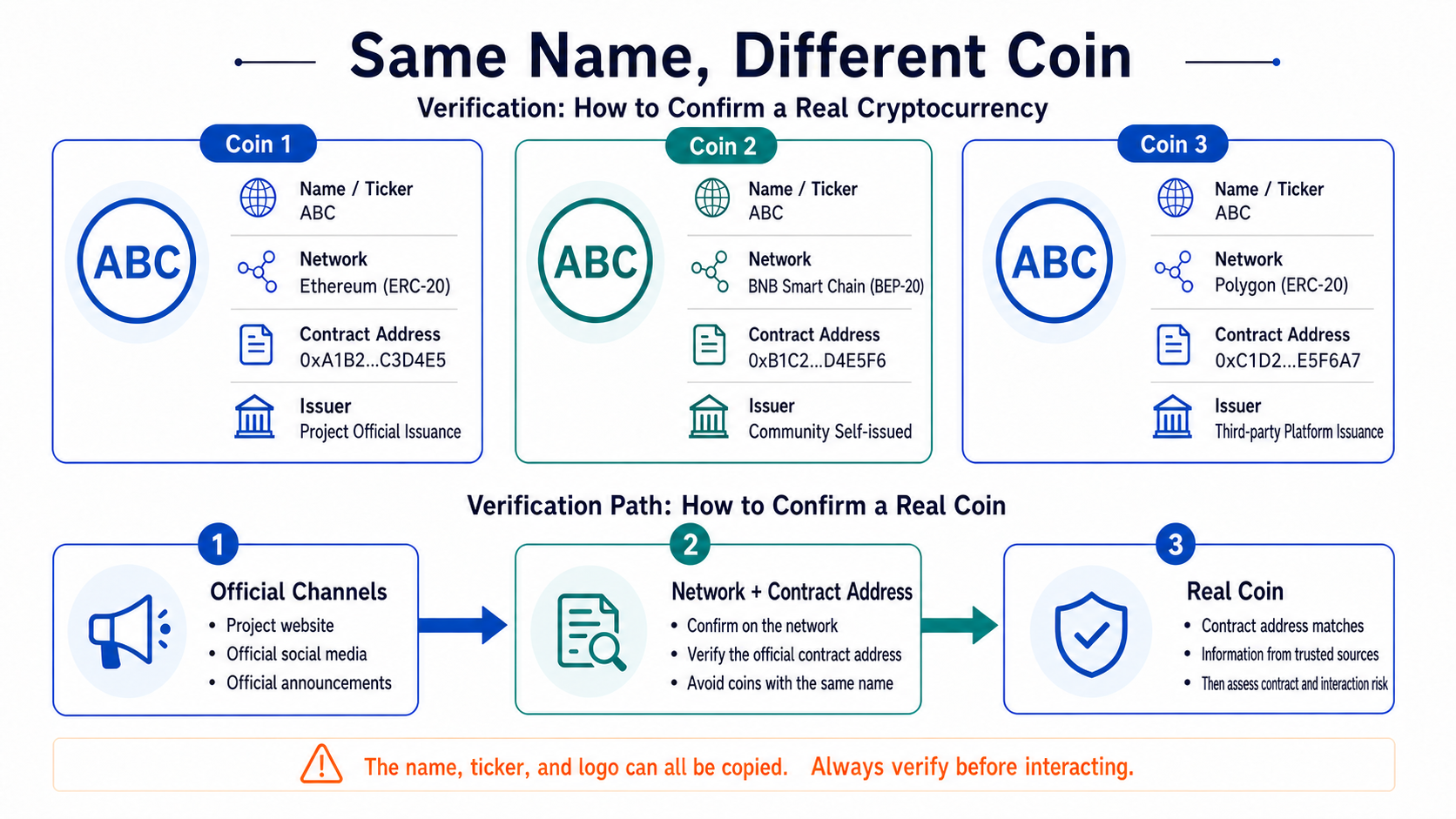
Fake tokens copy the names and logos of legitimate assets, while honeypot scams let users buy but prevent them from selling normally. An asset's identity is determined by its network and contract address, while the ability to exit depends on contract permissions and actual liquidity.
Why Do Tokens with the Same Name Appear in a Wallet?
Most public blockchains allow anyone to deploy a token and choose its name, symbol, and icon. Automatic wallet recognition and blockchain explorer labels provide clues, but they cannot replace verification against the network and contract address published by the issuer.
Attackers may also airdrop fake tokens to many addresses and direct recipients to websites shown in the token description. Do not use links attached to unfamiliar tokens to claim, swap, or “activate” them.
How Does a Honeypot Prevent Selling?
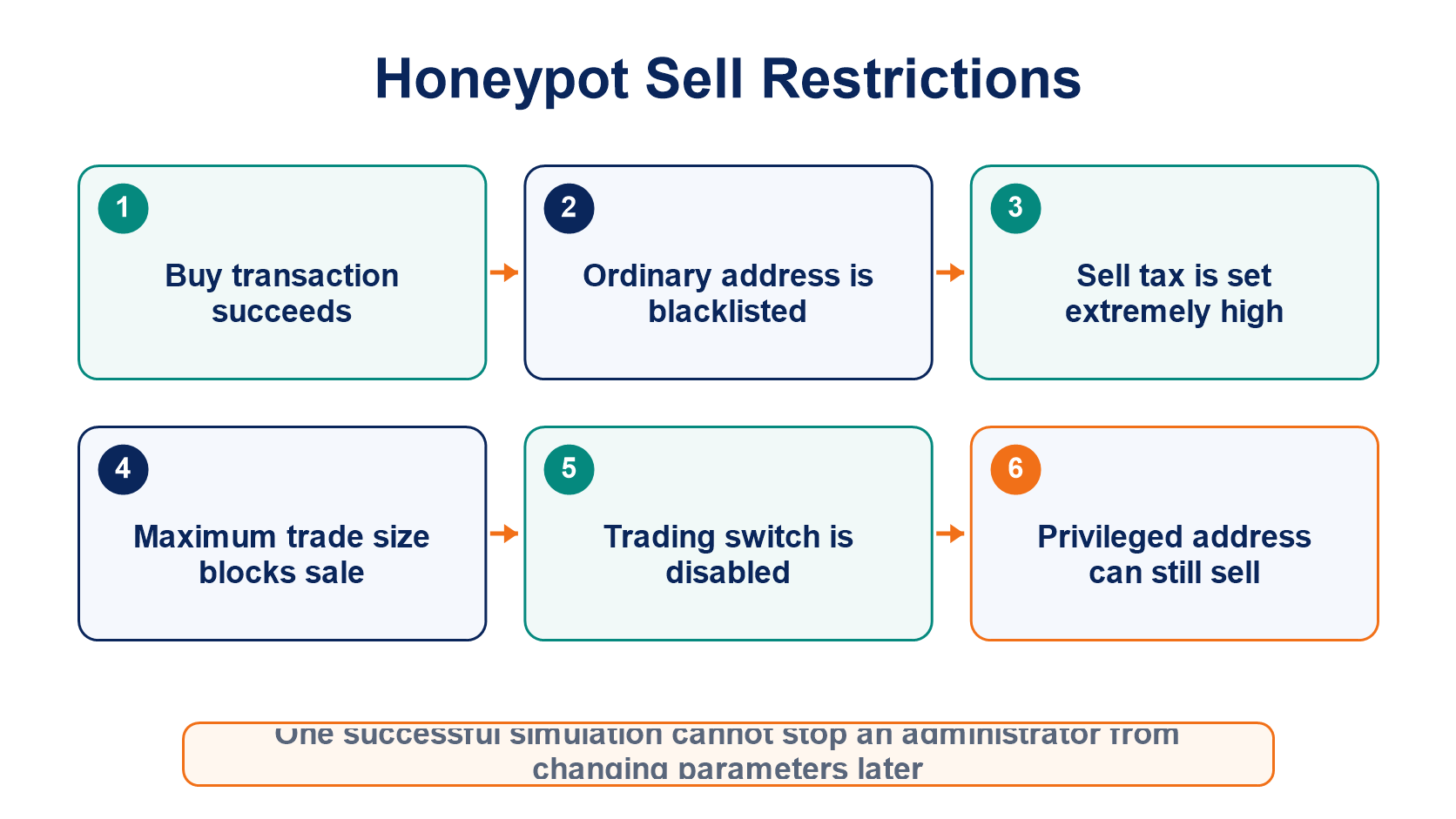
A contract can impose seller blacklists, extremely high taxes, maximum transaction limits, trading switches, or rules that allow only selected addresses to transfer tokens out. Some restrictions are hidden in proxy contracts, external allowlists or blocklists, or parameters that the owner can change.
Addresses controlled by scammers may be exempted to create a misleading history of successful sales. Simulation tools can only test the contract's current state, and an administrator may change parameters after users buy. A successful simulation therefore offers no permanent guarantee.
How Should You Verify a Token Before Buying?
Obtain the contract address from several official project channels, then compare it character by character with the address shown on the trading interface. Check whether the source code is verified, whether the contract is a proxy, which parameters its owner or assigned roles can modify, and whether liquidity and holdings are excessively concentrated.
Review buy and sell transactions from genuinely independent addresses, distinguishing transaction failures from taxes and routing issues. A small test purchase and sale may reveal some problems, but it still involves gas fees, slippage, and the risk that the rules will later change.
What Should You Do If You Cannot Sell?
Do not connect to an unfamiliar “unlock tool” or keep buying to lower your average cost. Save the contract address, transaction hash, failure details, routing information, and promotional pages, and check whether you used the wrong network, liquidity pool, or token version.
If the contract itself restricts selling, ordinary users usually cannot bypass its on-chain rules. Anyone claiming they can remove you from a blacklist for a fee is likely attempting a secondary scam.
For the risk of project teams withdrawing liquidity, read Rug Pull. For a broader classification of scams, return to the Complete Guide to Cryptocurrency Scams.
Frequently Asked Questions
Does Passing a Contract Security Scan Guarantee That a Token Can Be Sold?
No. A scan may miss proxy contracts, external dependencies, and later parameter changes, and it cannot guarantee that liquidity will remain available.
Does Having Many Token-Holding Addresses Prove That a Token Is Genuine?
No. Attackers can distribute tiny balances in bulk or control many addresses. The number of addresses does not equal the number of independent holders.
Is a Token Genuine If It Has a Trading Pair on a Well-Known DEX?
Not necessarily. Anyone may create a token with the same name and open a liquidity pool, so you must still verify the official contract address.
Does a Failed Sale Always Mean the Token Is a Honeypot?
No. Insufficient gas, slippage, routing problems, trading pauses, and network congestion can also cause failures. Read the on-chain receipt and check the contract state first.
Leitura recomendada
Veja mais