SIM Swap and Verification-Code Bombing: Your Phone Is a Target
A SIM swap transfers your phone number to a SIM card or carrier account controlled by an attacker. Verification-code bombing floods you with SMS messages or push notifications to create confusion. Both tactics can be used to take over accounts.
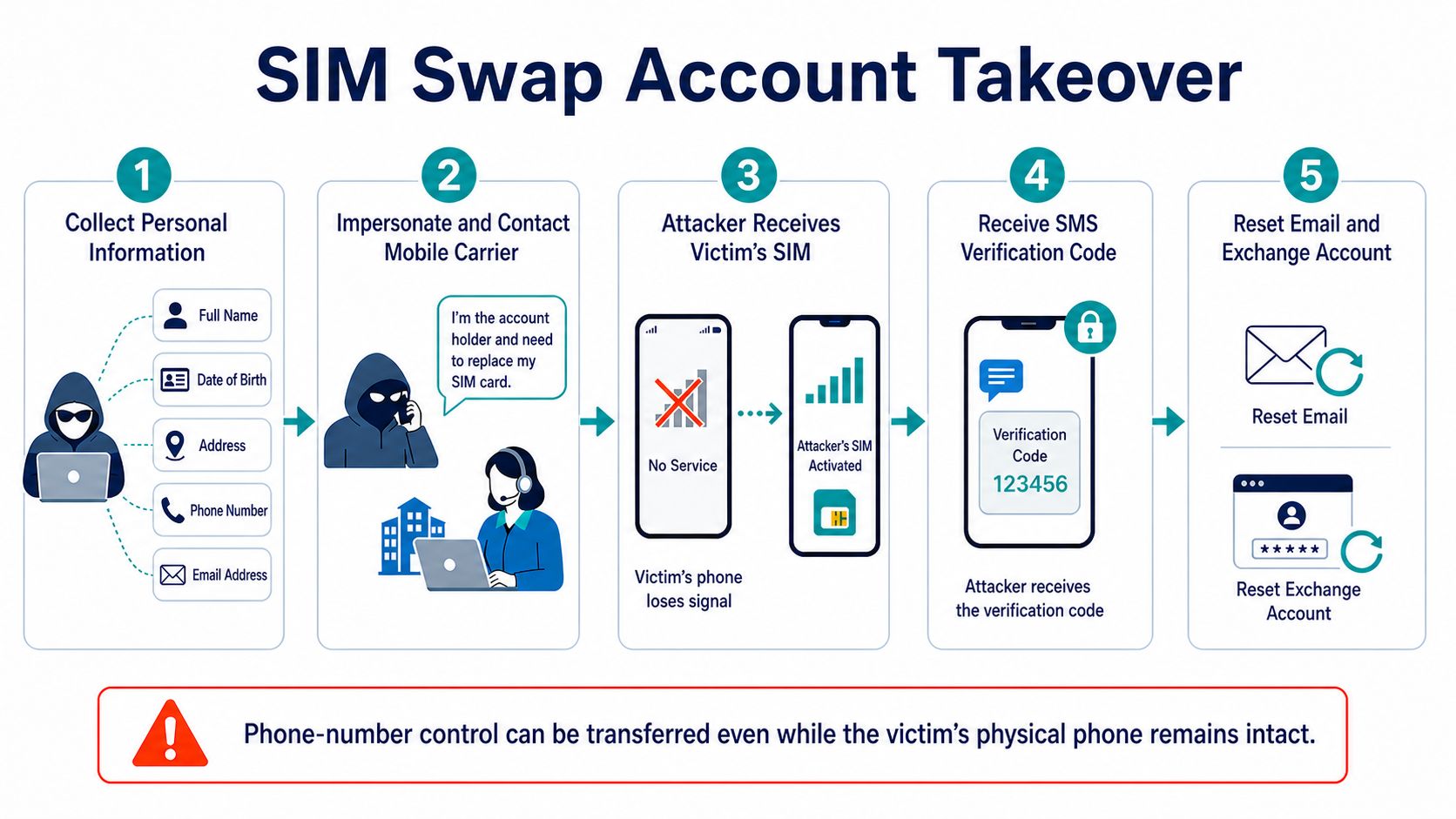
How Does a SIM Swap Happen?
Attackers collect a victim's name, phone number, address, fragments of identity documents, or carrier account details. They then impersonate the victim when contacting the mobile carrier and transfer the number to a new SIM card or another carrier. The victim's phone suddenly loses voice and SMS service.
Once attackers control the number, they may receive SMS verification codes, reset email and exchange accounts, or take over social media accounts to continue defrauding others. This dependence on carrier procedures makes SMS 2FA less secure than authenticator apps, passkeys, and hardware security keys.
What Is Verification-Code Bombing Hiding?
A flood of verification codes may result from repeated login attempts. It may also be intended to bury one genuine withdrawal, password-reset, or new-device alert. Push bombing exploits notification fatigue in the hope that a user will eventually tap "Allow."
Do not disable every alert or approve a request simply because the notifications are overwhelming. Take screenshots showing their times and sources, identify the affected account, and use its official entry point to review active sessions and security settings.
How Can You Prevent Your Number from Being Transferred?
Set a separate account PIN, port-out lock, or SIM-change protection with your carrier, and ask how it notifies you about account changes. Avoid publishing your phone number, asset holdings, or personal details that could be used to answer identity-verification questions on social media.
Use passkeys, hardware security keys, or authenticator apps for email, exchange accounts, and password managers whenever possible. Keep a recovery method that does not depend on the same phone number, and secure the carrier account itself.
What Should You Do First After Losing Service?
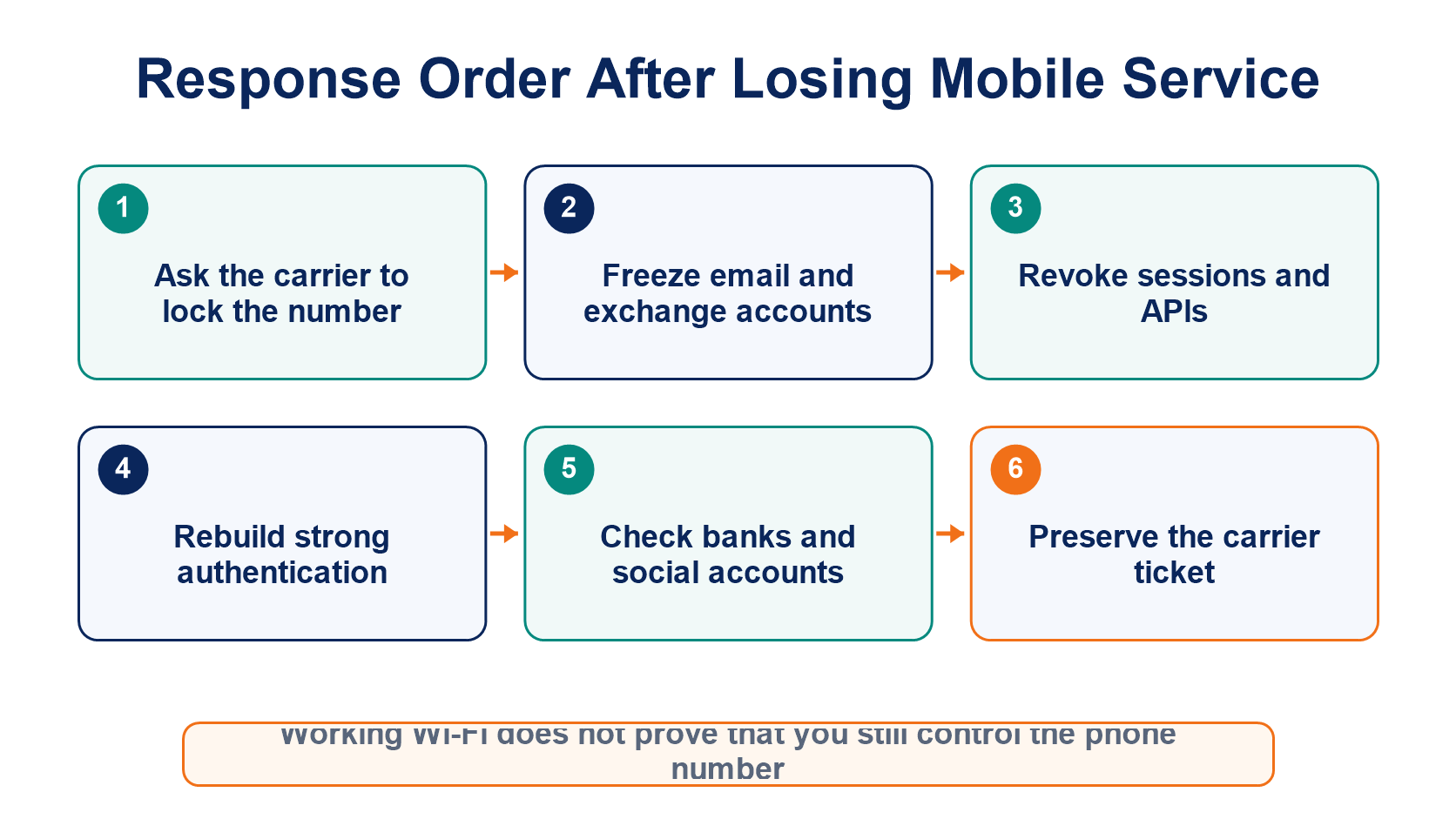
Use another phone to contact your carrier, confirm whether a SIM change or number transfer occurred, and ask it to lock the number. From a trusted device, freeze your exchange accounts, change your email and platform passwords, and revoke active sessions, API keys, and unknown devices.
Check your bank, social media, and cloud accounts because the same phone number is often connected to multiple services. Preserve carrier tickets, text messages, emails, IP addresses, transaction records, and a timeline of events, then report the incident to the relevant platforms and local law enforcement.
For a broader classification of fraud schemes, see the Complete Guide to Crypto Scams.
Frequently Asked Questions
Why Can I Still Use Wi-Fi but Not Receive Text Messages?
Wi-Fi and carrier phone service are separate. If your SIM has been disabled or transferred, your phone may still connect to the internet while being unable to send or receive SMS messages and calls normally.
Can Replacing My Phone Trigger a SIM Swap Alert?
A legitimate phone replacement and a malicious transfer may generate similar carrier-side events. Confirm the carrier's protection and notification policies before making the change.
Is SMS Verification Completely Unsafe?
It is generally still better than using a password alone, but it should be treated as a weaker or backup method. Move high-value accounts to stronger authentication.
Am I Safe Once the Verification-Code Bombing Stops?
Not necessarily. The attacker may already have completed part of the takeover, so continue checking active sessions, reset records, and financial activity.
Leitura recomendada
Veja mais