
Quick Guide to Evaluating Crypto Project Tokenomics
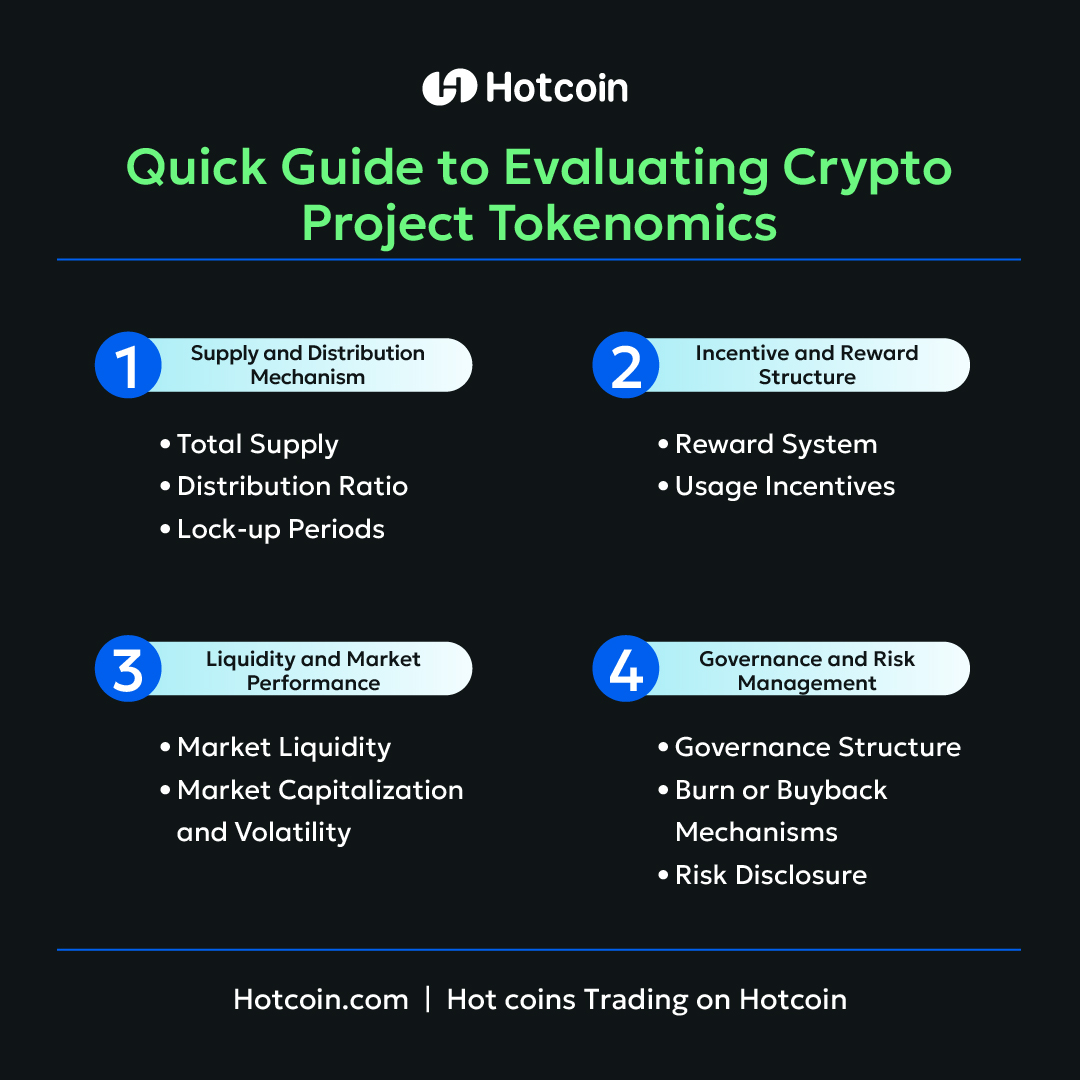
As the cryptocurrency market continues to evolve, tokenomics has become a critical factor in assessing a project's potential and associated risks. Tokenomics refers to the study of a token’s issuance, circulation, distribution, and utility within a project’s ecosystem, helping investors gauge its intrinsic value and long-term viability. Here are the key aspects to consider when evaluating a crypto project’s tokenomics:
1.Supply and Distribution Mechanism
Total Supply: Determine if the token has a capped supply. A limited supply can help mitigate inflation and enhance scarcity-driven value.
Distribution Ratio: Assess whether token allocation among the team, investors, community, and ecosystem is well-balanced, reducing the risk of excessive concentration in a few hands.
Lock-up Periods: Check for reasonable vesting schedules or lock-up periods to prevent large-scale sell-offs that could destabilize market prices.
2. Incentive and Reward Structure
Reward System: Evaluate whether the project incorporates effective incentive mechanisms, such as mining, staking rewards, or airdrops, to encourage participation and engagement.
Usage Incentives: Consider whether the platform rewards users for active participation, fostering long-term engagement and sustainable ecosystem growth.
3. Liquidity and Market Performance
Market Liquidity: Assess the token’s liquidity on exchanges to ensure efficient trading, minimal slippage, and low transaction costs.
Market Capitalization and Volatility: Determine whether the market cap accurately reflects the project’s intrinsic value, and analyze whether price volatility is within a reasonable range based on market demand.
4. Governance and Risk Management
Governance Structure: Check whether the project has a transparent governance model that enables community participation in key decision-making processes.
Burn or Buyback Mechanisms: Effective token burn or buyback strategies can help control supply and increase long-term value.
Risk Disclosure: Ensure the project clearly outlines potential risks and mitigation strategies, allowing investors to make well-informed decisions.
In summary, by evaluating the token’s definition, supply and distribution, incentive mechanisms, liquidity, and governance risks comprehensively, investors can better assess the health and sustainability of a crypto project’s tokenomics, thereby making more informed investment decisions.
Leitura recomendada
Veja mais



Service@hotcoin.com
Product@hotcoin.com
Business@hotcoin.com
Casecn@hotcoin.com