

What Is the Travel Rule? Why Cross-Exchange Withdrawals Require Recipient Information
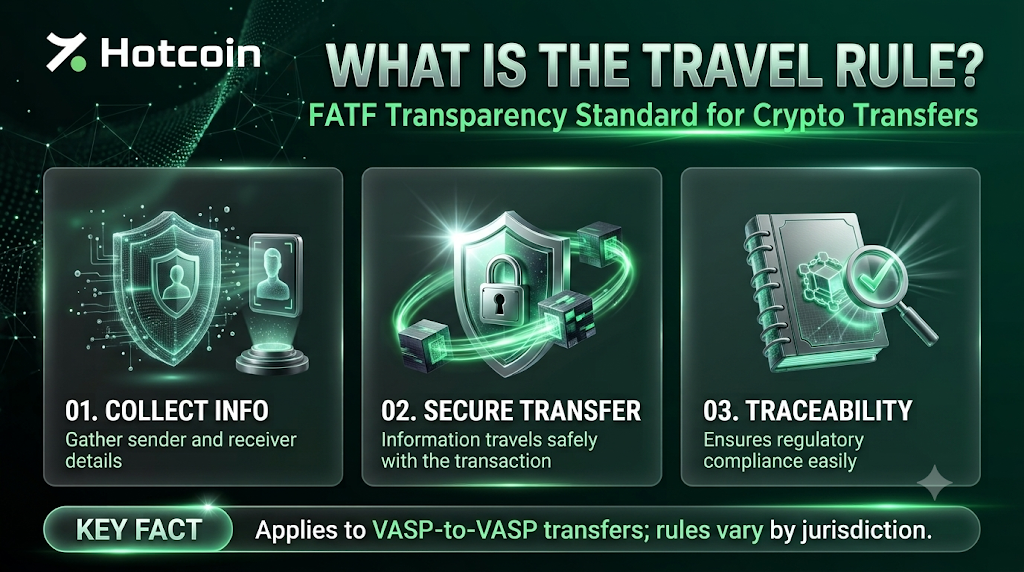
The Travel Rule means that virtual asset service providers must obtain, hold, and securely transmit the necessary sender and recipient information to the counterparty when transferring funds for customers. This requirement comes from the Financial Action Task Force (FATF) applying traditional wire transfer transparency rules to virtual assets, corresponding to Recommendation 16. Therefore, when you withdraw coins from one trading platform to another, or to certain regulated services, the system may ask for the recipient's name, address type, or account-related information. This is to make the transfer identifiable and traceable; it does not automatically mean the platform has determined that you are involved in illegal activity.
FATF standards only become binding on local service providers after each jurisdiction transposes them into local rules. Thresholds, fields, and the treatment of unhosted wallets are not uniform. When filling in information, follow the prompts on the withdrawal page at that time and the rules applicable to your region. Incorrect, incomplete, or inconsistent information may lead to longer review times, returned transfers, or the inability to send the transfer. The specific outcome is subject to the page and official customer service statements at that time.
Key Takeaways
- The core of the Travel Rule is that service providers obtain, hold, and securely transmit the necessary sender and recipient information in virtual asset transfers, not that they send your private keys or verification codes to the counterparty platform.
- FATF's 2021 updated virtual asset guidance states that virtual asset service providers should apply the preventive measures in Recommendations 10 to 21 and, when conducting virtual asset transfers, immediately and securely obtain, hold, and transmit the required sender and recipient information.
- Requiring recipient information for cross-platform withdrawals is usually to confirm who this on-chain transfer corresponds to and what type of address it is sent to, so that service providers can fulfill transparency obligations and risk management.
- When withdrawing to your own unhosted wallet, the counterparty platform may not be able to receive information in a "service provider to service provider" manner, which may result in additional confirmation or different handling. This does not mean self-custody is prohibited, but it may change the review steps.
- Only submit materials through the official withdrawal page or the entrance required by official customer service. Do not send ID documents, proof of address, or transaction records to "reviewers" who contact you via unsolicited private messages.
What Problem Does the Travel Rule Solve?
In traditional bank wire transfers, payment information travels with the funds so that the receiving bank and authorities can know who the sender and recipient are. FATF applies similar payment transparency requirements to virtual assets, which the industry commonly calls the Travel Rule.
According to FATF's public statements in its virtual asset-focused guidance, virtual asset service providers need to implement customer due diligence, record-keeping, and suspicious transaction reporting like financial institutions, and obtain, hold, and securely transmit sender and recipient information during transfers. The 2021 updated guidance also explicitly states this obligation: when conducting virtual asset transfers, immediately and securely obtain, hold, and transmit the required information.
Therefore, when a withdrawal page asks for the recipient's name, receiving platform, whether the address is a personal wallet or a custodial account, and the country or region, it is usually not an extra marketing questionnaire. Instead, it supplements an on-chain transfer that appears to contain only an address and a hash with the identity correspondence required by regulators.
Why Cross-Exchange Withdrawals Often Require Recipient Information
When you transfer assets from a platform subject to the Travel Rule to another platform also subject to it, the sending platform often needs to send sender information and recipient information to the receiving platform. Much of the sender-side information may already be held by the platform through identity verification; the recipient side often needs to be supplemented by you during withdrawal.
The information you may be asked to confirm or fill in usually includes:
- The recipient's name or a name consistent with the account's real name
- Whether the receiving address is a personal wallet or a custodial account of a virtual asset service provider
- If it is a platform address, identification information of the receiving platform or account
- Other country, region, or contact information prompted on the page
These are only common categories, not a globally uniform list. Different regions, different counterparties, and whether the amount reaches the local threshold all affect the actual fields to be filled in. In its overview, FATF's 2021 guidance states alongside the Travel Rule that "occasional transactions above USD/EUR 1,000 require customer due diligence," but that is a standard statement for the due diligence threshold. When jurisdictions implement the Travel Rule in withdrawal processes, they may set thresholds or require information to accompany a broader range of transfers. Do not use a single number to infer the rules of all platforms.
Filling in this information is to enable the sending and receiving parties to verify who should receive the assets and to provide traceable records to authorities when suspicious situations arise. It does not automatically mean your account has been characterized as money laundering, nor does it mean the withdrawal has been approved or rejected. If the system prompts you to supplement materials, submit them through the official page; whether you need to continue waiting depends on the withdrawal status in your account.
If the withdrawal enters review because of this and you want to understand common reasons and where to check, you can read Why Is My Hotcoin Withdrawal Under Review. Review times vary by reason, and the help documentation does not provide a uniform time limit applicable to all manual reviews.
Why Personal Wallets Sometimes Require Extra Confirmation
The Travel Rule was initially aimed at transfers between service providers, meaning both the sender and receiver can receive and hold the required information. If the receiving address is an unhosted wallet controlled by you, the counterparty may not be a service provider that can receive Travel Rule information.
When discussing risk management, FATF guidance lists transfers to or from "unhosted wallets with no obligated entity" and transfers to service providers in unregulated jurisdictions as situations requiring attention. It also mentions that service providers should effectively address the "sunrise issue," which refers to the connectivity difficulties that arise when the counterparty has not yet implemented the Travel Rule to the same extent.
The direct impact on users may be:
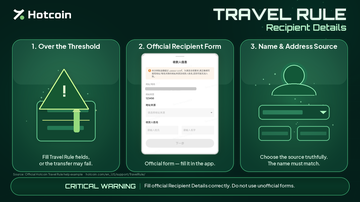
- The system requires you to declare that the address is controlled by you
- Requiring supplementary information about the recipient's identity or the purpose of the funds
- Applying additional review to certain destinations, or indicating that the original path cannot currently be completed automatically
These measures vary by region and platform. They should not be described as "withdrawing to your own wallet will always be rejected," nor as "withdrawing to your own wallet definitely requires no information." If the page requires you to confirm address ownership, complete it using the method prompted by the official page, and do not provide your private key or seed phrase to anyone claiming to be verifying it.
Regarding the relationship between identity verification and the Travel Rule, it can be understood this way: KYC addresses "who is using this account," while the Travel Rule addresses "whether the sender and recipient information for this transfer has been stored and transmitted as required." The two often appear in sequence but are not the same thing. If you need to understand identity verification itself, you can read What Is KYC.
How to Fill In Correctly and Avoid Risks
When filling in recipient information, the goal is to be consistent with the facts and submit only through official entrances.
You can prepare as follows:
- Confirm that the receiving address, network, Memo, and other on-chain information are correct before filling in the identity information required by the Travel Rule. A wrong address and wrong identity information cause different types of problems.
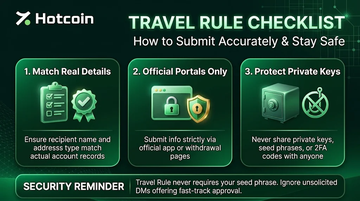
- The recipient name should be consistent with the real name of the receiving account or a recipient you actually know. Do not change it to a name inconsistent with the facts in order to "speed up approval."
- Select the address type truthfully. Labeling a platform deposit address as a "personal wallet," or labeling your own wallet as a platform account, may prevent the counterparty from completing matching.
- Submit supplementary materials only through the official withdrawal page, official app, or the entrance designated by official customer service. Do not use "compliance forms" in search ads, group chat links, or unsolicited private messages.
- After submission, check the status in the withdrawal records and keep the order number or withdrawal ID. Do not repeatedly submit multiple identical withdrawals to "urge" processing, and do not pay so-called acceleration fees to strangers for this reason.
Common Misconceptions
- "Asking me to fill in the recipient's name means they suspect me of money laundering." The Travel Rule targets transfer transparency. The appearance of a form does not mean an illegal determination has been made, but you should fill it in truthfully and keep records.
- "Rules are the same in all regions and for all amounts." FATF provides international standards, while what is actually enforced are the local rules of each jurisdiction. Thresholds, fields, and treatment of personal wallets may all differ.
- "Withdrawing to my own wallet means I can ignore the Travel Rule." The sending platform may still perform due diligence and record-keeping obligations toward its own customers and require you to confirm address control or supplement information.
- "Sending materials to a reviewer in chat can get approval faster." This is a high-risk practice. Official channels will not ask for passwords, verification codes, or seed phrases through unsolicited private messages, and you should not send ID documents to non-official entrances.
- "The more complex the information, the better; it doesn't matter if I make up a receiving platform name." Information inconsistent with the facts may prevent the receiver from matching and may increase the possibility of return or review. Fill it in according to page requirements and the actual receiving arrangement.
- "The Travel Rule will pass my private key to the counterparty exchange." The rule requires transmission of the necessary identity and account information of the sender and recipient, not private keys, seed phrases, or authenticator keys. If anyone asks for these under the name of the Travel Rule, stop immediately.
FAQ
Q1: Is the Travel Rule a rule invented by one platform? No. It comes from FATF's international standard applying payment transparency requirements to virtual asset transfers. Each jurisdiction then formulates local rules, and virtual asset service providers implement them in deposit and withdrawal processes. Forms may look different between platforms, but the purpose is usually to obtain and transmit necessary information.
Q2: I have completed KYC, why do I need to fill in information again when withdrawing? KYC confirms the identity of the account holder. The Travel Rule also requires matching the sender and recipient information for this transfer, especially when the recipient does not have an account with the sending platform. Completing identity verification usually helps fill in the sender side, but it does not automatically mean the recipient information is complete.
Q3: If I fill in the wrong recipient name, will the coins still arrive? On-chain transfers still execute according to the address; Travel Rule information is mainly used for identity matching and compliance transmission. Incorrect information may lead to review, delay, return, or the receiver being unable to credit the funds. The specific handling is subject to the rules of both platforms at that time. If you find an error, check the status through the official entrance and follow the prompts; do not send another "correction" transfer to an unfamiliar address.
Q4: What is the "sunrise issue"? This is an implementation challenge mentioned in FATF guidance: when the sending party has already implemented the Travel Rule but the counterparty has not yet received information in the same manner, the information transmission for the transfer may not be completed automatically. Users may experience additional forms, waiting for review, or certain destinations temporarily unavailable through automated channels.
Q5: If I refuse to fill in the information, can I not withdraw? If local rules and platform processes treat Travel Rule information as a necessary item for the transfer, the withdrawal may not proceed without completing the filling or verification. This does not mean the platform can arbitrarily interpret the nature of your funds, but it directly affects whether the transfer can be sent along the original path. Follow the withdrawal page and official customer service statements.
Q6: Will this information be made public on the blockchain? The Travel Rule requires information transmission and retention between service providers or from service providers to authorities in accordance with the law; it does not mean writing names and ID documents into public on-chain transaction data. Even so, such information is still sensitive and should only be submitted through official encrypted entrances, and you should be alert to phishing pages.
Conclusion
Being asked to fill in recipient information during cross-exchange withdrawals is usually because the Travel Rule requires virtual asset service providers to obtain, hold, and securely transmit the necessary sender and recipient information. It addresses transfer transparency, not handing over your private key to the counterparty. Thresholds and forms differ by region, and additional confirmation may appear when withdrawing to personal wallets. Filling in information accurately, submitting only through official entrances, and tracking status in withdrawal records are preparations you can make now; how long review takes and whether a transfer will be returned can only be determined by the page and official statements at that time.
If the withdrawal has already entered review and you want to check common reasons and query methods first, you can read Why Is My Hotcoin Withdrawal Under Review.
Risk warning: This article is for educational and informational purposes only and does not constitute legal, compliance, or tax advice. FATF standards and local implementation rules may change. For specific required fields, amount thresholds, and handling methods, please refer to the regulatory provisions of the applicable region and the prompts on the withdrawal page at that time. Please submit identity and recipient information only through official entrances, and do not provide ID documents, verification codes, private keys, or seed phrases to strangers. Failure to complete the required information may result in withdrawal delays or the inability to send the transfer, and outcomes vary by case.
読書をお勧めします
もっと見る