
What is Crypto Tokenomics
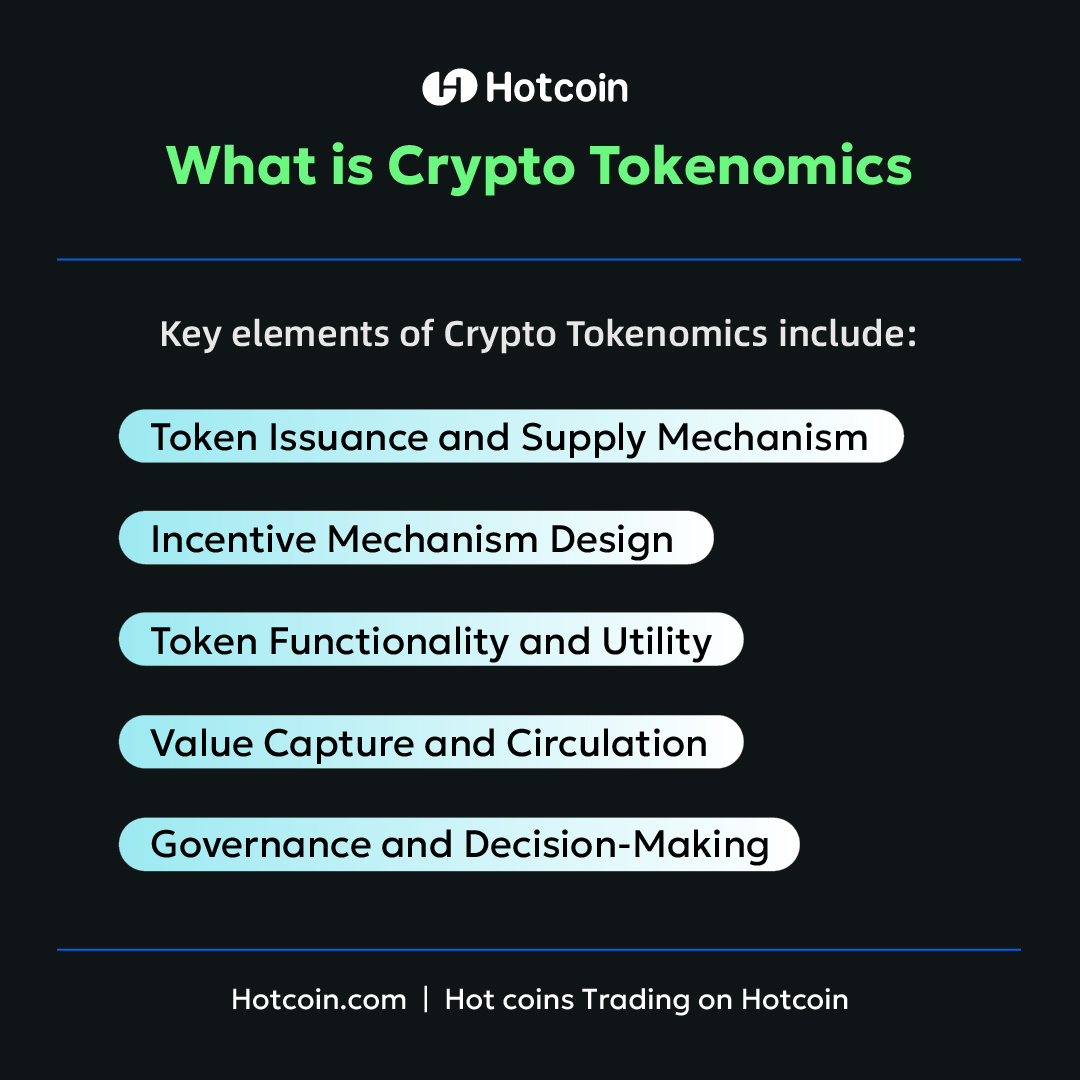
Crypto Tokenomics refers to the study and design of token distribution and economic incentives within cryptocurrency or blockchain projects. Integrating economics, game theory, and computer science, its goal is to create mechanisms that promote sustainable growth and maximize participants’ benefits. Key elements of Crypto Tokenomics include:
Token Issuance and Supply Mechanism
Initial distribution methods (ICO, IEO, Airdrops)
Total supply caps and inflation models
Token release schedules and vesting periods
Incentive Mechanism Design
Encouraging long-term user participation through staking, mining, etc.
Designing effective consensus mechanisms (PoW, PoS, DPoS)
Guiding user behavior to enhance network value
Token Functionality and Utility
Means of payment, fee discounts for transactions
Governance voting rights, and decision-making participation
Rewards for ecosystem contributors, such as developers and community members
Value Capture and Circulation
Deflationary measures, such as token burning
Buybacks and token-locking mechanisms to reduce the circulating supply
Ensuring market liquidity and price stability
Governance and Decision-Making
Community voting and allocation of governance power
Application of decentralized autonomous organization (DAO) governance models
Establishment of project transparency and public disclosure frameworks
In essence, Crypto Tokenomics is vital for blockchain ecosystems, as a well-designed token economy not only motivates participants but also lays a robust foundation for long-term project viability and growth.
読書をお勧めします
もっと見る


Service@hotcoin.com
Product@hotcoin.com
Business@hotcoin.com
Casecn@hotcoin.com