
Telegram and TON: The Web3 Social Ecosystem
Telegram and TON represent a Web3 social route that differs from Lens and Farcaster. Instead of building a brand-new decentralized social protocol and waiting for users to migrate, this approach embeds bots, Mini Apps, wallets, payments and digital assets into a messaging environment people already use. A user taps a link in a chat, channel or group and lands in a game, a store, a membership service or an on-chain application, while developers gain a distribution channel that behaves much like a super app.
The core advantage of this route is a low barrier to entry. Users do not have to understand RPC endpoints, browser extensions or complex addresses first, because many actions happen inside the familiar Telegram interface. But "opens inside Telegram" does not mean "guaranteed by Telegram." Login, front end, wallet and smart contract remain separate layers of risk. A Mini App does not necessarily use a blockchain at all; it only counts as a Web3 application once it touches on-chain assets and signatures.
As of August 2026 there is also a naming change to keep in mind. The blockchain is still called The Open Network, or TON, but the native coin Toncoin has been renamed Gram by community vote, with the ticker changing from TON to GRAM. The rename only affects the name, ticker and visual identity; holders are not required to swap assets or change addresses. Older announcements, wallet records and trading platforms may still show Toncoin or TON, so always check the date of whatever you are reading.
If you want the broader framework of open identity, content ownership and the financialization of social activity first, read SocialFi: The Present and Future of Decentralized Social Networks, then look at how Telegram connects a traffic gateway to TON's on-chain settlement layer.
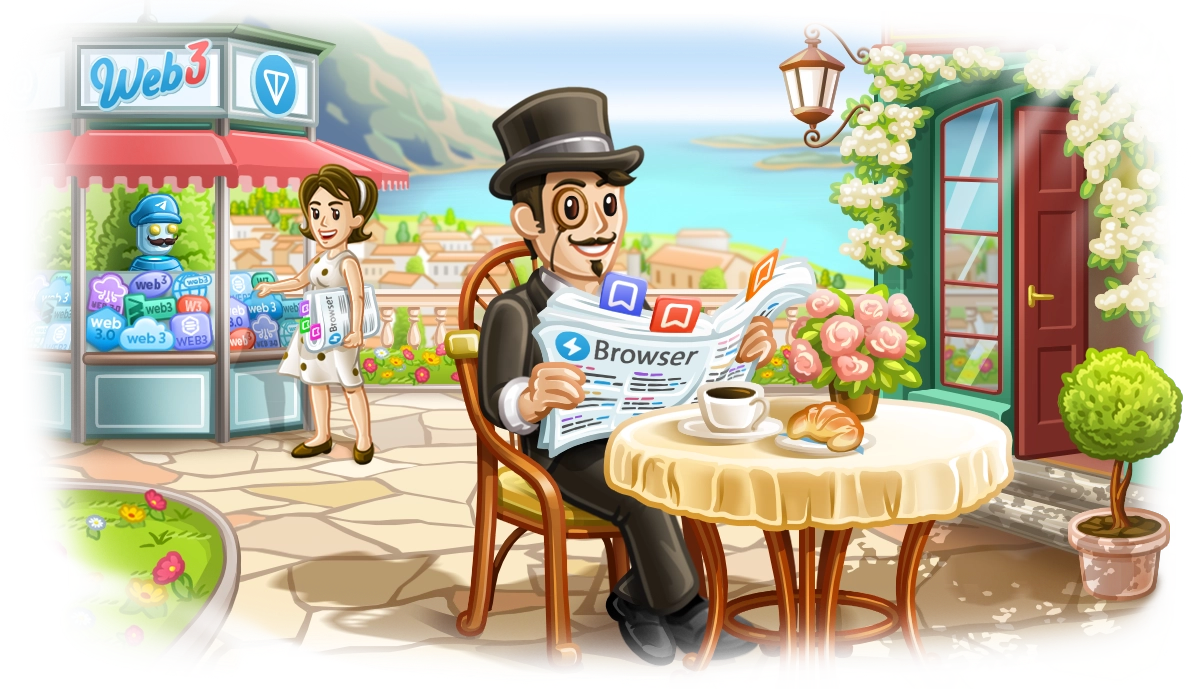
What is the Telegram and TON Web3 social ecosystem?
It helps to think of it as five connected parts. Telegram supplies accounts, chats, channels, groups and distribution. Bots handle automated replies, orders and message flows. Mini Apps provide an interface close to a website or mobile app. Wallets handle identity, signatures and asset management. TON processes on-chain transactions, tokens, NFTs and smart contracts.
These five parts are not one system. Telegram accounts are managed by the platform, most Mini Apps run on developer servers, a wallet may be custodied by a third party or held by the user, and TON transactions are executed by the blockchain network. A page that looks seamless does not mean the trust relationships behind it have merged.
The Web3 social value comes from the combination: channels distribute content, groups drive community interaction, Mini Apps carry quests, games and commercial services, TON wallets verify assets or membership status, and smart contracts handle payments and revenue splits. Users do not have to leave the messenger to find a standalone DApp, and projects do not have to build every social feature from scratch.
What is the relationship between TON and Telegram?
TON was originally designed by the Telegram team under the name Telegram Open Network, with the native asset planned as Gram. After regulatory litigation, Telegram halted the original project in 2020, and independent developers and the community carried the open-source code forward, evolving the network into The Open Network. Telegram later chose TON as its Web3 infrastructure.
So TON is not simply Telegram, but the two are not unrelated either. Telegram is a centralized communications platform; TON is a proof-of-stake blockchain run by validators. Telegram sets the rules for bots, Mini Apps, Stars and platform features, while the TON community and associated organizations maintain the protocol, developer tooling and ecosystem partnerships.
In 2025, Telegram's developer terms went further: any Mini App implementing crypto functionality inside Telegram should be built on TON and use TON Connect for wallet connections. This gives developers a single standard and gives TON a distinctive distribution advantage. Correspondingly, the TON ecosystem also depends more heavily on Telegram's product policies and entry points.
Why is TON well suited to hosting Telegram applications?
TON is a proof-of-stake Layer 1 blockchain that uses a masterchain, workchains and dynamic sharding to process state and messages. As network load changes, shards can adjust so that different parts process transactions in parallel. The TON Virtual Machine executes smart contracts, Jetton is the common fungible token standard in the ecosystem, and the NFT standard covers digital collectibles and on-chain identity assets.
Social applications tend to require large volumes of small, high-frequency operations: claiming rewards, buying game items, sending assets, verifying membership. If every interaction meant a long wait or a high fee, the chat experience would break down. TON is designed to raise throughput, lower interaction costs and let wallets and applications compose through its message mechanism.
That said, a theoretical architecture does not automatically give every app high performance. Smart contract design, indexing services, backend servers, wallet responsiveness and traffic spikes all shape the real experience. For more on TON's sharding, PoS, smart contracts and native coin usage, read TON Blockchain: The Web3 World on Telegram.
What is a Telegram Mini App?
A Mini App is a web application launched inside Telegram. It can be opened from a bot profile page, a menu button, a message button, inline mode, a direct link or an attachment entry, and it can read session information that Telegram provides with the user's authorization. Developers use standard web technologies to build stores, games, AI tools, quest platforms, membership hubs and financial interfaces.
Compared with asking users to download a separate app, the path to a Mini App is much shorter. Once a channel posts a link, users can open it directly; the app can also generate shareable content, return to the chat, request notifications or be added to the phone's home screen. Telegram disclosed in 2024 that more than 500 million users were interacting with Mini Apps each month at that point, which shows this is not only a crypto entry point but a general-purpose application platform at real scale.
Mini Apps are not inherently decentralized. Page code is usually loaded from the project's servers, user profile data is passed in by the Telegram environment, and the business database may be entirely centralized. Only wallet signatures, tokens or contracts actually reach TON. When evaluating a project, check the front-end operator, the data storage model and the on-chain contracts separately rather than trusting a page that simply says "Web3."
How does TON Connect link wallets and Mini Apps?
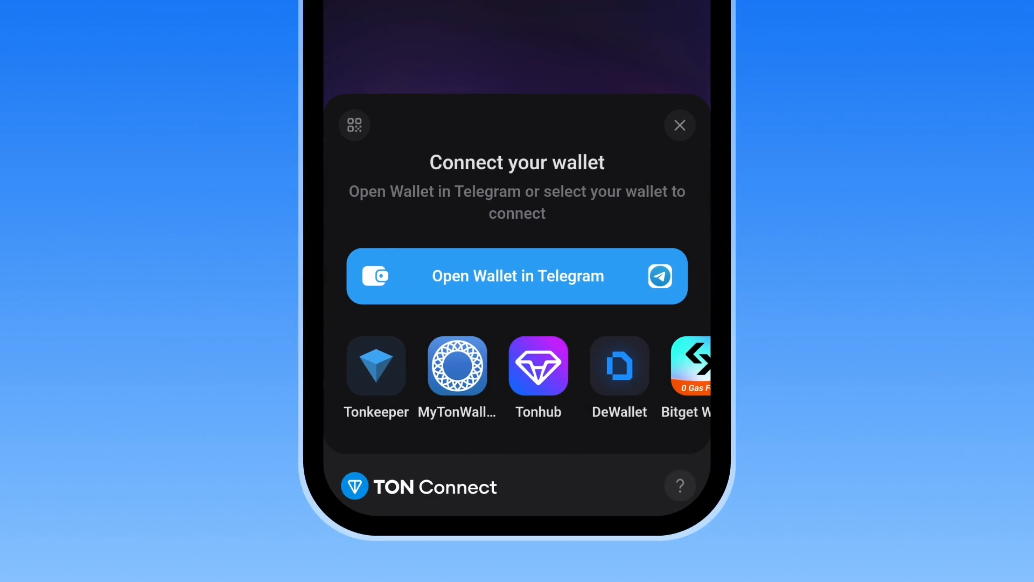
TON Connect is the standard wallet connection protocol in the TON ecosystem. A DApp or Mini App requests a connection through an encrypted session, reads the public address, and submits signature or transaction requests to the wallet. Private keys should never be handed to the application; an on-chain action only occurs after the user confirms it in the wallet interface.
What it solves is the connection and authorization standard. It does not do the blockchain integration for developers, and it does not judge whether a given contract is safe. A TON Connect popup only tells you the app is using a compatible protocol; the recipient, amount, token and permissions of a transaction still need to be checked by the user.
Telegram's current blockchain rules allow Mini Apps to use TON Connect while restricting the integration of other wallet protocols in Mini Apps or the direct promotion of non-TON chain assets. Multi-chain wallets can still manage other networks' assets in their own interfaces, but interaction with external apps remains subject to platform terms. This improves consistency, and it also means developers must satisfy both TON's technical standards and Telegram's platform rules.
What is the difference between Telegram Stars, Gram and TON?
Telegram Stars are a virtual item used inside the platform to buy digital goods and services. Bots and Mini Apps must use Stars when selling digital content inside the Telegram app. Users obtain Stars through app store in-app purchases or Telegram-supported entry points, then buy e-books, courses, game items, paid media and other digital services.
Gram is the native crypto asset of the TON blockchain, previously called Toncoin. It is used for network fees, transfers, smart contract interactions and validator-related economic activity, and it also appears in parts of Telegram's platform settlement flow. Stars are not a freely transferable token on a public chain, and Gram cannot directly replace Stars for buying every digital good inside Telegram.
After receiving Stars, developers and creators can accept the corresponding reward or spend it on advertising according to Telegram's rules. Historical official pages described the related reward as Toncoin; after the 2026 rename, read it as Gram in line with current wallet and settlement pages. The purchase price of Stars, taxes and the final reward value can vary by channel, region and platform policy, so the number of Stars a user pays cannot be equated with the fiat amount a creator can withdraw.
How do Telegram channels monetize content?
Telegram has built several creator revenue channels. A channel can post photos or videos that require Stars to unlock, and users can support content through Star Reactions. Bots and Mini Apps can sell courses, memberships, digital tools and game items. Qualifying public channels can also share in the ad revenue shown in their channel.
Telegram announced in 2024 that eligible public channel owners can receive 50% of the channel's ad revenue, with rewards handled through Fragment or reinvested into advertising. Exact eligibility, available regions, settlement assets and rates may change, so operators should rely on the Monetization page in their channel settings and the latest terms.
This model puts content, community, payment and remarketing in one product. After receiving Stars, a creator can buy Telegram Ads to acquire new users for the channel or Mini App, forming a content-payment-promotion loop. But the platform still controls the entry point, the rules and settlement eligibility, so an on-chain reward is not the same as independence from the platform. For the broader design of subscriptions, collectibles, social tokens and programmatic revenue splits, read The Creator Economy: How Web3 Is Changing Content Monetization.
Why do collectible gifts, usernames and anonymous numbers matter?
Telegram has gradually connected items that used to belong purely to platform accounts and social display to TON. Users can buy gifts, upgrade them into collectibles with distinct looks and attributes, and transfer them to a TON wallet when eligible. Collectible gifts can also be shown on a profile page or used as an emoji status, and traded on external marketplaces.
Fragment handles some collectible usernames, anonymous numbers, advertising and creator settlement. A collectible username can point to a person, a channel or a group, and an anonymous number can be used to register an account without a traditional SIM card. These assets turn a "social entry point" into a transferable on-chain item and create new trading and identity use cases.
But owning a username NFT is not the same as owning the associated trademark, nor does it mean the platform guarantees a particular display forever. A gift's rarity attributes, market quotes and auction results are even less a guide to stable value. Users should confirm whether an item is currently in Telegram platform state or already moved on chain, because transfer methods, fees, recovery options and tradability can differ.

Why did Telegram tap-to-earn games explode so quickly?
Projects such as Notcoin, Hamster Kombat and Catizen turned "small games inside a messenger" into one of the defining crypto phenomena of 2024. They used the instant-open nature of Mini Apps, channel distribution, referral quests and the prospect of token rewards to acquire huge user numbers with very few steps. Players tapped the screen, completed tasks or invited friends, and projects then distributed assets according to points, snapshots or their own rules.
This growth looked more like a mix of social virality and incentive marketing. Mini Apps cut the cost of signing up, Telegram groups and channels provided continuous distribution, and token expectations amplified participation. It proved that Web3 can reach non-crypto users through a mature social product, and it also exposed problems: farmed accounts, bots, fake activity and sharp retention drops after airdrops.
Taps do not automatically create game value. If users only show up for a potential airdrop, they churn easily once tokens are distributed. A sustainable product needs gameplay, content, genuine paid demand and community relationships, not just points that keep people waiting. To tell "players attracted by rewards" apart from "gameplay that generates long-term spending," read The Core Models of GameFi: Play-to-Earn and Play-and-Earn.
Are all wallets inside Telegram self-custodial?
No. Wallet in Telegram currently covers different services. Crypto Wallet is a custodial multi-chain wallet where the service provider manages private keys and typically offers account recovery, swaps and in-platform transfers. DeFi Account is a self-custodial address on TON where the user controls the recovery phrase and can use DApps, NFTs and on-chain features through TON Connect. Older material may call the latter TON Space or TON Wallet.
A custodial wallet is simpler to operate, but the user depends on the provider's account review, regional availability, withdrawal handling and asset custody. A self-custodial wallet gives more control, and a lost key or a bad signature usually cannot be reversed by support. Both live inside the Telegram interface, which does not mean they share a security model.
Users may also install independent self-custodial wallets such as Tonkeeper. Before choosing one, confirm who holds the private key, whether identity verification is required, whether the recovery phrase can be exported, whether transactions settle on chain, which networks are supported and whether the service is available locally. Never judge authenticity by a bot's name, a blue icon or a recommendation in a group.
Is Telegram plus TON really decentralized social?
At the communication layer, Telegram accounts, contacts, channel recommendations, the Bot API and Mini App entry points are still controlled by a centralized platform. Users cannot migrate a complete account and its social graph to another server the way an open social protocol allows. The platform can adjust developer terms, restrict bots, change discovery surfaces or shut a feature down.
At the asset layer, Gram, Jettons, NFTs and collectibles moved to a self-custodial address are controlled by the user's private key and verified by the TON network. Third-party applications can also read public on-chain state. In other words, the Telegram and TON route is "centralized social distribution plus open on-chain assets," not full decentralization of every chat and relationship.
This is a practical SocialFi structure with clear trade-offs. It makes on-chain payments and digital ownership much easier for the mainstream, but it does not remove platform dependence. Rather than labelling it fully centralized or fully decentralized, judge layer by layer who controls the account, the data, the front end, the wallet and the assets.
What are the core advantages of this ecosystem?
First, a massive and mature social entry point. Users already talk on Telegram, so a project does not have to re-educate them into downloading yet another community tool.
Second, a short distance between distribution and use. Channel posts, group discussions, invite links, bots and Mini Apps form a continuous path, so users can open a service the moment they see a campaign.
Third, payment and asset components are converging. Stars handle in-platform digital goods, TON Connect handles wallet authorization, Gram and TON contracts handle on-chain settlement, and collectibles connect social display with external marketplaces.
Fourth, development costs stay relatively manageable. Teams can reuse Telegram login, notifications, chat and sharing, and concentrate resources on the business interface and on-chain logic.
Fifth, Web2 and Web3 can be combined gradually. A Mini App can offer an ordinary service first and then let users who want a wallet enable collectibles, payments or membership features, without forcing everyone to understand crypto assets on first use.
What are the main risks?
Fake bots and phishing Mini Apps
Scammers can imitate names, avatars and channels to lure users into entering a recovery phrase, connecting a wallet or signing a malicious transaction. Legitimate wallets and support teams never ask users to send a private key or full recovery phrase in a chat.
Opaque approvals and transaction contents
TON Connect does not audit contracts for the user. Before signing, check the app domain, the wallet address, the recipient, the asset, the amount and the fee. Reject any signature request you do not understand and re-confirm through the project's official entry point.
Airdrop and token speculation
Points, referrals and tap quests can produce enormous numbers that do not represent real revenue. Snapshot rules can change, and a token may never launch, launch late, or fall sharply after listing. Do not pay high fees or grant approvals from a main wallet for an uncertain reward.
Dependence on platform policy
Mini App distribution, crypto functionality and payment methods are all subject to Telegram's terms. Compliance requirements or policy changes can force a project to migrate its technology, modify assets or stop serving certain regions.
Custodial and self-custodial risks differ
A custodial service may restrict accounts, require identity verification or suspend withdrawals; with a self-custodial wallet the user bears the risk of keys, malicious approvals and irreversible transfers. Similar interfaces do not mean similar responsibility.
Privacy and social engineering
A public address exposes holdings and transactions, and group membership, quest records and referral relationships may be collected by project servers. Attackers can also combine channel posts with holdings data to run targeted scams.
Contract and liquidity risk
Jettons, NFTs, DeFi and cross-chain bridges can carry contract vulnerabilities, fake assets, price manipulation and thin liquidity. A token showing up in a wallet does not mean it has value or can be sold.
The Hotcoin SOCIAL six-point checklist
To evaluate a Telegram Web3 project, you can use the SOCIAL six-point method. It is not an investment rating but a risk checklist to run before participating.
S: Service, is the service real
Start by identifying whether the Mini App offers gaming, content, trading or membership. Strip away airdrops and price expectations and ask whether users would still want to use it. That is the most important demand test.
O: Ownership, who controls the account and assets
Distinguish between the Telegram account, a custodial balance, a self-custodial address and smart contract assets. Confirm who holds the private key and whether you could recover from another wallet if the platform shut down.
C: Conversion, how value is settled
Understand the relationships between Stars, Gram, Jettons, points and fiat, and check fees, withdrawal conditions, lock-up periods and regional limits. Do not treat a points balance as a withdrawable asset.
I: Incentive, is the incentive sustainable
Check whether referral, check-in and trading rewards come from real business revenue, a marketing budget or a future token issuance. Returns sustained only by new user growth rarely last.
A: Access, is the entry point trustworthy
Enter through the project's official site, a verified channel or a reliable directory, and check bot usernames and links character by character. Never click airdrop, support or wallet-upgrade links sent in unsolicited direct messages.
L: Liability, who is responsible
Confirm who handles refunds, support, data privacy and contract maintenance. Telegram, the wallet provider, the Mini App team and the TON network are not the same responsible party, and the escalation path differs when something goes wrong.
How can ordinary users explore this safely?
First, start with low-risk features. Browse channels and try Mini Apps that need no wallet before deciding whether to connect an address, and do not rush a signature because of a "limited-time snapshot."
Second, use a separate small wallet for new projects. Keep main holdings, long-term storage and daily DApp interaction on different addresses to limit the damage from a malicious approval.
Third, confirm the wallet type. Custodial Crypto Wallet and self-custodial DeFi Account recover differently. After creating a self-custodial address, store the recovery phrase offline and never screenshot it, sync it to the cloud or send it to anyone.
Fourth, verify the network and the asset. Gram was previously called Toncoin and the network is still TON; Jetton names and icons can be faked, so identify tokens by their official contract address. Send a small test transfer first.
Fifth, calculate the full cost. The purchase price of Stars, app store fees, TON network fees, exchange spreads and withdrawal conditions all affect real spending and income.
Sixth, clean up risk regularly. Review active Telegram sessions and two-step verification, remove bots you no longer use, disconnect unfamiliar DApps and follow the project's official security announcements.
Frequently asked questions
Is Telegram a decentralized social platform?
No. Telegram's accounts, messaging service, channels and recommendation surfaces are operated by the platform. Self-custodial assets on TON can be verified in a decentralized way, but that does not turn Telegram's entire communication system into an open protocol.
Are TON and Telegram the same company?
No. TON was originally designed by the Telegram team, then built by independent developers and the community after 2020, and later became Telegram's Web3 infrastructure. The two cooperate closely, but platform operation, blockchain validation and ecosystem projects belong to different entities.
Why did Toncoin become Gram, and do I need to swap?
After a community vote in 2026, the TON native coin was renamed from Toncoin to Gram and the ticker changed from TON to GRAM. The blockchain, balances, addresses and smart contracts did not migrate, so holders do not need to swap into any "new coin." Treat any message asking you to send coins to an unfamiliar address for a swap as high risk.
Are Telegram Stars a cryptocurrency?
Stars are a virtual item used inside Telegram to pay for digital goods and content. They are not the same as Gram, which can be transferred freely on a public blockchain. Developers and creators can accept rewards or buy ads under platform rules, but the actual value and settlement are governed by Telegram's terms.
Do all Telegram Mini Apps run on TON?
No. A Mini App is essentially a web application and may use no blockchain at all. Under the current terms, if it adds crypto assets, wallet connection or on-chain signing inside Telegram, it must be built on TON and use TON Connect.
Is Wallet in Telegram a self-custodial wallet?
It depends on the service. Crypto Wallet is custodial and the provider manages the keys; DeFi Account is a self-custodial TON address where the user controls the recovery phrase. Before using either, confirm the name, regional availability and key management model on the product page.
Do points in tap-to-earn games always convert into tokens?
Not necessarily. Points are just records in the project's database, and whether they convert depends on issuance, snapshots, eligibility, anti-cheat measures and claim rules. Even if you do receive tokens, you may still face price volatility, lock-ups, fees and thin liquidity.
Conclusion
The combination of Telegram and TON moves Web3 away from the standalone-website model of "download a wallet first, then look for a DApp" toward a super-app path of "discover in chat, use in a Mini App, confirm in a wallet." Mini Apps lower the distribution barrier, TON Connect standardizes wallet interaction, Stars support in-platform digital spending, and Gram and TON contracts carry on-chain assets and settlement.
Its real value is not that every group issues a token, but that community, content, product and digital ownership are connected. At the same time, the coexistence of centralized platform entry points, third-party front ends, self-custodial wallets and a public blockchain makes the boundaries of responsibility more complex. Users must know who they are interacting with, who holds the keys and which step actually settles on chain.
Across the SocialFi landscape, Lens and Farcaster emphasize open social protocols, while Telegram and TON emphasize low-friction distribution through a mature platform. To compare how these routes handle identity, content, governance and monetization, return to SocialFi: The Present and Future of Decentralized Social Networks.
Before exploring on-chain applications with the Hotcoin Web3 Wallet, verify the network, the contract and what you are approving. To trade or manage an account, download the Hotcoin App or visit the Hotcoin website.
Risk warning: This article is for educational purposes about Telegram, TON and Web3 social only, and does not constitute investment, legal or tax advice. Crypto assets, Mini Apps, bots, smart contracts, custodial services and self-custodial wallets all carry risk, and project points or tokens may have no actual value. Before participating, independently verify official entry points, wallet types, contract addresses, fees and local rules. Never disclose your private key or recovery phrase to anyone, and only use funds you can afford to lose.
Lettura consigliata
Visualizza altro
service hotcoin.com
producthotcoin.com
businesshotcoin.com
casecnhotcoin.com