What Is XRP (Ripple)? Ripple Lawsuit Outcome, Uses, and How to Buy
When people see XRP, they usually ask three things at once: what it is, how the lawsuit with the U.S. Securities and Exchange Commission (SEC) was ultimately decided, and what to check if they want to buy it. XRP is the native crypto asset of the XRP Ledger (often shortened to XRPL). It is mainly used for transfers on the ledger, paying transaction fees, and the ledger's built-in trading features. It is not the same entity as Ripple, the company that develops the ecosystem around the ledger.
On the lawsuit, only SEC releases and court rulings should be treated as authoritative. The widely circulated claims of a "total victory" or that "everything is over and no restrictions remain" cannot be compressed into a conclusion. Below, based on official documents that can be verified, we explain the outcome of the lawsuit, the common uses of XRP, and how to prepare a purchase path before logging in to verify trading pairs.
Key Takeaways
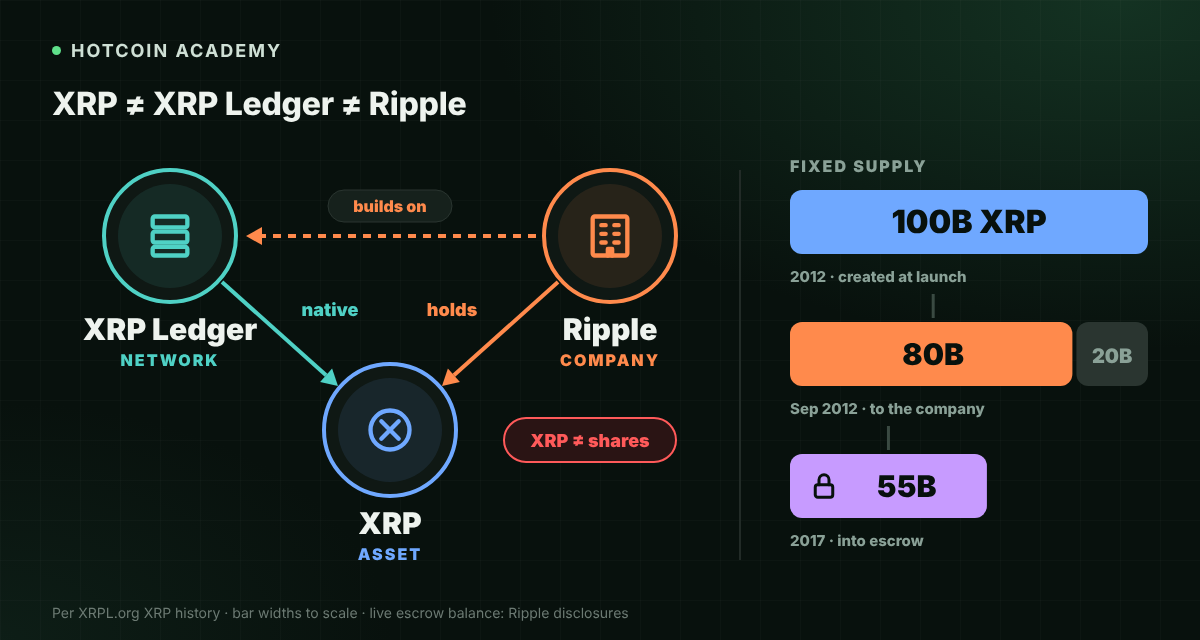
- XRP is the native asset of the XRP Ledger. The ledger was developed by Jed McCaleb, Arthur Britto, and David Schwartz between 2011 and early 2012; when the ledger launched, 100 billion XRP were created. XRP shares a similar name with the company Ripple, but they are not the same thing.
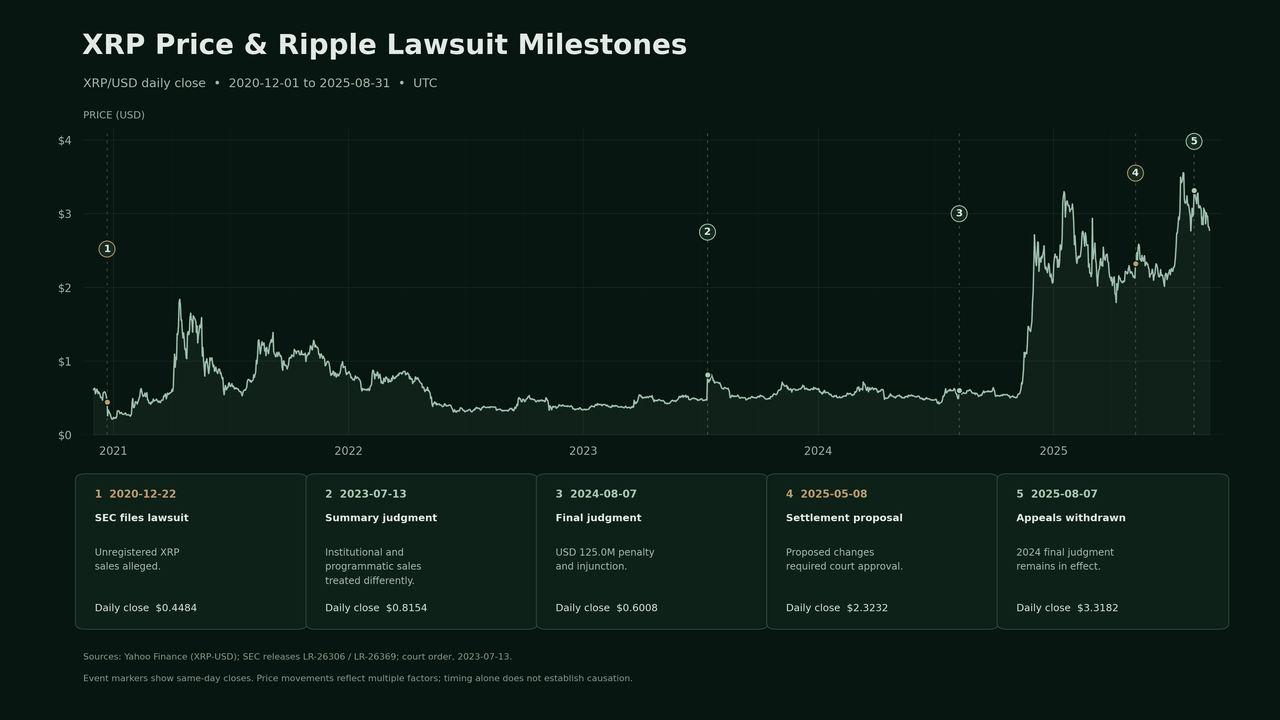
- On December 22, 2020, the SEC sued Ripple Labs and two of its executives in the U.S. District Court for the Southern District of New York, Case No. 1:20-cv-10832, alleging an unregistered securities offering.
- On July 13, 2023, Judge Torres drew distinctions by sales scenario: direct sales to institutional buyers were found to constitute unregistered investment contracts; for other situations such as blind-bid programmatic sales on digital asset exchanges, the defendants' related motions were granted. The court did not issue a blanket conclusion that "XRP itself is or is not a security in every circumstance."
- On August 7, 2024, the district court issued a final judgment imposing a $125,035,150 civil penalty on Ripple and enjoining it from violating the registration provisions of the Securities Act of 1933. In August 2025, after both parties withdrew their appeals, the SEC's release stated that the final judgment remains in effect.
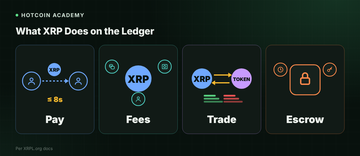
- According to official documentation, XRP is mainly used for direct transfers, paying network fees, on-ledger decentralized trading, and escrow functions.
- Whether XRP is open for trading on a given platform should be based on that platform's announcement center and trading page at the time. Until verified, no platform should be described as "already able to trade XRP."
What Is XRP and How Is It Different from Ripple?
XRP is the native crypto asset of the XRP Ledger. According to official XRPL documentation, the ledger was developed by Jed McCaleb, Arthur Britto, and David Schwartz between 2011 and early 2012; when the ledger launched, the source code created a fixed supply of 100 billion XRP.
In September 2012, Jed McCaleb, Arthur Britto, and Chris Larsen founded the company later known as Ripple (then named OpenCoin Inc.) and gave it 80 billion XRP in exchange for continued development on the XRP Ledger. After that, to avoid the word "Ripple" referring simultaneously to the technology, the company, and the asset, the community gradually standardized on XRP to refer to the native asset.
In other words, the ledger, the native asset, and the company are three things that need to be viewed separately. Holding XRP does not mean holding equity or debt in Ripple; Ripple holding or selling XRP does not mean the rules of the XRP Ledger can be unilaterally rewritten by the company.
In 2017, the company placed 55 billion XRP into escrow; official documentation explains this was to make the amount entering circulation more predictable. The exact amount still in escrow or already released should be based on what Ripple's official market performance page discloses at the time; this article does not reproduce unverified inventory figures.
If you simply want to place XRP within common categories, you can start with A Complete Guide to Cryptocurrency Types. Category labels only help locate use cases; they cannot replace judgments about supply, permissions, and legal characterization.
What Can Be Verified About the Ripple Lawsuit Outcome?
On December 22, 2020, the SEC filed a civil lawsuit in the U.S. District Court for the Southern District of New York against Ripple Labs, Inc., Bradley Garlinghouse, and Christian A. Larsen, Case No. 1:20-cv-10832. The SEC alleged that the defendants conducted an unregistered securities offering through the sale of XRP.
On July 13, 2023, Judge Analisa Torres ruled on both parties' motions for summary judgment. The court did not determine that "the XRP token" by itself is necessarily a security or not a security in every transaction; instead, it applied the Howey test based on the economic reality at the time of sale.
For institutional sales, the court found that Ripple's direct sales of XRP to institutional buyers satisfied the elements of an investment contract and constituted an unregistered securities offering; the SEC's motion on this part was granted.
For programmatic sales, the situation was different. These sales occurred on digital asset exchanges as blind-bid transactions where buyers and sellers did not know each other's identities. The court held that buyers could not know whether their payment went to Ripple, so the record could not establish the third prong of the Howey test—that buyers had a reasonable expectation of profits from Ripple's entrepreneurial or managerial efforts. The defendants' motions regarding programmatic sales, other distributions, and the two executives' personal sales were granted.
This ruling was later incorporated into the final judgment of August 7, 2024. According to the SEC's subsequent litigation release, the judgment imposed a $125,035,150 civil penalty on Ripple and issued an injunction prohibiting it from violating the registration provisions of the Securities Act of 1933. Both parties then appealed and cross-appealed to the U.S. Court of Appeals for the Second Circuit.
On May 8, 2025, the SEC published a proposed settlement framework, which included requesting the district court to consider lifting the injunction and changing the escrowed penalty to a $50 million payment to the SEC with the remainder returned to Ripple. That framework depended on whether the district court issued corresponding instructions and cannot be understood on its own as the judgment having been rewritten.
On August 7, 2025, the SEC issued Litigation Release No. 26369, stating that the parties had submitted a joint stipulation withdrawing their respective appeals to resolve the civil action; after the appeals were withdrawn, the district court's final judgment of August 7, 2024, remained in effect. Therefore, based on verifiable official statements, the appellate proceedings in this enforcement action against Ripple and its two executives have concluded, but the penalty and injunction have not been rendered invalid by later releases.
Describing the above as "Ripple won completely," "XRP has been conclusively determined not to be a security," or "all restrictions have been lifted" exceeds what the court and the SEC have actually stated. The case addressed the characterization of specific sales conduct under U.S. securities law; it cannot be automatically applied to other countries or regions, nor should it be treated as trading advice.
For ordinary users, the most confusing thing when reading the ruling is the difference between "the token" and "a particular sale." In the summary judgment, the court dealt with how Ripple and the related defendants sold XRP, not with pre-labeling all secondary-market transactions with the same tag. The legal assessment of the same asset may differ across scenarios; other countries or regions will not automatically adopt the same conclusion.
The case also cannot answer how the price will move or whether a given trading platform will open or restrict XRP. Whether a platform offers a trading pair depends on its own rules, local regulation, and announcements at the time, and must be checked separately.
If you want to understand "legal holding, legal trading, and legal tender are not the same thing" from a broader regulatory framework, you can read Is Crypto Legal?.
What Is XRP Mainly Used for on the Ledger?
Official XRPL documentation describes direct XRP payments as the most direct way to transfer value on the ledger: XRP moves from the sending account to the receiving account in a single transaction without an intermediate exchange path, and it notes that this usually completes in 8 seconds or less. The sender also needs to pay a transaction fee denominated in XRP.
XRP is also the native asset required for the ledger to operate. Opening a new account, paying transaction fees, and using ledger features all involve XRP. The specific parameters of the fee mechanism are adjusted with protocol rules; before viewing or transferring, the current network and wallet display should be treated as authoritative.
The ledger also has built-in decentralized trading functionality. Users can use Offers (equivalent to limit orders) to trade XRP for other tokens on the ledger or to complete cross-currency payments. Official documentation also states that the ledger supports escrow: locking XRP or eligible tokens by time or cryptographic conditions and releasing them to the recipient once the conditions are met.
These are features already written into the protocol layer. They do not mean that a particular cross-border remittance product necessarily uses XRP, nor that holding XRP automatically entitles you to Ripple's commercial returns. When evaluating use cases, go back to official XRPL documentation rather than relying only on promotional slogans.
The XRP Ledger also does not use proof-of-work mining. To keep an account usable, a reserve denominated in XRP usually needs to be maintained; the specific amount should be based on official documentation and network parameters at the time, and this article does not reproduce figures that may change. When paying an address that does not meet the requirement, the transaction may not create a new account as expected.
Also pay attention to asset identity. XRP's native form runs on the XRP Ledger; wrapped or mapped assets on other networks, even with similar names, may have different redemption paths and custody risks. When depositing or withdrawing, confirm the network, address format, and destination tag / memo requirements specified by the platform; missing or incorrect entries can cause the transaction to fail to be credited.
Want to Buy XRP? What Preparations Can You Make Now?
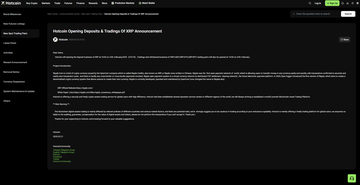
Before buying XRP, the best approach is to first go to the Announcement Center and the trading page to check for yourself whether XRP-related trading pairs exist, when they open, and what the order and deposit/withdrawal rules are at the time, and to act only after a formal announcement is published.
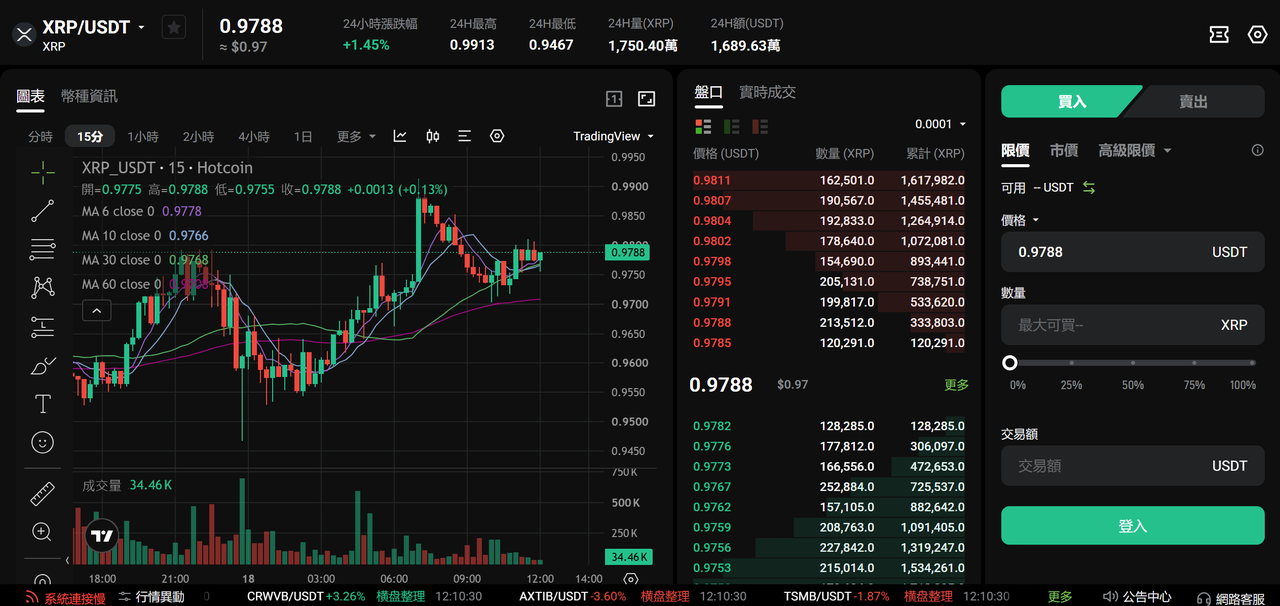
After registering a Hotcoin account, completing identity verification and security settings, and transferring trading funds, you can go to the XRP/USDT spot page to buy and sell XRP, or search for the XRP/USDT perpetual contract from the Hotcoin futures trading entry. Before placing an order, you can view real-time quotes, order book depth, and the bid-ask spread, and choose a market or limit order as needed. You can also refer to Blockchain Exchange Basics to learn about deposits, order placement, and trade inquiry processes. Futures trading involves leverage and forced liquidation risks; please confirm margin and related rules first.
If you later need to withdraw XRP to a personal wallet, you must also separately confirm the receiving address, network, and memo requirements. The XRP Ledger's address and tag rules differ from other chains; choosing the wrong network or omitting a required destination tag can prevent assets from arriving as expected.
For a first operation, check in the following order:
- Check the Announcement Center to see whether the XRP network is operating normally and whether we are under maintenance
- The trading pair, available balance, order types, and fees shown on the trading page
- Whether to plan to use limit orders, or first complete a process test with a small amount you can afford
- After execution, verify the trade record and account balance rather than immediately placing the next order
- If withdrawing, separately confirm the network, address, and destination tag
Before this information has been clearly verified on official pages, keeping preparatory actions to registration, security settings, preparing USDT, and following announcements is more prudent than placing orders directly based on second-hand accounts.
Common Misconceptions
- "The lawsuit is over, so XRP is deemed not a security everywhere" — U.S. courts ruled by sales scenario; this cannot be directly generalized into a global classification.
- "Ripple is XRP, so buying XRP is like taking equity in Ripple" — the company, the ledger, and the native asset are different entities; holding the token usually does not confer equity.
- "Official docs say transfers are fast, so it must be suitable for investment" — confirmation speed describes the payment experience, not price stability, and does not constitute investment advice.
- "If a platform lets you search for XRP, trading must already be open" — rely on official announcements and the trading page's formal opening information; search results or old tutorials cannot replace the rules at the time.
- "Tokens with XRP in their name on other chains can be withdrawn as the same asset" — native XRP and wrapped or mapped assets have different arrival paths; the network specified by the platform must be followed.
FAQ
Q1: Are XRP, "Ripple coin," and Ripple the same thing?
XRP is the ledger's native asset and is often called "Ripple coin" in Chinese. Ripple is a company, and early on it shared similar names with the ledger and the asset. The more accurate way to put it now is: XRP is the asset, XRP Ledger is the ledger, and Ripple is the company.
Q2: Is the SEC v. Ripple case completely over?
In this civil action against Ripple and its two executives, both parties withdrew their appeals in August 2025, and the SEC release states this was used to resolve the enforcement action. However, the civil penalty and injunction in the final judgment of August 7, 2024, remain in effect according to the same release. "The appeals have been withdrawn" cannot be equated with "all obligations in the judgment have been canceled."
Q3: Is buying XRP now still affected by the case?
The case addressed specific sales conduct by Ripple and related defendants under U.S. securities law. An ordinary buyer's trades on a trading platform are not the same as the institutional sales in the case, but how other countries or regions classify XRP still depends on local rules. This article does not judge whether you should buy.
Q4: What can XRP be used for?
According to official XRPL documentation, it can be used for direct transfers, paying network fees, and participating in the ledger's trading and escrow features. Whether a particular payment product actually uses XRP depends on that product's official explanation at the time.
Q5: How do I confirm where I can buy XRP?
Hotcoin's public market page already lists XRP/USDT spot. To view trading information, go to the Hotcoin XRP/USDT spot page, first confirm the trading pair, then log in to verify your available USDT balance, order types, minimum order size, and fees. If you need to deposit or withdraw XRP, go to the asset page separately to confirm the selected network and service status.
Conclusion
XRP is the native asset of the XRP Ledger, commonly used for transfers, paying network fees, and using the ledger's built-in trading and escrow features. It should be viewed separately from the company Ripple. The SEC's case against Ripple was resolved through the court's ruling distinguishing sales scenarios and the final judgment of August 2024; both parties later withdrew their appeals, but the final judgment remains in effect according to the SEC release. If you want to trade, first check the announcement center and trading page to see whether it is open, then prepare according to the basic spot trading process.
If you are using a trading platform for the first time, you can read Blockchain Exchange Basics first to get familiar with registration, security settings, and the checklist for your first spot trade.
Risk Disclosure: This article is for educational and informational purposes only and does not constitute investment, legal, or trading advice, nor does it guarantee the price, legal characterization, or tradability of any asset. The outcome of the U.S. lawsuit cannot automatically apply to other jurisdictions. Crypto asset prices are highly volatile and may result in loss of principal. Please refer to the content published at the time by courts, the SEC, and official project documentation, as well as the rules on the trading page at the time.
Lectura recomendada
Ver más