Crypto Scams List: 7 Common Tactics, Their Red Flags, and What to Check
A useful crypto scams list should help you recognize the decision a scammer is trying to rush. The details change, but many schemes rely on the same moves: impersonate a trusted person, promise an outcome that cannot be guaranteed, create urgency, or ask you to reveal access credentials or send assets to an address you do not control.
The seven patterns below cover common ways those tactics appear, from fake investment opportunities to recovery offers aimed at previous victims. A warning sign is a reason to pause and verify; it is not, by itself, proof that a specific person or company committed fraud. Check the claim through an independent source before acting.
1. Fake Investment Platforms and “Pig-Butchering” Schemes
In an investment scam, a contact may build trust over days or weeks before introducing a trading opportunity. The person can appear to be a friend, romantic interest, online mentor, or successful investor. They direct the target to a website or app that displays apparent account growth. The displayed balance may be fabricated, even when the interface looks professional.
A common warning appears when a victim tries to withdraw. The platform may demand a separate tax, deposit, verification payment, or “unlock” fee. Paying that amount does not prove the balance is real. It can lead to another fee request or the disappearance of the supposed support agent.
What to check: Treat any investment opportunity from an unsolicited contact as unverified. Search the exact company name, website address, and names of the people involved through independent sources. Do not rely on testimonials, screenshots, or account balances supplied by the promoter. If a platform will not let you withdraw without sending additional funds, stop and contact the service through a route you locate independently. If a pitch cites a specific token price, compare it with OnCoin’s cryptocurrency market prices; even a matching quote does not verify the platform’s displayed balance.
The FBI's cryptocurrency investment fraud guidance describes these schemes as socially engineered and trust-based. That explains why a friendly conversation can be part of the setup rather than evidence that the opportunity is legitimate.
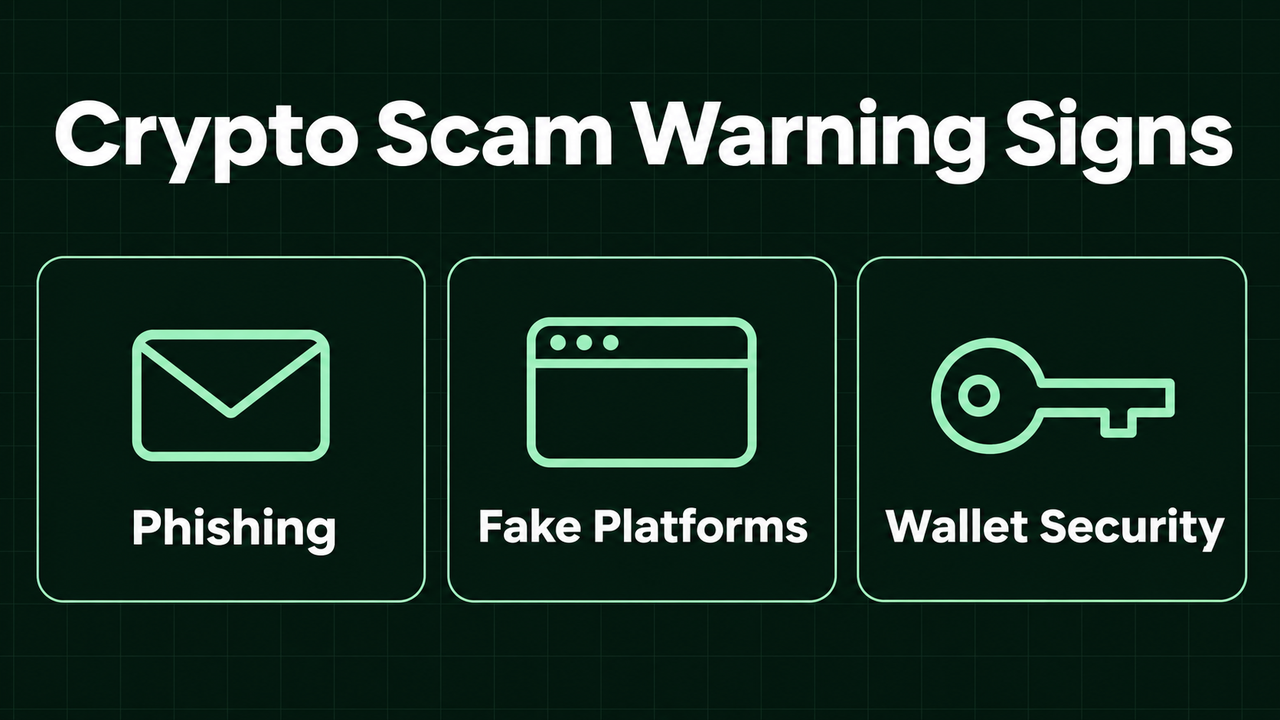
2. Phishing Messages and Fake Wallet Support
Phishing attempts arrive by email, text, social media, search ads, QR codes, or direct messages. A message may claim that your wallet is at risk, a transaction failed, or an account needs to be reverified. Its link leads to a lookalike page that asks for a password, recovery phrase, private key, or one-time code.
A wallet recovery phrase is not a support credential. Anyone who obtains it may be able to control the wallet, depending on the wallet design and network. A legitimate support agent should not need you to disclose a seed phrase or private key in a message. For more on how to protect a crypto seed phrase, see OnCoin’s wallet guide.
What to check: Do not open the supplied link. Navigate to the service using a saved bookmark or an address you independently know. Check the spelling of the domain and verify account alerts inside the official application. If you already entered a phrase or key, assume it has been exposed and follow the wallet provider's official security steps from a clean device.
The FTC's cryptocurrency scam guidance warns that unexpected messages can direct people to fake pages or connect them with impostors. Urgent language is designed to shorten the time available for verification.
3. Fake Exchange, Wallet, or Customer-Support Impersonation
An impersonator may copy a real service's logo, employee name, or support style. They can contact you first, or wait for you to post publicly that you have a problem. The fake agent may claim to freeze a transfer, protect your account, or move assets to a “secure” wallet. The requested action often gives the impostor access or causes the victim to send funds away.
A phone number or support link in an unsolicited message is not independently verified just because the sender knows your name or transaction details. Scammers may use public information or details disclosed in an earlier conversation.
What to check: End the conversation and find the provider's official support route yourself. Ask whether the reported issue appears in your account. Never share a password, one-time code, private key, or recovery phrase. Do not transfer assets to an address described as a temporary or protective account.
4. Giveaway and Celebrity-Endorsement Scams
A fake giveaway may promise to multiply any cryptocurrency sent to a listed address. The promotion can use a public figure's name, a copied video, a livestream, or a compromised social account. A countdown or limited participation window adds pressure.
The basic test is simple: if the “giveaway” requires you to send crypto first to receive more back, do not send it. A familiar face, verified-looking profile, or polished broadcast does not establish that the person authorized the promotion. Scammers can copy media and take over accounts.
What to check: Find the announcement on a separate official channel that you reach without using the promotional link. Compare the account handle and domain character by character. Do not connect a wallet or sign an unfamiliar transaction to “claim” a prize. A signature request can authorize actions even when no coins are visibly sent in that moment.
5. Fake Airdrops, Token Claims, and Malicious Approval Requests
A fake airdrop or token claim can appear as a direct message, a search result, a community post, or a copied project website. It may ask you to connect a wallet and approve a transaction. The screen may describe the action as a claim, eligibility check, or identity confirmation, while the transaction grants permissions or transfers assets.
Not every new token or airdrop is fraudulent. The risk is that a familiar name, logo, or ticker does not prove that a contract address is official. A transaction can also have consequences beyond the wording on the page.
What to check: Verify the announcement and contract address through the project's independently reached official documentation. Read the wallet's transaction details. If you do not understand what the request authorizes, reject it and seek an explanation from an official source. Never enter a recovery phrase to receive an airdrop. For token-specific checks, see OnCoin’s guide to how to spot a rug pull in crypto.
6. Livestream, Community, and Social-Account Impersonation
Crypto conversations happen in livestreams, chat rooms, forums, and group channels. Scammers may impersonate a host, reply to a viewer with a fake support account, post a fraudulent giveaway, or circulate a lookalike link in chat. They may also reuse a real creator's video while placing a different wallet address on screen.
A live broadcast is a format, not verification of every statement or account shown in it. The same is true of a large audience, a familiar username, or enthusiastic comments. Those signals can be copied, purchased, or manipulated.
What to check: Verify the host's identity from a separate official profile and confirm any address or offer through a second source. Do not treat a chat message as customer support.
7. Recovery Scams That Target Previous Victims
After an initial loss, a person may contact you claiming to be a blockchain investigator, lawyer, government agent, exchange employee, or recovery specialist. They may promise to trace and return the funds for an upfront fee, tax, or deposit. Some claim that they have already located the assets and only need a payment to release them.
The FBI warns about cryptocurrency recovery schemes, and the FTC advises consumers not to pay unexpected recovery offers. A blockchain trace is not the same as identifying who controls an address, obtaining a legal order, or returning funds. Private companies cannot issue seizure orders, and law enforcement does not require victims to pay a fee before investigating a crime.
What to check: Be skeptical of unsolicited recovery offers and guaranteed outcomes. Do not send more crypto, gift cards, or wire payments to release a supposed recovery. Do not share identity documents, passwords, one-time codes, or wallet credentials with an unknown contact. If you consider professional help, independently verify the provider and get a written description of the work, cost, and limits.
A Short Verification Routine Before You Act
When a crypto message, offer, or transaction request feels urgent, pause and run four checks:
- Verify the source independently. Find the official website or account without following the message's link.
- Check the requested action. A request for a seed phrase, private key, one-time code, or a transfer to a “safe” wallet is a serious warning.
- Look for pressure or guaranteed outcomes. A countdown, threat, secret opportunity, or promised return should increase scrutiny.
- Ask what evidence supports the claim. Check the address, contract, company, or announcement through a second reliable source.
These checks can help identify warning signs, but they cannot guarantee that every scam will be detected. A legitimate service can also experience outages or account problems. Verify the specific issue through its official support channel rather than assuming every failure is fraud.
If You Think You Have Been Scammed
Stop sending money and preserve messages, receipts, wallet addresses, transaction hashes, dates, times, domains, usernames, and screenshots. Contact the exchange, wallet provider, bank, or payment service you used through an independently verified channel. A completed cryptocurrency transfer is often difficult to reverse, and reporting does not guarantee a freeze or refund, but a clear record helps providers and investigators understand what happened.
In the United States, you can file a report with the FBI's Internet Crime Complaint Center and the Federal Trade Commission. The FBI asks for transaction details such as the asset, amount, addresses, date and time, and transaction hash. Report what you have even if some details are missing. Do not pay someone who contacts you unexpectedly and promises to recover the loss.
Conclusion
Most crypto scams are easier to recognize when you focus on the action being requested. An unsolicited contact wants access, a transfer, a signature, or an additional payment; urgency and impersonation are used to make that action feel safe. Verify the person, website, contract, and requested transaction through sources you reach independently. If you have already sent funds, preserve the evidence, contact the services involved, and report the incident without trusting a guaranteed recovery offer.
Lectura recomendada
Ver más