Crypto Limit Order Placement Tips and Execution Strategies
A cryptocurrency limit order lets you choose the price at which you are willing to buy or sell. The order executes only when the market meets the relevant conditions. Compared with a market order, a limit order gives you greater control over the execution price, but it may never fill. The real skill lies in setting a sensible price, reading order-book depth, and deciding when to keep waiting or cancel the order.
If you are new to crypto spot trading, begin with the basic purchase methods for popular crypto assets before learning specific order techniques: How to Buy Popular Cryptocurrencies: A One-Stop Guide to USDT, SOL, and DOGE
What Is a Cryptocurrency Limit Order?
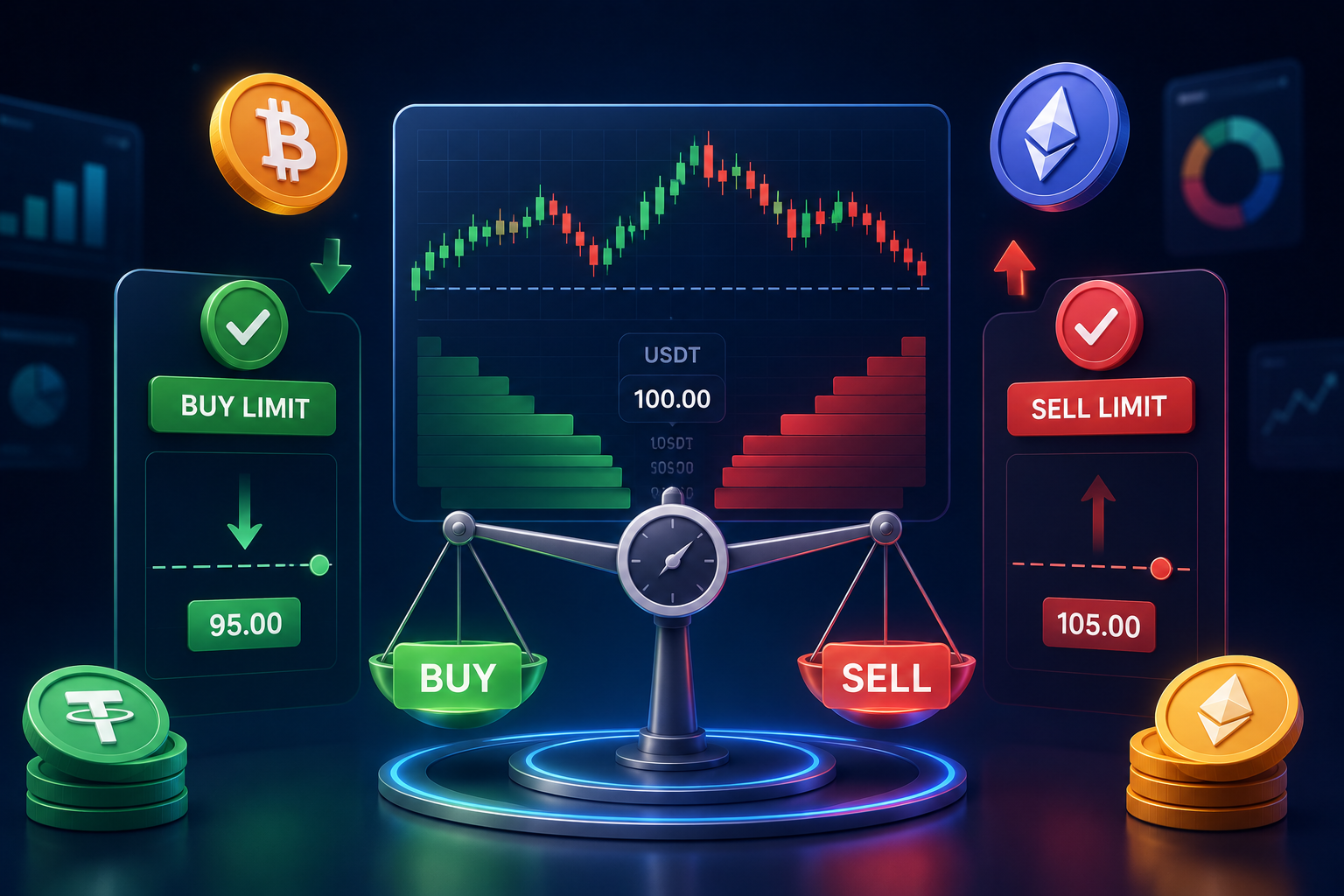
A limit order is an instruction that specifies a price and quantity in advance. When buying, you set the highest price you are willing to pay. When selling, you set the lowest price you are willing to accept. The order enters the execution process only when market conditions satisfy those limits.
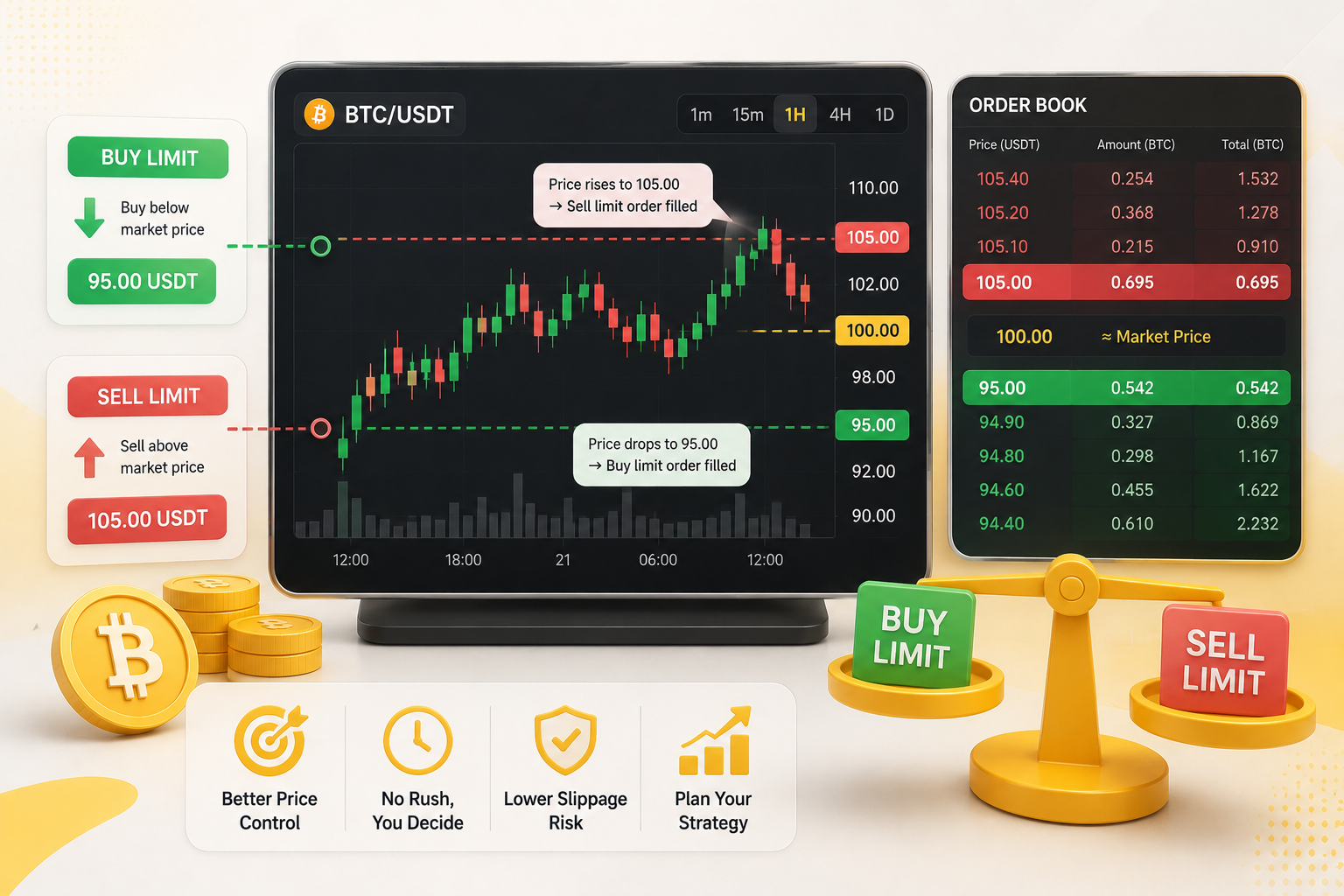
For example, suppose a cryptocurrency currently trades at 100 USDT and you want to buy only if it falls to 95 USDT. You can place a buy limit order at 95 USDT. If the market never reaches that price, the order will not fill automatically. This is the most important difference between a limit order and a market order.
Limit Order or Market Order: Which Should You Choose?
A market order prioritizes quick execution, with the actual fill price determined by available orders in the market. A limit order prioritizes price control but does not guarantee immediate execution. If your main concern is buying right now, a market order is generally more direct. If your priority is not paying more than a certain price, a limit order may be more appropriate.
Beginners should not think of a limit order as a “cheaper market order.” Its defining feature is precisely that it may not fill. If your chosen price is too far from the market, the order may remain open indefinitely.
Where Should You Place a Limit Order?
A reasonable limit price should reflect the current price, the recent trading range, and order-book conditions rather than intuition alone. A buy limit order placed far below the market generally has a lower probability of filling. An order placed very close to the market is more likely to fill, but it provides less price-control benefit.
The order book shows how buy and sell orders are distributed around the current market. A large buy or sell order near a certain price can help you assess a potential short-term execution area, but it does not mean that the large order will definitely support the price or inevitably be broken.
A useful rule is to decide which price you genuinely accept before considering execution probability. Do not keep changing your price merely to force a fill.
Why Has My Limit Order Not Filled?
The most common reason is that the market has not reached your specified price. Even if the price briefly touches your target, however, your order may not fill completely. Other orders at the same price may have been submitted earlier, and the available trading volume at that moment may be insufficient.
Therefore, when a candlestick appears to touch your limit price, do not assume the order has filled. Check the open-order or trade-history page to confirm whether the order is fully filled, partially filled, or still waiting.
This distinction is easy for beginners to overlook: submitting an order and completing a trade are two different states.
Ways to Improve the Fill Probability of a Limit Order
If you want a higher probability of execution, the most direct approach is not to raise your bid blindly but to place it closer to the market's actual trading range. You should also consider the pair's liquidity, because an illiquid market may have a wide bid-ask spread and a thin order book.
When the market direction is uncertain, you can divide the order across several prices instead of committing all funds at one level. For example, define several acceptable price zones and assign a different amount to each. This does not guarantee a profit, but it can reduce the impact of making one incorrect price judgment on your overall position.
Remember that staged orders may never all fill. If the market keeps rising while every buy order sits at lower levels, you may end up with no position at all.
When Should You Cancel a Limit Order?
A limit order should not be ignored after submission. If market conditions change significantly and the original trade thesis no longer holds, reassess the order instead of continually adjusting its price just to obtain a fill.
For example, you may initially believe a certain level presents a good buying opportunity, but later the project's fundamentals, market conditions, or your funding plan may change. Keeping the order may then serve no purpose. Canceling it does not necessarily mean your judgment failed; it is a normal risk-management response to a changed plan.
Especially during intense volatility, avoid chasing the market by repeatedly revising an unfilled order. Otherwise, a tool originally chosen for price control may turn into another form of buying high or selling low.
A Proper Limit-Order Process for Beginners
A simple process begins by choosing the asset and trade direction. Next, examine the current price and order book, decide the highest buying price or lowest selling price you can accept, set the quantity, and submit the order.
Do not assume that submission means the trade is complete. Check the order status. If it has filled, verify the change in your account balance. If it remains open, decide whether to wait, modify it, or cancel it as the market changes.
Beginners placing their first limit order should use a small amount to become familiar with submission, execution, and cancellation. The real goal is to develop trading discipline, not to find a supposedly perfect price that guarantees a fill.
What Are the Most Common Limit-Order Mistakes?
The most common mistake is focusing only on price while ignoring liquidity and order-book depth. A price may appear reasonable, but if the asset has low trading volume, the order may remain unfilled for a long time or the actual execution environment may differ substantially from expectations.
The second mistake is treating a “lower price” as automatically being a “good price.” A lower price does not necessarily make an asset worth buying. If the market has no reason to return to that level, the order may never fill. The third mistake is neglecting order status. After a partial fill, a trader who fails to check the order may mistakenly believe that all funds have been deployed.
Finally, one successfully filled limit order does not mean the strategy will remain profitable. A limit order is only an order tool. The outcome still depends on market price movements, trading costs, liquidity, and your overall trading plan.
FAQ
Is a Limit Order Guaranteed to Fill?
No. A limit order can fill only when the market price and order-book conditions meet its requirements. If the market never reaches the target price, the order may remain open indefinitely.
Should a Buy Limit Order Be Below the Current Price?
A buy limit order is often placed near or below the current market price, but no fixed rule requires it to be a certain percentage lower. The farther away the price is, the less likely the order is to fill, so base the decision on your trading plan and acceptable price.
Why Did My Order Not Fill When the Price Touched My Limit?
A brief touch does not mean your order was first in line. Other orders at the same price may have been submitted earlier, while the actual trading volume may have been insufficient. Your order may therefore fill only partially or not at all.
Can I Cancel a Limit Order?
An order that has not been fully filled can generally be canceled according to the platform's current rules. If it is partially filled, cancellation normally stops only the remaining unfilled portion. Refer to the order status displayed on the trading page.
Should Beginners Use Limit Orders or Market Orders?
A market order is generally simpler when fast execution matters most. A limit order is more suitable when execution price matters more and you can accept waiting. Neither type is universally better; the right choice depends on whether you need to control price or execution speed.
Risk Warning
A limit order helps control the order price, but it does not guarantee profit or eliminate the price volatility of crypto assets. The market may continue falling after your order fills, or it may never reach your target price.
Size each trade according to your financial circumstances, and do not commit more than you can afford simply because a price appears cheap. For illiquid or highly volatile crypto assets, pay particular attention to order-book depth, bid-ask spreads, execution conditions, and rapid price changes.
Lectura recomendada
Ver más