
Quick Guide to the Highly-Controlled Tokens
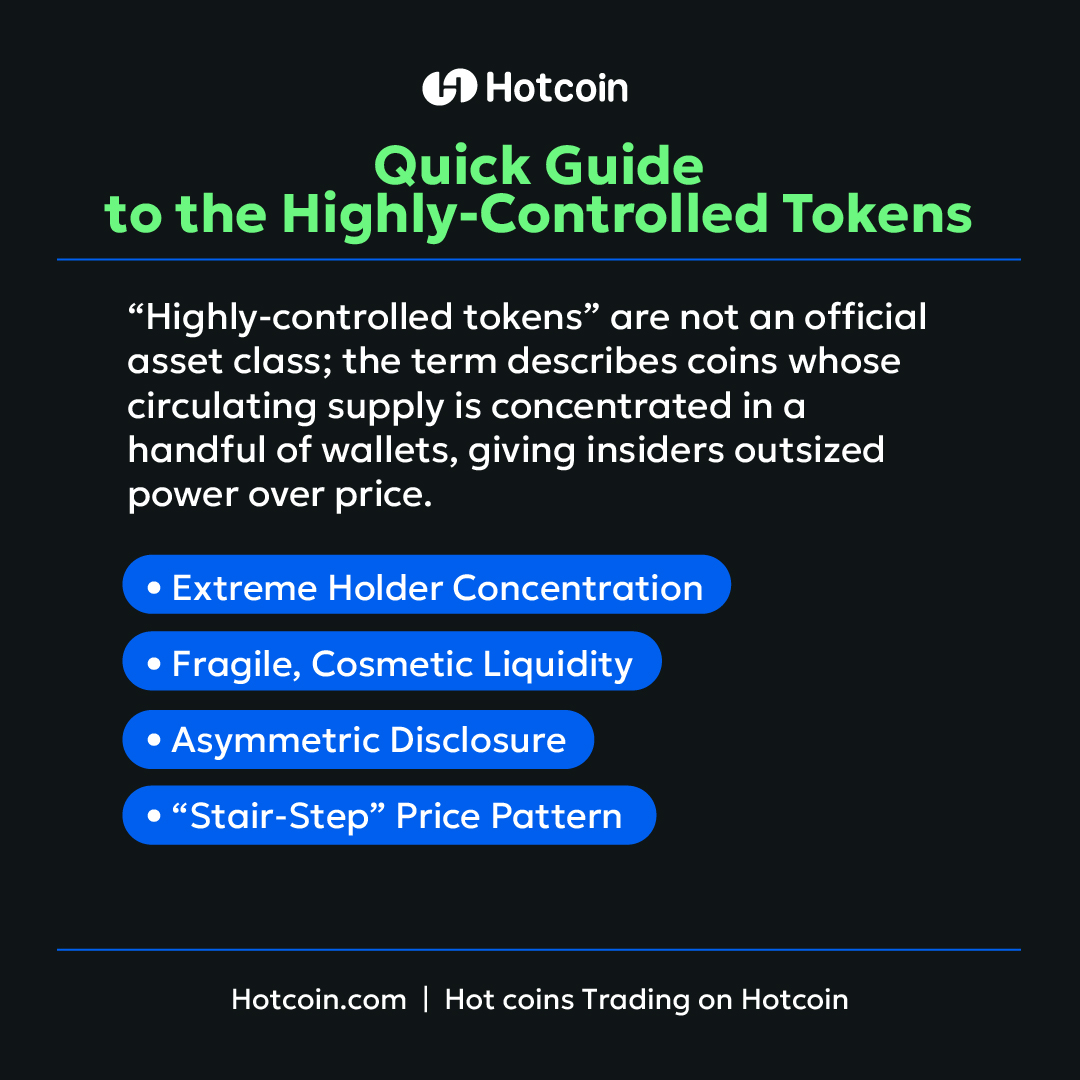
“Highly-controlled tokens” aren’t an official asset class—but the term refers to tokens with a heavily concentrated supply held by a few wallets. This gives insiders disproportionate influence over price. These tokens often appear in micro-cap launches, team-controlled ecosystems, or governance tokens that appear decentralized but lack real community liquidity. Spotting these traits early is key to avoiding sudden price crashes or rug-pull risks.
Extreme Holder Concentration
On-chain data frequently shows the top 10 addresses owning 60–90 % of supply. Coordinated buys or sells by this small set can swing the market, leaving retail traders unable to hedge effectively.Fragile, Cosmetic Liquidity
Market makers may post thick order walls on CEXs and DEXs to create an illusion of depth. Once they pull the orders, liquidity evaporates and slippage spikes.Asymmetric Disclosure
Teams hide real control using multisig wallets, bridges, or proxy contracts while releasing “good news” tweets to lure buyers. Audited lock-up reports or proof-of-reserves are rare.“Stair-Step” Price Pattern
A classic cycle of rapid pumps, sideways drifts, and renewed pumps forms piano-key-like charts. Each leg is usually synchronized with airdrops, influencer threads, or headline-grabbing partnerships.
Three On-Chain Warning Metrics
A sharply elevated Herfindahl Index of holder distribution.
An abnormal 24-hour ratio of canceled to placed orders.
Spikes in core-wallet activity minutes or hours before public announcements.
A small number of these projects eventually evolve—diluting ownership, improving transparency, and adding liquidity incentives. But until that happens, traders should stay cautious: keep positions small, use hard stop-losses, and treat every price spike with skepticism.
Lectura recomendada
Ver más



Service@hotcoin.com
Product@hotcoin.com
Business@hotcoin.com
Casecn@hotcoin.com