
The Web3 Tech Stack: Blockchain, Smart Contracts, and Decentralized Storage
What Is the Web3 Tech Stack?
The Web3 tech stack is the set of technologies needed to build and run decentralized applications. Blockchain is an important foundation, but a usable Web3 application also relies on components such as smart contracts, wallets, nodes, front-end interfaces, data indexers, and decentralized storage.
Traditional Web2 applications commonly follow a “website or app—centralized server—database” structure. After a user submits an action, the platform server verifies the user, updates the database, and returns a result. The platform controls both the business rules and user data.
A Web3 application may instead place its core assets and business rules on a blockchain. A user signs through a wallet, a node sends the transaction to the network, a smart contract executes the rules, the blockchain records the final state, and off-chain storage systems hold images or other large files.
For an introduction to the broader concept, see What Is Web3? A Complete Guide to the Next Generation of the Internet.
To understand why the internet is evolving from centralized platforms toward on-chain applications, see Web1 → Web2 → Web3: The Internet's Three Evolutions.
What Components Make Up the Web3 Tech Stack?
A typical Web3 application includes layers such as the blockchain, smart contracts, decentralized storage, wallets, RPC nodes, indexers, oracles, and a front-end interface.

These layers do not operate in complete isolation. When a user clicks a single “Swap” button, the process may involve wallet approval, an RPC request, a smart contract call, node validation, and block confirmation.
Blockchain: The Settlement and State Layer
A blockchain can be understood as a shared state system maintained by multiple nodes. Nodes validate transactions according to common rules, while a consensus mechanism determines which transactions are written into new blocks.
Blockchain networks mainly perform the following functions:
- Record address balances and asset ownership;
- Store smart contract code and state;
- Verify transaction signatures;
- Confirm the order of blocks under consensus rules;
- Provide public records that different participants can independently verify.
In a conventional database, an administrator usually has the highest authority to change or delete data. Blockchain uses node validation, cryptographic signatures, and consensus to restrict any single participant from changing historical records at will.
However, blockchains are not suitable for storing every type of data. Saving large images, videos, or complex websites directly on a mainnet is generally expensive, so projects often place only critical state, transaction records, and file hashes on-chain.
Ethereum is a key piece of smart contract infrastructure. Users can view the Ethereum asset page to learn about ETH. In addition to being transferable, ETH is used to pay Gas fees on the Ethereum network.
Smart Contracts: The Business Logic Layer
A smart contract is a program deployed on a blockchain. A user initiates a transaction through a wallet and calls a contract function, after which network nodes perform the computation according to the same code.
For example, a token swap contract might follow this process:
User selects assets to swap ↓ Wallet displays transaction details ↓ User signs with a private key ↓ Transaction is sent to a blockchain node ↓ Smart contract checks the conditions ↓ Asset balances and on-chain state are updated
Smart contracts have several important characteristics.
Publicly Verifiable
Verified contract code can usually be viewed through a blockchain explorer. Users and developers can inspect the contract logic, although reading code still requires technical knowledge.
Automatic Execution
When a transaction satisfies the conditions encoded in a contract, the contract executes according to those rules without manual approval from platform staff.
Composability
One smart contract can call another. For example, an asset management application may connect to a token contract, a swap protocol, and a price oracle so that several contracts jointly complete one operation.
Execution Has a Cost
Contract execution consumes network computing and storage resources, so users generally pay a Gas fee. More complex operations may cost more.
Code Is Not Inherently Safe
Smart contracts execute code as written, but the code itself may contain vulnerabilities. Some projects also include administrator privileges, pause functions, or upgradeable proxies. The presence of a smart contract alone does not prove that a project is fully decentralized or completely safe.
Decentralized Storage: Where Is Large Data Stored?
Blockchains are suited to recording assets and critical state, but they are not a low-cost place for large files. To address this limitation, some Web3 applications use content-addressed protocols such as IPFS.
A traditional website generally retrieves a file from a server location. A browser visits a designated server to download an image, and the original link may fail if that server shuts down or the file moves.
IPFS uses content addressing. It generates a content identifier, or CID, from the file's contents. If the file changes, its CID will normally change as well.
The basic IPFS process can be summarized as follows:
- A file is divided into data blocks;
- The system generates a CID from the data;
- Nodes announce that they can provide the data;
- A user searches for nodes that hold the requested CID;
- Nodes transfer the data through peer-to-peer protocols;
- The recipient verifies the data using its content hash.
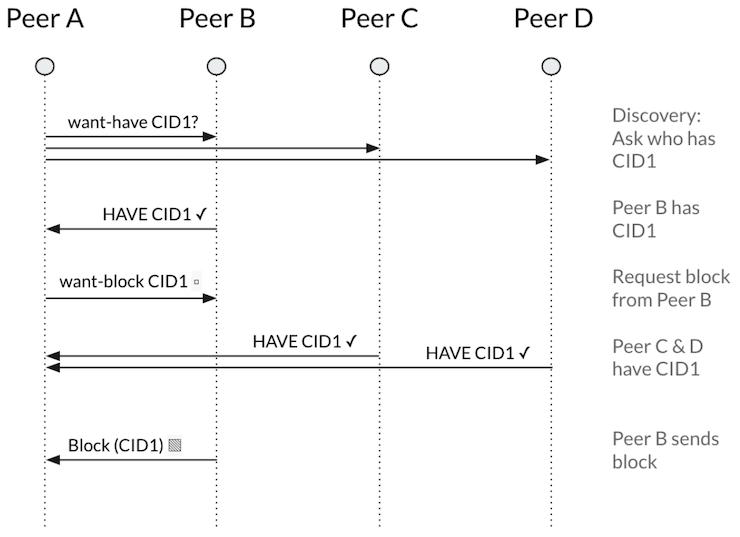
This approach ties a file address to the content itself rather than to a single server.
IPFS, however, is not a cloud service that automatically guarantees permanent storage. Continued availability depends on whether nodes keep providing the content or whether the project uses pinning and other persistent storage services.
Decentralized Storage Is Not the Same as Private Storage
Storing content on a decentralized network does not automatically encrypt the file.
IPFS provides protections for data transfer between nodes, but a person who obtains the CID may still read the content if the file itself was not encrypted. Projects handling identity, financial, or other sensitive information therefore need to encrypt files before upload and manage decryption permissions carefully.
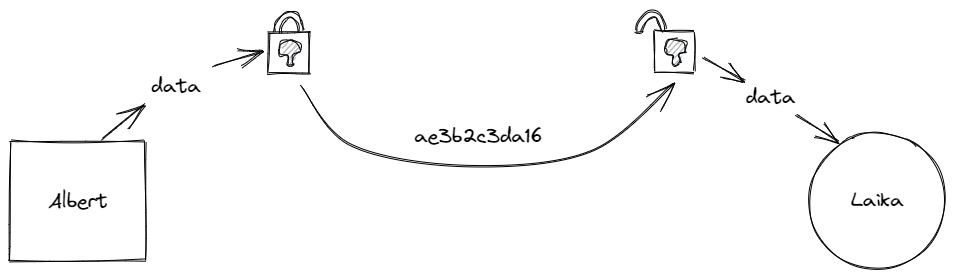
Access control also requires reliable authentication and authorization. Encrypted transmission without sound permission checks still cannot keep sensitive data secure.
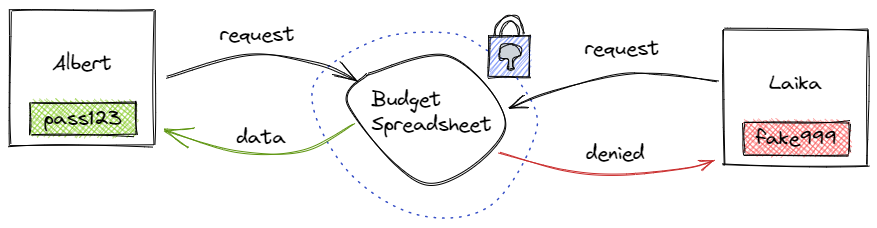
Information written to a public blockchain may also remain searchable for a long time. Users should never write identity documents, private keys, seed phrases, or other sensitive information directly to a blockchain or upload them to a public storage network.
The Roles of Wallets, RPC, Indexers, and Oracles
Blockchain, smart contracts, and decentralized storage form an important foundation, but ordinary users still need other tools to complete Web3 operations.
Web3 Wallets
A Web3 wallet generates and manages addresses, safeguards private keys, displays assets, and signs transactions. Strictly speaking, tokens are recorded on-chain against a blockchain address rather than stored inside the wallet app itself.
Users can visit the Hotcoin Web3 Wallet to access wallet features. Before connecting to an application or signing a transaction, verify the network, domain, contract address, asset, and approval limit.
RPC Nodes
RPC is an important interface through which wallets and applications connect to blockchain nodes. A front end can use RPC to query balances, read contract state, or send signed transactions.
Even if a smart contract itself is decentralized, an application that depends on only one RPC provider may still suffer outages or abnormal data responses. Some projects therefore prepare multiple node services.
Data Indexers
Blockchains hold large volumes of data, and querying every block directly is inefficient. Indexers organize on-chain transactions, events, and address activity so front ends can quickly display transaction history, NFT lists, or protocol data.
Oracles
Smart contracts cannot independently confirm real-world information. Oracles deliver prices, weather data, match results, and other off-chain information to on-chain contracts.
If oracle data is wrong, lending, insurance, or derivatives contracts that depend on it may also be affected. Data sources and update mechanisms are therefore important when assessing project risk.
How Does a Web3 Operation Work?
When a user submits an on-chain transaction through a DApp, the complete process may include the following steps:
- The user opens the DApp in a browser or app;
- The DApp reads blockchain state through RPC;
- The user connects a Web3 wallet;
- The DApp prepares transaction data for signing;
- The wallet displays the network, contract address, amount, and Gas fee;
- The user signs with a private key;
- An RPC node broadcasts the transaction to the blockchain network;
- Network nodes verify the signature and execute the smart contract;
- Consensus confirms the transaction and writes it into a block;
- An indexer reads the new transaction result;
- The DApp front end updates the balance and status shown to the user.
If the operation also involves NFT images, project documentation, or other large files, the application may retrieve content from IPFS or another off-chain storage system at the same time.
How Can You Evaluate a Web3 Project's Architecture?
Users do not need programming skills to review the basic technical structure of a project. Consider the following questions:
- Which blockchain does the project use, and does it publish the network name and contract addresses?
- Is the contract code verified, and is security audit information available?
- Can the contract be paused, upgraded, or used to mint or freeze assets?
- Are administrative privileges controlled by one address or a multisignature wallet?
- Where are images and documents stored, and is there a persistence plan?
- If the front end, RPC service, or indexer fails, can users still access the contract by other means?
- Does the wallet approval request an unlimited allowance, and is that consistent with the action?
- Which oracles and off-chain data sources does the application use?
- Can the official domain, social accounts, and contract addresses be cross-verified?
“Deployed on a blockchain” does not mean every component is decentralized. Some projects place only a token or settlement contract on-chain, while their website, database, RPC service, and administrator privileges remain under the project team's control.
How Can You Start Exploring Web3?
New users can download the Hotcoin App or visit the Hotcoin Web3 Wallet to learn about wallet and on-chain asset features.
Before getting started, understand these basic security principles:
- Never send a seed phrase or private key to anyone;
- Do not connect your wallet through links received in unsolicited messages;
- Before signing, verify the network, amount, asset, and approval limit;
- Use a small test amount for your first transfer or cross-chain operation;
- Regularly review and revoke contract approvals you no longer need;
- Do not treat “high returns” as proof that a smart contract is safe.
Conclusion
The core Web3 technology stack is not a single blockchain but a set of cooperating systems. Blockchain handles validation and settlement, smart contracts execute rules, decentralized storage holds large content, wallets manage identity and signing, while RPC nodes, indexers, and oracles connect applications to on-chain data and the outside world.
Understanding these components helps users identify which functions a project has put on-chain, which parts still depend on centralized services, and what risks may arise during use.
Users can visit the Hotcoin website to learn more about the platform and its Web3 services.
Recommended
View more


service hotcoin.com
producthotcoin.com
businesshotcoin.com
casecnhotcoin.com