
How to Track Cryptocurrency Live Prices: The Whole Market in One Place
Cryptocurrency live prices can be checked instantly on professional platforms, including current prices for major coins, 24-hour changes, market capitalization, trading volume, and price charts. Users can get the latest data from exchange market pages such as Hotcoin, or from aggregators such as CoinGecko and CoinMarketCap, to quickly assess the market's overall direction.
The total global cryptocurrency market capitalization currently stands at roughly $2.65 trillion, based on August 2026 data, while Bitcoin dominance commonly fluctuates in the 55%-60% range. Live market data is more than a set of numbers; it is the basis for trading decisions. The sections below explain how to view and interpret it efficiently in practice.
What Core Data Does a Live Cryptocurrency Market Page Include?
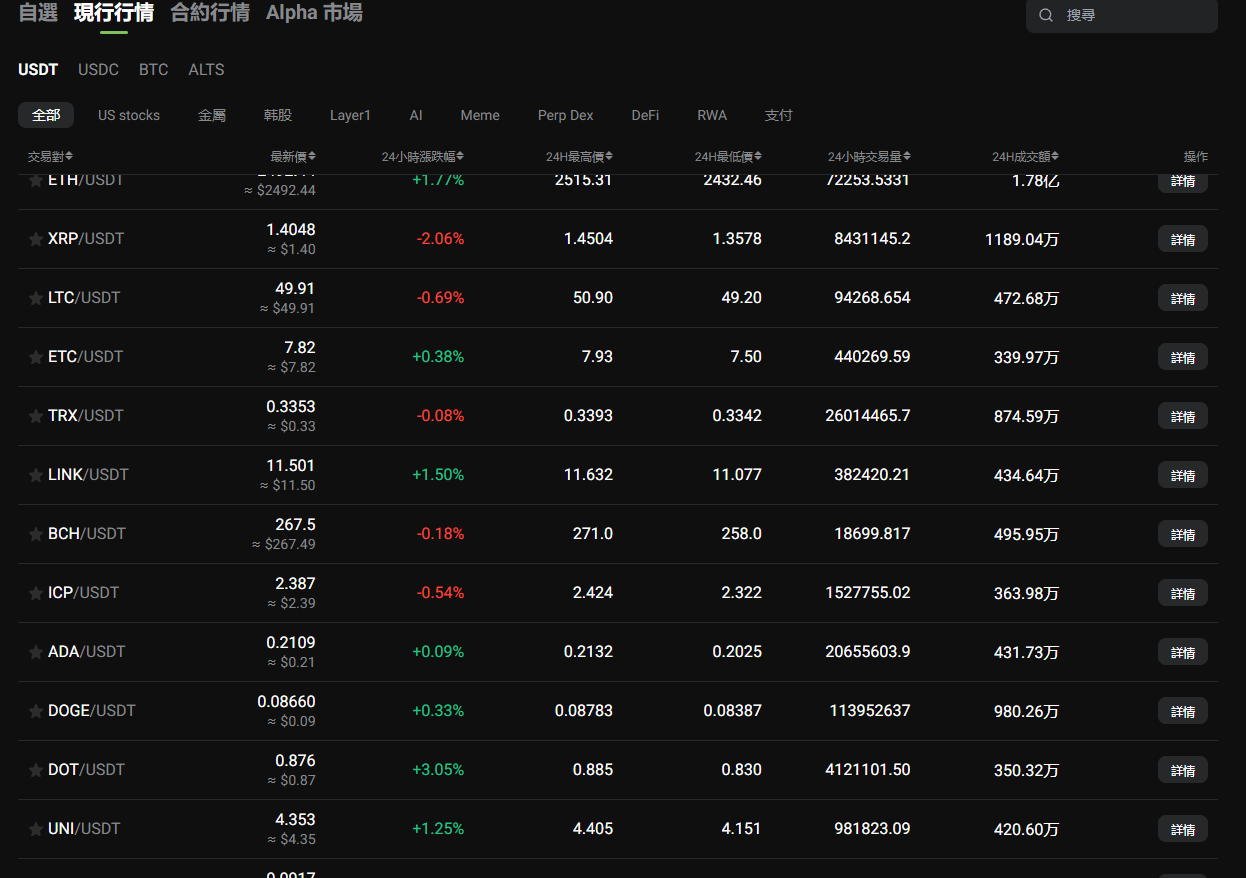
Professional market pages usually display the following key indicators, compiled in real time from exchange order books:
Last price: The latest reference price at which a trade occurred. It may vary slightly between exchanges.
24-hour change: The percentage change in price over the past 24 hours, useful for quickly assessing short-term strength or weakness.
Market capitalization: Price multiplied by circulating supply, reflecting an asset's size and position in the market.
24-hour trading volume/value: Measures liquidity and attention. High volume often accompanies a more credible trend.
24-hour high/low: Shows the day's trading range.
Seven-day or longer-term chart: Helps reveal the medium-term direction.
These figures are easy to review on Hotcoin's market pages, including /tools/crypto-price/ and related tools. Prices can be quoted in USDT, BTC, and other assets, while users can switch between spot and derivatives views. Compared with pure aggregator sites, exchange data is closer to the actual executable price and generally has lower latency.
How to View Cryptocurrency Live Prices on Hotcoin
Open the Hotcoin website or app and select Markets, or go directly to the market page.
The default view shows popular assets, top gainers, top losers, new listings, and volume rankings, helping you identify current areas of interest quickly.
Enter a coin name or ticker in the search bar, such as BTC, ETH, or SOL, to open its detail page.
On the detail page, review the candlestick chart, order-book depth, live trades, and 24-hour figures. Time frames from one minute to one day are available.
Add assets to a watchlist and set price alerts so you do not miss important levels.
This workflow is more closely aligned with real trading than many competing services: the data links directly to execution, reducing the cost of switching between platforms. This practical advantage is rarely covered by leading search results, many of which only show static tables.
A Practical Framework for Interpreting Live Market Data
Do not focus only on the percentage gain or loss. Consider the data in the following order:
Start with the overall market: changes in total market capitalization and Bitcoin dominance indicate whether the market is rising broadly, falling broadly, or moving in a more selective pattern.
Then examine liquidity: check whether volume is expanding along with price. A price increase accompanied by declining volume is often difficult to sustain.
Compare different sources: aggregators such as CoinGecko provide an average price, while exchanges provide an executable price. A large discrepancy may indicate elevated slippage risk.
Use multiple time frames: short-term gainers lists can help identify intraday opportunities, but longer periods are needed to confirm the trend.
Recognize the limitations: percentage moves in low-cap, low-volume coins can be exaggerated. Poor liquidity also increases slippage and manipulation risk.
This framework provides an actionable process that many leading results omit, helping users move from simply reading numbers to making informed decisions.
Differences from Competing Services and Additional Value
A real Hotcoin workflow, including watchlist and alert features.
A reproducible sequence for interpreting data, with risk warnings for situations in which low liquidity makes signals less reliable.
A complete path from data to action.
These elements directly address the common search-result gap of displaying data without explaining it, offering greater practical value.
Common Use Cases and Important Considerations
Daily monitoring: Add major coins such as BTC and ETH, together with popular altcoins, to a watchlist and use gainers and losers rankings to gauge sentiment.
Pre-trade confirmation: Check the target asset's order-book depth and volume to avoid liquidity traps.
Risk warning: Market data is provided for reference only and does not constitute investment advice. Prices fluctuate in real time, and past performance does not predict future results. Always consider your own risk tolerance and the exchange's security and compliance requirements.
Frequently Asked Questions
Q1: Why do cryptocurrency prices differ between platforms?
A: Platforms use different data sources and update frequencies. Aggregators calculate weighted averages across multiple exchanges, while an exchange shows the latest price traded in its own order book. When trading, use the actual price on the platform where you place the order.
Q2: How often is live market data updated, and is it reliable?
A: Major platforms usually update their data every second or even faster. Reliability depends on the breadth of data sources and anti-manipulation controls. Cross-check at least two sources, especially for small-cap assets.
Q3: Which indicators should beginners examine first?
A: Start with the last price, 24-hour change, trading volume, and market capitalization. Once you understand these four, gradually add order-book depth and candlestick analysis.
Q4: Should I immediately buy coins listed among the top gainers?
A: Not necessarily. A sharp increase may have already exhausted much of the short-term upside and is often accompanied by high volatility and low liquidity. Consider volume, fundamentals, and your own strategy, and avoid chasing price spikes.
Q5: How can I set useful price alerts?
A: In the watchlist tools on Hotcoin or another major platform, set alerts around important support and resistance levels. Too many alerts can cause alert fatigue, so prioritize levels that are relevant to your trading plan.
Using these methods, users can obtain cryptocurrency live prices quickly and accurately and turn them into practical judgments. Consider bookmarking Hotcoin's related tools, including crypto-price, btc-price, eth-price, hot-crypto-prices, and crypto-gainers-losers, to establish a consistent monitoring routine. Markets change quickly, so continued attention and a rational approach are essential for effective long-term use.
Recommended
View more
Service@hotcoin.com
Product@hotcoin.com
Business@hotcoin.com
Casecn@hotcoin.com