
10 Essential Cryptocurrency Terms Every Beginner Should Know
When you first encounter cryptocurrency, placing an order is often easier than understanding its unfamiliar language. Why does a wallet not actually “hold coins”? How is an address different from a private key? Does a successful transaction mean that funds have safely arrived? Why is Gas not fuel? Does a large market capitalization mean that an equivalent amount of cash sits inside a project?
Memorizing a one-line definition for each term is not enough. Misunderstanding one concept might merely lead to a bad reading of the market, but it can also cause someone to use the wrong network, expose a seed phrase, sign a malicious approval, or become unable to sell in an illiquid market.
This glossary covers the first ten groups of concepts a beginner should master. Each section explains what a term means, how it works, common misconceptions, and what to verify before using it. Related concepts that are easily confused are discussed together. For a broader roadmap spanning definitions, history, asset categories, and risks, read the Complete Beginner’s Guide to Cryptocurrency.
Why Are Cryptocurrency Terms So Easy to Misunderstand?
First, familiar words take on new technical meanings. A “wallet” sounds like a container for cash, but an on-chain wallet mainly manages keys and reads a public ledger. “Mining” does not mean digging coins out of the ground; on some networks, it is the process of competing to record transactions and earn rewards.
Second, one word can refer to different layers. A “network” may mean Bitcoin mainnet, Ethereum, a Layer 2, or a testnet. An “account” may be controlled by a private key or implemented as a smart contract. “Yield” may come from protocol issuance, borrowing interest, trading fees, or platform subsidies.
Third, industry marketing can turn technical labels into implied quality marks. Decentralized, on-chain, AI, RWA, stablecoin, and governance token describe certain structures; none of them automatically proves that a project is safe, legal, transparent, or worth buying.
Fourth, the industry uses many abbreviations at once. TVL, FDV, APY, APR, DEX, CEX, PoW, PoS, L1, and L2 often appear in the same discussion. Acting on literal meanings or community explanations alone can hide important conditions and risks.
Instead of memorizing terms in isolation, ask five questions about each one: What object does it describe? Who controls it? Where is the data? What responsibility does the user bear? Can an abnormal action be reversed or recovered?
Term 1: Blockchain
A blockchain is a shared ledger maintained by many computers under a common set of rules. Transactions or state changes are grouped into blocks, the blocks are cryptographically linked in order, and nodes update their local records after verification.
The value of a blockchain is not simply that it puts data online. It allows participants who do not fully trust one another to verify the same history and current state. Public networks generally let anyone read the ledger, while miners, validators, or other consensus participants determine which valid transactions become part of the record.
A blockchain does not mean that a database can never change. Public-chain history is highly resistant to tampering, but chain reorganizations, protocol upgrades, governance decisions, contract upgrades, and extreme consensus attacks can still alter state or rules. Networks also differ in security budgets, node distribution, and finality mechanisms.
Beginners should verify the chain, its block explorer, its native Gas asset, the time needed for stronger finality, whether the network has ever halted, and whether a same-named asset uses the official contract on that chain.
To see how ledgers, nodes, signatures, and consensus form a complete system, read What Is Cryptocurrency? A Clear Guide to Digital Currency.

Term 2: Coin and Token
A Coin generally refers to a blockchain’s native asset. BTC is recorded directly by the Bitcoin protocol, while ETH is Ethereum’s native asset. Native Coins commonly pay network fees, reward miners or validators, support staking, and transfer value.
A Token is usually issued by a smart contract on an existing blockchain. It relies on the underlying network’s security and execution environment, and transfers or interactions generally require that network’s native Coin for Gas.
Coin and Token are technical classifications, not rankings of value or safety. A native Coin may belong to a very small network, while a Token may be issued by an established institution with transparent reserves. Conversely, a popular name, consistent logo, and polished website do not prove that a Token is official.
One project may have a native coin, wrapped versions, and bridged representations at the same time. Their names may look similar, but they rely on different custodians, bridges, or contracts. Always verify both the network and contract address before transferring.
Stablecoins, exchange tokens, governance tokens, DeFi receipts, RWAs, NFTs, and Meme coins often overlap. For a systematic explanation of these categories, read How Many Cryptocurrencies Exist? A Beginner’s Guide to Token Categories.
Term 3: Wallet
A cryptocurrency wallet mainly generates, stores, or invokes keys, constructs signatures, and reads blockchain balances through nodes. Asset records remain on-chain rather than inside a phone app, browser extension, or hardware device.
With a custodial wallet, a platform or service provider controls the critical keys and the user accesses assets through an account, password, KYC process, and platform rules. This is easier to use and may support account recovery, but withdrawals, asset segregation, and service continuity depend on the platform.
With a self-custody wallet, the user controls the keys. The benefit is the ability to sign and connect to on-chain applications without platform approval. The cost is that losing a seed phrase, signing a malicious request, using an infected device, or sending funds to the wrong address usually cannot be reversed by customer support.
A hot wallet remains connected to an internet-enabled device and is convenient for routine, smaller interactions. A hardware wallet isolates critical signing operations in a dedicated device and is better suited to larger balances, but fake devices, faulty backups, and blind signing can still cause losses.
Disconnecting a wallet only ends a website session; it does not automatically revoke existing on-chain token approvals. Deleting an app also does not delete on-chain assets, although control may be permanently lost without the correct seed phrase or private key.

Term 4: Address, Private Key, and Seed Phrase
An address is a public receiving identifier. It can be shared with a payer or searched in a block explorer. Publishing an address does not directly reveal its private key, but it exposes the address’s on-chain balance and transaction history.
A private key is secret information used to create digital signatures. Whoever controls it can generally authorize actions for the corresponding account. It is not an ordinary website password: after exposure, a “forgot password” process cannot invalidate the old private key.
A seed phrase, also called a recovery phrase, is a sequence of words generated by a wallet and commonly used to restore a group of keys and accounts. It is not a verification code, a customer-service check, or a login password. Anyone asking for the complete phrase should be treated as someone attempting to take control of the wallet.
A seed-phrase backup may not include accounts later imported through separate private keys. Identical-looking addresses across several chains also do not guarantee that every network, account type, and derivation path can be restored from the same backup.
Never enter a private key or seed phrase into a search engine, AI chat, online form, cloud drive, messaging app, or supposed synchronization tool. Legitimate customer support will never ask a user to send these secrets.
Term 5: Transaction Hash and Block Confirmation
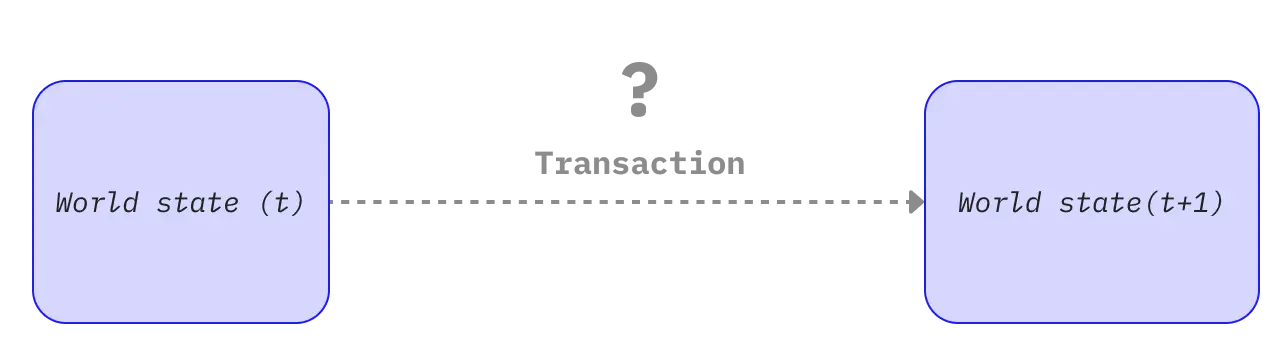
A transaction hash, often called a TxID, is one of the unique identifiers for an on-chain transaction. It can be pasted into the relevant network’s block explorer to review the sender, recipient, asset, amount, Gas, status, block height, and contract events.
After a wallet submits a transaction, it may first remain pending. It receives its first confirmation when a miner or validator includes it in a block. As more blocks are added, the probability of a reorganization or replacement usually decreases, but networks define finality differently.
A Success status only means that the network executed the transaction successfully; it does not prove that the user’s economic objective was achieved. Sending a Token to a contract address that does not support deposits may still succeed on-chain. A malicious approval may succeed as well. After a cross-chain bridge transaction succeeds on the source chain, delivery on the destination chain may still require another stage.
Failed means that execution reverted, but fees for computation and block resources already consumed are generally still charged. A transaction may remain Pending because of congestion, fee settings, or the account Nonce. Repeatedly sending different transactions can create additional conflicts.
When investigating a transfer, confirm the network first and then inspect the TxID. Do not rely only on wallet screenshots or chat records. A centralized platform may also wait for a specified number of confirmations before crediting a deposit.
Term 6: Consensus Mechanisms, PoW and PoS
A consensus mechanism helps distributed nodes agree on valid transaction ordering and the current ledger state without a single central bookkeeper.
Proof of Work, or PoW, generally involves miners committing computation and energy to compete for block production. Rewriting substantial history would require an attacker to control enough hash power and sustain the associated cost. Bitcoin uses PoW, but its difficulty, block-production, and confirmation rules should not be copied directly to every PoW network.
Proof of Stake, or PoS, generally requires validators to lock native assets to participate in block production and attestations. Malicious or negligent behavior may be penalized through slashing. Security also depends on stake concentration, client diversity, governance, and penalty design.
PoW does not mean absolute safety, and PoS does not eliminate energy or centralization concerns. Smaller networks may face rented-hash-power attacks, concentrated stake, validator collusion, or network halts.
“Staking yield” is not risk-free interest. Rewards may come from new issuance and transaction fees, while users remain exposed to asset-price, lockup, validator, slashing, liquid-staking Token, and smart-contract risks.
Term 7: Gas and Network Fees
Gas is a unit used by some smart-contract networks to measure consumption of computation, storage, and block resources. Users pay fees in the network’s native asset when they transfer funds, approve spending, perform a Swap, or call a contract.
Gas Limit is the maximum amount of resources made available for an operation, not a fixed charge. Gas Used is the amount actually consumed. Under EIP-1559, Gas Price or the combination of Base Fee, Priority Fee, and Max Fee affects both the final fee and transaction priority.
Increasing a fee can improve a transaction’s competitiveness for inclusion, but it cannot make an otherwise reverting contract call succeed. Failed transactions usually still consume Gas for the work already performed.
Networks cannot share Gas merely because their address formats look similar. A USDT transfer on Ethereum requires ETH. A Layer 2 may also use ETH, but its fee structure can include the cost of publishing data to Layer 1.
Before transacting, beginners should check the balance of the network’s native asset, estimated total fee, recipient address, approval amount, slippage, and contract-simulation result.
Term 8: Smart Contract
A smart contract is a program and its state deployed at a blockchain address. Nodes execute the same code under common rules, and the result is written to the shared ledger.
Smart contracts can issue Tokens, manage loans, run automated market makers, custody NFTs, distribute revenue, and execute governance decisions. They reduce reliance on human intermediaries in some processes, but they are not actually “smart”; they only follow code, inputs, and permissions.
Public code does not mean that a contract has been thoroughly audited. Passing an audit does not mean it has no vulnerabilities. Immutability does not guarantee safety, while an upgradeable contract may have logic changed by an administrator, multisig, or governance process.
Users should also investigate proxy contracts, administrator keys, pause and freeze powers, oracles, cross-chain bridges, external protocol dependencies, and existing approval amounts. Even a protocol without a direct bug can fail because a dependency breaks.
Signing an Approve, Permit, or global NFT approval may allow a contract or third party to move assets later. A free signature, Gasless signature, or login signature should not automatically be considered harmless.
Term 9: Market Capitalization, Circulating Supply, and FDV
A crypto asset’s market capitalization is generally calculated as its current price multiplied by circulating supply. It is a valuation metric, not proof that an equivalent amount of US dollars is stored in the market, nor evidence that every holder could sell at the displayed price.
Circulating supply is the amount a data provider considers available to the market. Platforms may treat team allocations, treasury holdings, staked assets, burned supply, and bridged assets differently.
Fully Diluted Valuation, or FDV, generally multiplies the current price by maximum supply or by the total supply expected after full release. When substantial future unlocks remain, FDV can be far above current market capitalization.
A low unit price does not mean an asset is cheap. A Token priced at $0.01 with a supply of one trillion may carry a higher overall valuation than an asset worth tens of thousands of dollars per unit but with limited supply.
Market capitalization is also affected by liquidity. A very small trade can push up the last traded price, which is then multiplied by the entire supply to produce an apparently enormous figure. Analysis should also consider market depth, ownership concentration, unlock schedules, real utility, and realizable revenue. To distinguish utility and a quoted price from sustainable value, read Why Does Cryptocurrency Have Value? Scarcity and Consensus.

Term 10: Liquidity and Slippage
Liquidity describes how easily an asset can be bought or sold without materially moving its price. It is not measured only by 24-hour volume; order-book depth, bid-ask spread, pool size, authenticity of trading activity, and distribution across markets also matter.
Slippage is the difference between an expected execution price and the actual execution price. It grows when the market moves quickly, an order is large, or liquidity is limited.
On an automated-market-maker DEX, a trade changes the proportion of assets in a pool. Setting slippage tolerance too low can cause a transaction to fail. Setting it too high can accept a substantially worse price and increase exposure to front-running or sandwich attacks.
A displayed price does not guarantee that an asset can be sold at that price. Honeypot Tokens, extreme sell taxes, blacklists, pause functions, or a tiny liquidity pool can make a displayed balance impossible to realize.
Beginners should ask more than “How much did it rise?” They should also ask where an order of their size would execute, what the spread and fees are, whether they can exit in stages, and whether the market is concentrated on one untrusted venue.
What Other Abbreviations Will Beginners Encounter?
FOMO means fear of missing out and often appears when prices surge and social media becomes saturated. It describes an emotion, not a reason to buy.
FUD originally means fear, uncertainty, and doubt, although communities also use it to dismiss negative news. Information labeled FUD still needs factual verification; the label is not a reason to ignore risk.
DYOR means Do Your Own Research. Real research includes reviewing official documents, contracts, supply, permissions, teams, regulation, and contrary evidence, not merely watching an influencer’s video.
HODL began as a misspelling and later came to mean long-term holding. Time alone does not repair weak fundamentals, smart-contract vulnerabilities, or vanished liquidity.
ATH and ATL mean all-time high and all-time low. Historical position alone cannot predict the next move.
APR expresses a return using a simple annualized rate, while APY generally includes a compounding assumption. Both can change with block rewards, utilization, Token prices, and incentives.
TVL estimates the value of assets locked in a protocol. It may increase because asset prices rise, assets are restaked repeatedly, or the statistical method changes. It does not equal protocol revenue or solvency.
Why Does the Same Term Differ Across Platforms?
Data sources differ. One platform may aggregate prices from exchange order books while another uses on-chain pools. Circulating-supply figures may also come from project disclosures or be adjusted by a data team.
Time windows differ. A 24-hour volume, volatility, or return figure may use a rolling window, a UTC calendar day, or local time.
Asset mappings differ. Wrapped, bridged, liquid-staking, and legacy contracts may be combined or separated.
Protocol designs differ. Bitcoin confirmations, Ethereum finality, and state confirmation on a Layer 2 are not the same process.
Marketing definitions differ. “Users” may mean registered accounts, active addresses, cumulative addresses, or people who completed a transaction. “Yield” may refer to base interest, incentive Tokens, or a compounded estimate.
When figures disagree, first look for methodology notes and timestamps instead of immediately assuming that one source is dishonest.
The Hotcoin TERMS Five-Step Method for Checking Terminology
This method helps beginners reduce misunderstandings when reading markets, project documents, and platform descriptions. It is not investment advice.
14.1 T: Target — Identify What the Term Describes
First determine whether it describes a network, asset, account, transaction, valuation, yield, or legal status. Do not treat a technical classification as an investment rating.
14.2 E: Evidence — Find Primary Evidence
Prioritize protocol documentation, block explorers, contracts, regulatory notices, and formal platform announcements. Social-media screenshots should serve only as leads.
14.3 R: Rules — Read the Calculation and Execution Rules
Confirm formulas, supply definitions, fee structures, unlock conditions, permissions, and exception handling. Pay close attention to qualifiers such as “maximum,” “estimated,” “variable,” and “may.”
14.4 M: Mismatch — Check Whether the Name Matches the Facts
Look for same-named Tokens, the wrong network, wrapped assets, fake websites, old contracts, and whether labels such as “stable,” “decentralized,” or “audited” accurately describe the structure.
14.5 S: Scenario — Test the Term in a Real Use Case
Use small-value tests to understand deposits, transfers, approvals, execution, and withdrawals. Stop and verify any explanation that requests a seed phrase, guarantees returns, or pressures you to act immediately.
Terminology Learning Checklist
Can you explain that assets are recorded on-chain while a wallet mainly manages keys and signatures?
Can you distinguish native Coins, contract Tokens, wrapped assets, and bridged representations?
Can you distinguish a public address, private key, seed phrase, and platform login password?
Can you use a block explorer to inspect a transaction hash, status, confirmations, contract, and approvals?
Can you explain Gas Limit, actual fees, and why a failed transaction may still incur a charge?
Can you explain smart-contract code, administrators, upgradeability, and external dependency risks?
Can you evaluate market capitalization using price, supply, and liquidity together instead of looking only at unit price?
Can you estimate slippage, spread, fees, and exit depth before placing an order?
Can you identify the conditions and limitations behind abbreviations such as APY, TVL, FOMO, and DYOR?
Frequently Asked Questions
16.1 Are Cryptocurrency and Digital Currency the Same Concept?
Not exactly. Digital currency is broader and can include commercial-bank money, central bank digital currency, and platform electronic balances. Cryptocurrency generally refers to crypto assets recorded and transferred using cryptography and distributed ledgers.
16.2 Can a Wallet Address Be Public?
It can be shared as receiving information, but the address exposes associated balances and transaction history. Never disclose a private key, seed phrase, or any recovery information.
16.3 Does a Lower Token Price Mean More Upside?
No. Circulating supply, total supply, FDV, unlocks, liquidity, and demand must be assessed together. A low unit price may simply reflect an enormous supply.
16.4 Why Has a Platform Not Credited a Transaction Marked Success?
The platform may require more block confirmations, or the network, asset, contract, or Memo may not match the deposit requirements. Keep the TxID and contact support only through official channels.
16.5 Does a Higher APY Always Mean a Better Return?
No. A high APY may come from inflationary incentives, Token-price volatility, leverage, smart-contract risk, or liquidity risk, and the quoted rate may change quickly.
16.6 Is an Audited Smart Contract Completely Safe?
No. The audit scope, software version, external dependencies, administrator permissions, and newly discovered vulnerabilities all affect the result. An audit report is not a compensation guarantee.
16.7 What Are the Most Reliable Sources for Learning Terms?
Start with official documentation from the relevant network, protocol, and regulator. Verify on-chain facts with a block explorer, then use several independent media sources for additional context.
Conclusion: Truly Understanding a Term Means Recognizing Responsibility and Risk Before Acting
Blockchain, Coin, Token, wallet, keys, transaction hashes, consensus, Gas, smart contracts, market capitalization, and liquidity form the foundational language of cryptocurrency.
These terms are not isolated definitions. A wallet uses a private key to sign a transaction, a transaction consumes network resources and is confirmed through consensus, smart contracts issue and manage Tokens, and markets use supply, demand, and liquidity to form prices and market capitalization.
The goal is not to sound more technical but to reduce real losses: do not treat a wallet as a bank account, hand a seed phrase to customer support, mistake Success for achievement of an economic goal, view market capitalization as cash reserves, or treat high APY as guaranteed yield.
When learning a new term, keep asking about the target, evidence, rules, mismatches, and real-world scenario. That is effective DYOR. Continue with the Complete Beginner’s Guide to Cryptocurrency for history, regulation, advantages, disadvantages, and information evaluation. Use the Hotcoin App for mobile market data and trading tools, or choose Hotcoin Web3 Wallet to connect an independent wallet to Web3 applications. Visit Hotcoin for more educational content.
Risk warning: This article is based on publicly available information accessible as of August 27, 2026 and is provided solely for education and information. It is not investment, trading, legal, tax, or cybersecurity advice. Terminology, protocol rules, platform functions, and regulatory interpretations may change. Crypto assets may face severe price volatility, insufficient liquidity, private-key compromise, platform insolvency or withdrawal suspension, smart-contract vulnerabilities, stablecoin depegging, cross-chain bridge attacks, market manipulation, fraud, and enforcement risk. Conduct independent verification and use only funds you can afford to lose in full.
Recommended
View more

Service@hotcoin.com
Product@hotcoin.com
Business@hotcoin.com
Casecn@hotcoin.com