
Popular Cryptocurrency Buying Guide: Learn USDT/SOL/DOGE in One Place
Buying popular cryptocurrencies often starts with assets such as USDT, SOL, and DOGE, but these coins have different uses, risks, and purchase methods. Beginners are better served by deciding why they want to buy first, then choosing an asset, trading method, and order type, and finally confirming details such as the withdrawal network—instead of placing an order simply because a coin is popular.
If you already know what you want to buy, the basic path is: choose an asset → prepare funds → enter spot trading → select a trading pair → choose an order type → confirm execution → check your assets. If you do not yet know what to buy, first solve the asset-selection question before executing a trade.
How Are USDT, SOL, and DOGE Different?
USDT, SOL, and DOGE can all be traded in the cryptocurrency market, but they play different roles. USDT is a stablecoin mainly used for pricing trades and transferring funds. SOL is the native asset of the Solana network and relates to on-chain transactions and applications in the Solana ecosystem. DOGE, meanwhile, has a strong community identity and broad market recognition. It is not useful to rank them simply by asking which is “better”; a more reasonable approach is to consider your actual needs and risk tolerance.
If you need an asset mainly for quoting prices or moving funds in the trading market, USDT has a different role from SOL and DOGE. If you want exposure to the Solana ecosystem, research SOL further. If you are interested in DOGE, focus on understanding its market characteristics and price volatility rather than buying solely because it attracts attention.
Step 1: Decide Why You Want to Buy Crypto
The most important question before buying is not “Which coin should I buy now?” but “Why do I want to buy?” Different objectives lead to different asset choices. If you have not defined your goal and make decisions only from short-term price moves, market volatility can easily cause you to abandon your original plan.
If you need a stablecoin mainly for trading, pricing, or fund transfers, start by learning about USDT. If you want exposure to the Solana ecosystem, research SOL. If DOGE interests you, you must be prepared for potentially significant price swings.
If you still do not know what to buy, start here:
How to Find Promising Cryptocurrencies: A Beginner’s Coin Selection Guide
This step seems simple, but it avoids a common mistake: seeing a coin rise first and only then looking for reasons to buy it. A better sequence is to define your objective, research the asset and its risks, and only then execute the trade.
Step 2: Choose a Suitable Purchase Method
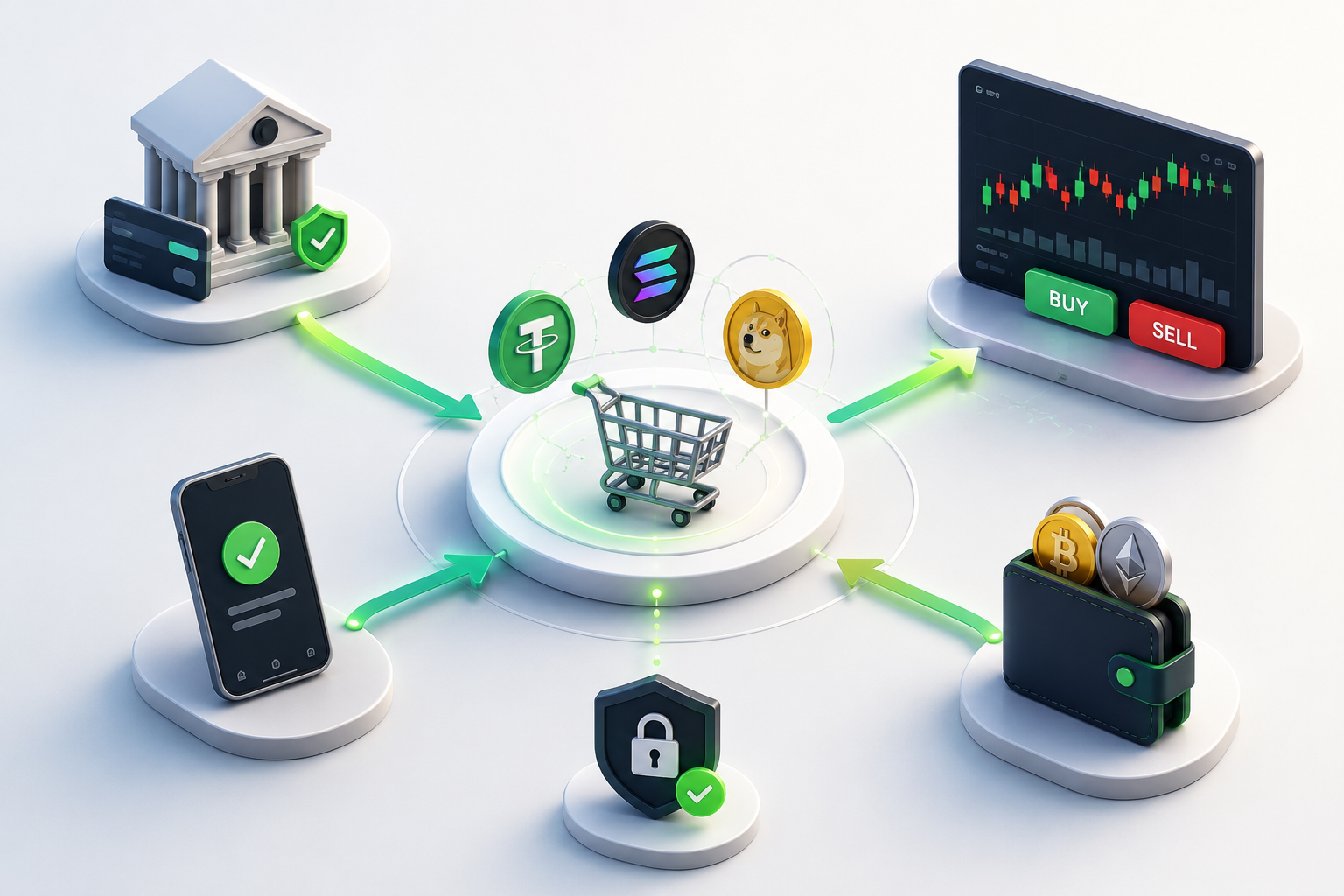
There is more than one way to buy cryptocurrency. Which methods you can use usually depends on the fiat currencies, payment methods, region, and purchase channels currently supported by the platform. Common options include C2C, fiat purchases, spot trading, asset conversion, and transfers of cryptocurrency from another wallet.
If you are new to the market, begin with a common funding path: fiat currency → USDT → use spot trading to buy another cryptocurrency. For example, you can obtain USDT first and then use it to buy SOL or DOGE through a trading pair currently supported by the platform. Whether a particular asset can be purchased directly with fiat depends on the platform’s currently available channels.
Step 3: Why Is USDT Often an Intermediate Asset for Buying Crypto?
One important role of USDT is to serve as a quote asset in the cryptocurrency market. You may see trading pairs such as SOL/USDT, DOGE/USDT, and BTC/USDT. These pairs indicate buying or selling SOL, DOGE, or BTC using USDT.
Many new users therefore encounter USDT first and then use it to trade other cryptocurrencies. One crucial distinction is that USDT is the asset name, while TRC20, ERC20, and BEP20 refer to different blockchain networks. They should not be confused.
If you plan to buy USDT, continue reading:
What Is USDT and How Can You Buy It Safely?
If you later need to withdraw USDT to another platform or wallet, you must also confirm the network, fee, and crediting rules. See:
USDT Withdrawal Fee Comparison: TRC20 vs ERC20 vs BEP20
Step 4: Why Confirm Spot or Futures Before Buying?
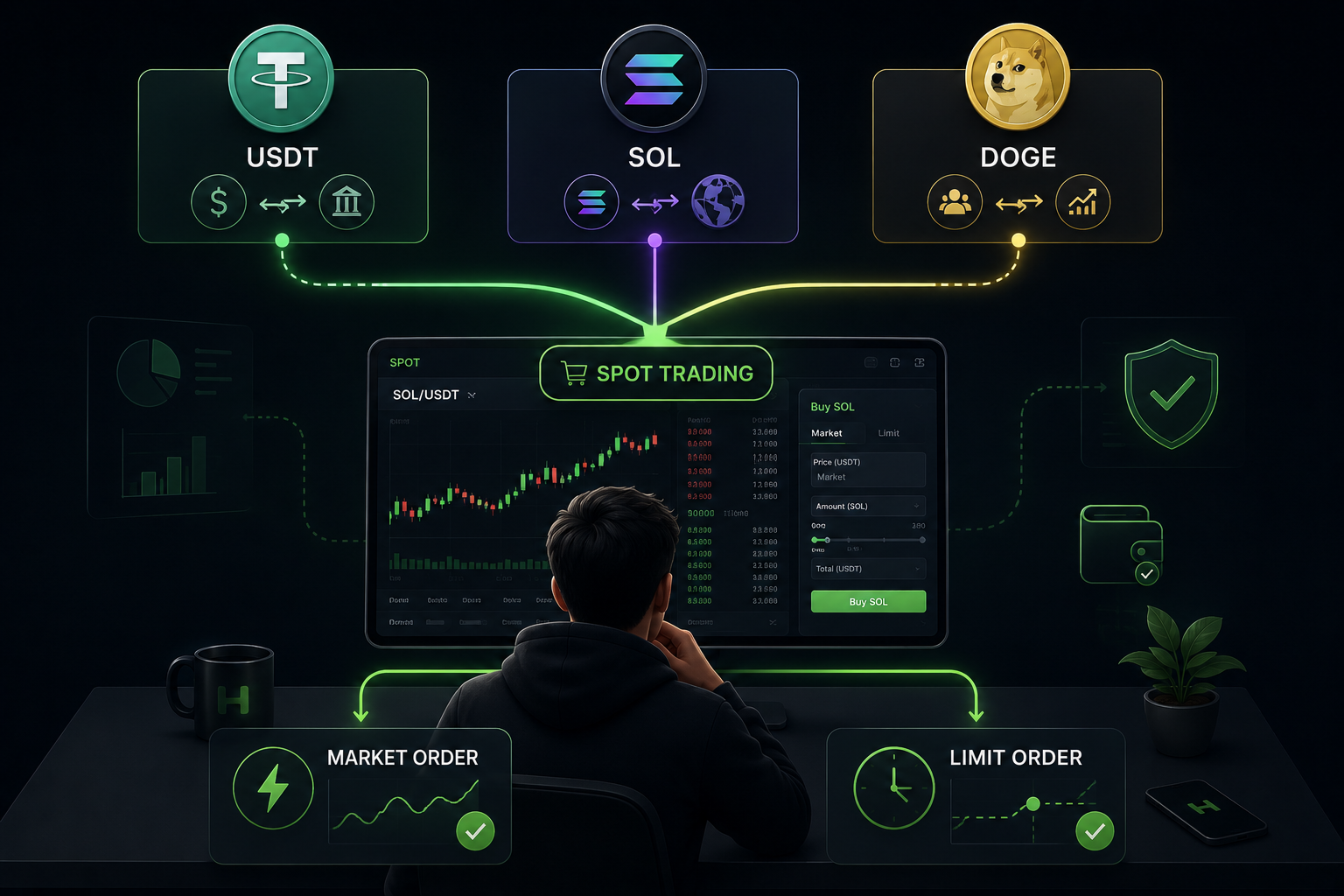
If your goal is to actually buy and hold SOL or DOGE, pay close attention to the difference between spot and futures trading. Spot trading directly buys or sells the cryptocurrency, whereas futures are derivative products that may involve leverage, margin, liquidation, and other additional risks.
Therefore, if you search for “how to buy SOL” and want to own SOL itself, make sure you have opened the SOL spot market rather than a similarly named SOL perpetual futures market. Before submitting an order, check the product, trading pair, and account type so that selecting the wrong page does not result in a trade different from your plan.
Step 5: Choose a Market Order or Limit Order
After choosing the trading pair, you must select an order type. The two most common types are market orders and limit orders. Their main difference is whether you prioritize execution speed or price control.
A market order generally prioritizes execution as quickly as possible, while the actual fill price depends on the order book and market liquidity at the time. A limit order lets you set the price at which you want to trade, but it may remain unfilled if the market does not reach your condition. A limit order therefore does not guarantee that you will buy at a cheaper price.
To learn more about placing limit orders, read:
Cryptocurrency Limit Order Tips and Execution Strategies
Step 6: How Do You Buy SOL?
Once you have decided that you need SOL, the purchase process is usually straightforward. In general, prepare funds, enter spot trading, search for SOL, select a trading pair, choose an order type, enter the purchase amount, and confirm the order.
If your account already holds USDT, find a SOL/USDT trading pair currently supported by the platform, then choose a market or limit order according to your plan. Remember that “how to buy SOL” and “when to buy SOL” are different questions. A purchase guide can help you execute a trade, but it cannot predict SOL’s future price.
For detailed steps, continue reading:
How to Buy SOL: A Solana Purchase Guide
Step 7: How Do You Buy DOGE?
The basic process for buying DOGE is similar to buying SOL. If the platform supports DOGE/USDT spot trading, you can prepare USDT and then enter the corresponding spot market. Confirm the DOGE/USDT pair, order type, purchase amount, and final execution, then check your DOGE balance on the assets page.
DOGE may experience pronounced price fluctuations, so “popular” does not mean “suitable for everyone.” If short-term social media attention or a price rally drew your interest, understand your risk tolerance before deciding whether to participate.
If you have decided to research DOGE, continue reading:
How to Buy DOGE: A Dogecoin Purchase Guide
How Can You Avoid the Five Most Common Mistakes When Buying Crypto?
The biggest problem for beginners is often not that they do not know how to buy, but that they have not confirmed what they are buying. Spending a few extra seconds checking the product, pair, and order conditions before submitting an order is usually easier than correcting a mistake afterward.
Confusing Spot and Futures Trading
If you want to buy and hold SOL or DOGE, first confirm that the page is a spot market. Futures trading uses different margin and risk mechanisms. Similar page names do not make futures and spot purchases the same operation.
Looking Only at the Asset Name, Not the Trading Pair
Seeing SOL does not mean you have confirmed the transaction. SOL/USDT means buying or selling SOL with USDT. Before ordering, make sure the base and quote assets match your plan.
Treating a Limit Order as Guaranteed Execution
A limit order sets a price condition; it does not guarantee a transaction. The order may remain open if the market does not reach your price. Even if the price is touched, actual execution still depends on the order book and liquidity.
Ignoring the Network When Withdrawing
This is especially important for USDT. You must check that the withdrawal network matches a network supported by the receiving platform or wallet, not just the asset name. Two options may both say USDT, but a network mismatch can prevent the assets from being credited normally.
Chasing a Short-Term Rally
“It has risen quickly recently” is not a complete investment rationale. Popular assets can also pull back rapidly. Without a clear capital plan and risk tolerance, buying solely because of short-term sentiment can force you to change your strategy during volatility.
Use This Checklist Before Buying Crypto
Before purchasing a popular cryptocurrency for the first time, quickly confirm several key questions. This takes little time but helps you avoid mixing up three different tasks: what to buy, how to buy it, and how to withdraw it.
The most important thing is not to find a supposedly “best coin,” but to understand what you are doing at every step. Especially for a first trade, understanding the asset, pair, order type, and withdrawal network is often more important than pursuing a small price difference over a few minutes.
Where Should You Keep Assets After Buying?
After a purchase, the assets will generally appear in the corresponding account on the trading platform. If you only plan to trade spot, you can view the balance and order history in the spot account. If you want to transfer assets to a personal wallet, verify the withdrawal address and network.
For a withdrawal, check the asset name, network, receiving address, minimum amount, fee, and crediting status. USDT purchases and withdrawals are separate operations: when buying, confirm what you are purchasing; when withdrawing, confirm which network will carry it and where it will go.
What If You Do Not Know What to Buy?
If you do not know which cryptocurrency to buy, do not begin with “Which coin has risen the most recently?” A better method is to create your own selection criteria and assess each asset against them.
Consider what problem the project solves, the token’s purpose, whether it has real use cases, how supply and unlocks work, whether market liquidity is sufficient, and what the ecosystem and main risks are. This produces a reusable decision framework instead of a coin list for one particular market cycle.
For a complete selection method, read:
How to Find Promising Cryptocurrencies: A Beginner’s Coin Selection Guide
“Potential” should not be interpreted as predicting that a coin will definitely rise. It means deciding whether an asset deserves further research. Market trends change, but a repeatable evaluation method is usually more valuable than chasing short-term popularity.
How Should You Choose Between USDT, SOL, and DOGE?
The buying logic for USDT, SOL, and DOGE is different, so no single “best popular coin” applies to everyone. If you need a quote asset or a way to transfer funds, focus on USDT. If the Solana network and ecosystem interest you, research SOL. If you are considering DOGE, focus on its market characteristics, community factors, and price volatility.
The useful approach is to define your needs first and then research the asset—not to choose a popular coin first and search for reasons afterward. This framework can help you determine what to research next.
How Much Money Do You Need to Buy Popular Cryptocurrencies?
There is no fixed purchase amount suitable for everyone. The actual minimum depends on the platform, trading pair, order rules, and current market price. Instead of applying a supposed minimum from another website, follow the minimum order amount and rules shown on the current trading page.
For beginners, a more important question than “How much must I invest?” is whether the funds are money they can afford to lose. Cryptocurrency prices can fluctuate sharply. Do not trade with money needed for daily living, rent, debt payments, or other essential expenses.
Popular Cryptocurrency Buying FAQ
Which Is More Suitable for Beginners: USDT, SOL, or DOGE?
There is no universal answer because the three assets have different purposes and risk profiles. USDT functions more as a stablecoin and trading quote asset, SOL relates to the Solana ecosystem, and DOGE has strong community characteristics and price volatility. Beginners should define their objective before deciding which asset to study.
Can You Buy SOL or DOGE Directly with Fiat Currency?
Whether a specific asset can be bought directly with fiat depends on the currencies, payment methods, products, and regions currently supported by the platform. Another common path is to obtain USDT first and then buy SOL or DOGE through spot trading, but the exact route should follow the platform’s current offerings.
Can You Buy Other Cryptocurrencies Directly After Buying USDT?
If the platform provides the relevant spot trading pair, you can use USDT to purchase another asset. For example, when SOL/USDT or DOGE/USDT is available, you can trade in that spot market. Confirm the pair and product before ordering to avoid entering the wrong market.
Which Is Better, a Market Order or a Limit Order?
Neither order type is universally better; they address different needs. Market orders prioritize execution speed, while limit orders emphasize price control. Because a limit order may not fill, choose according to your objective and the current market.
Which Network Should You Choose When Withdrawing USDT?
Do not choose a network based only on the fee. First confirm which networks the receiving platform or wallet supports, then compare current fees and minimum withdrawal amounts. Before sending, make sure the withdrawal and deposit networks match and carefully verify the address.
Are Popular Cryptocurrencies More Worth Buying?
Popularity only indicates stronger market attention; it does not guarantee future gains. Research an asset’s purpose, supply mechanism, liquidity, ecosystem, volatility, and potential risks rather than deciding solely from social media attention.
Risk Warning
Cryptocurrency prices are highly volatile, and USDT, SOL, and DOGE have clearly different risk profiles. A stablecoin is not the same as a bank deposit and is not risk-free, while non-stablecoin assets such as SOL and DOGE may experience substantial price swings.
This article provides knowledge about buying and trading cryptocurrency. It is not investment advice and does not imply that any asset will rise in the future. Before buying, make sure you understand the trading rules, fees, order types, and withdrawal networks, and decide whether to participate based on your risk tolerance.
Ready to Start Buying Popular Cryptocurrencies?
If you know which asset you want to buy, continue with its detailed guide. Buying USDT, SOL, and DOGE involves different tasks, so the dedicated guides explain the specific steps and precautions.
What Is USDT and How Can You Buy It Safely?
How to Buy SOL: A Solana Purchase Guide
How to Buy DOGE: A Dogecoin Purchase Guide
If you are still unsure what to buy, read:
How to Find Promising Cryptocurrencies: A Beginner’s Coin Selection Guide
If you know the asset but want to control your execution price, continue with:
Cryptocurrency Limit Order Tips and Execution Strategies
If you plan to withdraw USDT, first understand the differences between networks:
USDT Withdrawal Fee Comparison: TRC20 vs ERC20 vs BEP20
Start Exploring Popular Cryptocurrencies with Hotcoin
Once you have selected an asset and are ready to trade, you can create a Hotcoin account and prepare funds using a purchase method currently supported by the platform. Available assets, trading pairs, payment methods, and trading rules may change, so follow the information shown on the platform at the time of your transaction.
Recommended
View more
Service@hotcoin.com
Product@hotcoin.com
Business@hotcoin.com
Casecn@hotcoin.com