Trading Addiction: Recognising and Overcoming Compulsive Trading
Trading addiction is a behavioural addiction marked by repeated, excessive or reckless financial trading that continues despite negative consequences. The crypto market's 24/7 schedule, easy access to high leverage and fragmented social media information make it a high-risk environment for this pattern. Unlike drug or alcohol addiction, trading addiction is rarely treated by society as a serious problem, yet its financial and psychological damage can be just as severe.
What Is Trading Addiction?
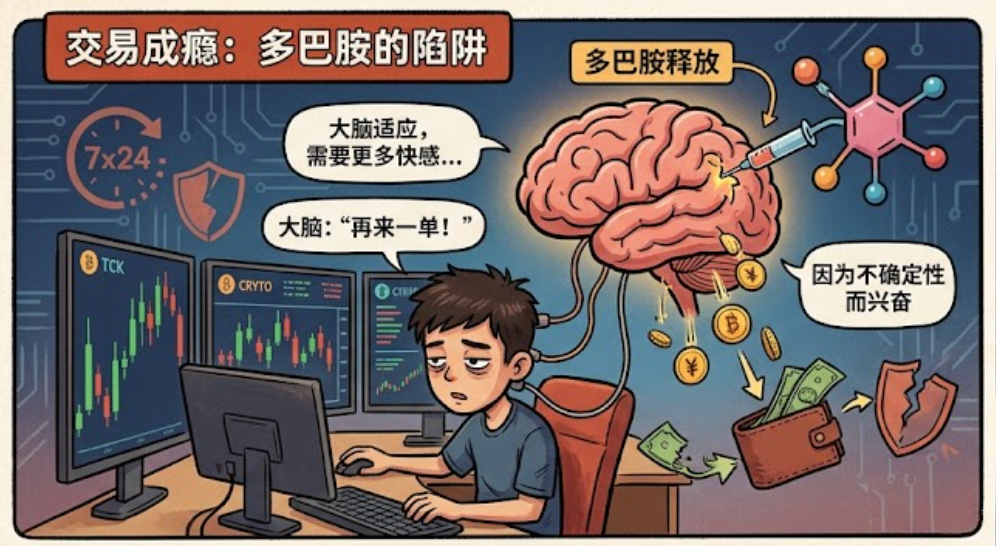
Trading addiction overlaps heavily with gambling disorder in its neural mechanisms. Dopamine is the key neurotransmitter involved: the uncertainty and potential payoff of a trade trigger the brain to release dopamine, producing pleasure and excitement. Over time the brain adapts to those dopamine levels, so a trader needs larger and more frequent trades to feel the same rush. This escalating "dose" closely mirrors how drug addiction develops.
Unlike professional day traders, compulsive trading behaviour usually shows these characteristics:
Trades are made for emotional reasons (excitement, stress relief) rather than from a plan or strategy
Trading frequency is unrelated to results — losses continue for a long time without stopping
Trying to "win it back" becomes the core motive, not making a profit
Warning Signs of Trading Addiction
The following signs may indicate that you have slipped from "trader" towards "compulsive trader":
Preoccupation with the market: even when you are not trading, you find it hard to stop thinking about it.
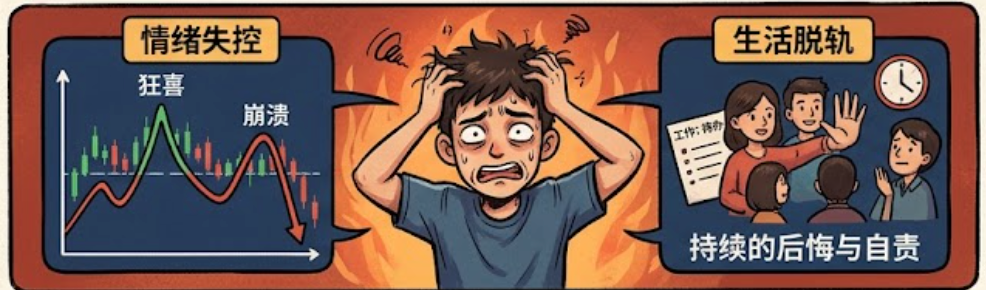
Emotions tightly bound to trading results: extreme excitement on a win, severe anxiety or despair on a loss; mood swings that spill over into daily life.
Damage to social and daily functioning: so much time goes into trading that work performance drops, family relationships strain and social activity shrinks noticeably.
Persistent regret and self-blame: repeatedly telling yourself "I should have read that one better", while losing trust in your own strategy.
Physical symptoms: insomnia, loss of appetite, living in a constant state of anxiety.
Repeated failure to cut back: you try again and again to trade less often or commit less money, and never manage it.
The Vicious Cycle of Addiction: From "Trading" to "Revenge Trading"
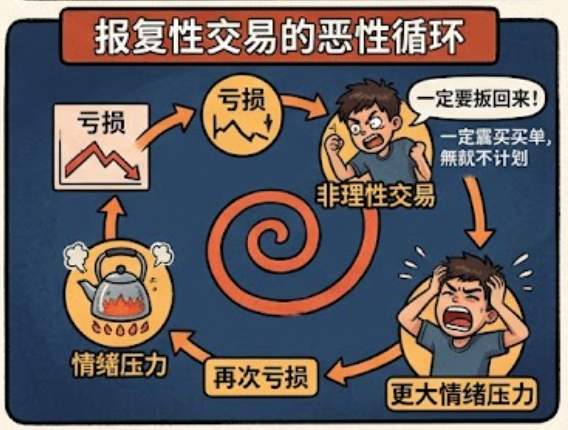
Compulsive trading usually follows a predictable loop: a trigger event (a loss, or missing a move) leads to rising emotional pressure, then to irrational trades taken to relieve that pressure, which widen the loss, which intensifies the pressure, which prompts an even larger trade to "unwind" the position.
This "revenge trading" — trying to win back a loss fast with bigger risk — is one of the most dangerous features of addictive behaviour. At this stage the trader no longer cares about the market itself and is fighting their own emotions instead — and the market never cares about your emotions.
How to Overcome Trading Addiction
The first step is admitting the problem exists, instead of blaming losses on the market or outside factors. If three or more of the warning signs above describe your state, take it seriously.
Technical measures:
Write down your entry rationale in a document before opening a position, rather than acting on impulse
Set a daily or weekly cap on the number of trades, and tell family or friends about the cap so it acts as an external constraint
Pause trading for one week and observe your emotional and behavioural reaction — if withdrawal symptoms appear (anxiety, restlessness, compulsively checking prices), the addiction is fairly deep and you may need a longer forced break or outside help
Psychological adjustments:
Accept that "losses are part of trading" — while distinguishing "strategic losses" from "addictive losses"
Ask friends or family to help supervise, and tell them your trading plan and frequency limits
Replace the thrill of trading with other activities — exercise, meditation or another worthwhile hobby
Frequently Asked Questions (FAQ)
Q1: What is the difference between trading addiction and gambling?
Trading addiction and gambling disorder are highly similar in their neural mechanisms. In fact, multiple studies have confirmed that the two overlap in reward processing and decision-making circuitry. The difference lies in social perception: gambling is generally seen as an addiction, while trading is often normalised as "investing". At the level of addiction, however, both share the same dopamine-driven pattern and loss of control.
Q2: How do I know whether I simply "love trading" or am already "addicted"?
The key test is whether trading has had a sustained negative effect on your quality of life while you remain unable to control or reduce it. If you are simply focused and engaged during trading hours and can live normally once the market closes, that is healthy involvement; if trading controls every part of your life, or becomes your only outlet for regulating emotion, you have probably crossed the line.
Q3: How do I recognise and interrupt "revenge trading" after a loss?
Revenge trading is characterised by a reason that is not profit but "venting frustration" or "proving I was right". The most direct way to spot it is to ask yourself: "If this trade loses, what is my next plan?" If there is no plan, it is very likely revenge trading. Once you identify it, stop trading immediately and close the charts for at least 30 minutes.
Related tutorials:
Crypto Trading Psychology: From Emotional Control to Discipline
Trading Journal Template: How to Review Every Trade Properly
Recommended reading:
Đề xuất đọc
Xem thêm