Multisignature Wallets: A Digital Asset Vault Managed by Multiple People
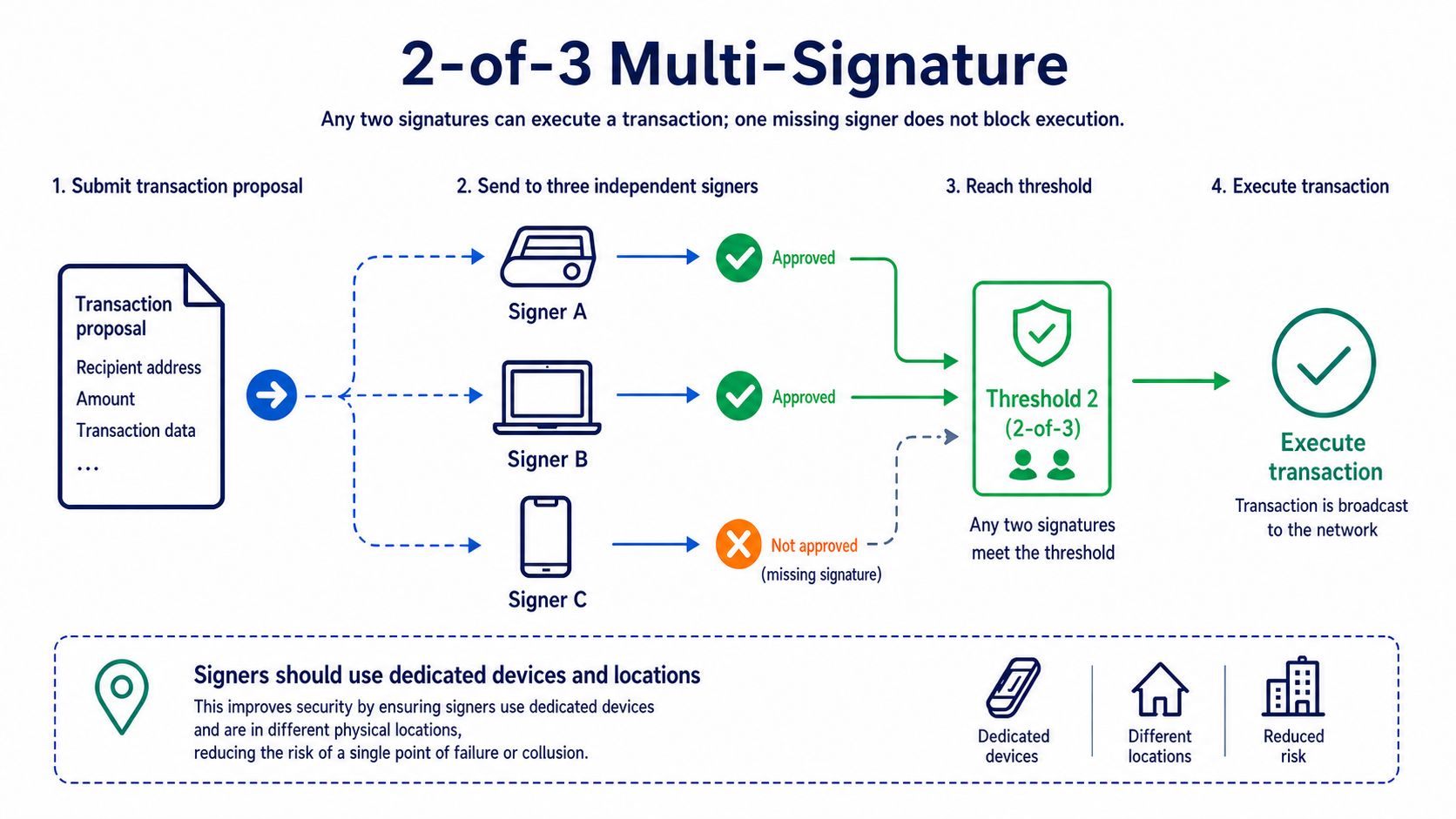
A multisignature wallet requires a preset number of owners to approve a transaction together. For example, a 2-of-3 setup needs signatures from any two of three owners, reducing the damage that could result from one compromised key.
How Does Multisig Work?
On Bitcoin, multisig can use scripts that define multiple public keys and an approval threshold. On Ethereum, smart accounts such as Safe store the owners and threshold in a contract. Each owner signs the same transaction with their own account, and the transaction can be executed only after the threshold is reached.
Signatures may first be collected off-chain before one executor submits the final transaction. Paying the Gas does not allow the executor to alter the transaction independently, because the wallet verifies both the transaction details and the required signatures.
How Should You Choose a Threshold?
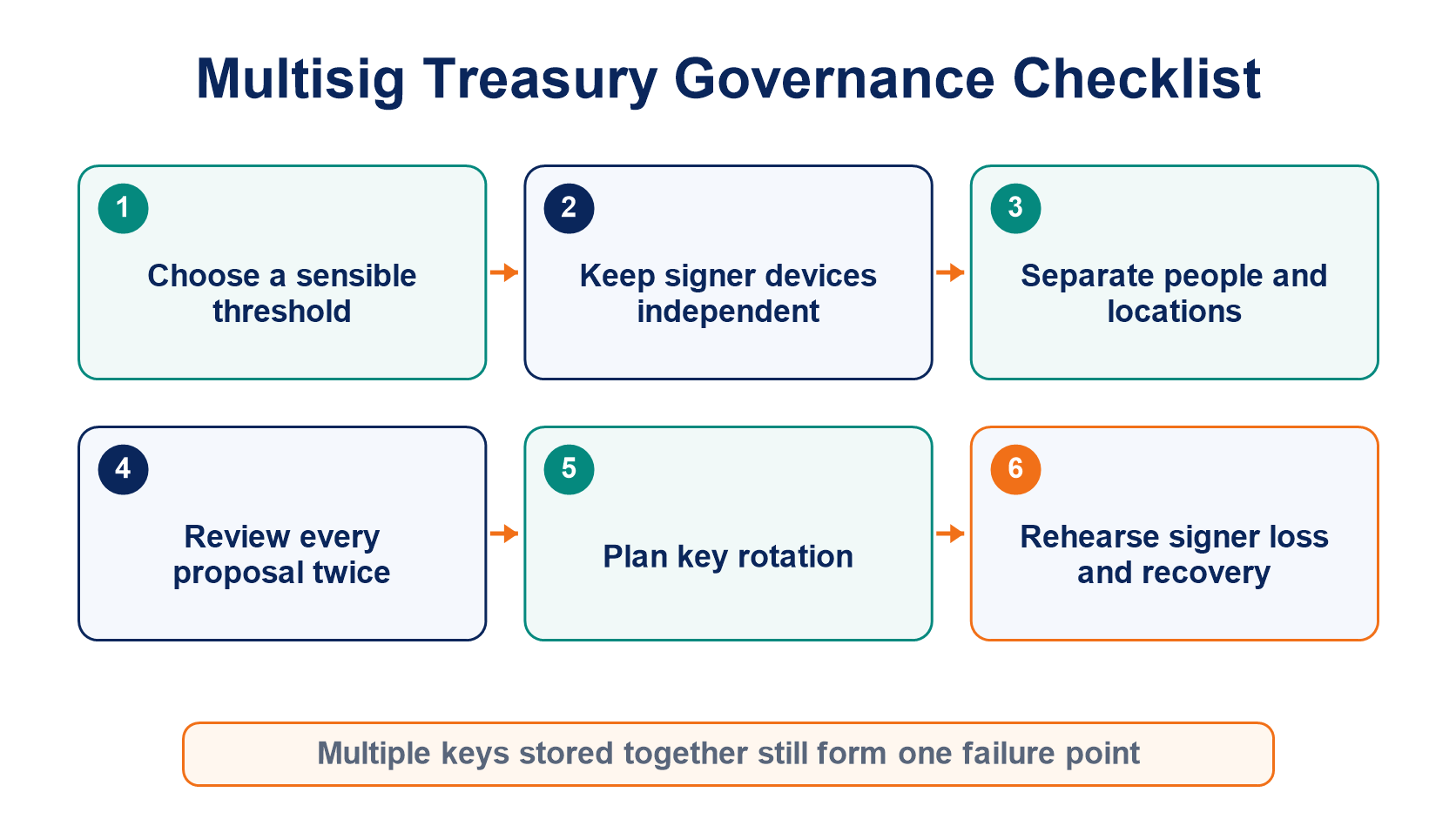
A 1-of-N setup is convenient but cannot withstand the compromise of a single key. An N-of-N setup provides the strictest control, but losing any one key can permanently lock the wallet. Thresholds such as 2-of-3 and 3-of-5 are more common because they balance security and recoverability, although no single configuration suits every team.
Signers should use separate devices, different backup locations, and, where possible, different administrators. If all three keys are kept in the same office or cloud account, the wallet may be multisig in name but still has a single point of failure.
What Problems Can Multisig Not Solve?
Multiple signers may all be deceived by the same fake front end, or collectively approve an incorrect transaction without checking its hash and call data. Proposal systems, browsers, and modules can also become attack surfaces.
Smart account modules may bypass the normal threshold to execute automated transactions. Before enabling spending limits, recovery tools, or automation modules, audit their permissions and prepare a way to disable them.
Establishing a Routine Operating Process
Every proposal should record its initiator, business purpose, blockchain, contract, amount, recipient, and deadline. Signers should verify the transaction through a second source instead of approving only the link shared in a group chat.
Regularly rehearse owner replacement, key-loss recovery, and emergency pauses. Remove departing personnel on-chain before they leave rather than merely deleting their collaboration accounts.
For broader key-security practices, see Private Keys and Seed Phrases.
Frequently Asked Questions
Who Holds the Assets in a Multisig Wallet?
The assets are controlled by an on-chain script or smart account and can move only with valid authorization that satisfies the threshold. Legal ownership still depends on the organization's arrangements.
Can Signers Use the Same Type of Hardware Wallet?
Yes, but shared firmware, supply chains, and operating habits create correlated risks. Important treasuries may benefit from a reasonable degree of diversity.
Does a Transaction Execute Automatically Once the Threshold Is Reached?
It depends on the implementation. Many systems still require someone to submit an execution transaction and pay the Gas, while automation modules may execute transactions according to predefined rules.
Can the Signers of a Multisig Address Be Changed?
Smart accounts can usually change owners through a transaction that satisfies the threshold. A Bitcoin script address may instead require funds to be transferred to a new script, so always check the specific implementation.
Đề xuất đọc
Xem thêm