
Exchange Security Ratings: How to Evaluate an Exchange's Security
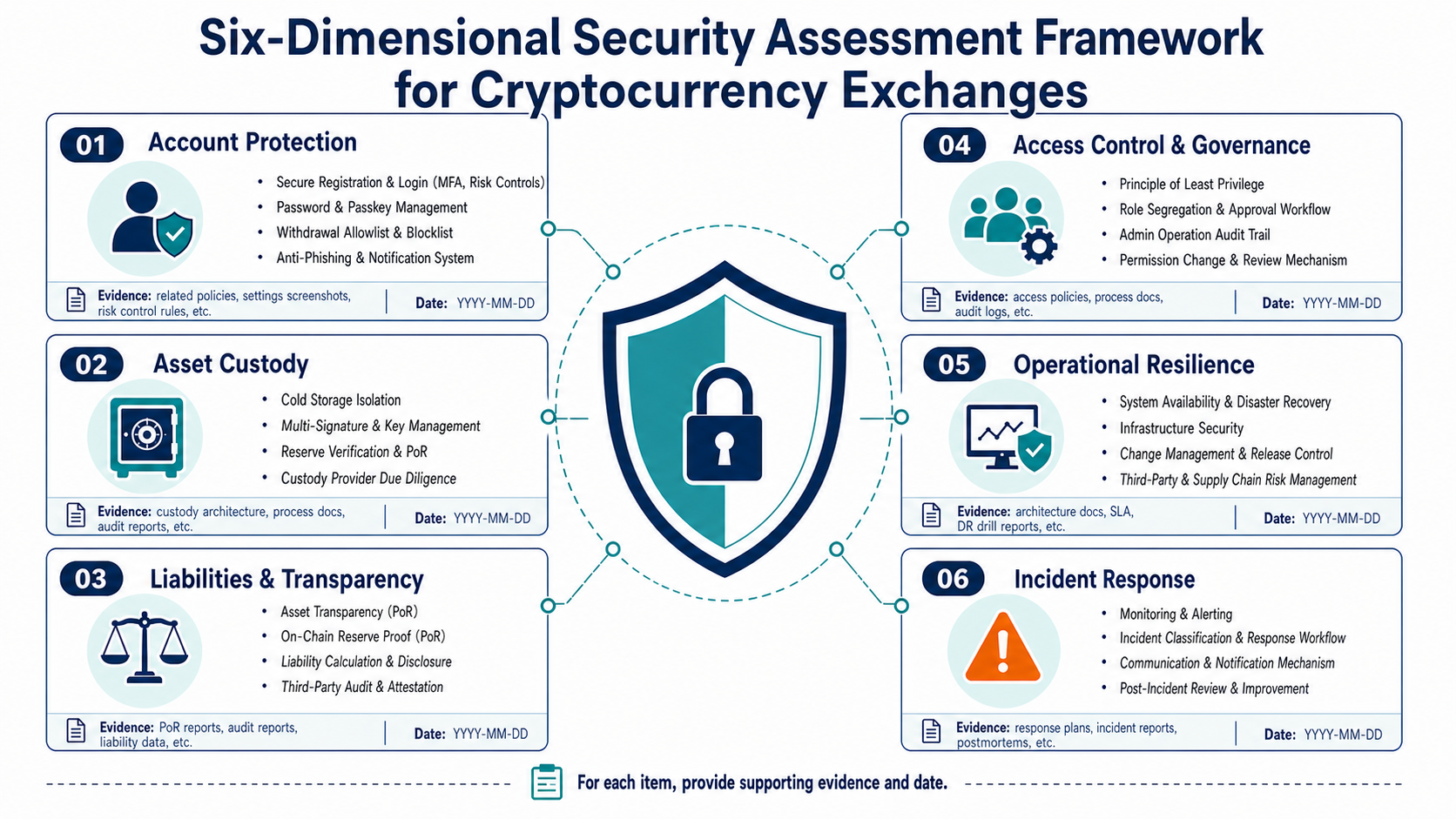
Exchange security cannot be reduced to a single star rating. A reliable assessment should examine account protection, asset custody, reserves and liabilities, access governance, operational resilience, and incident response separately, while recording the date of each piece of evidence.
Why Can Public Rankings Be Misleading?
Website rankings may emphasize trading volume, liquidity, traffic, or the number of listed assets, but these metrics do not measure security. An exchange with no publicly reported incident may simply disclose too little; an exchange that has disclosed an incident cannot be assumed to have weak controls today.
A common mistake is to equate "proof of reserves" with "cannot become insolvent." A reserve snapshot may verify certain on-chain assets or show that some user balances are included, but it may not cover all liabilities, borrowing, related-party exposure, internal controls, or customers' legal rights in bankruptcy.
How Should You Use the Six-Dimension Evidence Card?
| Dimension | Evidence to verify | What it cannot replace |
|---|---|---|
| Account protection | Passkeys, 2FA, sessions, API controls, allowlists, and security locks | Exchange wallets and corporate governance |
| Custody structure | Hot and cold wallets, approval thresholds, MPC or multisig, and third-party custody | Solvency |
| Reserves and liabilities | Address control, asset coverage, liability inclusion, and user verification | A complete financial audit |
| Access governance | Administrators, related parties, approvals, audits, and segregation of duties | Technical defenses against attacks |
| Operational resilience | Status pages, backups, disaster recovery, withdrawals, and support continuity | Legal segregation of assets |
| Incident response | Announcement timelines, remediation, postmortems, and compensation scope | A guarantee of zero future incidents |
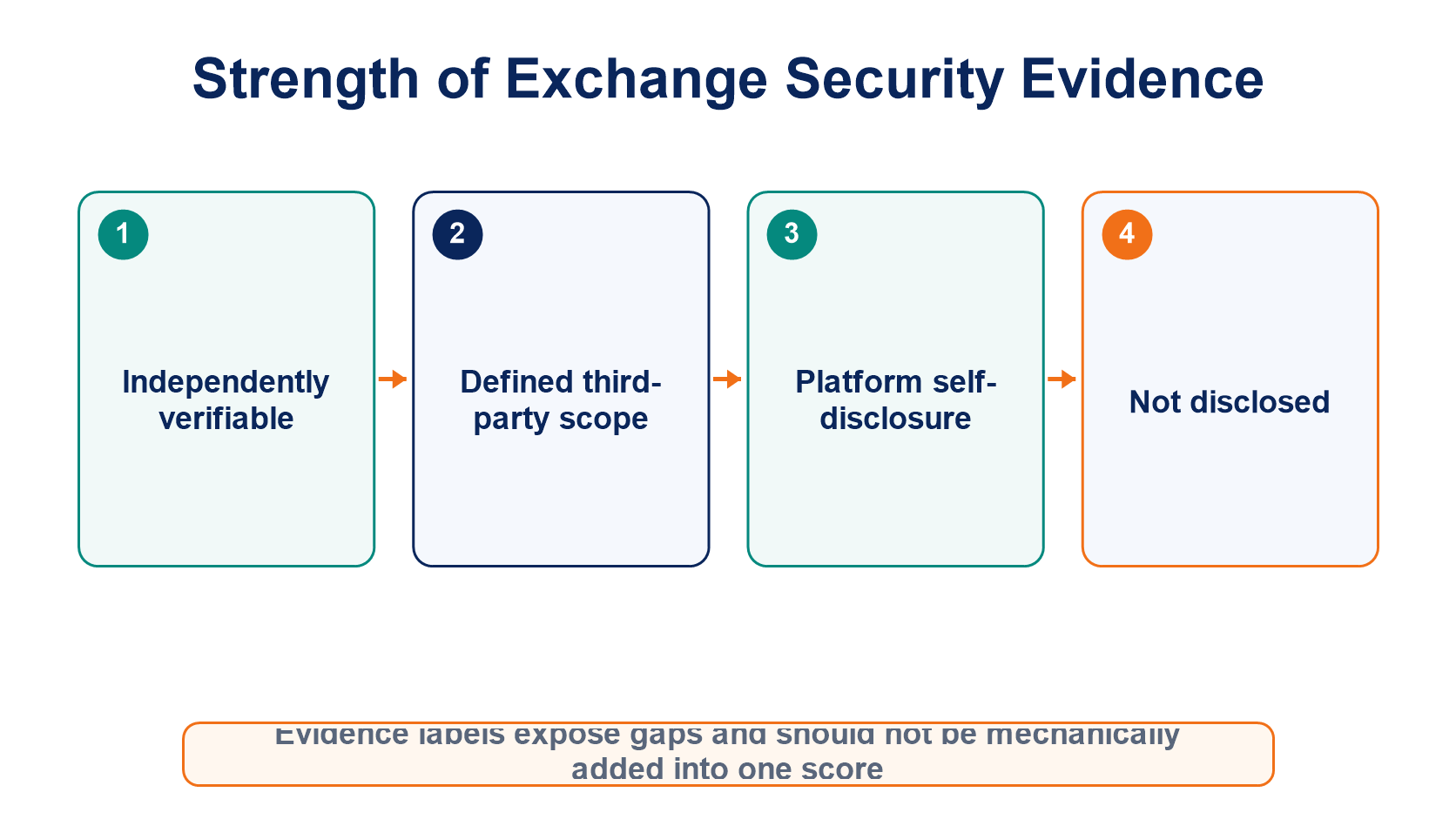
Each piece of evidence can be labeled "independently verifiable," "clearly scoped third-party evidence," "platform self-disclosure," or "not disclosed." However, these labels should not be mechanically added into a precise score. Different users face different primary risks, so an institutional API trader will not assign the same weights as someone making only small spot trades.
How Can You Test Account Security Features?
Before registering, confirm whether the exchange supports strong authentication, device management, anomaly alerts, least-privilege API permissions, IP allowlists, withdrawal allowlists, and waiting periods. The presence of a feature is not enough: check whether disabling or resetting it requires renewed verification and triggers a notification.
Use a small amount to test deposits, trading, and withdrawals, then compare the actual timing with support information and the status page. Such a test does not prove solvency, but it can reveal practical friction involving network support, address rules, risk-control communications, and the exit process.
Which Red Flags Should Immediately Lower Your Trust?
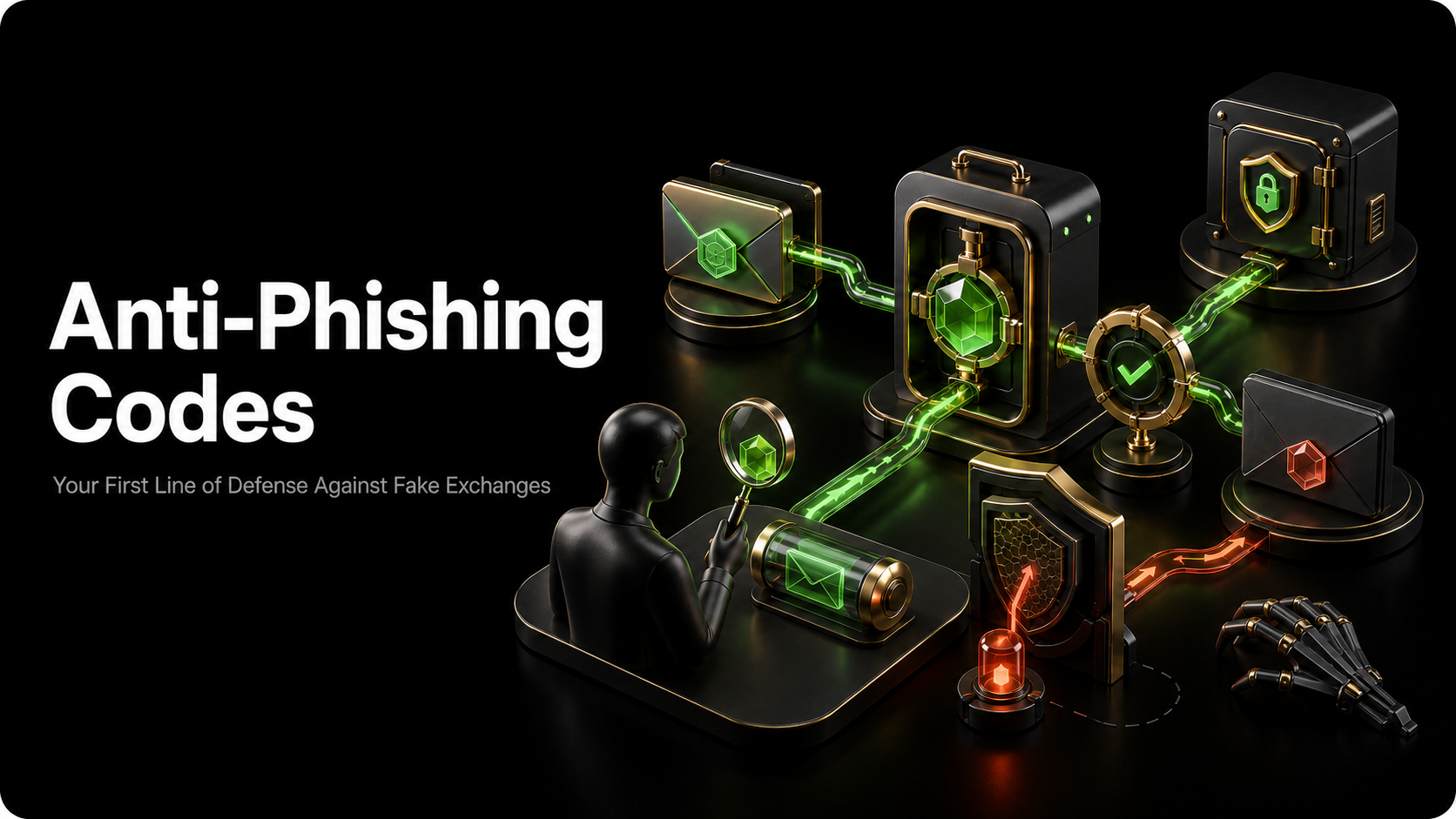
Serious warning signs include prolonged withdrawal restrictions without a clear explanation, unclear legal entities or terms of service, reserve reports that show assets without defining liability coverage, related-party transactions with no clear boundaries, major incidents without a published timeline, and support agents who ask for passwords, verification codes, or seed phrases.
An overall trust assessment should also cover regulatory entities, the legal status of customer assets, corporate governance, and financial information. Continue with How to Evaluate an Exchange's Security and Trustworthiness. For signs of abnormal account activity, read Account Intrusion Detection; for essential safeguards, return to Cryptocurrency Security Fundamentals.
Frequently Asked Questions
Is the Exchange with the Highest Trading Volume Always the Safest?
No. Trading volume may reflect liquidity and scale of use, but it does not prove asset segregation, liability coverage, sound governance, or effective internal controls.
Does an Exchange with No Publicly Reported Hack Deserve the Highest Rating?
Not on that basis alone. You must consider its operating history, disclosure quality, testing scope, and current architecture. A lack of public incidents may also reflect incomplete information.
Does a Regulatory License Guarantee Full Compensation for Customer Assets?
No. Different licenses cover different entities, activities, and customer protections. You still need to review the terms for your jurisdiction and the legal arrangements governing customer assets.
Are More Third-Party Security Audit Reports Always Better?
The number of reports is not what matters. Review the audited system, version, date, scope, findings, and verification of fixes. An old, narrowly scoped audit cannot cover an entire exchange.
Đề xuất đọc
Xem thêm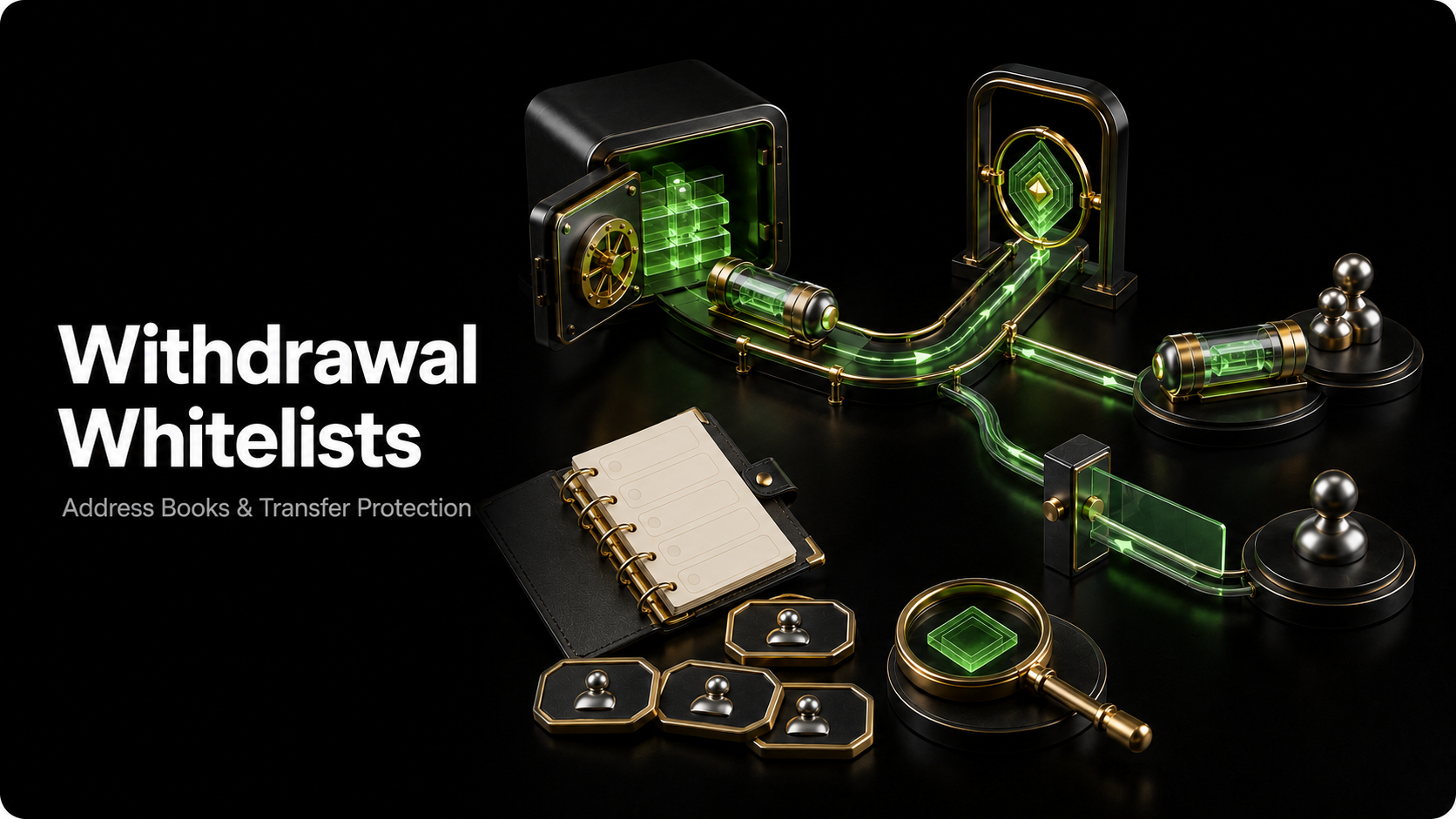

Service@hotcoin.com
Product@hotcoin.com
Business@hotcoin.com
Casecn@hotcoin.com