
Cryptocurrency Lending and How It Works
Crypto lending is an ingenious tool for getting the cash you need quickly, as it allows you to utilize your cryptocurrency holdings as collateral to get a secure loan. If you are wondering how do I borrow cryptocurrency, collateralized cryptocurrency loans are a viable solution. It allows borrowers to use their crypto assets as collateral to get a fiat or stablecoin loan.
This allows you to obtain funds without having to sell your tokens, use the cash to achieve your goals, and then repay it to get your assets back. Crypto loans allow you to use your digital asset holdings to generate dividends by lending some or all of your assets.
How does stablecoin lending work?
If you are considering why stablecoins have high interest rates, then this section may provide a lot of information. The principle of supply and demand leads to stablecoin lending and borrowing, providing double-digit annual returns. Stablecoin is still an emerging industry, representing only 2-3% of the total market capitalization of cryptocurrencies.
A large supply of loans on lending platforms comes from stablecoins, and many people buy these coins just to lend them on these platforms, but it is incredibly low compared to the supply of top cryptocurrencies. Take Compound Finance, for example, where the total supply of Ethereum is 50% more than DAI and USDC combined.
Compare it to demand and you'll see the numbers are staggering. On Compound Finance, the demand for DAI is nearly 40 times higher than ETH. Large institutional traders and cryptocurrency payment processors are behind the huge demand for DAI. Institutional traders include hedge funds and market makers who borrow cryptocurrency loans for speculative purposes.
How does crypto lending work?
Crypto lending serves as a viable option because of several advantages, such as low interest rates, choice of loan currencies, lack of credit checks, quick funding, and the ability to earn passive income from idle cryptocurrencies. Additionally, you can lend your own digital coins and earn high APY (over 10%) on multiple crypto platforms.
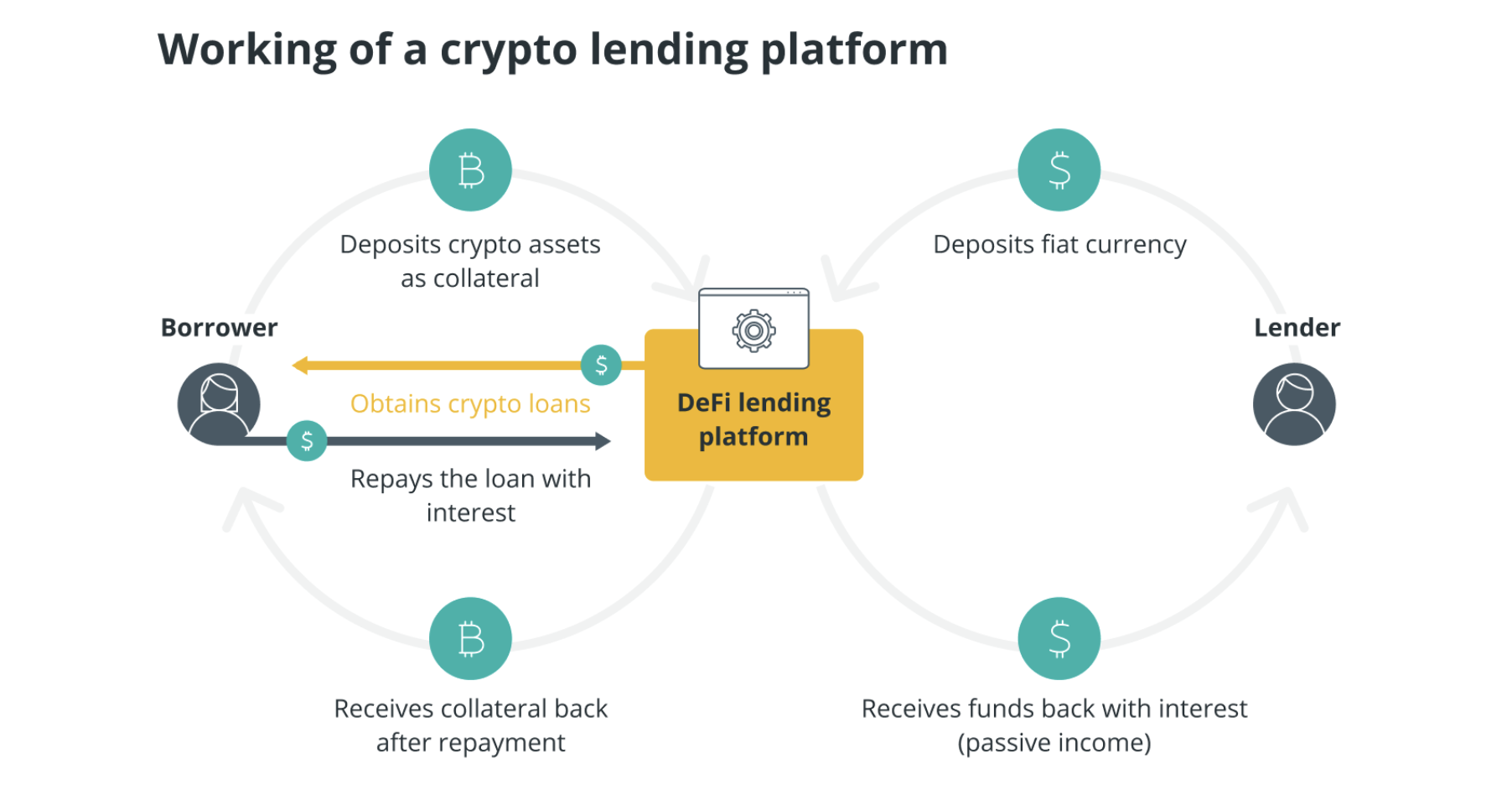
All crypto lending transactions have two distinct parties involved: the borrower and the lender. The borrower uses crypto assets as collateral to secure a loan from the lender. This arrangement is beneficial to both parties, as the borrower receives an immediate loan in exchange for their crypto assets, while the lender earns interest on the amount disbursed as a loan. If the borrower defaults, they dispose of the underlying crypto asset realizing their money.
Đề xuất đọc
Xem thêm



Service@hotcoin.com
Product@hotcoin.com
Business@hotcoin.com
Casecn@hotcoin.com