
Cross-Chain Interoperability: Bridges, Messaging Protocols, and the Multichain Future
Cross-chain interoperability is the technology that enables different blockchains to exchange assets, messages, and state securely. Bridges move value, while messaging protocols let applications on separate chains call one another.
Blockchains are isolated by design. An Ethereum contract cannot directly read Solana state, and an application on Arbitrum does not automatically know what happened on another chain. A cross-chain system confirms an event on the source chain, verifies and delivers it, then releases assets, mints tokens, or executes contract instructions on the destination chain to create a multichain application.
Cross-chain operation is not equivalent to copying a token between servers. It establishes a trusted correspondence between two independent consensus domains. The system must decide who proves a source-chain event, when the transaction is final, how the destination chain prevents duplicate execution, and how losses are contained if validators misbehave or a chain reorganizes.
For the broader relationship between interoperability, AI, DePIN, oracles, and modular blockchains, see The 2025 Web3 Frontier Landscape.
What Problem Does Cross-Chain Interoperability Solve?
Cross-chain interoperability addresses the inability of blockchains to communicate natively. Each chain maintains independent accounts, consensus, transaction history, and smart-contract environments, so one chain cannot inherently prove an event on another. User assets, application liquidity, and governance state are therefore fragmented across networks.
An interoperability protocol creates cross-domain communication rules. The source chain emits an event; a verification layer determines whether it is genuine and sufficiently final; a delivery participant submits the proof; and a destination-chain contract verifies it before performing the corresponding action. Delivery participants generally cannot forge messages on their own because execution depends on a valid proof.
The purpose is broader than “moving coins.” Full interoperability can cover cross-chain calls, governance votes, identity state, oracle data, NFTs, lending positions, and application instructions. Asset transfer is only one special outcome of a general message.
How Do Bridges Differ from Messaging Protocols?
A cross-chain bridge is primarily a user-facing asset-transfer system. A user locks, burns, or hands over tokens on the source chain; the destination chain then mints a representation, releases a native asset, or receives an advance from a liquidity provider. The interface typically shows the source network, destination network, token, fees, and estimated arrival time.
A cross-chain messaging protocol delivers arbitrary data for developers. It may tell a destination chain that a vote passed, collateral was posted, or an NFT was locked, or instruct a destination contract to call a function. A message that carries both tokens and instructions creates a programmable token transfer.
The categories overlap. Many bridges are built on messaging protocols, and messaging protocols may offer standardized token frameworks. Wormhole describes its core capabilities as general messaging, queries, and cross-chain applications in addition to token bridging. Chainlink CCIP likewise supports tokens, data, and tokens combined with instructions.
How Do Assets Usually Move Across Chains?
3.1 How Does Lock-and-Mint Work?
In a lock-and-mint design, native tokens are locked in a bridge contract on the source chain and representation tokens are minted on the destination chain. On the return trip, the representation is burned and the source asset is unlocked. The destination token retains value only while custody, message verification, and contract accounting remain consistent.
The design is easy to understand but can create a honeypot. If an attacker forges a message and mints without limit on the destination chain, the representations lose full backing. If the source custody contract is compromised, locked assets may be stolen directly. Users should therefore determine whether they will receive a native asset or a wrapped version.
3.2 How Does Burn-and-Mint Work?
Burn-and-mint is suitable when an issuer controls a token's supply across chains. Tokens are burned on the source chain and, after verification, the same amount is minted on the destination chain. Supply moves between chains rather than remaining in bridge custody. Native-transfer frameworks such as Circle CCTP commonly reflect this model.
It reduces concentrated custody but still relies on issuance authority, message proofs, and destination-chain minting logic. Verification mistakes or abused administrator permissions can still unbalance supply. A native token does not mean the complete cross-chain route is trustless.
3.3 How Does a Liquidity Bridge Work?
In a liquidity bridge, market makers or pools pay users on the destination chain, then recover capital through rebalancing and final settlement. Users may receive a native destination asset faster than under a full lock-and-mint cycle, but they pay for liquidity, rebalancing, and routing.
The important factors are destination-chain depth, quote competition, inventory distribution, and settlement security. Large transfers may incur slippage, while smaller ecosystems may lack liquidity. Fast delivery means the user received an advance; it does not prove that underlying cross-chain settlement is final.
What Steps Does a Cross-Chain Message Go Through?
First, a user or application calls a sending contract on the source chain and specifies the destination chain, receiver, payload, tokens, and execution parameters. The source contract emits an observable event or message commitment.
Second, a verification system waits for the required source-chain finality and checks that the message is authentic. Verification may use light clients, decentralized validator networks, multisignature guardians, oracle networks, zero-knowledge proofs, or a native security mechanism shared by related chains.
Third, a relayer, Executor, or application submits the verified proof to the destination chain. Delivery is an availability task and should not give the relayer permission to alter the content. Some protocols allow anyone to submit a signed message, reducing dependence on a single relayer.
Fourth, the destination contract checks the source, sender, message order, unique identifier, and proof, confirms that the message has not already executed, and calls the receiving application. If execution fails because of insufficient gas or application logic, the protocol must define retries, refunds, and recovery.
How Are Major Cross-Chain Messaging Protocols Designed?
5.1 How Does Chainlink CCIP Verify Messages?
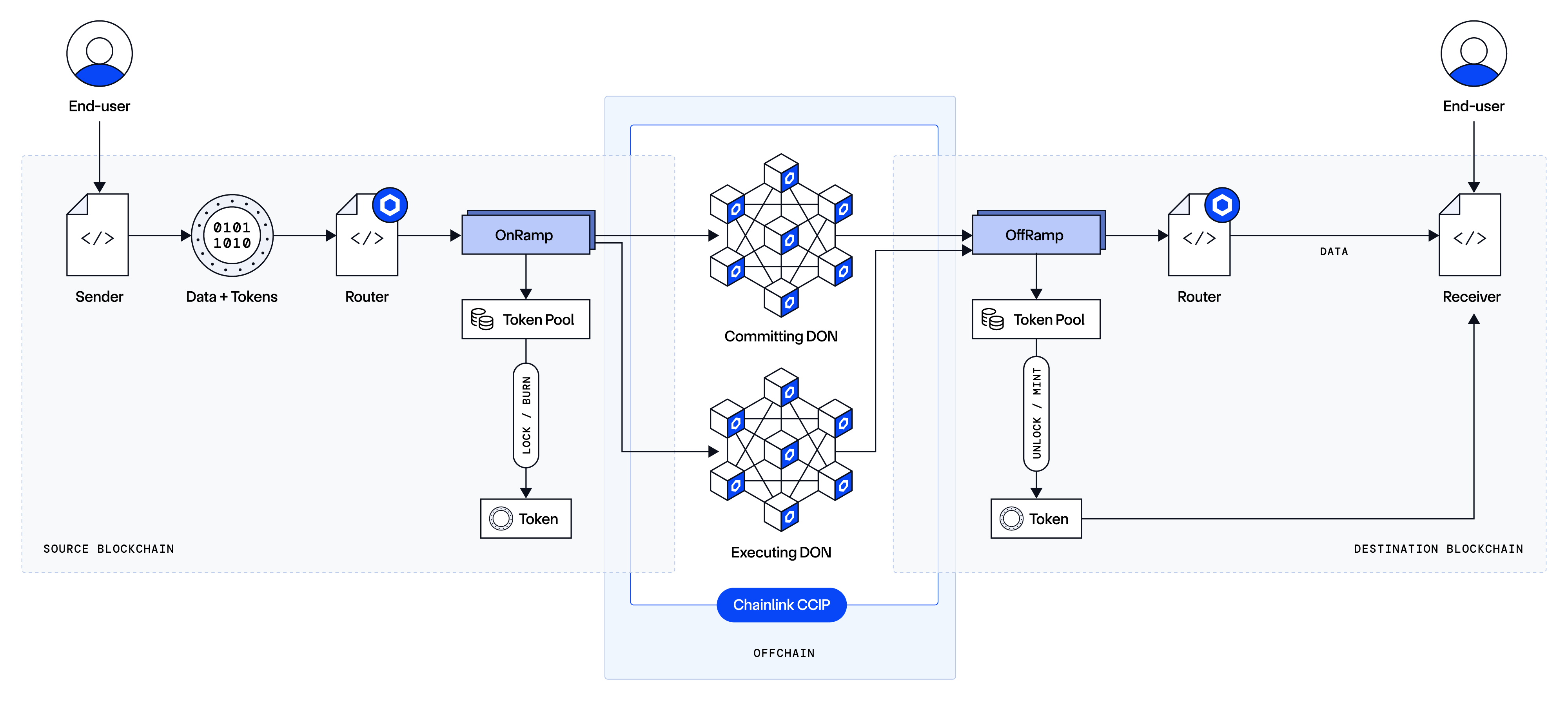
Chainlink CCIP is an interoperability protocol for token transfers, arbitrary data, and programmable token transfers. Its architecture uses multiple decentralized oracle networks to process cross-chain transactions, together with defense-in-depth measures such as rate limits, delayed role changes, and upgrade controls.
CCIP can support Burn-and-Mint, Lock-and-Mint, and Lock-and-Unlock mechanisms. The Cross-Chain Token standard lets issuers configure their own pools, administrators, and limits. Developers must still secure the destination receiver because even a valid message can trigger vulnerable application logic.
Like a price oracle, CCIP turns an external fact that one system cannot directly confirm into a verifiable input. Unlike a conventional oracle, a cross-chain protocol must also manage ordering, finality, execution, and asset accounting. For more on oracle trust models, see Oracles: Chainlink and Bringing Off-Chain Data On-Chain.
5.2 How Does LayerZero V2 Separate Verification from Execution?
LayerZero V2 provides an Endpoint through which omnichain applications send messages, while separating verification from execution. An OApp can configure Decentralized Verifier Networks, or DVNs. Once a message satisfies the required and optional DVN conditions, an Executor invokes the receiver on the destination chain.
This modular security stack lets applications choose verifier combinations according to risk instead of forcing every application to use one validator set. The flexibility also shifts responsibility to the application: weak DVN settings, a compromised administrator key, or an incorrect peer contract can reduce security.
LayerZero documentation describes the Executor as a permissionless service, and another participant can execute a verified message on the destination chain. Delays may arise from source finality, DVN verification, destination congestion, or execution parameters, rather than a single relay server.
5.3 How Does Wormhole Use Guardians and VAAs?
Wormhole's Guardian Network observes and signs on-chain messages to create a Verifiable Action Approval, or VAA. The destination contract performs the cross-chain action only after validating the VAA. Standard VAAs use a supermajority of Guardian signatures.
A Relayer or Executor delivers the signed VAA to the destination. Because the VAA can be publicly verified, delivery mainly solves availability rather than determining truth. If one relayer goes offline, another participant can still submit the valid VAA.
Wormhole Messaging supports asset transfer, cross-chain governance, oracle data, queries, and multichain applications. Developers must evaluate Guardian trust, the Core Contract, destination application, and administrator permissions together. Correct protocol-level verification does not guarantee a fault-free integration.
5.4 How Does IBC Use Light Clients?
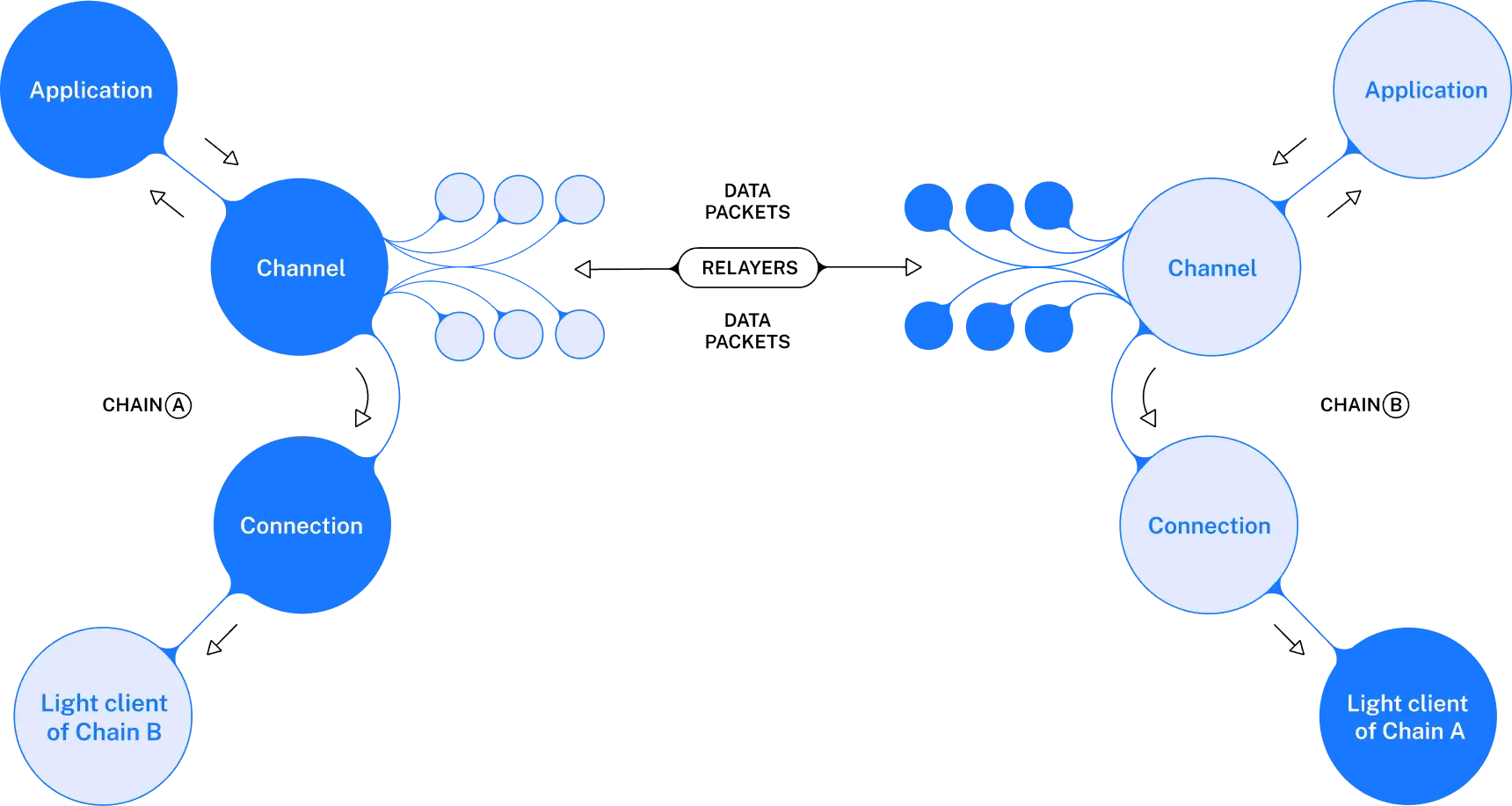
IBC is an inter-blockchain communication standard. Its classic architecture separates a transport layer from an application layer. Light clients, connections, channels, and relayers provide authentication, ordering, and delivery; applications can then implement fungible-token transfers, interchain accounts, and queries.
A light client on one chain tracks the consensus state of another and verifies remote state with Merkle proofs. Relayers transport data and proofs but generally need not be trusted to decide whether a message is true. Security is therefore closer to the security of both chains' consensus and light-client implementations than to fixed multisignature custody.
IBC offers standardization and trust minimization, but integration cost, chain types, client updates, and consensus differences still matter. IBC v2 further simplifies packet and client interfaces and permits different verification models. Actual support should be confirmed against each connected chain's official deployment.
How Do Bridges, Messaging Protocols, and Native Interoperability Differ?
Bridges are usually designed around particular assets and routes, emphasizing custody, minting, liquidity, and user delivery. General messaging protocols expose lower-level communication and let an application define what happens after receipt. A single bridge interface may combine a messaging protocol, token pools, market makers, and aggregated routing.
Native interoperability occurs between chains that share a technology stack or security relationship. For example, a Rollup communicates with Ethereum through a canonical bridge and cross-domain messenger, while chains in the same Superchain cluster may use shared standards and security models to shorten the path. Finality, reorganizations, and destination execution still need handling.
Native systems are not always safer than third-party systems, and third-party protocols are not inherently unsafe. The decisive questions are who verifies the source, who can upgrade, whether the system can pause, what limits exist, how assets are accounted for, and who bears losses in the worst case. For Rollup settlement, see What Is Layer 2? A Complete Ethereum Scaling Guide.
What Are the Main Risks of Cross-Chain Interoperability?
7.1 What Happens If the Verification Layer Fails?
If a multisig, Guardian, DVN, oracle node, or light client accepts a forged event, the destination chain may release assets or execute an arbitrary message. Concentrated keys, low thresholds, and validators running common software can turn apparently independent participants into a correlated failure.
7.2 What Happens If a Smart Contract Is Vulnerable?
A bridge may include source and destination contracts, token pools, messaging libraries, receiver applications, and upgrade proxies. A permission or accounting error anywhere can amplify losses. Audits reduce known risks but cannot prove absolute safety.
7.3 What Happens If Finality Is Misjudged?
If a protocol executes on the destination before the source transaction is truly final, a source-chain reorganization may remove the original event after destination assets were released. More confirmations improve safety but increase latency, creating a security-speed trade-off.
7.4 What Happens If Destination Execution Fails?
After verification, a message can still fail because of insufficient gas, a paused receiver, incompatible parameters, or destination congestion. Users should distinguish “verified,” “delivered,” and “application executed,” and inspect status through the protocol's official explorer.
7.5 What Are the Front-End and Approval Risks?
A phishing site can imitate a bridge and induce unlimited approvals or malicious signatures. Even with a secure underlying protocol, a false domain, counterfeit contract, or substituted clipboard address can steal assets. Before bridging, verify the official entry point, networks, token address, and approval amount.
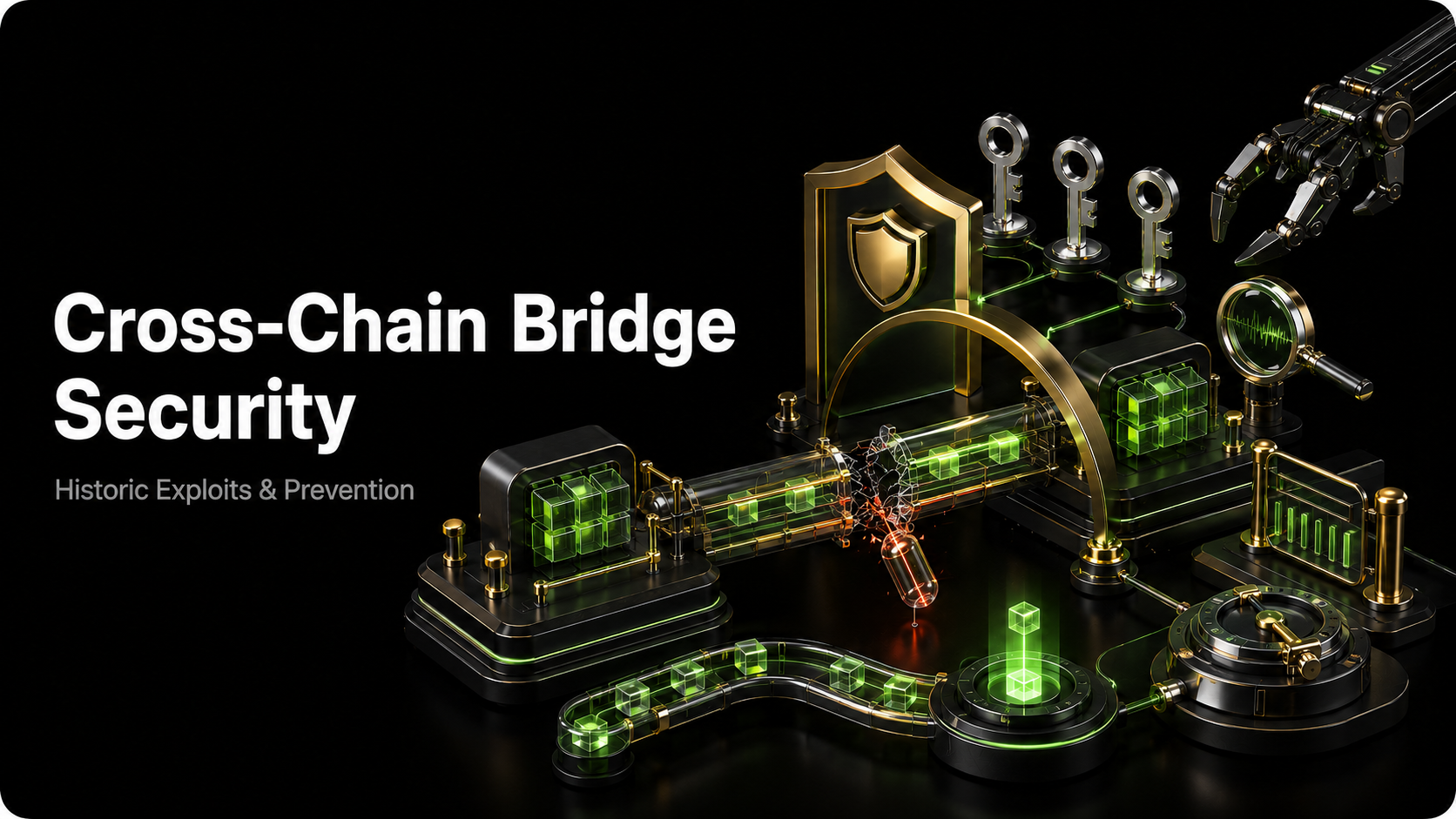
Historical cross-chain exploits also include key leaks, signature-validation flaws, message replays, initialization errors, and liquidity-pool losses. See Cross-Chain Bridge Security: Historical Attacks and Prevention for examples and defenses.
How Can Ordinary Users Bridge Safely?
First, determine whether bridging is necessary. A centralized platform may support direct withdrawal to the destination network, or the application may work on the original chain. Avoid unfamiliar protocols merely to chase short-term rewards.
Second, enter the bridge through the project's official site, chain documentation, or a trusted aggregator, and cross-check its domain and contracts. Search advertisements, direct-message support, and pinned community links can be hijacked; appearance alone proves nothing.
Third, verify the source token, asset received on the destination, minimum amount, fees, estimated time, and destination gas requirement. A representation may have different price or liquidity from the native asset, and without gas the received asset may be unusable.
Fourth, start with a small test. Wait until explorers show source success, message verification, destination execution, and the final balance before sending more. Split large transfers so one transaction does not carry all protocol risk.
Fifth, limit token allowances and revoke those no longer needed. A hardware wallet protects keys but cannot stop its owner from signing a malicious approval. Cancel any signature, Permit, or contract call that you do not understand.
Sixth, save the transaction hash, message ID, source chain, and destination chain. If delivery is delayed, use the official message explorer to identify whether the transfer is awaiting finality, verification, delivery, or execution. Never give a seed phrase to a stranger offering “recovery.”
Hotcoin's CHAINS Framework for Cross-Chain Assessment
The six-part CHAINS checklist can help compare bridges and messaging protocols. It is not a security rating; it helps users identify trust and operational boundaries.
9.1 C: Consensus — Who Confirms the Message?
Determine whether the protocol relies on light clients, validator networks, multisigs, oracles, shared sequencers, or a canonical bridge. Review thresholds, node independence, key management, and source-chain finality requirements.
9.2 H: Handling — How Are Assets Managed?
Identify whether assets are locked and minted, burned and minted, locked and unlocked, or advanced by liquidity providers. Check whether the destination receives a native token, wrapped token, or bridge receipt.
9.3 A: Authority — Who Can Upgrade or Pause?
Review administrators, multisigs, timelocks, pausers, and token-minting permissions. Emergency pauses can limit losses, but overly concentrated upgrade powers also create a single point of failure.
9.4 I: Integrity — How Is Replay Prevented?
Check the source chain, sending contract, destination contract, nonce, order, unique message ID, and finality validation. A message should execute once only and must not be redirected, retargeted, or replayed.
9.5 N: Network — Is the Route Mature?
The same protocol may have different deployment histories, limits, liquidity, and verifier configurations on different chains. A common brand does not guarantee equal security on every route.
9.6 S: Safety — What Happens After Failure?
Review retry, refund, timeout, message explorer, support, and emergency-response procedures. A sound product not only resists attacks but also helps users identify and resolve ordinary failures.
Where Is the Multichain Future Heading?
First, account abstraction and intent systems will hide much of the cross-chain process. A user may simply request an outcome with assets on one chain while solvers select bridges, swaps, and gas routes. Abstraction does not remove protocol risk; it makes transparent routing criteria more important.
Second, tokens will move away from many isolated wrappers toward issuer-controlled native multichain standards. Burn-and-Mint, Native Token Transfers, Cross-Chain Token, and Omnichain Fungible Token frameworks all aim to reduce fragmented representations and liquidity.
Third, message verification will become more modular. Applications can combine DVNs, oracles, light clients, ZK proofs, or multiple verification methods according to value and context, then apply rate limits. High-value governance messages may use stricter security stacks than small routine transfers.
Fourth, groups of chains built on the same stack will develop native interoperability through Superchains, shared settlement, or shared sequencing. This can lower latency and unify experience, but common components may create correlated risk, so fault-propagation boundaries must be clear.
Fifth, multichain applications will evolve from duplicated deployments toward unified state. Liquidity, governance, identity, and accounts may reside across multiple chains and be coordinated by messaging protocols. Competition will shift from the number of connected chains to security, composability, observability, and recovery.
Sixth, interoperability standards need better observability. A unified status page should expose source confirmations, message proofs, validator status, destination delivery, and application execution instead of forcing users to guess across explorers. Wallets and aggregators should disclose the actual bridge, asset version, estimated costs, and failure handling.
Seventh, risk management will move from post-incident recovery to proactive containment. Per-chain and per-token rate limits, anomaly pauses, timelocked upgrades, tiered quotas, and independent monitoring can create response time when a verifier or application behaves abnormally. The more value a system carries, the less it can rely on one audit or one administrator.
Frequently Asked Questions
11.1 Are a Cross-Chain Bridge and a Cross-Chain Protocol the Same Thing?
Not exactly. A bridge mainly transfers assets, while a messaging protocol can deliver arbitrary data and contract instructions. Many bridges use messaging protocols, so one product may provide both functions.
11.2 Do Assets Really Leave Their Original Blockchain?
It depends on the mechanism. Lock-and-mint retains the original in a source contract and issues a representation on the destination. Burn-and-mint reduces source supply and issues on the destination. A liquidity bridge pays from a destination pool first.
11.3 Why Is a Cross-Chain Transfer Taking So Long?
Possible causes include source finality, missing validator signatures, delayed delivery, destination congestion, insufficient gas parameters, or receiver execution failure. Use the official message explorer and transaction hashes on both chains to locate the stage.
11.4 What Does a Bridge Fee Include?
Costs may include source gas, destination execution gas, protocol and relay fees, liquidity charges, rebalancing costs, and swap slippage. A single fee shown by the interface may not equal the entire difference between the amount sent and received.
11.5 Is a Canonical Bridge Always Safer Than a Third-Party Bridge?
Not necessarily, although a canonical bridge is usually integrated more closely with a chain's settlement and upgrade mechanisms. Users must still review waiting periods, administrators, contracts, asset form, and route. A third-party system requires additional assessment of its independent verification and liquidity.
11.6 Can a Cross-Chain Message Execute Twice?
A well-designed protocol uses message IDs, nonces, channel ordering, and execution records to prevent replay. Duplicate effects can still occur if a receiving application fails to validate its source or implements faulty retry logic.
11.7 Will One Blockchain Replace the Multichain World?
That is unlikely in the near term. Chains make different trade-offs in security, cost, performance, privacy, and applications. User experience may become unified while multiple chains, Rollups, and specialized networks continue to cooperate underneath.
Conclusion: Cross-Chain Is About Verification, Not Just Transfers
Cross-chain interoperability lets assets, messages, and application state coordinate across blockchains. Bridges move value, general messaging protocols enable contract communication, and light clients, validator networks, oracles, or shared security prove source-chain events.
Chainlink CCIP, LayerZero, Wormhole, and IBC demonstrate different approaches. CCIP uses decentralized oracle networks and defense in depth; LayerZero modularizes verification and execution; Wormhole uses Guardians to sign VAAs; and IBC uses light clients and proofs to verify remote state.
No design removes every risk. Users must understand asset handling, verification, finality, administrators, and destination execution. Developers must also protect receivers, message ordering, limits, and failure recovery. Arrival speed is an experience metric; the security boundary is the foundation of cross-chain value.
Return to The 2025 Web3 Frontier Landscape to place interoperability, modular blockchains, oracles, Layer 2, and chain abstraction in one framework.
To connect to Web3 applications with a standalone wallet, consider Hotcoin Web3 Wallet. For mobile market and trading tools, visit the Hotcoin App. For more educational content, visit Hotcoin.
Risk warning: This article is for education and information only and does not constitute investment, trading, cross-chain, legal, or tax advice. Bridges and messaging protocols can face smart-contract bugs, verification-key compromise, chain reorganizations, execution failures, liquidity shortages, representation-token depegs, phishing approvals, and regulatory risks. Before acting, verify current official documentation, supported networks, contract addresses, audits, pause status, and destination gas, and transfer only assets you can afford to lose.
Đề xuất đọc
Xem thêm

Service@hotcoin.com
Product@hotcoin.com
Business@hotcoin.com
Casecn@hotcoin.com