Panic Selling: Why You Always Capitulate at the Bottom
Panic selling means dumping assets in a fit of fear while the market is crashing, usually after prices have already fallen a long way — in other words, at the very moment when selling is least rational. It is not a rare lapse: CoinLedger's 2026 report shows that in 2025 around 71% of crypto investors reported losses on their tax returns, and a large share of those losses came from selling in panic. Understanding the psychology behind panic selling is the first step to avoiding a capitulation at the bottom of the cycle.
The Psychology Behind Panic Selling: Why We Make Irrational Decisions
Panic selling is not a lack of willpower; it is the brain's natural response to extreme stress. Three psychological mechanisms drive it together:
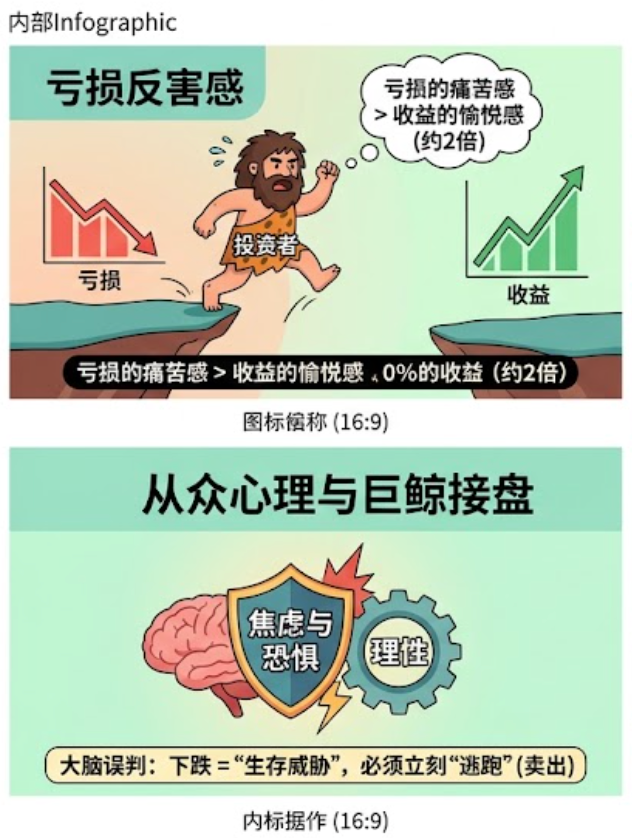
Loss aversion: behavioural economics shows that a loss hurts roughly twice as much as an equal-sized gain feels good. When the price starts falling, that asymmetry triggers anxiety and fear: the brain reads the drop as a threat to survival and pushes you to act in order to escape the pain — and the most direct action is to sell. The irony is that in trying to stop the loss from growing, you sell exactly when the loss is largest.
Herding: as prices fall, social media fills with "the bear market is here" and "it will drop further", and your account shows other people selling. Humans are wired to copy the group, and that instinct is strongest under uncertainty and threat. Seeing others run, the brain concludes that there may be a disaster you do not yet know about, and you join the sell-off. This "safety in numbers" effect produces collective irrationality.
Confirmation bias: once you feel panic, you actively hunt for information that supports the decision to sell and screen out the opposite. Long-term holders are still accumulating, stablecoin inflows to exchanges are at record highs, and MVRV has fallen into undervalued territory — yet in a panic those bottom signals get filtered out. During a sell-off you are far more likely to accept the most pessimistic view than to assess the situation objectively.
The Chain Reaction of Panic Selling: Who Is Buying From You?
Part of what makes panic selling so dangerous is that it builds a self-reinforcing loop inside the market.
A self-fulfilling panic: when one person sells in fear, the price falls further, which panics more people, which widens the feedback loop. 2018, the March 2020 COVID crash and the FTX collapse of 2022 all showed this mechanism at work.
The more important question, though, is who buys the bottom. Whales and institutional traders usually have an explicit accumulation plan and build positions in tranches as the price reaches certain technical or valuation levels. They need panic selling to obtain enough liquidity to fill those positions without pushing the price up noticeably. Every time retail sells in fear, that money is quietly absorbed on the other side.
As one trader put it: "While you capitulate, the big players are greedily accumulating. The market is cruel, and it will make the uncommitted hand over their coins."

How to Tell Whether You Should Sell: Panic vs Rational Judgement
In a falling market, the framework below helps you separate a rational adjustment from panic selling:

Two practical checklists:
The pause checklist: when the drop exceeds 10–15%, pause for 30 minutes and run a "pre-flight check" to confirm whether the trigger for selling belongs to the rational or the panic category above.
The review checklist: after every take-profit or stop-loss, go back over your emotional state, position size and decision quality that day, and trace how the panic was triggered and amplified. "How to spot the first sign of panic" is far more valuable than "how to predict the next bottom".
Building Defences Against Panic
Set automatic rules for buying and selling: place stop-loss and limit orders in advance and let the system execute them instead of leaving the decision to your emotions. Decide beforehand that you will buy or sell in tranches as the market reaches certain valuation levels, so that during a crash you are executing a plan made months earlier rather than reacting to the moment.
DCA is a built-in anti-panic mechanism: dollar-cost averaging treats a decline as an opportunity — the lower the price, the more you buy with the same amount of money, and the more your average cost falls. When the market drops, the DCA investor thinks "good, I can buy more this time" rather than "oh no, I have to sell". That shift in thinking is the fundamental cure for panic.

FAQ
Q1: What is the difference between panic selling and a stop-loss?
A stop-loss is planned before you enter, based on a specific price level or your risk tolerance, and is part of rational decision-making. Panic selling is a sudden, emotionally driven impulse with no plan behind it, and it usually happens after prices have already fallen heavily — when selling is rationally the last thing you should do.
Q2: How do I tell a healthy pullback from a trend reversal?
Look at both technicals and on-chain data. A healthy pullback usually finds support at a key level such as a moving average or a Fibonacci level, whereas a reversal comes with support broken on heavy volume and with signals across multiple timeframes no longer agreeing. If you cannot tell, it is better to wait for more confirmation than to sell in a panic.
Q3: How do I calm down when my account is down 30%?
The first step is to step away from the screen for 15–30 minutes and let your brain come out of fight-or-flight mode. Then go back to your trading plan: why did you buy? Has that reason changed? If it has not, the drop is only the market's temporary mood. If it has, plan your exit rationally instead of dumping everything in one emotional click.
Q4: What long-term perspectives help reduce panic?
Understand three things. Crypto has seen several drawdowns of 70%–90% and has gone on to make new highs every time. Institutional money, such as spot Bitcoin ETFs, keeps flowing in, which shows the long-term thesis has not changed. And statistics show that the market's gains are concentrated in a handful of the best trading days — sell in a panic and you may miss those rebounds entirely, badly weakening your long-term returns. Believing that Bitcoin trends upward over the long run is an effective antidote to the anxiety of a sharp short-term crash.
Related tutorials:
Crypto Trading Psychology: From Emotion Management to Discipline
Building Trading Discipline: How to Make and Follow a Trading Plan
Trading Journal Template: How to Review Every Trade Properly
Recommended reading:
Leitura recomendada
Veja mais