How Are Crypto and Stocks Different? Risks, Trading Hours, and Valuation
Buying stocks and buying crypto both involve seeing quotes, placing orders, and enduring price swings, but what you buy is not the same. Stocks represent shares in a company; buying general crypto usually does not make you a shareholder of the development company.
This difference affects how you view valuation, obtain data, custody assets, and what rights you can assert if problems arise. If tokenized stocks or stock-related contracts are involved, you also need to examine the product terms more closely.
Key Takeaways
- Stocks and crypto assets derive their rights from different sources; similar trading interfaces do not make them the same.
- Crypto markets usually trade all day; stock trading hours, closures, and extended sessions vary by market.
- Stock valuation often analyzes company earnings and cash flow; tokens require further examination of supply, utility, and how value flows to holders.
- Risks include not only price but also leverage, liquidity, platform, and custody.
- Stocks, tokenized stocks, and price-linked products must each have their rights confirmed separately.
The Biggest Difference: What Are You Buying?
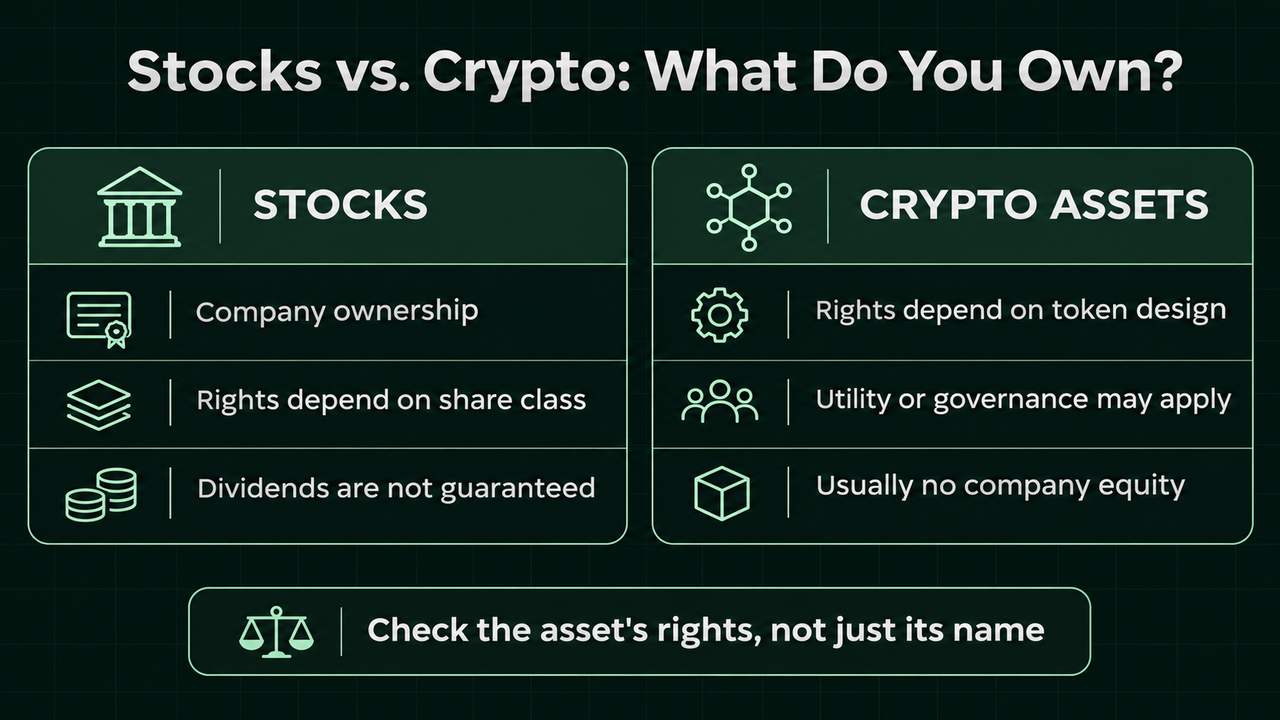
Buying stocks means acquiring partial ownership of a company. Depending on share class and local rules, this may involve voting, dividends, and other shareholder rights; however, companies do not necessarily pay dividends, and shareholder rights are not the same for every share class.
When buying crypto, you first need to see what it represents. Some are used for network fees, some for governance, and some are linked to specific assets or services. A token being votable does not mean holders have the full rights of company shareholders.
A practical question is: if this project makes money, do token holders have a clear right to share in it? If not, you cannot estimate your return solely based on "increased project revenue."
A Table Comparing Stocks and Crypto
| Comparison Item | Stocks | Crypto |
|---|---|---|
| What you buy | Company shares | Depends on asset design |
| Where returns may come from | Price spreads, dividends distributed by the company, etc. | Price spreads and rewards under specific mechanisms, etc. |
| Common analytical data | Financial reports, announcements, operational and industry data | Protocol documents, on-chain data, supply and unlock schedules |
| Trading hours | Varies by market and trading system | Usually 24/7 year-round |
| Custody method | Often through brokers, custodians, and settlement systems | Platform custody or self-managed wallets |
| Supply changes | Possible capital increases, buybacks, stock splits, etc. | Depends on protocol and token arrangements |
| Main risks | Company operations, valuation, liquidity, etc. | Price, supply, technology, custody, liquidity, etc. |
The table only helps grasp the direction. Large-cap stocks, small-cap stocks, stablecoins, meme coins, and native assets of different networks cannot each be fully summarized with a single risk label.
What's the Difference in Trading Hours? What Are the Impacts of All-Day Trading?
Crypto markets usually trade 24 hours a day, 7 days a week. Therefore, news appearing on weekends or at night may cause prices to change immediately; individual platforms may still undergo maintenance, and individual trading pairs may also be suspended.
Stocks depend on which market they trade on. For example, for U.S. stocks, regular trading hours are ET 09:30–16:00 on trading days, with pre-market and after-hours arrangements as well. Extended sessions may have thinner depth and wider spreads.
The benefit of all-day trading is not having to wait for the next market open; but it also means risks do not stop while you rest. This does not mean you need to watch the market all day, but rather that you need to decide your position, leverage, and tolerable loss in advance.
Additionally, a platform's stock-related products offering extended trading does not mean the underlying stock exchange is open at the same time. Trading hours and quote sources should still be examined separately by product.
How to Judge Whether the Price Is Expensive?
Stocks: Look at How the Company Makes Money
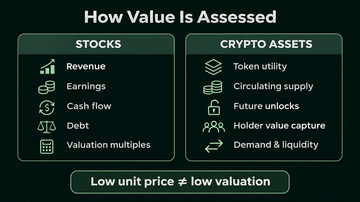
When analyzing stocks, people often look at revenue, earnings, debt, and cash flow, then combine them with industry prospects and valuation multiples.
For example, the price-to-earnings ratio looks at stock price together with earnings per share. But when a company is losing money, this metric may lose its original comparative meaning; different industries also cannot be judged by the same multiple alone.
Crypto: Look at Utility, Supply, and What Holders Get
Token analysis should at least ask:
- Why do people need to hold or use it?
- How much is circulating now, and how much more will be added in the future?
- When will team, investor, or reward tokens unlock?
- Does protocol revenue actually flow to token holders?
- Does the expected return depend on actual usage or mainly on subsequent buying?
A low price per unit does not equal a low valuation. Suppose a token's price is 0.01 USD and its circulating supply is 100 billion tokens; the circulating market cap would be 10 billion USD. More decimal places do not automatically make an asset cheaper.
Risks Are Not Just Price Moves; Where the Money Is Held Matters Too
Investment losses may come from getting the direction wrong, or from other links in the chain.
| Risk | What May Happen |
|---|---|
| Liquidity | There is a quote, but you cannot sell the intended quantity at a price close to it |
| Leverage | A small adverse move causes a larger loss, or even forced liquidation |
| Platform and custody | Service interruptions, withdrawal restrictions, or disputes over asset handling |
| Self-custody | Lost private keys, authorization errors, wrong addresses |
| Information gap | Relying on unverified news, promotion, or outdated data |
If you are not yet familiar with investing, you can first use the Blockchain Exchange Beginner's Guide to get familiar with account security, deposits, orders, and trade records. Understand the features you use first, then decide whether to increase trading complexity.
How to Distinguish Stocks, Tokenized Stocks, and Stock-Related Contracts?
These products may all display familiar company names, but they cannot be treated as the same thing.
| Product | Key Points to Confirm |
|---|---|
| Ordinary stocks | Share class, holding method, shareholder rights, and trading market |
| Tokenized stocks | Issuance and custody structure, rights to underlying stocks, redemption arrangements |
| Stock price-linked products | Counterparty, tracking method, settlement rules, and fees |
| Leverage contracts | Margin, forced liquidation, funding or position fees, price sources |
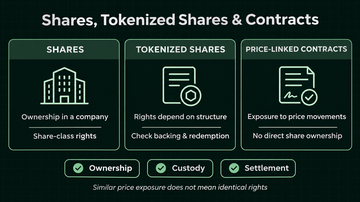
Tokenized products have different structures. Some represent rights to underlying securities, while others provide price-linked synthetic exposure; the rights can differ significantly.
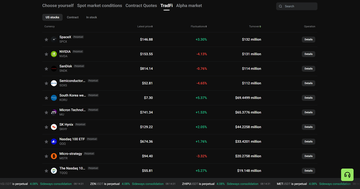
Hotcoin already offers a TradFi Zone, including related products priced and settled in USDT. The platform's product descriptions also distinguish price-linked trading from direct stock ownership: trading related products does not mean directly holding the corresponding company's stock.
To learn about the entry point and operations, read the Hotcoin TradFi Features Guide; if your main confusion is about holding rights, you can then read What Are Tokenized Stocks.
Common Misconceptions
- "Buying coins equals taking equity in the development company." You need to look at the asset and legal documents; you cannot presume based on the project name.
- "Stocks always pay dividends." Whether dividends are distributed depends on company decisions and share conditions.
- "Being able to trade all day means there are always enough buyers and sellers." Trading hours and liquidity are two different things.
- "If the product name includes 'stock,' it carries shareholder rights." You need to confirm the actual product structure.
FAQ
Q1: Will buying crypto give me company shares?
Usually not automatically. If the asset itself represents securities or other rights, you need to examine the specific documents and applicable rules.
Q2: Can crypto be valued using the price-to-earnings ratio?
Most tokens cannot directly apply the concept of a company's earnings per share. Even if a protocol has revenue, you still need to confirm whether holders have corresponding rights.
Q3: Can stocks only be traded during the day?
It depends on the market, trading session, and broker services. "Daytime" also differs across time zones; you should confirm using the time of the exchange's location.
Q4: Are the rights of tokenized stocks the same as ordinary stocks?
Not necessarily. The issuer, custody, legal structure, and redemption method may all affect rights.
Q5: Does trading Hotcoin TradFi mean directly buying stocks?
According to the platform's relevant descriptions, what is traded are products linked to traditional asset prices, not direct ownership of the corresponding stocks; before placing an order, you also need to read the rules of the selected product.
Conclusion
When comparing stocks and crypto, you can first ask three questions: What rights am I buying? What is the price based on? Who holds the assets? Once you understand these, looking at trading hours and fees will be more useful than just comparing which one rises faster.
If you want to learn about related products in different markets on Hotcoin, you can start with the TradFi Features Guide, confirm the product nature first, and then get familiar with the operations.
Risk Warning: This article is for educational and informational purposes only and does not constitute investment, legal, or trading advice. Stocks, crypto assets, tokenized products, and derivatives have different rights and risks; leverage may amplify losses and lead to forced liquidation. Please read the product terms, confirm the applicable rules in your location, and make decisions based on your own risk tolerance, consulting a professional advisor if necessary.
Leitura recomendada
Veja mais