
Private Key Sharding and Social Recovery: Next-Generation Key Management
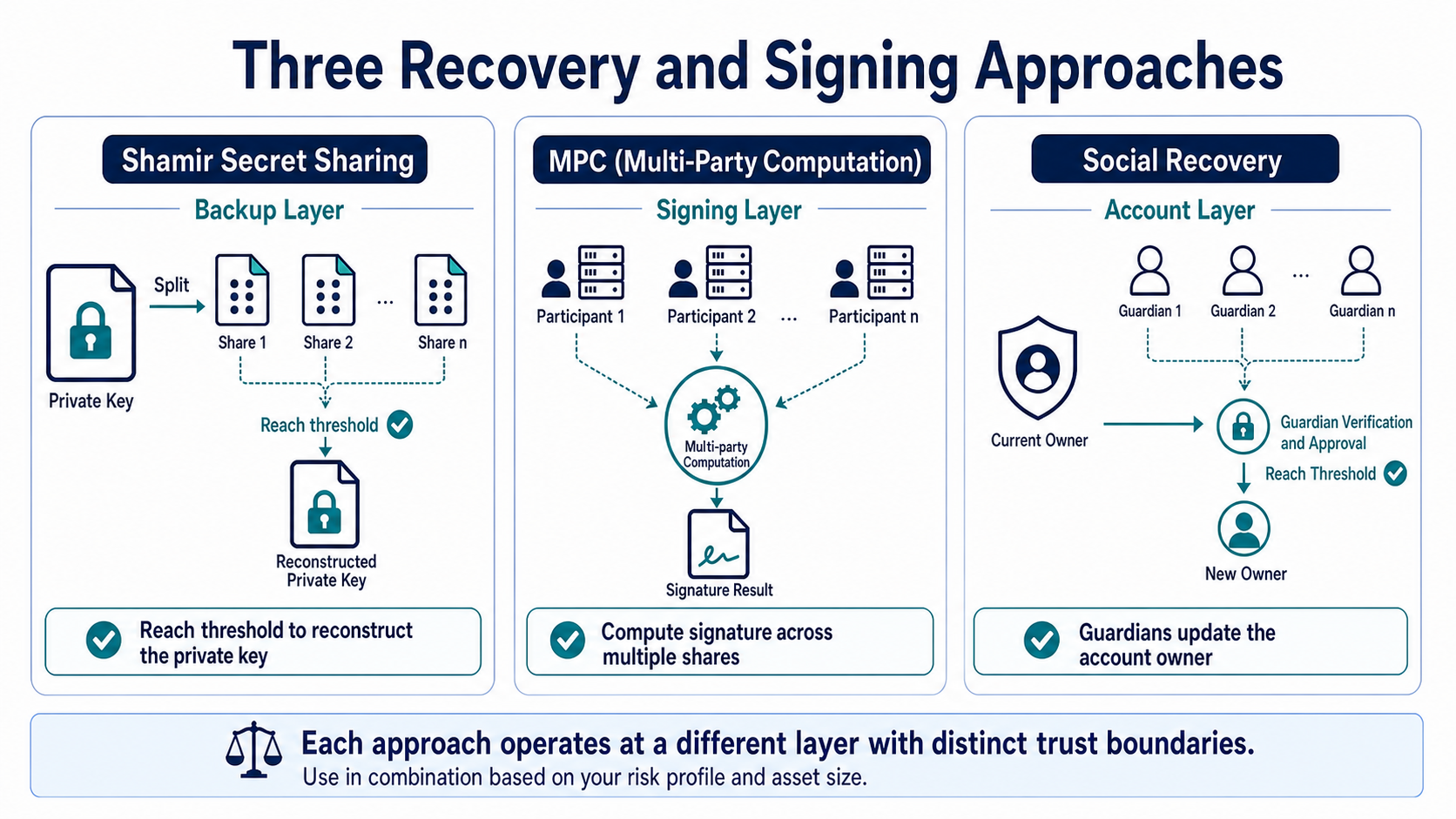
Private key sharding divides a recovery secret into shares that can reconstruct it only after a threshold is reached. MPC allows multiple parties to sign together without rebuilding the full private key, while social recovery lets guardians update control of an account.
What Problem Does Shamir Secret Sharing Solve?
Shamir Secret Sharing can divide a secret into multiple shares and require any chosen threshold of them for recovery. For example, a 2-of-3 setup can tolerate the loss of one share, while exposure of a single share does not directly reveal the complete secret.
Wallet standards such as SLIP39 define recoverable shares based on this approach. This is different from manually cutting a seed phrase into pieces: each share is algorithmically generated recovery material, and users must confirm wallet compatibility and threshold settings.
How Is MPC Different from Backup Sharding?
Multi-party computation wallets distribute signing capability across multiple devices or services. The parties jointly compute a signature without combining a complete private key during normal operation. This can support device replacement, policy approvals, and institutional workflows.
MPC security still depends on protocol implementation, share refresh procedures, identity authentication, service availability, and recovery processes. The absence of one plaintext private key does not eliminate dependence on a platform or coordination layer.
How Does Social Recovery Work?
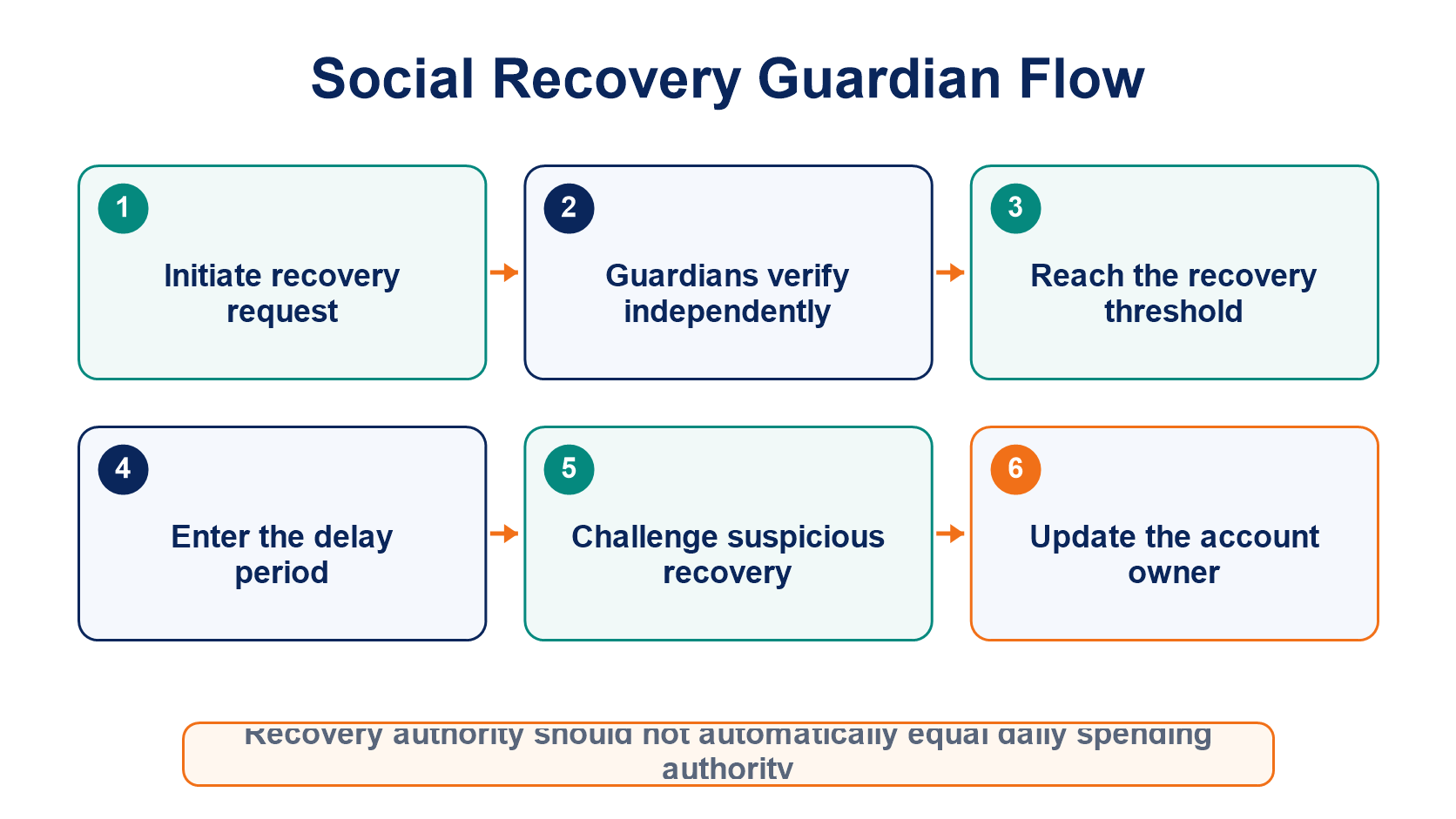
A smart account can designate friends, family members, hardware devices, or institutions as guardians. Once the configured rule is satisfied, the guardians update the account owner to a new key, allowing the assets to remain at the same address.
Recovery rules should include delays, notifications, and cancellation windows to reduce the risk of guardian collusion or simultaneous phishing. Guardian arrangements also need maintenance and succession planning rather than being left unchecked after setup.
How Should You Choose Among the Three Approaches?
| Approach | Primary layer | Best suited to solve | New dependencies |
|---|---|---|---|
| Shamir secret sharing | Backup and recovery | Loss or theft of a single backup | Share custody and compatible implementations |
| MPC | Key generation and signing | Multiple devices, institutional approvals, and avoiding a single signing point | Coordination services, protocols, and identity recovery |
| Social recovery | Smart-account control layer | Loss of the user's current signing key | Guardians, contracts, delays, and upgrade permissions |
Complex recovery systems require practice. A threshold arrangement that cannot recover after staff departures, device loss, or service shutdowns merely replaces a technical single point of failure with a process failure.
For the basic structure, read the multisignature wallet guide. For the broader relationship among key materials, see private keys and seed phrases.
Frequently Asked Questions
Can One Shamir Share Recover Part of the Assets?
No. When the threshold has not been reached, the original secret should remain unrecoverable, and one share does not correspond to a "partial wallet."
Do MPC Wallets Have No Private Key at All?
Implementations describe this differently. The key point is that multiple shares jointly produce signing authority; this does not mean that no key material or recovery dependency exists.
Can Guardians Spend the Account's Assets at Any Time?
A standard social recovery setup grants recovery authority rather than everyday spending authority, but users must verify the actual contract and module configuration.
Are More Shares Always Safer?
Not necessarily. More shares also create more custody, synchronization, and loss risks. The threshold should reflect the real people and locations involved.
Leitura recomendada
Veja mais

Service@hotcoin.com
Product@hotcoin.com
Business@hotcoin.com
Casecn@hotcoin.com