
GameFi Blockchain Games: The New Play-to-Earn Economy
What Is GameFi?
GameFi is a Web3 gaming model that combines gameplay, blockchain assets, and open economic systems. Players can hold characters, equipment, land, or tokens in a wallet and trade, transfer, or use them where a game permits. However, “play-to-earn” does not guarantee a profit. Actual returns depend on demand for the game, its token economy, market liquidity, and the player's costs.
The term GameFi combines “game” and “finance,” but it means more than simply adding financial features to a game. A complete GameFi product must coordinate game content, accounts, smart contracts, NFTs, tokens, marketplaces, and community governance. If the game itself is not enjoyable, token rewards alone are unlikely to sustain its player base or asset value over time.
How Does GameFi Work?
GameFi generally involves a game client, servers, a blockchain, smart contracts, Web3 wallets, and asset marketplaces. Combat, maps, and real-time actions may run on servers or locally, while ownership, minting, transfers, and trades of important assets are recorded on-chain. Projects put different amounts of data on-chain, and a game that uses NFTs is not necessarily a fully on-chain game.
2.1 What Does a Web3 Wallet Do?
A Web3 wallet serves both as a player account and as a tool for managing on-chain assets and signing transactions. After connecting to a game, a player may view NFTs, claim rewards, buy items, or authorize smart contracts. Embedded wallets and account abstraction are reducing the barriers associated with seed phrases and gas fees, but players must still verify the signature request, network, and contract address to avoid granting unintended access to assets.
2.2 What Do Smart Contracts Do?
Smart contracts can manage token issuance, NFT minting, trading, crafting, staking, and reward distribution. Public rules are not automatically well designed: a project team may retain authority to upgrade or pause contracts, issue more assets, or change parameters. When researching GameFi, distinguish immutable on-chain rules from governable parameters and game data controlled entirely by a server.
2.3 How Do Game Assets Move On-Chain?
Characters, equipment, pets, cards, and land commonly use NFT standards such as ERC-721 or ERC-1155, while game currencies may use ERC-20. Ethereum explains that a blockchain game can put only currencies and items on-chain, or it can encode game rules and world state in smart contracts. Source: Ethereum Gaming
How Is GameFi Different From Traditional Gaming?
Accounts, coins, and equipment in traditional games are usually controlled by an operator's database, and players receive permission to use them under platform rules. GameFi can represent some assets as tokens in player wallets, giving them a verifiable origin and the ability to move on-chain. Owning an NFT does not mean owning a game's copyright, however, and an asset may have no practical use if the game shuts down.
Account model: Traditional games use platform accounts, while GameFi can support external or embedded wallet login.
Asset records: Traditional items are stored in centralized databases, while on-chain assets can be independently verified with a blockchain explorer.
Trading scope: Some GameFi assets can trade on markets outside the game, but their usability still depends on contracts, networks, and marketplace support.
Development access: Open contracts may let third parties build tools or experiences around assets, depending on licensing and interfaces.
Economic risk: Tradable tokens bring market volatility, liquidity constraints, and speculation into the game economy.
What Is the Difference Between Play-to-Earn and Play-and-Earn?
Play-to-Earn emphasizes tradable rewards for completing tasks, winning battles, or contributing to a game. Play-and-Earn puts the gameplay experience first and treats earnings as an optional outcome. Both models may use tokens and NFTs, but their priorities differ: the former can attract yield-driven users, while the latter asks whether players will continue playing and spending even without large rewards.
Early GameFi projects often used high token emissions to attract new players. If reward supply grows faster than in-game spending and genuine demand, token prices may fall and player earnings may decline. A sustainable Play-and-Earn model must tie rewards to skill, content contributions, or scarce resources and create enough useful ways to spend assets instead of relying solely on new capital.
For more on reward logic, economic differences, and sustainability, continue with: GameFi's Core Models: Play-to-Earn and Play-and-Earn.
How Can GameFi Players Earn Rewards?
GameFi rewards may come from quests, competition, asset trading, content creation, tournaments, and ecosystem contributions. Every method requires time, skill, initial assets, or transaction costs. The rewards displayed by a platform are usually calculated before taxes, fees, and asset discounts and should not be treated as net income. Players must also consider gas fees, marketplace fees, NFT price volatility, and withdrawal liquidity.
Quest rewards: Earn tokens, materials, or NFTs by completing daily tasks, seasonal objectives, or story challenges.
Competitive rewards: Receive limited assets or prizes based on rank, tournament results, and skill.
Production and trading: Gather, craft, breed, or create items and sell them to other players.
Content contributions: Create maps, skins, mods, streams, or community tutorials and receive project incentives.
Asset rentals: Let other players use characters, land, or equipment where the game's rules allow it.
Ecosystem governance: Some projects reward stakers or governance participants, though those returns also carry token risk.
What Makes Up a GameFi Token Economy?
A GameFi economy must manage asset sources, spending mechanisms, player demand, and circulation speed. Tokens can serve as rewards, payments, governance assets, or upgrade resources, while NFTs can represent characters, equipment, land, and collectibles. Sustainability cannot be judged from total token supply alone; daily issuance, burns and other sinks, player retention, and non-speculative demand also matter.
6.1 How Do Single-Token and Dual-Token Models Differ?
A single-token model uses the same asset for payments, rewards, and governance. It is simple, but game rewards may translate directly into market selling pressure. A dual-token model generally separates the governance asset from the in-game reward asset to isolate some functions and supply-demand dynamics. Splitting tokens does not automatically solve inflation, however. A reward asset without useful sinks can still lose value continuously.
6.2 What Are Token Sources and Sinks?
Quests, battles, and seasonal rewards are token sources, while character breeding, equipment upgrades, tickets, crafting, and transaction fees are sinks. A healthy economy matches issuance to genuine player demand. If the main sink is new players purchasing entry assets while existing players continually claim and sell rewards, the system becomes highly dependent on user growth.
6.3 What Rights Can a Governance Token Provide?
A governance token may support proposals, voting, ecosystem fund allocation, and changes to game parameters, but the actual rights depend on the contract and governance process. Token holders do not necessarily own equity in the game company, profit-distribution rights, or intellectual property. Before participating, check whether votes are actually executed, whether team holdings are concentrated, and whether the project retains final control.
Why Put Game Items On-Chain?
The core benefit of putting game items on-chain is that their origin, supply, and transfer history can be independently verified and managed through compatible wallets, markets, or applications. An NFT can prove that a token belongs to an address, but it cannot guarantee cross-game compatibility, long-term value, or permanent playability. Utility still depends on developers maintaining the game and supporting the contract.
On-chain items can represent characters, weapons, skins, pets, cards, land, and achievement credentials. Developers can also support trading, rental, crafting, and third-party displays around the same asset, but they must address cheating, copyright, data updates, and cross-chain security. For a fuller analysis of the technology and associated rights, read: On-Chain Game Assets: Why Your Game Items Should Be On-Chain.
Why Did Axie Infinity Become a Defining GameFi Case?
Axie Infinity combined creature collection, combat, breeding, and an on-chain economy. Players could manage Axie NFTs and participate through AXS, SLP, and marketplace trading. It showed that blockchain games could form large player economies, while also exposing reward inflation, high asset entry costs, dependence on user growth, and cross-chain security issues that GameFi must address.
Axie Infinity describes Axies as digital creatures that players can battle, collect, and breed, with related NFTs and game experiences managed within its ecosystem. Source: Axie Infinity official website For industry researchers, Axie's importance extends beyond its peak metrics: it demonstrates how token incentives can drive growth and amplify economic volatility at the same time.
How Are GameFi and the Metaverse Related?
GameFi focuses on gameplay and asset economies, while the metaverse places greater emphasis on persistent virtual spaces, digital identity, social relationships, and content creation. The two frequently overlap: metaverse land, wearables, and tickets can use NFTs, and users can participate in an economy through games, events, and creation. Not every metaverse is a game, however, and not every GameFi product needs a virtual world.
Projects such as Decentraland, The Sandbox, and Otherside explore virtual land, user-generated content, digital identities, and community events in different ways. For more on economic systems, technical foundations, and ownership structures, read: What Is the Metaverse? The Economy and Technology Behind Virtual Worlds.
How Do Metaverse Land and Assets Work?
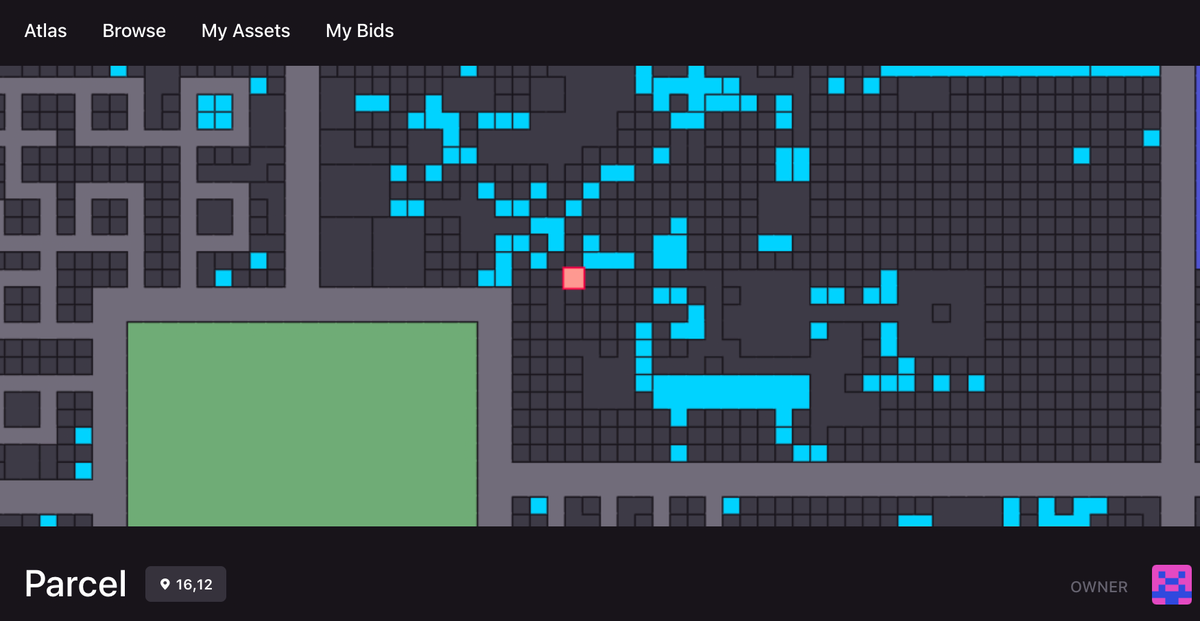
Metaverse land is often represented by limited-supply NFTs. Holders may build experiences, host events, rent space, or sell assets within platform rules. On-chain scarcity does not guarantee visitors or commercial value. Location, content, user scale, development tools, platform activity, and operating costs all affect real utility, so buyers should not evaluate land solely by total supply.
Decentraland's official Marketplace supports the management and trading of assets such as LAND, Wearables, and Emotes. The Sandbox uses LAND to host user-created experiences and SAND as a utility token in its ecosystem. Sources: Decentraland Marketplace and The Sandbox LAND documentation
What Are Gaming Guilds and Scholarship Models?
Blockchain gaming guilds are groups organized around game assets, player training, community coordination, and ecosystem partnerships. In early scholarship models, a guild or asset owner supplied the NFTs needed to enter a game, players contributed time, and rewards were split according to an agreement. The model lowered entry costs for some players, but returns remained highly dependent on the game economy, token prices, and revenue-sharing terms.
Organizations such as Yield Guild Games promoted guild-based collaboration, but players still need to verify asset control, reward calculations, withdrawal conditions, and regional compliance requirements. A guild cannot eliminate the risks of game shutdowns, token declines, or contract vulnerabilities. For more on organizational structures and scholarships, read: Gaming Guilds: YGG and the Scholarship Model.
How Can You Explore Different Types of GameFi Projects?
GameFi now includes card games, strategy games, role-playing games, shooters, sports, simulation, metaverse experiences, and fully on-chain games. When comparing projects, first determine whether the game is live and whether its core gameplay loop works, then review its on-chain assets and token design. Concept demos, trailers, and large funding rounds cannot substitute for real players, ongoing content updates, and stable technical performance.
Ethereum's gaming directory includes both conventional games with on-chain assets and Onchain games that store more state on a blockchain, showing that GameFi has no single technical model. Source: Ethereum gaming apps directory For examples from this category, read: Top GameFi Projects to Watch in 2025.
Where Is GameFi Heading?
GameFi's next phase is shifting from “high rewards attract users” toward better gameplay, low-friction wallets, and sustainable economies. AAA-quality production, mobile experiences, embedded wallets, sponsored gas, and cross-platform markets can make entry easier for mainstream players. Fully on-chain games and autonomous worlds aim to open more rules, state, and extension rights to communities and developers.
13.1 What Challenges Must AAA Blockchain Games Solve?
High-quality blockchain games need more than graphics and content: wallets, signatures, and transactions should interrupt play as little as possible. Gaming infrastructure providers such as Immutable are offering embedded identity, wallets, asset contracts, order books, and Unity and Unreal Engine integrations, allowing developers to place blockchain functionality behind the game experience. Source: Immutable developer documentation
13.2 What Is a Fully On-Chain Game?
A fully on-chain game writes more rules, state, and player actions to smart contracts so that anyone can verify how the world operates and, where permissions allow, build new clients, mods, or automation. The tradeoffs include transaction latency, gas costs, privacy, randomness, and complex state management. Not every game is suited to putting every action on-chain.
13.3 What Is an Autonomous World?
An autonomous world is designed so that its rules can continue operating and the community can extend it, rather than depending entirely on a single developer's servers. Open-source frameworks such as MUD provide entities, state synchronization, plugins, and development tools for fully on-chain applications on Ethereum, although governance, upgrades, and frontends may still retain control points. Source: MUD documentation
For more on AAA games, fully on-chain logic, and autonomous worlds, read: The Future of GameFi: AAA Games, Fully On-Chain Games, and Autonomous Worlds.
How Can You Judge Whether a GameFi Project Is Sustainable?
To assess sustainability, first ask whether the game can retain players who are not motivated only by earnings, then examine token issuance, asset sinks, and development costs. Short-term user growth may come from airdrops or high-yield subsidies. Only when gameplay, content updates, and paid demand can stand on their own can an economy become less dependent on new users and rising token prices.
14.1 Hotcoin's Six-Dimension GameFi Checklist
Gameplay: Is the core loop enjoyable, and will players keep playing when rewards decline?
Economics: Are token issuance, sinks, inflation, and team unlocks transparent, and does demand come from real gameplay?
Assets: Can NFT utility, supply, contract addresses, and metadata be independently verified?
Technology: Are the game, blockchain, bridges, and wallets reliable, and have critical contracts been security reviewed?
Operations: Does the team keep updating content, combat cheating, support players, and disclose important rule changes?
Liquidity: Do tokens and NFTs have real buyers, and are selling costs, spreads, and lockups acceptable?
Of these six dimensions, gameplay drives long-term demand; economics and liquidity determine whether rewards can be realized; assets and technology define ownership and security boundaries; and operations affect the lifetime of the content. If a project relies mostly on high-yield promotion but cannot explain why players will continue spending, its economic model may lack a stable foundation.
How Should a Beginner Start With GameFi?
Beginners should start with free or low-cost experiences and first confirm that the game is live, whether it requires a wallet, and how rewards are settled. Do not buy an expensive NFT because of advertised maximum returns, and do not download a client from direct messages or group-chat links. Use a separate wallet with a small balance for initial interactions and verify the website domain, network, and authorization target before every signature.
Confirm the official entry point: Enter through the project's website and verified social accounts, not search ads or unsolicited messages.
Understand entry costs: Distinguish free-to-play access, required NFTs or tokens, and optional paid content.
Verify network assets: Confirm the game's blockchain, gas token, contract addresses, and bridging method.
Create a separate wallet: Keep the gaming wallet separate from long-term storage and fund it only with the amount you plan to use.
Test the gameplay first: Before calculating rewards, determine whether the game is complete, its servers are stable, and content is updated regularly.
Calculate real costs: Include asset purchases, gas fees, marketplace fees, time, and discounts required to sell.
Review permissions regularly: Revoke unnecessary smart contract permissions after you stop using a game or marketplace.
What Are the Main Risks of GameFi?
GameFi combines gaming operations, crypto assets, and smart contract risks. Players may face token depreciation, a lack of buyers for NFTs, game shutdowns, server-side data changes, bridge attacks, wallet phishing, and regulatory restrictions. Even if an NFT remains in a wallet, its functionality and market demand may fall sharply when a game stops supporting it.
Economic inflation: If reward issuance continually exceeds spending demand, token and item prices may remain under pressure.
Insufficient liquidity: A listed price does not guarantee a sale, and even a rare NFT may have no buyer.
Contract vulnerabilities: Game contracts, marketplaces, bridges, and wallet approvals can all become attack surfaces.
Centralized control: Teams may suspend service, change game statistics, freeze accounts, or repurpose assets.
Speculation replacing gameplay: When users enter only for rewards, a token decline can cause players and demand to disappear together.
Accounts and private keys: A lost seed phrase or malicious signature can cause irreversible on-chain asset losses.
GameFi FAQ
17.1 Can You Really Earn Money While Playing GameFi?
GameFi may distribute tokens, NFTs, or tournament prizes, but it does not guarantee a net profit. Outcomes depend on the reward amount, asset prices, withdrawal liquidity, gas fees, marketplace fees, initial capital, and time spent. Advertised maximum returns rarely represent the average player, so model scenarios in which rewards fall and assets cannot be sold before you begin.
17.2 Do You Always Need to Buy an NFT Before Playing GameFi?
No. Some games use a free-to-play model in which players can try basic content and later choose whether to buy NFTs or paid features. Other projects require characters, cards, or land for entry. Beginners should prioritize low-cost access, verify the gameplay, contracts, and withdrawal process, and only then decide whether to purchase on-chain assets.
17.3 Do GameFi NFTs Belong to Players Forever?
As long as the blockchain and contract keep running, a wallet can generally retain on-chain control of an NFT, but the NFT's game functionality is not permanent. A project may shut down servers, remove item utility, or migrate contracts, and media files may depend on external storage. Holding a token and receiving continued game services are two different things.
17.4 Which Is Better, Play-to-Earn or Play-and-Earn?
There is no answer that fits every player. Play-to-Earn emphasizes reward efficiency and may attract yield-focused users. Play-and-Earn emphasizes the game itself and treats rewards as a supplement. Products that can retain players after rewards decline generally have more stable demand over the long term, but their economics and security still require review.
17.5 Are the Metaverse and GameFi the Same Thing?
No. The metaverse emphasizes persistent virtual spaces, identity, social activity, creation, and digital economies, while GameFi emphasizes gameplay and blockchain assets. They can overlap—for example, a virtual world may use NFT land, clothing, and game rewards—but a social metaverse is not necessarily a game, and a conventional blockchain game may not have a metaverse structure.
How Can You Use a Web3 Wallet to Enter GameFi?
Before entering GameFi, confirm which blockchain and wallet types the game supports and connect through an official entry point. Signing a login message usually does not transfer assets, but purchases, approvals, and reward claims may trigger on-chain transactions. Verify the called contract, asset amount, and permission scope for each request, and never disclose a private key or seed phrase.
You can use Hotcoin Web3 Wallet to manage multichain assets and interact with DApps, or download the Hotcoin App to explore related Web3 services.
Conclusion
GameFi's real innovation is not that every player can earn a stable income. It is the potential to make game assets, economic rules, and community collaboration more verifiable and composable. NFTs, tokens, and smart contracts can extend game economies, but they cannot replace compelling gameplay, ongoing content, and secure operations. Reward models without genuine player demand are difficult to sustain.
For beginners, a more sensible order is to decide whether a game is worth playing, assess whether its assets are worth holding, and only then calculate whether rewards can cover costs. Choosing a free or low-cost entry point, using a separate wallet, verifying contracts, and limiting exposure can reduce risks from token volatility, insufficient liquidity, and malicious approvals.
Visit the Hotcoin website for more educational content about blockchain, NFTs, and Web3.
Risk warning: This article is for educational and informational purposes only and does not constitute investment, legal, or tax advice. GameFi tokens and NFTs can be highly volatile and carry risks including insufficient liquidity, smart contract vulnerabilities, project shutdowns, phishing, and cross-chain failures. Conduct independent research and make decisions carefully before participating.
Leitura recomendada
Veja mais

Service@hotcoin.com
Product@hotcoin.com
Business@hotcoin.com
Casecn@hotcoin.com