
Types of NFTs: PFPs, Art, Gaming, Music, and Domains
What Are the Main Types of NFTs?
NFTs can represent many kinds of unique digital assets. Common categories include PFPs, digital art, gaming assets, music, Web3 domains, membership credentials, event tickets, and digital certificates.
Different NFT categories derive their value from different sources.
PFP NFTs often emphasize visual identity, community, and brand affiliation. Art NFTs depend more on the creator, the work itself, and collector demand. Gaming NFTs need practical in-game utility. Music NFTs may combine collectible works with fan benefits, while domain NFTs focus on address resolution and on-chain identity.
An NFT can also belong to several categories at once. For example, a PFP NFT may serve as an avatar while also providing community membership, event access, or functionality as a game character.
When evaluating an NFT, it is therefore not enough to identify its category. You should also understand its smart contract, supply, practical utility, and project rules.
For an introduction to the fundamentals, see the Complete Beginner's Guide to Non-Fungible Tokens (NFTs).
Why Classify NFTs?
Different NFTs may use similar blockchain technology, but their functions and risks can vary considerably.
Classifying an NFT can help users answer the following questions:
- What is the NFT's primary purpose?
- Does its value come from collectibility or practical utility?
- Does the project depend on centralized servers?
- Does the NFT include copyright or commercial-use rights?
- Does it need to connect to a game or another application?
- Can the NFT be used across multiple platforms?
- What remains if the project stops operating?
- Are there renewal, maintenance, or other costs?
- Where do its liquidity and potential buyers come from?
- Is the user buying a digital asset or eligibility for a service?
For example, an art NFT may retain collectible value without any gaming functionality. A gaming NFT may lose much of its intended purpose if it cannot be used in the game. A domain NFT, meanwhile, relies on the underlying naming protocol continuing to operate.
What Is a PFP NFT?
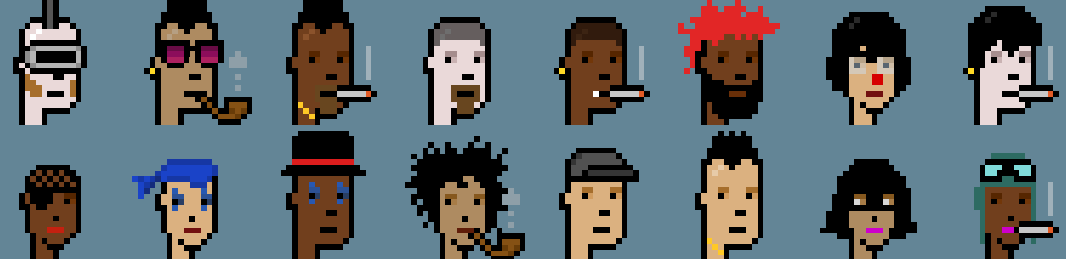
PFP stands for Profile Picture and refers to an NFT designed primarily for use as an avatar.
PFP NFTs commonly feature people, animals, robots, or virtual characters and are issued as collections. Each NFT may have a different background, outfit, facial expression, accessory, or other trait.
A typical PFP collection may contain thousands or tens of thousands of NFTs. Projects often combine visual elements algorithmically to give each NFT a distinct appearance.
What Can a PFP NFT Be Used For?
Common uses for PFP NFTs include:
- Serving as a social media avatar.
- Signaling membership in a particular community.
- Accessing a project's private community.
- Attending holder events.
- Claiming future digital assets.
- Receiving project governance or voting rights.
- Unlocking merchandise, games, or content.
- Participating in brand collaborations.
Some users buy PFP NFTs not merely to collect an image, but to join a community or gain associated benefits.
Where Does a PFP NFT's Value Come From?
The value of a PFP NFT may be affected by:
- Project brand recognition.
- Community activity.
- Holder distribution.
- Trait rarity.
- The background of the creators and team.
- Commercial-use rights.
- Future products and events.
- Market trading activity.
An avatar image can be copied, but copying it does not give someone the original NFT's contract address, Token ID, transaction history, or holder benefits.
What Are the Risks of PFP NFTs?
PFP projects rely heavily on community interest. Even if trading is active at first, prices and liquidity may fall significantly if the team stops building, community members leave, or market attention declines.
Some projects also use celebrity promotion, time-limited minting, or artificial scarcity to create buying pressure. Users should not make decisions based solely on social media hype.
What Is an Art NFT?
An art NFT links an illustration, photograph, animation, generative artwork, or another digital work to an on-chain token.
Artists can issue one-of-one works through NFT smart contracts or create collections containing multiple pieces.
Common forms of art NFTs include:
- One-of-one digital artworks.
- Limited-edition works with multiple copies.
- Dynamic or interactive art.
- Generative art.
- On-chain art.
- Photography NFTs.
- Animation and video NFTs.
- Digital certificates linked to physical artworks.
Sources of Value for Art NFTs
The value of an art NFT may be influenced by:
- The artist's creative ability and industry reputation.
- The artistic style of the work.
- Edition size.
- Creation history and provenance records.
- Collector demand.
- Whether the work is stored entirely on-chain.
- Whether the NFT includes additional benefits.
- Copyright and commercial-use rules.
Art NFTs allow creators to issue works directly to collectors, while the blockchain can record the initial issuance and subsequent transfers.
Does an Art NFT Include Copyright in the Work?
Not necessarily.
When users buy an art NFT, they usually receive the corresponding on-chain token and any usage rights explicitly granted by the project's rules. Whether reproduction, modification, or commercial-use rights are transferred depends on the license and sale agreement.
If the project does not clearly state otherwise, buyers should not assume they can use the work in advertising, clothing, film, or other commercial applications.
Creators also cannot legitimately turn another person's images, music, characters, or brands into NFTs without authorization.
What Is the Difference Between On-Chain Art and Off-Chain Storage?
Some art NFTs store their primary visual content or generation rules directly on the blockchain. These works are commonly described as on-chain art.
Other NFTs record only a metadata link on-chain, while the actual image is stored on IPFS, another distributed network, or a project server.
Fully on-chain storage generally offers greater independence, but blockchain storage space and costs impose limitations. Off-chain storage can accommodate larger files, but users need to check whether those files can remain accessible over time.
What Is a Gaming NFT?
A gaming NFT is a digital asset that can be used in a blockchain game or related application.
Gaming NFTs can represent:
- Game characters.
- Weapons and equipment.
- Character skins.
- Pets and mounts.
- Virtual land.
- Buildings and resources.
- Cards.
- Game passes.
- Achievement credentials.
- Tournament tickets.
Traditional game items are usually stored in a game company's internal database. Gaming NFTs can instead be recorded under a player's wallet address and transferred within the limits set by the project.
What Are the Characteristics of Gaming NFTs?
Gaming NFTs commonly have both collectible and functional attributes.
A weapon NFT may appeal to collectors because of its rare appearance, while its combat statistics may also affect player demand.
Its value may depend on:
- Whether the game has real players.
- Whether the NFT works properly in the game.
- Whether the item has rare traits.
- Whether the in-game economy is stable.
- Whether the asset can be traded freely.
- Whether the development team continues to update the game.
- Whether different platforms support the NFT.
- Whether game rules may be changed.
Can Gaming NFTs Be Used Across Games?
Technically, multiple applications can read the same NFT, but cross-game use requires developers to integrate it deliberately.
A sword may have full combat functionality in one game, appear only as a commemorative item in another, or not be recognized at all.
Therefore, "an NFT can be transferred across platforms" does not mean "an NFT automatically works in every game."
What Are the Risks of Gaming NFTs?
Gaming NFTs depend heavily on continued game operations. If development stops, servers close, or the player base shrinks, an NFT's utility and market demand may decline.
The game team may also adjust character attributes, equipment strength, and reward mechanisms. Even if the NFT still belongs to the user, its practical in-game functionality may change.
What Is a Music NFT?
A music NFT is associated with a song, album, audio recording, music video, or fan benefit.
Musicians can issue limited works as NFTs or use NFTs to create membership and fan-engagement systems.
A music NFT may include:
- A collectible edition of a single or album.
- Unreleased music.
- Digital cover art and visual works.
- Concert tickets.
- Access to online events.
- Membership in a creator community.
- Redemption rights for signed physical merchandise.
- Materials documenting the music creation process.
- Specific licenses related to the work.
Does Buying a Music NFT Provide Revenue Sharing?
Not necessarily.
Most music NFTs are digital collectibles or access credentials. They do not automatically grant royalties, copyright, or a right to revenue distributions.
If a project claims that an NFT includes revenue sharing, users should verify:
- How the share is calculated.
- Where the revenue comes from.
- Who is responsible for collecting and distributing it.
- Whether a legally enforceable agreement exists.
- Whether the rights remain valid after the NFT is transferred.
- Whether the project is subject to local securities or financial regulation.
Simply labeling something a "revenue right" on an NFT page may not create a complete and enforceable legal right.
What Are the Risks of Music NFTs?
Music NFTs may involve unclear copyright, discontinued platform services, inaccessible music files, or benefits that cannot be delivered.
Before buying, users should confirm the creator's identity, licensing status, file storage method, and the holder's specific benefits.
What Is a Web3 Domain NFT?
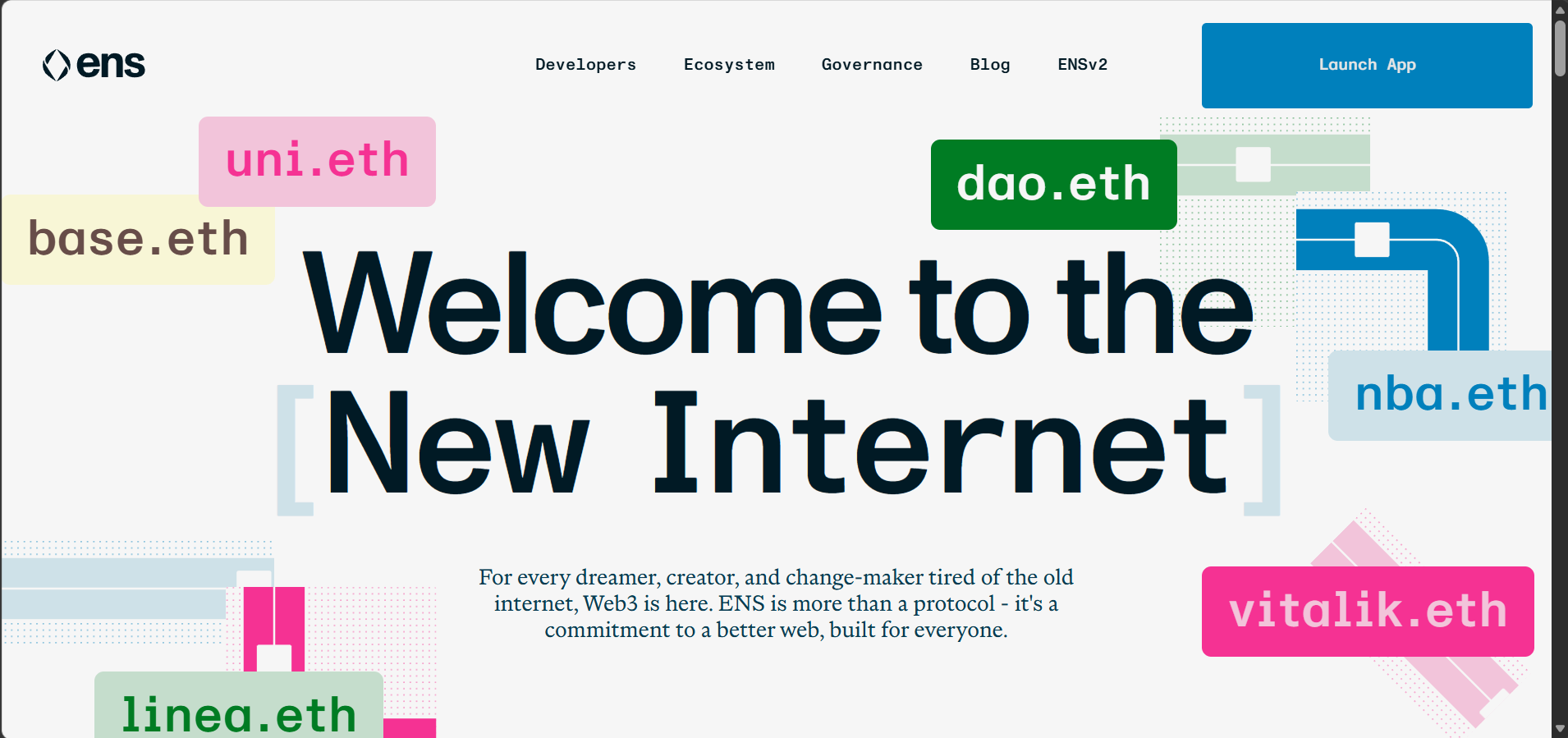
A Web3 domain maps a long wallet address to a name that is easier to remember.
For example, a user may use a domain to receive crypto assets, display an on-chain identity, or connect to supported Web3 applications.
Some Web3 domains record ownership in NFT form, allowing them to be held and transferred through a wallet.
Common Web3 domain functions include:
- Resolving wallet addresses.
- Linking multiple blockchain addresses.
- Displaying an on-chain profile.
- Serving as a DApp login identity.
- Linking to a decentralized website.
- Receiving crypto assets.
- Transferring the domain on compatible marketplaces.
What Gives a Web3 Domain Value?
The value of a domain NFT often comes from the name's length, readability, brand meaning, usage demand, and level of protocol support.
Short numbers, common words, brand names, or culturally meaningful terms may attract more market attention.
Registering a domain does not automatically grant the registrant the corresponding trademark or brand rights. Bad-faith registration of another party's brand name may lead to disputes or legal risk.
Is a Web3 Domain Permanent?
Not necessarily.
Different domain protocols use different rules. Some domains require periodic renewal, some may remain valid after a one-time registration, and others depend on specific smart contracts and front-end services.
Before acquiring a domain, check:
- Whether the domain requires renewal.
- What happens when it expires.
- Which networks the domain can resolve.
- Whether it can be transferred.
- Whether administrators can change the rules.
- Whether the domain protocol is still actively maintained.
- Whether trademark or naming disputes may exist.
What Is a Membership NFT?
A membership NFT proves that its holder has access to a community, brand, or service.
A project can check whether a wallet holds a designated NFT to determine whether the user can enter private pages, participate in events, or claim benefits.
A membership NFT may provide:
- Community access.
- Exclusive content.
- Merchandise purchasing rights.
- Tickets to online or offline events.
- Early access to new products.
- Project voting rights.
- Access to courses and resources.
- Brand membership benefits.
The core value of a membership NFT usually comes from the services the project can continue to provide, rather than from the NFT image itself.
If the project stops operating, membership benefits may expire even though the NFT remains in the wallet.
What Is a Ticket NFT?
A ticket NFT can record admission rights for events such as concerts, conferences, sporting events, and online broadcasts.
Blockchain records can help organizers review ticket issuance and transfers, while smart contracts can define resale rules.
A ticket NFT may have the following characteristics:
- Each ticket has a unique number.
- The issuer can set a fixed supply.
- Transfers can be restricted.
- Resale conditions can be specified.
- The ticket can remain as a digital keepsake after the event.
- Additional benefits can be distributed to attendees.
Ticket NFTs cannot automatically solve every counterfeit-ticket problem. A user who visits a fake event website may still buy a token that has no real admission rights.
Event organizers also need a reliable link between the on-chain NFT and the offline admission system.
What Is a Digital Certificate NFT?
NFTs can also represent course certificates, event mementos, community contributions, or work experience.
These NFTs usually emphasize verification rather than market trading.
A digital certificate NFT may record:
- Course completion.
- Event participation.
- Community contributions.
- Professional qualifications.
- Competition results.
- Volunteer service.
- Brand loyalty.
Some certificates should not be freely transferable. If a certificate proves that a particular person completed a course, selling it to another person would undermine its authenticity.
For this reason, some identity or certificate NFTs are designed as non-transferable tokens.
What Is an NFT Linked to a Physical Asset?
NFTs can also be linked to physical art, collectible cards, luxury goods, property rights, or other real-world assets.
These NFTs may record product identifiers, provenance, transfer history, or redemption rights.
However, connecting an on-chain NFT to a real-world asset still requires trustworthy legal and custody arrangements.
Users need to confirm:
- Who holds the physical asset.
- Whether the NFT represents ownership or is only a digital credential.
- How the holder can redeem the physical item.
- What happens if the item is damaged or lost.
- Whether transferring the NFT also changes legal ownership.
- How rights can be enforced if the project stops providing services.
- Whether the arrangement complies with local law.
Simply creating an NFT that points to a physical item does not automatically put the real-world asset on-chain.
What Is a Dynamic NFT?
A dynamic NFT is an NFT whose attributes can change when predefined conditions are met.
Changes may be triggered by time, game data, real-world events, or on-chain activity.
For example:
- A game character's appearance changes as its level increases.
- A sports NFT updates its data based on match results.
- A membership NFT upgrades according to participation time.
- A digital artwork changes color based on the weather.
- A character's equipment changes in response to on-chain behavior.
Dynamic NFTs provide more interactivity, but they also add technical complexity.
Users should determine who supplies the data, who controls update permissions, and whether the project team can modify the NFT's content at will.
How Do Sources of Value Differ Across NFT Types?
PFP NFTs primarily depend on community, brand, visual identity, and holder benefits.
Art NFTs primarily depend on the creator, the quality of the work, collector demand, and provenance.
Gaming NFTs primarily depend on in-game functionality, player numbers, asset balance, and game operations.
Music NFTs primarily depend on the musician's influence, the quality of the work, fan demand, and associated benefits.
Domain NFTs primarily depend on the name, resolution functionality, protocol support, and practical demand.
Membership NFTs primarily depend on services the project can continue to provide.
Ticket and certificate NFTs primarily depend on the issuer's authenticity and the associated online or offline verification system.
The same metric cannot be used to assess every NFT. For example, a rare visual trait on a gaming NFT does not mean it has stronger in-game functionality. A high historical sale price for a domain NFT does not guarantee a future buyer.
How Do You Choose the Right NFT Type?
Before choosing an NFT, first identify your objective.
If your main goal is to collect digital works, focus on art NFTs and the creator's background.
If you want to join a community, review the holder benefits of PFP or membership NFTs.
If you want to use an NFT in a game, confirm that it already has real in-game functionality.
If you want music or fan benefits, carefully read the music NFT's licensing terms and service details.
If you want a wallet name that is easier to recognize, study a Web3 domain's resolution features, renewal rules, and supported protocols.
Regardless of category, check:
- The official contract address.
- The blockchain network.
- The supply.
- The project team.
- Holder distribution.
- Market liquidity.
- Practical utility.
- Metadata storage.
- Contract permissions.
- Copyright and licensing scope.
For more on assessing digital ownership and scarcity, see The Core Value of NFTs: Digital Ownership and Scarcity.
What Risks Do Different NFT Types Share?
Price Volatility
NFT prices can rise or fall rapidly. Historical prices do not indicate future value.
Insufficient Liquidity
Some NFTs are difficult to sell. A floor price is only the lowest listed asking price and does not mean an immediate sale is possible.
Impersonation and Fake Projects
Scammers may copy project names, images, and websites. Always verify the official contract address before buying.
Malicious Approvals
Fake minting websites or marketplaces may trick users into signing malicious transactions that transfer assets out of their wallets.
Copyright Risk
The minter may not own the copyright to the relevant work. Users should verify the creator's identity and licensing terms.
Project Dependency
Gaming, music, membership, and ticket NFTs may depend on project servers and operating teams. If those services stop, some NFT functions may disappear.
Metadata Risk
If NFT images and files are stored on a single server, they may become unavailable when that server shuts down.
Contract Permissions
Administrators may have permission to modify metadata, pause trading, mint additional NFTs, or upgrade the contract.
How Can You View NFTs with the Hotcoin Web3 Wallet?
Users can visit the Hotcoin Web3 Wallet to learn about the wallet and related Web3 features, or download the Hotcoin App for mobile access.
Before viewing an NFT, confirm that the wallet supports the NFT's blockchain and token standard.
If an NFT does not display correctly, it does not necessarily mean the asset is lost. Possible reasons include:
- The wallet has not indexed the NFT collection.
- The wallet is connected to the wrong network.
- Metadata failed to load.
- The image storage service is unavailable.
- The wallet does not support the relevant token standard.
- The NFT has been classified as hidden or risky.
Users can use the contract address and Token ID to check a blockchain explorer and confirm whether the NFT remains at their wallet address.
Ethereum is one of the smart contract networks commonly used for NFTs. Visit the Ethereum asset page for related market information.
Conclusion
An NFT is not merely one type of digital image. It is a blockchain token capable of representing many forms of unique assets.
PFP NFTs emphasize avatars, community, and brand identity. Art NFTs emphasize creators and collectible value. Gaming NFTs emphasize practical functionality. Music NFTs connect works with fan benefits, while Web3 domains support address resolution and on-chain identity.
Memberships, tickets, certificates, dynamic NFTs, and NFTs linked to physical assets further expand the range of possible applications.
Different NFT types have different sources of value and risks. Before choosing one, users should define their purpose and then examine the contract address, asset rights, storage method, project dependencies, and market liquidity.
Visit the Hotcoin website to learn more about NFTs and Web3.
Recommended
View more

Service@hotcoin.com
Product@hotcoin.com
Business@hotcoin.com
Casecn@hotcoin.com