
Withdrawal Allowlist and Address Book: Prevent Transfers to Wrong Addresses
An address book stores frequently used recipient details, while a withdrawal allowlist restricts withdrawals to approved addresses. It can prevent a temporary change of destination, but it cannot automatically determine whether the network, asset, or memo is correct.
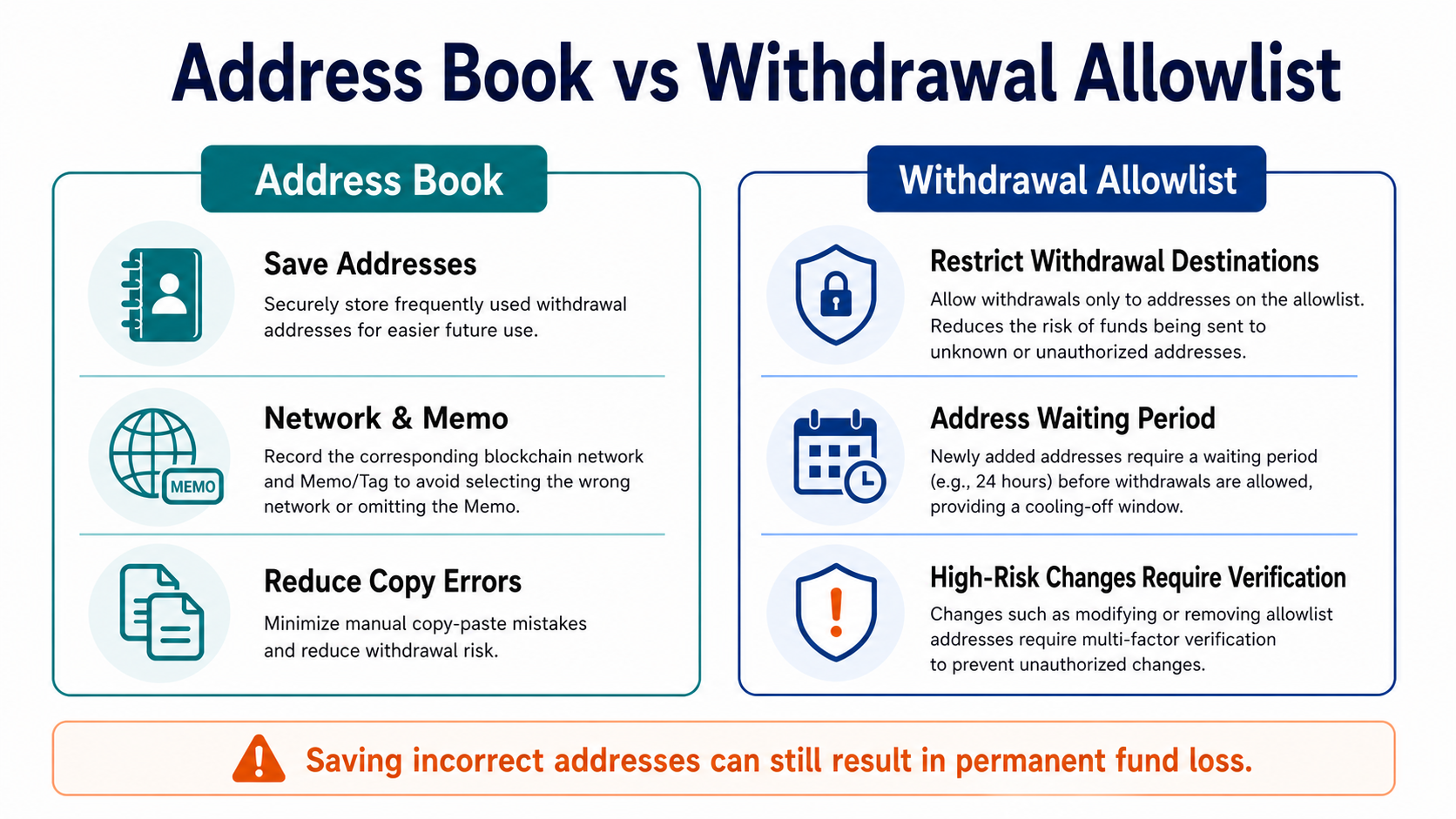
An Address Book and an Allowlist Are Not the Same
An address book can record an address, asset, network, label, and notes, primarily to reduce repeated copying. Only after allowlist mode is enabled will the platform reject withdrawals to addresses that have not been approved. Some platforms also impose a waiting period after a new address is added or the allowlist is disabled.
An allowlist only enforces the fields saved by the platform. If a user adds an incorrect address to the allowlist, the system may still process the withdrawal normally. Adding an address should therefore be treated as a high-risk action: use 2FA and independently verify the details with the recipient.
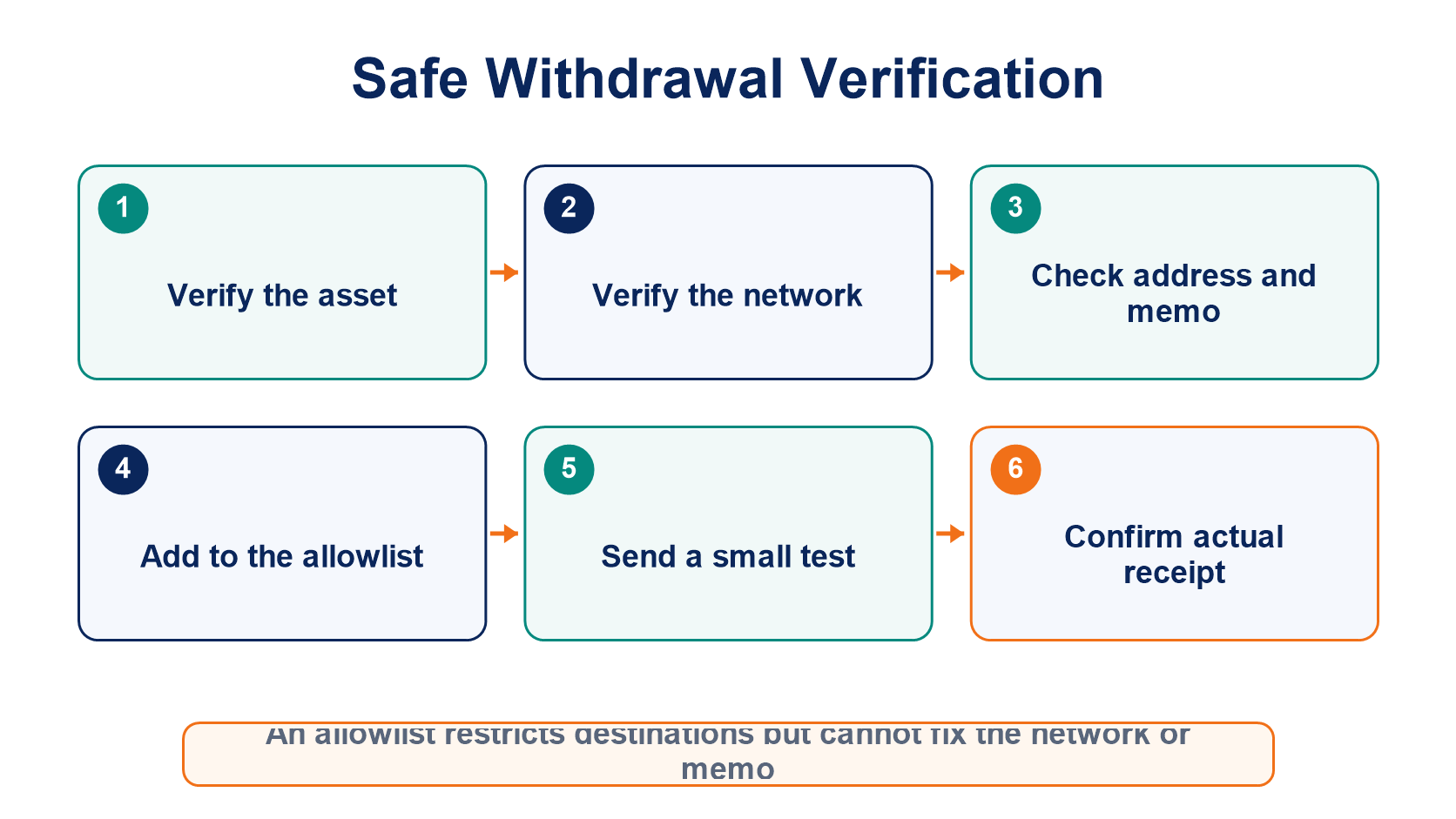
Verify Six Details When Adding an Address
- The asset must match what the recipient supports. Do not rely only on the ticker when similarly named or wrapped tokens exist.
- The recipient must explicitly support the selected network. Never switch chains simply because the address formats look similar.
- Check the beginning, a random section in the middle, and the end of the address instead of comparing only the first and last four characters.
- If the network requires a Memo, Tag, or Payment ID, enter it in full.
- Use a label that identifies the recipient, purpose, and verification date rather than a vague name such as "Address 1."
- Retrieve the information again from the recipient platform's deposit page instead of copying it from a chat history or a list of earlier small transfers.
Why Can Address Poisoning Defeat a Superficial Check?
An attacker can send a tiny amount of a token to a wallet or create a look-alike address so that a malicious address appears in the transaction history. A user who copies the most recent entry or checks only the beginning and end may send funds to the attacker.
The reliable approach is to retrieve the address again from a trusted recipient, compare the complete details, and record the source in the allowlist label. Malware can also replace clipboard contents, so check the address displayed on screen again after pasting it.
What Can a Small Test Verify?
A test can confirm the network, address, memo, and basic delivery path, but it cannot guarantee that a later large transfer will succeed. Platform limits, network congestion, contract pauses, and recipient-side risk controls may vary by amount or over time.
After the test arrives, do not copy an arbitrary address from the transaction history. Return to the saved allowlist and confirm the same entry, network, and recipient account before making the next withdrawal.
For broader account protection, return to Cryptocurrency Security Fundamentals.
Frequently Asked Questions
Can the Same EVM Address Be Used on Every EVM Network?
The address format may be the same, but the recipient platform may not support every network, and token contracts also differ. Always use the network specified on the deposit page.
Does Enabling an Allowlist Always Restrict Internal Transfers?
Not necessarily. A platform may apply different rules to on-chain withdrawals, internal transfers, subaccount transfers, and fiat withdrawals. Review each setting separately.
Can the Waiting Period for a New Address Be Disabled?
That depends on the platform. Disabling the waiting period reduces the time available to detect an account takeover, so it should not be changed merely for convenience.
Does an Address Still Need Verification After Many Successful Uses?
Yes. A recipient platform may change its address or network, and an attacker who compromises the account may alter an old label. Verify the details again before a large transfer.
読書をお勧めします
もっと見る


service hotcoin.com
producthotcoin.com
businesshotcoin.com
casecnhotcoin.com