
Real-World Assets (RWAs): How Tokenization Is Bringing Traditional Assets On-Chain
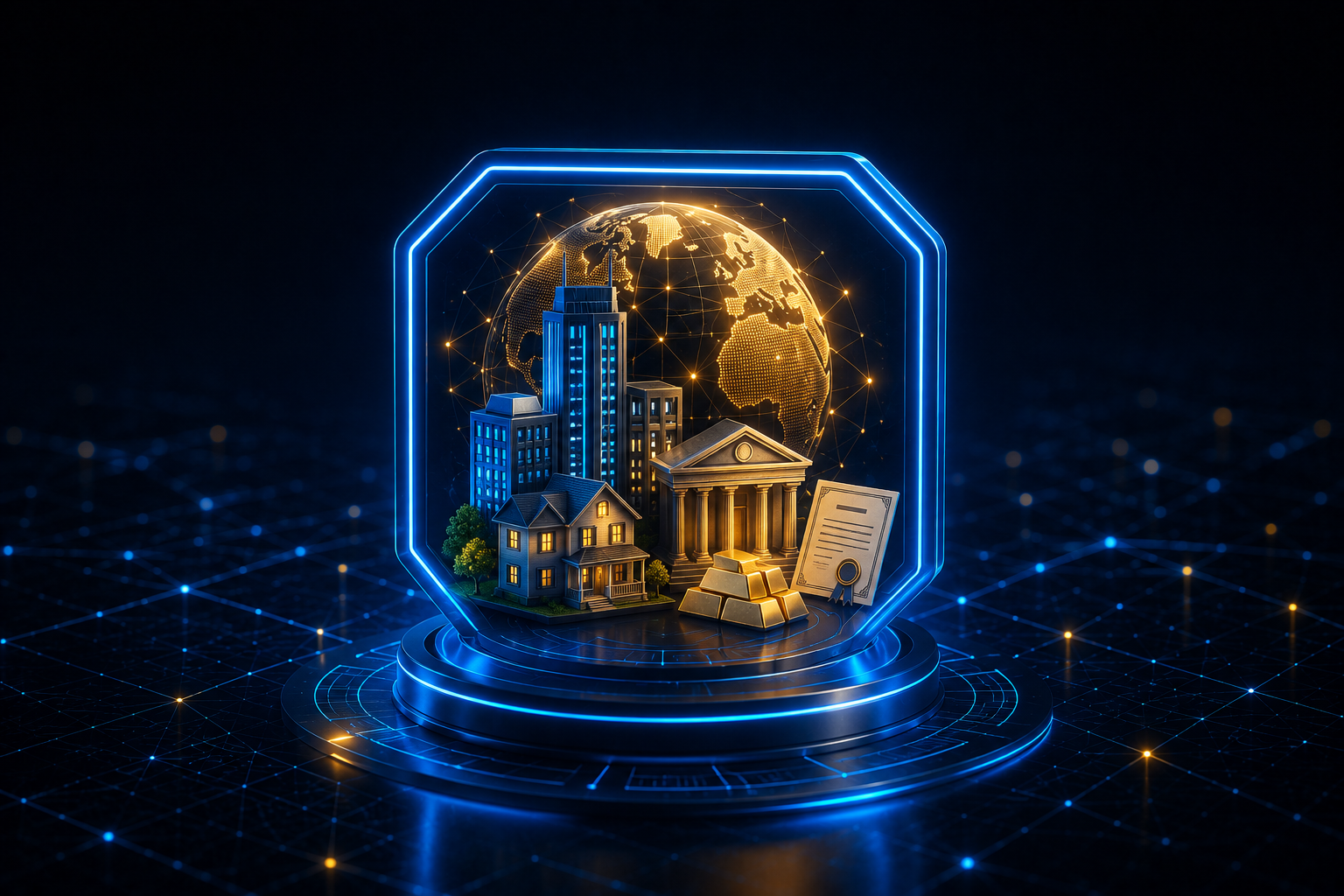
The rapid growth of Real-World Assets (RWAs) is changing how investors access and trade traditional financial products. Instead of relying solely on banks, brokers, or lengthy settlement processes, blockchain technology allows assets such as government bonds, real estate, private credit, commodities, and even stocks to be represented as digital tokens. This process, known as asset tokenization, enables fractional ownership, faster settlement, improved liquidity, and global accessibility. However, owning an RWA token does not automatically mean owning the underlying asset outright.
The value of an RWA depends on its legal framework, custodianship, regulatory compliance, and redemption rights. Understanding these factors is essential before investing because they ultimately determine whether a token truly represents a secure investment or merely a digital claim.
If tokenization sounds like simply "putting an asset on the blockchain," you're only seeing half the picture. The real innovation—and the real risks—lie in everything that happens before and after a token is created.
Why Real-World Assets Are Becoming Crypto's Next Growth Market
The cryptocurrency industry has evolved far beyond speculative digital currencies. Financial institutions are increasingly exploring blockchain as infrastructure for managing tangible assets because it offers efficiencies that legacy systems often cannot match. Instead of replacing traditional finance, tokenization enhances it by reducing administrative costs, accelerating settlement times, and enabling assets to be traded continuously across global markets.
This transformation has attracted major asset managers, banks, and investment firms that recognize blockchain's ability to modernize capital markets. Tokenized government securities, money market funds, and private credit products demonstrate that regulated financial products can operate on blockchain while maintaining compliance with existing legal frameworks. Retail investors also benefit by gaining access to fractional ownership opportunities that were previously unavailable due to high capital requirements.
But why are some of the world's largest financial institutions investing billions in tokenization? The answer becomes much clearer once you understand how a traditional asset is transformed into a blockchain-based investment.
Related Article: What Are Alternative Assets?
How Asset Tokenization Works from Start to Finish
Many articles reduce tokenization to a simple concept: convert a physical asset into a digital token. In reality, the process involves multiple legal, financial, and technical layers that work together to protect investors.
The process begins with identifying a real-world asset, such as commercial property, treasury bonds, or private credit. The asset owner transfers ownership or legal rights into a legally recognized structure, often a Special Purpose Vehicle (SPV), creating enforceable ownership that can be represented digitally.
A licensed custodian safeguards the underlying asset while a tokenization platform creates blockchain tokens that represent ownership or economic rights. Smart contracts automate transfers, dividend distributions, coupon payments, and redemption rules. Before investors gain access, compliance providers perform Know Your Customer (KYC) and Anti-Money Laundering (AML) verification. Finally, tokens may be listed on regulated exchanges where investors can buy, sell, or redeem them under predefined legal conditions.
This complete lifecycle reveals that blockchain is only one component of tokenization. Legal ownership, custody, compliance, and governance are equally important.
Now that you know the mechanics, another question naturally follows: Who ensures every step in this process remains trustworthy? The answer lies in an ecosystem that extends far beyond blockchain technology.
Understanding the Complete RWA Ecosystem
A successful Real-World Asset ecosystem relies on collaboration between several specialized participants.
The asset owner contributes the underlying asset, while lawyers establish the legal framework that protects investors. Custodians safeguard physical or financial assets and verify their continued existence. Tokenization platforms issue blockchain tokens through audited smart contracts, while blockchain networks provide transparent ownership records. Oracles connect real-world information such as interest rates or asset valuations to blockchain applications. Compliance providers verify investor identities, exchanges facilitate trading, and independent auditors confirm that reserve assets continue backing the issued tokens.
Together, these participants create trust that blockchain technology alone cannot provide.
Once you understand who powers the ecosystem, another important question emerges: Are all assets equally suitable for tokenization? The answer may surprise you.
The Growing Range of Tokenized Assets
Early discussions surrounding RWAs focused primarily on real estate and precious metals. Today, the ecosystem has expanded dramatically.
Government treasury securities have become one of the fastest-growing categories because they combine relatively low risk with predictable returns. Money market funds, corporate bonds, and private credit portfolios are increasingly moving on-chain to improve settlement efficiency and transparency. Beyond traditional finance, tokenization is expanding into carbon credits, renewable energy infrastructure, commodities, invoice financing, intellectual property, fine art, infrastructure projects, and selected publicly traded equities.
The expansion demonstrates that blockchain is not limited to cryptocurrency. It is increasingly becoming the digital infrastructure for representing ownership across many sectors of the global economy.
Tokenizing more assets certainly sounds impressive—but does it actually create better investments? To answer that, it's important to understand the practical benefits tokenization delivers.
Related Article: The On-Chain Stock Trading Era Begins
Benefits That Extend Beyond Faster Transactions
The advantages of RWAs go far beyond faster settlement.
Tokenization enables fractional ownership, allowing investors to purchase smaller portions of expensive assets while improving diversification. Continuous trading creates greater liquidity compared with traditional markets that operate during limited business hours. Blockchain records also improve transparency by providing immutable ownership histories and reducing reconciliation costs.
For institutions, programmable smart contracts automate dividend distributions, interest payments, settlements, and corporate actions. Issuers benefit from access to broader global investor pools, while investors gain more efficient access to previously exclusive investment opportunities.
These operational improvements explain why tokenization has become a strategic initiative for many financial institutions rather than simply another blockchain experiment.
Every financial innovation creates opportunities—but it also introduces new risks. Understanding those risks is often what separates informed investors from speculative traders.
Risks Every Investor Should Understand
Despite their advantages, RWAs carry risks that differ significantly from traditional cryptocurrencies.
-
Legal ownership may differ from token ownership depending on the jurisdiction and contractual agreements.
-
Custodian failure could affect investor claims on underlying assets.
-
Regulatory changes may alter issuance or trading requirements.
-
Oracle inaccuracies could impact pricing or reporting.
-
Liquidity may remain limited despite tokenization.
-
Redemption rights vary considerably between issuers.
-
Smart contract vulnerabilities remain a technical risk despite security audits.
Evaluating these risks requires reviewing legal documentation rather than relying solely on blockchain transparency or marketing materials.
Many of these risks also explain why RWA tokens should never be confused with stablecoins, NFTs, or utility tokens. Although they all exist on blockchain networks, their legal foundations are fundamentally different.
RWA Tokens Are Not the Same as Stablecoins or NFTs
Stablecoins primarily represent fiat currencies and facilitate payments. NFTs establish ownership of unique digital or physical items but generally do not provide fractional investment exposure. Utility tokens grant access to blockchain services or ecosystems.
RWA tokens, however, derive their value from legally recognized ownership or economic rights tied to tangible assets. These assets may generate dividends, rental income, interest, or capital appreciation, making them fundamentally different from most cryptocurrencies whose value depends primarily on market demand.
Understanding these differences is only the beginning. The more practical question for investors is how to determine whether an RWA project is genuinely credible before committing capital.
How to Evaluate an RWA Before Investing
Before investing in any Real-World Asset token, investors should examine several critical questions.
-
Who legally owns the underlying asset?
-
Which custodian safeguards it?
-
Are independent audits or reserve attestations available?
-
What legal rights do token holders receive?
-
Can tokens be redeemed for the underlying asset?
-
Does the issuer comply with securities regulations?
-
Is there sufficient market liquidity?
Answering these questions provides a much stronger indication of an RWA's credibility than marketing claims or short-term price performance.
As regulations evolve and institutional adoption accelerates, these evaluation standards are likely to become the foundation of future digital capital markets. That leads to one final question: What does the future of Real-World Assets actually look like?
The Future of Real-World Asset Tokenization
Real-World Asset tokenization is steadily evolving into financial infrastructure rather than a niche blockchain application. As regulatory frameworks mature and institutional adoption expands, government securities, private credit, equities, infrastructure investments, and money market funds are expected to become increasingly available through blockchain-based systems.
The long-term success of RWAs will depend less on cryptocurrency speculation and more on legal certainty, investor protection, operational transparency, and institutional trust. Blockchain provides the technology, but governance, regulation, custody, and compliance provide the confidence required for global adoption.
Real-world assets are not replacing cryptocurrencies—they are expanding blockchain's role in global finance. The next phase of digital finance may not be about creating entirely new assets, but about bringing trillions of dollars' worth of existing assets onto blockchain networks, fundamentally reshaping how ownership, investing, and capital markets operate worldwide.
Related Article: The Trillion-Dollar Stock Token Market Is Accelerating
References
Bank for International Settlements. Blueprint for the Future Monetary System: Improving the Old, Enabling the New. Basel: BIS, 2023.
Boston Consulting Group and ADDX. Relevance of On-Chain Asset Tokenization. Boston: BCG, 2022.
McKinsey & Company. From Ripples to Waves: The Transformational Power of Tokenizing Assets. New York: McKinsey & Company, 2024.
The Block Research. "What Are Real-World Assets (RWAs)?" The Block Learn. Accessed July 30, 2026.
World Economic Forum. Asset Tokenization in Financial Markets. Geneva: World Economic Forum, 2023.
読書をお勧めします
もっと見る
Fully Homomorphic Encryption (FHE): Unlocking Computation Without Compromising Privacy
Basic Concepts
What Are the Differences Between Spot ETFs and Futures ETFs?
Basic Concepts
What Are Cryptocurrency Token Buybacks and Burns?
Basic Concepts

サービス連絡先
Service@hotcoin.com
製品フィードバック
Product@hotcoin.com
ビジネス協力
Business@hotcoin.com
法務連絡先
Casecn@hotcoin.com
©2017-2026