
Hotcoin Research | Who is the King of Staking Returns? A Comparison of ETH and BTC Staking Protocols and Yields
As the two giants of the cryptocurrency market, Ethereum (ETH) and Bitcoin (BTC) play critical roles in the blockchain ecosystem through their staking and restaking mechanisms. These processes not only offer additional revenue streams for holders but also significantly enhance network security and decentralization.
1. The Background of Staking and Restaking
Ethereum PoS Mechanism and Staking
Ethereum 2.0 introduced the Proof of Stake (PoS) mechanism, replacing the previous Proof of Work (PoW) system. PoS selects validators through staking ETH, who then validate and produce new blocks.
Staking Requirements: To become a validator, one must stake at least 32 ETH.
Validator Responsibilities: Validators are responsible for validating transactions, proposing new blocks, participating in the consensus mechanism, and ensuring the network's proper functioning.
Staking Rewards: Validators earn rewards based on the amount of ETH staked and their validation performance.
Slashing Mechanism: Validators can be penalized for improper behavior or downtime, risking partial or total loss of their staked ETH.
The Rise of Restaking
While ETH staking offers significant benefits for network security and participants, its singular reward model limits capital utilization. Restaking emerged to address this issue, allowing staked ETH or Liquid Staking Tokens (LST) to earn additional rewards by participating in other PoS networks or blockchain activities. This innovative model not only improves capital efficiency but also promotes interoperability among different blockchain networks.
2. The LSD Track and ETH Staking Yields
ETH Staking Overview
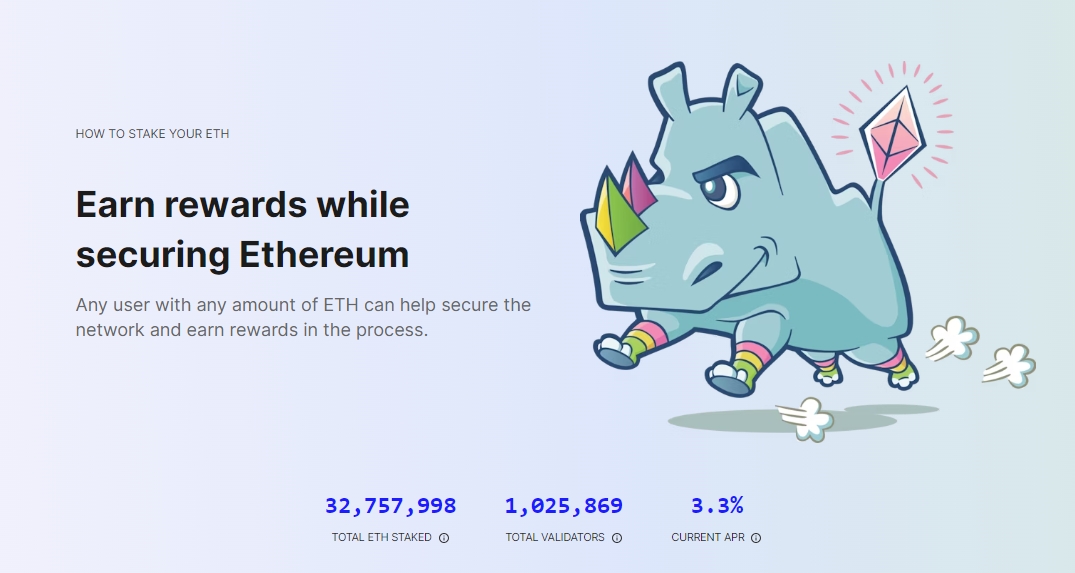
Staking ETH involves depositing 32 ETH to activate validator software. Validators store data, process transactions, and add new blocks to the blockchain, earning rewards from transaction fees paid by users on the execution layer and native token issuance on the consensus layer. According to Ethereum's official website, the current annual yield for direct ETH staking is 3.3%.
The Emergence of LSD Track
To meet market demand for ETH liquidity and reduce staking thresholds, the LSD (Liquid Staking Derivatives) track was developed. LSD protocols issue tokens pegged to staked ETH (e.g., Lido's stETH), enabling users to enjoy staking rewards while using tokens for other DeFi applications, significantly enhancing asset utilization.
Features of LSD Track
High Liquidity: LSD projects allow users to participate in various DeFi activities, such as lending and trading, without unlocking original ETH.
Security Assurance: The token's value is closely pegged to original ETH, ensuring asset security.
Additional Yield: Users can earn extra rewards through token circulation in addition to staking rewards.
Representative Projects: Lido and Rocket Pool
Lido: A leader in the LSD field, Lido offers convenient and efficient staking services. Lido stakers receive 90% of staking rewards, with 10% distributed between operators and a DAO managed by LDO token holders. Users deposit ETH into Lido smart contracts to receive an equivalent amount of stETH tokens, which can be used in various DeFi activities. As of June 27, stETH APY is 2.97%, according to DefiLlama.
Rocket Pool: Similar to Lido, Rocket Pool is a popular LSD project with a unique decentralized validator node network. It allows users to stake ETH, participate in network validation, and earn rewards. Rocket Pool emphasizes decentralization and security, providing a trustworthy staking platform. As of June 27, rETH APY is 3.11%, according to DefiLlama.
3. The LRD Track and ETH Restaking Yields
Restaking Overview
Restaking involves staking already staked tokens again to maximize returns. In the Ethereum ecosystem, restaking is particularly active, driven by users' pursuit of maximizing asset yields. Traditional staking only allows earning from main node validation activities, while restaking provides an additional income source by staking tokens to other blockchain projects needing extra security.
EigenLayer: Pioneer of Restaking Protocols
EigenLayer, as the originator and leader of the restaking concept, offers node service solutions (AVS) and liquidity restaking services for other blockchain protocols and applications. EigenLayer's innovation lies in commoditizing Ethereum's staking security and enabling flexible and efficient use of staked assets through smart contracts.
Around the EigenLayer platform, a series of restaking protocols based on Liquid Staking Tokens (LST) have emerged, such as Renzo and Ether.fi. When ETH or LSTs are deposited into LRT-supported projects, these projects deposit these assets into EigenLayer, earning both EigenLayer points and token airdrops, as well as additional project-specific points and airdrops. This dual-mining strategy allows investors to gain both EigenLayer points and extra airdrop rewards from participating projects.
Overview of EigenLayer and Ecosystem Projects
EigenLayer has attracted a large user base through its innovative restaking mechanism. Notable LRT projects in the EigenLayer ecosystem include Etherfi, Renzo, Puffer, KelpDAO, Swell Network, and Pendle.
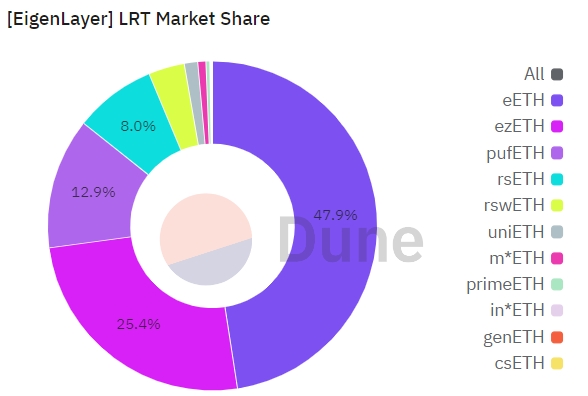
Etherfi: Integrates staking and automatic restaking functions. Users can deposit eETH to participate in restaking and earn additional yields, with extensive DeFi integration options for flexible asset management. As of June 27, weETH APY is 2.42%, according to DefiLlama.
Renzo: A comprehensive restaking protocol supporting multiple tokens, including ETH and stETH, earning ezETH tokens. Renzo allows easy restaking of assets into EigenLayer or other supported blockchain projects for additional rewards.
Puffer: Specializes in liquidity restaking, accepting major LSTs for restaking on EigenLayer to maximize returns. Puffer offers a unique points system to incentivize active restaking.
KelpDAO: Built by Stader Labs team members, KelpDAO supports ETH and multiple LST assets, earning LRT tokens and additional yields. As of June 27, rsETH APY is 1.67%, according to DefiLlama.
Swell Network: An innovative restaking platform introducing LRT token rswETH, allowing users to participate in DeFi activities on the Swell L2 network for further yield increases. As of June 27, swETH APY is 3.22%, according to DefiLlama.
Pendle: Focuses on yield maximization and liquidity optimization, partnering with EigenLayer and other restaking protocols to offer new investment strategies. Users can use LRT tokens on Pendle for high-yield investment portfolios.
4. New Opportunities in BTC Staking Yields
Historically, Bitcoin holders wanting to participate in DeFi or new financial protocols had to use bridging tokens like wBTC to enter the Ethereum ecosystem. However, with growing interest in the BTC ecosystem, new staking services have been developed, providing BTC holders with fresh yield opportunities.
Innovative projects like Babylon and BounceBit have introduced Bitcoin staking mechanisms using Bitcoin scripts and cryptographic techniques to ensure the safety of staked assets. For example, Babylon uses "one-time signatures" to prevent double-spending attacks, ensuring staked asset security.
BTC staking offers various yield opportunities:
PoS Validation Participation: Stakers can earn secure returns by participating in project PoS validation.
CeFi Rewards: Projects like BounceBit allow participation in centralized exchange activities using on-chain asset mirroring for CeFi rewards.
Future DeFi Rewards: As on-chain DeFi evolves, stakers could earn additional DeFi rewards.
Other projects like B² Network, Merlin Chain, and StakeStone are exploring BTC staking yield models, often using layer 2 technologies like ZK-Rollup to improve efficiency and scalability. Staking BTC on these platforms can earn future project tokens as rewards, resembling airdrop mining.
5. Comparison of ETH and BTC Staking Yields
ETH Staking Yields
Direct Staking Yields: ETH holders can stake their assets to support the Ethereum network and earn annualized yields typically between 3% and 6%, depending on the amount and duration of staking.
Restaking Yields: Restaking allows ETH stakers to further enhance capital efficiency and returns, e.g., through EigenLayer, where staked ETH can earn additional token rewards and points.
DeFi Legos: Strategies involving multiple DeFi operations to maximize yields, such as staking ETH with Lido to receive stETH, then using stETH in liquidity provision, or reinvesting on DEX platforms or lending protocols.
BTC Staking Yields
BTC staking primarily relies on specific platform or project rewards mechanisms. Unlike ETH, Bitcoin's staking mechanism may require specific technical implementations due to its lack of smart contract support.
Cross-chain Staking Yields: With cross-chain technology, Bitcoin can be staked on other chains to earn staking yields.
Additional Token and Airdrop Rewards: Some projects offer extra staking rewards, such as project points or native token airdrops.
Transaction Fee Sharing: Some staking protocols distribute network transaction fees to stakers. For example, Merlin Chain shares a portion of transaction fees as staking returns.
Opportunities and Risks in ETH and BTC Staking
Opportunities
Stable Returns: Staking offers a new, relatively low-risk way to earn stable annual returns by staking ETH and BTC.
Value Storage and Appreciation: As leading cryptocurrencies, BTC and ETH offer high potential for value storage and appreciation. Staking allows earning additional returns while holding these assets.
Network Security: Staking ETH and BTC helps maintain network security and stability, rewarding participants accordingly.
Ecosystem Participation: Staking and restaking tokens generate additional DeFi opportunities, promoting ecosystem development.
Risks
Node Misbehavior Risk: Despite PoS penalties, nodes can still misbehave, threatening network security and staker returns.
Smart Contract Risk: Staking and DeFi participation involve smart contracts, which can have vulnerabilities leading to fund losses or security issues.
Liquidity Risk: Staked ETH and BTC are not freely movable during the contract period, potentially preventing timely asset withdrawal in volatile markets.
Credit Risk: Restaking involving IOUs across multiple projects can create chain reactions of credit risk.
Staking Strategy Recommendations
Investors should consider multiple factors when choosing staking protocols and restaking opportunities. Here are some suggested strategies:
Diversify Investments: Spread investments across multiple staking protocols to balance returns and risks.
Understand Project Background: Thoroughly research project backgrounds, team strength, and market reputation to lower investment risks.
Evaluate Yields and Risks Cautiously: Compare APYs, yield sources, and risk factors of different staking protocols to make informed investment decisions.
Monitor Market Dynamics: Stay updated with market trends to adjust investment strategies promptly.
Staking ETH and BTC offers opportunities and risks. Participants should fully understand relevant knowledge and market trends, carefully evaluate risks, and make decisions based on their risk tolerance and investment goals. Continuous market monitoring and project developments are crucial to adjusting strategies and addressing potential risks and challenges.
About Us
Hotcoin Research, as the core investment research department of Hotcoin, is dedicated to providing comprehensive and professional analysis of the crypto market. Our goal is to offer clear market insights and practical operational guidance for investors at all levels. Our professional content includes "Play to Earn Web3" tutorial series, in-depth analysis of crypto market trends, detailed analysis of potential projects, and real-time market observations. Whether you are a newcomer exploring the crypto world or a seasoned investor seeking deep insights, Hotcoin is your reliable partner for understanding and seizing market opportunities.
Risk Disclaimer
The crypto market is highly volatile, and investment involves risks. We strongly advise investors to fully understand these risks and operate within a strict risk management framework to ensure the safety of their funds.
Website:https://www.hotcoin.com/
X:x.com/HotcoinAcademy
Mail:labs@hotcoin.com
Medium:medium.com/@hotcoinglobalofficial
読書をお勧めします
もっと見る

Service@hotcoin.com
Product@hotcoin.com
Business@hotcoin.com
Casecn@hotcoin.com