

Crypto Regulations in 2026: A Complete Guide to Crypto Compliance, Laws, and Global Frameworks
The world of digital assets continues to mature rapidly, making crypto regulations one of the most critical topics for investors, projects, and exchanges in 2026. With evolving cryptocurrency regulation, governments worldwide are establishing clearer digital asset regulation and blockchain regulation to balance innovation with investor protection and financial stability.
Whether you’re asking “What are the current crypto regulations in the United States?” or seeking to understand “EU MiCA crypto regulation explained,” this comprehensive guide covers the latest developments, compliance requirements, and their impact on Bitcoin, DeFi, stablecoins, and more. Staying informed on crypto compliance and regulatory framework crypto is essential for anyone navigating this space.
Understanding the Global Landscape of Crypto Regulations
Crypto oversight has intensified as virtual currency adoption grows. In the United States, crypto regulations in the US 2026 involve a dual approach between the SEC and CFTC. The SEC often treats many tokens as securities under Howey Test criteria, while the CFTC oversees commodities like Bitcoin and Ethereum futures. This SEC vs CFTC crypto regulation dynamic creates complexity for projects and exchanges seeking clarity.
In Europe, the MiCA regulation (Markets in Crypto-Assets) provides a unified EU MiCA crypto regulation framework that has become a global benchmark. MiCA sets licensing requirements for crypto service providers, stablecoin rules, and consumer protections. For those wondering “Explain MiCA regulation and how it affects crypto in Europe,” it standardizes operations across EU member states, reducing fragmentation while imposing strict crypto compliance requirements for exchanges.
Asia and other regions show varied approaches. Some countries embrace innovation with sandbox programs, while others maintain strict bans or heavy restrictions. Global cryptocurrency regulation updates in 2026 reflect a trend toward greater crypto policy harmonization, though differences remain stark between jurisdictions.

Key Regulatory Bodies and Their Roles
-
SEC Crypto oversight focuses on investor protection and securities laws.
-
CFTC Crypto regulates derivatives and commodity aspects of digital assets.
-
FCA Crypto in the UK continues to enforce strict standards for promotions and licensing.
These bodies drive crypto laws that influence everything from ICOs to NFT trading.
KYC and AML Requirements in Crypto
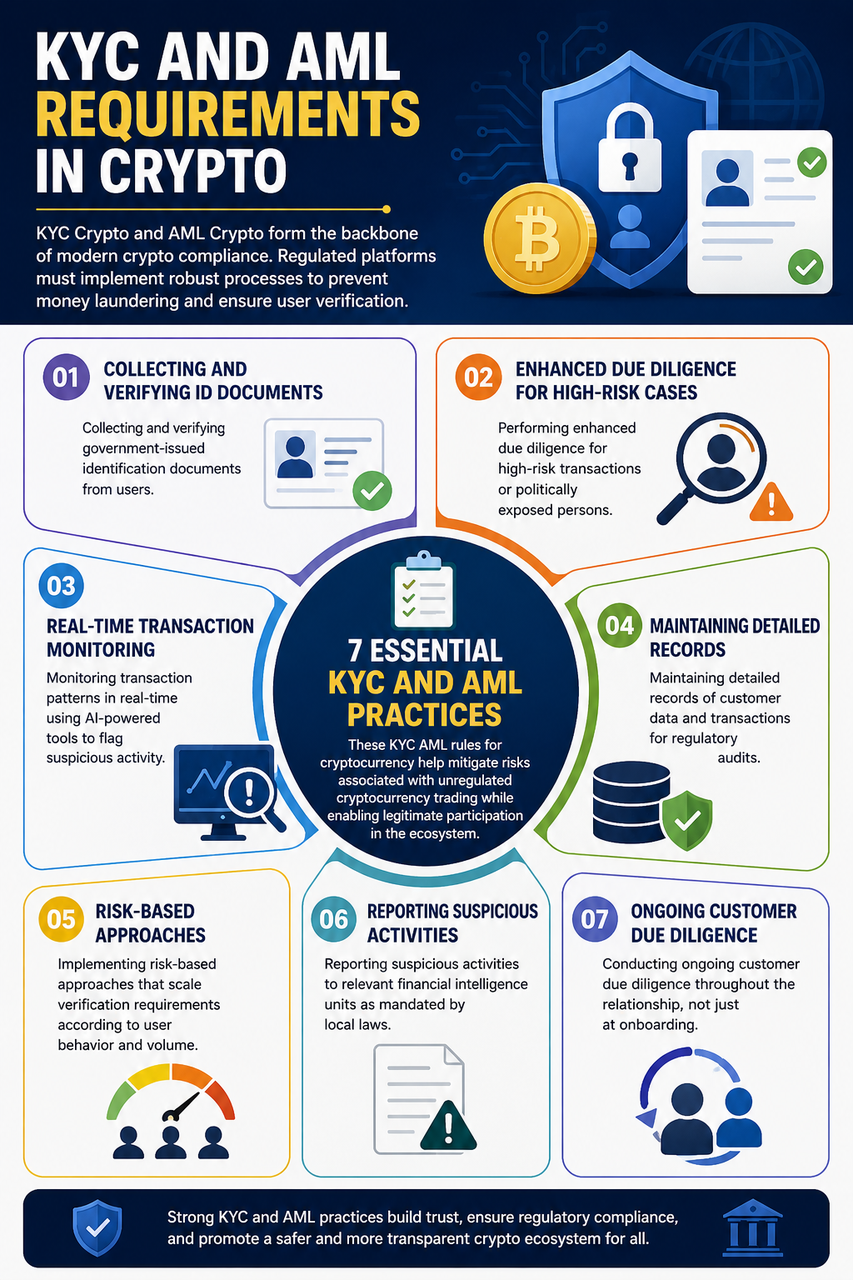
🔐 KYC (Know Your Customer) and AML (Anti-Money Laundering) are the foundation of crypto compliance.
Regulated cryptocurrency platforms use these measures to verify user identities, detect suspicious activity, and prevent financial crimes such as money laundering, fraud, and terrorist financing.
Modern crypto exchanges and service providers typically implement the following compliance practices:
-
🪪 Collect and verify government-issued identification documents
-
🔍 Perform enhanced due diligence (EDD) for high-risk users and politically exposed persons (PEPs)
-
🤖 Monitor transactions in real time using AI-powered fraud detection systems
-
📂 Maintain detailed customer and transaction records for regulatory audits
-
📊 Apply risk-based verification based on user behavior, transaction volume, and account activity
-
🚩 Report suspicious transactions to the appropriate financial intelligence authorities
-
🔄 Conduct ongoing customer due diligence throughout the customer relationship, not only during account registration
These KYC AML rules for cryptocurrency help mitigate risks associated with unregulated cryptocurrency trading while enabling legitimate participation in the ecosystem.
Suggested Reading Article: Crypto Security Hacks Every Newbie Needs: Avoid These 7 Costly Mistakes
How Crypto Regulations Affect DeFi, Stablecoins, and NFTs
One common question is “how do crypto regulations affect DeFi.” DeFi Regulation remains challenging due to its decentralized nature, yet regulators increasingly target front-end interfaces, liquidity providers, and governance tokens. Stablecoin regulations worldwide have gained urgency, with rules focusing on reserves, redemption rights, and systemic risk management.
ICO Regulation has largely evolved into stricter securities offerings, while NFT projects face scrutiny regarding utility versus investment contracts. Blockchain regulation and investor protection continue to evolve, with many jurisdictions requiring clear disclosures for token offerings.
Suggested Reading Article: What Is a Perp DEX?
Impact on Bitcoin and Broader Market
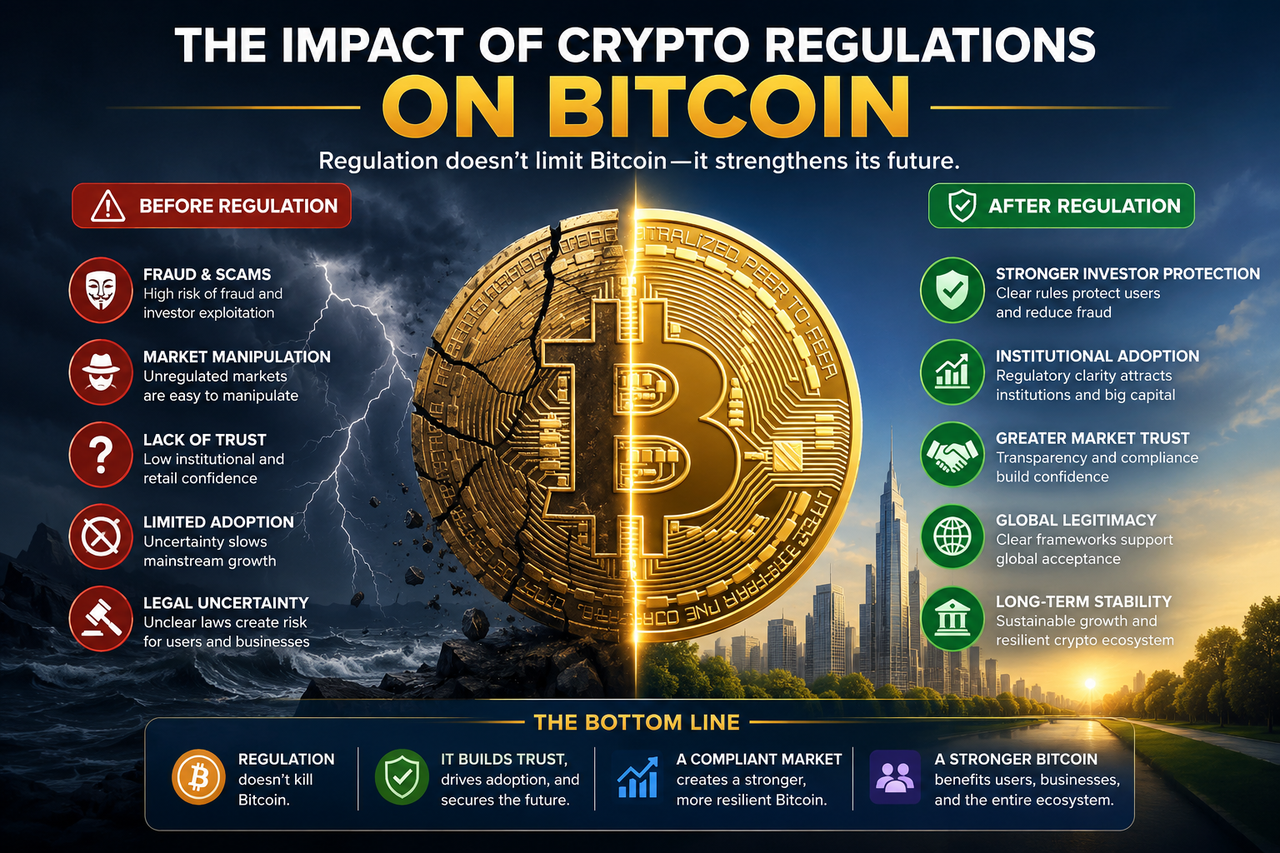
The “impact of crypto regulations on Bitcoin” is significant. Clearer rules often boost institutional confidence, but overly restrictive virtual currency regulation can drive activity offshore. Crypto tax regulations by country also vary widely, affecting holding and trading strategies.
Compliance Best Practices for 2026
To achieve crypto compliance, exchanges and projects should:
-
Obtain necessary crypto licensing in operating jurisdictions.
-
Implement comprehensive AML/KYC programs.
-
Stay updated on crypto regulations news and updates.
-
Engage legal experts familiar with regulatory challenges for NFT and token offerings.
-
Adopt transparent governance and audit practices.
For those exploring “Best practices for crypto regulatory compliance 2026,” prioritizing licensed partners and robust internal controls is key.
Future of Crypto Regulations
Looking ahead to the “future of crypto regulations in 2026” and beyond, expect greater international coordination, clearer stablecoin regulations, and tailored frameworks for emerging technologies. Questions like “How will new crypto laws impact DeFi and stablecoins?” will be answered through ongoing policy development.
Risks of investing under current crypto regulations include regulatory uncertainty, potential enforcement actions, and compliance costs. However, well-structured projects that embrace crypto oversight often gain competitive advantages through legitimacy and access to traditional finance.
FAQ on Crypto Regulations
What are the current crypto regulations in the United States? The US employs a patchwork system with SEC and CFTC playing major roles, alongside state-level laws. No comprehensive federal framework exists yet, leading to ongoing legal developments.
Explain MiCA regulation and how it affects crypto in Europe. MiCA creates a single licensing regime for crypto service providers across the EU, enhancing consumer protection and market integrity while allowing innovation within clear boundaries.
How do SEC and CFTC regulate cryptocurrencies? The SEC focuses on securities, while the CFTC oversees commodity-related activities and derivatives. Many projects must navigate both.
What compliance requirements exist for crypto exchanges? Exchanges typically need KYC/AML programs, licensing, cybersecurity standards, and regular reporting under applicable digital asset regulation.
How do AML and KYC rules apply to blockchain projects?
Decentralized projects may face indirect requirements through interfaces or token issuers, with increasing focus on accountability in governance and fundraising.
Understanding crypto regulations, cryptocurrency regulation, and crypto compliance is vital for long-term success. By staying proactive with regulatory framework crypto and crypto policy, participants can better navigate opportunities and risks in this dynamic space. For the latest on crypto laws and virtual currency regulation, regularly consult official sources and professional advisors.
References
European Commission. MiCA Regulation Documents, 2024–2026.
U.S. Securities and Exchange Commission. Crypto Asset Guidance and Enforcement Actions, 2026.
Additional sources from global regulatory updates and compliance frameworks, 2025–2026.
読書をお勧めします
もっと見る
Quick Guide to Digital Asset Fund Management
Basic Concepts

What is the ETH2.0 Staking Slashing Mechanism?
Basic Concepts

What is a Blockchain Virtual Machine?
Basic Concepts

サービス連絡先
Service@hotcoin.com
製品フィードバック
Product@hotcoin.com
ビジネス協力
Business@hotcoin.com
法務連絡先
Casecn@hotcoin.com
©2017-2026