
Crypto Fear and Greed Index Today: Current Reading and Practical Interpretation
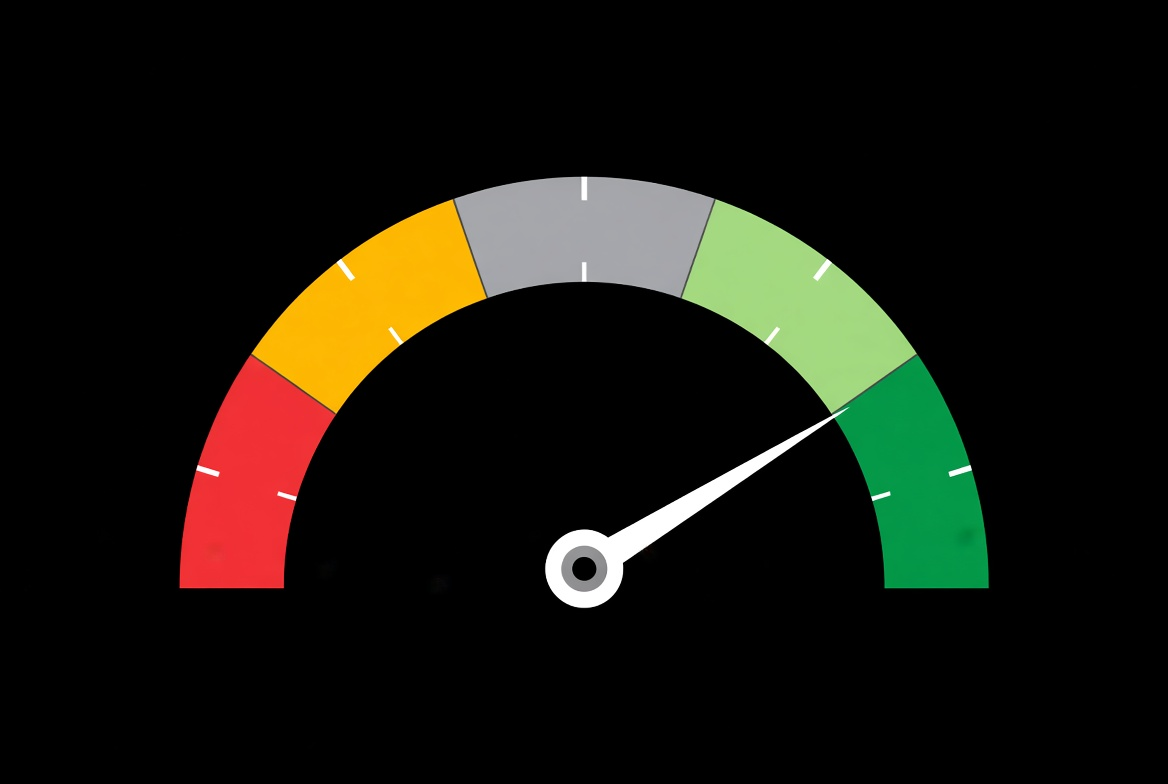
The Crypto Fear and Greed Index has recently remained in the Greed range, at around 70. You can check it in real time on platforms such as Alternative.me or CoinGlass. By expressing market sentiment as a number from 0 to 100, the index can help investors avoid emotion-driven decisions.
The Fear and Greed Index is one of the most widely used sentiment indicators in the crypto market. It does not predict prices; instead, it reflects investors' current state of mind. A low score signals fear, while a high score signals greed. This guide explains how to check today's reading, interpret it, and incorporate it into trading decisions.
Where Is the Fear and Greed Index Today?
According to recent updates from several data providers, including Alternative.me, CoinGlass, and CoinMarketCap, the index fluctuated mostly between 65 and 74 in late August 2026, placing it in the Greed range. Its rapid rebound from Extreme Fear to Greed reflects a significant shift in market sentiment over a short period.
The index is commonly divided into the following ranges:
- 0–24: Extreme Fear
- 25–49: Fear
- 50–54: Neutral
- 55–74: Greed
- 75–100: Extreme Greed
A reading in the Greed range indicates that the broader market is optimistic and FOMO is rising. It also warns investors to remain alert to the risk of a correction caused by excessive optimism.
How Is the Fear and Greed Index Calculated?
Mainstream crypto Fear and Greed Index models, represented by Alternative.me, combine the following weighted factors:
- Volatility (about 25%): Unusually large price swings often correspond to fear.
- Market momentum and trading volume (about 25%): Rising prices on strong volume often correspond to greed.
- Social media sentiment (about 15%): Discussion volume and the tone of market conversations.
- Survey data (about 15%).
- Bitcoin dominance (about 10%): Rising dominance is often interpreted as relative fear because capital may be moving toward safety.
- Search trends (about 10%): Data such as Google Trends.
Each factor is standardized and combined through a weighted average. The result is compressed into a single score from 0 to 100 and updated daily.
How to Check Today's Fear and Greed Index
- Open the Fear & Greed Index page on Alternative.me, or use a platform such as CoinGlass or CoinCarp.
- View the current value and sentiment label on the main page: Extreme Fear, Fear, Neutral, Greed, or Extreme Greed.
- Review historical charts for seven days, one month, and one year to compare recent trends.
- Cross-check the reading against BTC price action and trading volume.
- Add the index to your daily monitoring list or set alerts for important range changes.
How to Use the Fear and Greed Index Correctly
The index is not a buy or sell signal by itself. It is a supporting tool that can be used within the following framework:
- Extreme Fear (0–24): The market may be excessively pessimistic. Historically, these conditions have sometimes offered attractive opportunities for long-term positioning, but fundamentals and capital flows still need confirmation.
- Greed to Extreme Greed (55–100): Optimism is elevated. Traders should watch for short-term correction risk and avoid chasing prices blindly.
- During rapid changes: A sharp rise or fall in the index over a short period often signals increasingly extreme sentiment and potentially higher volatility.
- Together with other indicators: Compare it with BTC dominance, funding rates, trading volume, and macroeconomic events rather than relying on it alone.
Common failure cases include black-swan events, periods of low liquidity, and clear divergences between the index and price. Under these conditions, the index may become less informative.
Additional Value Compared With Common Search Results
Many pages show only the current number and a basic explanation of its range, without practical methods or limitations. This guide adds:
- A clear explanation of the calculation logic and data sources.
- Actionable steps for checking the index and using it in decisions.
- Common failure conditions and suggestions for cross-validation.
Use Cases and Risk Warning
- Daily monitoring: Check the index once a day and compare it with price movements in the assets on your watchlist.
- Trading support: During Extreme Fear, screen for high-quality assets that may be oversold. During Extreme Greed, place greater emphasis on profit-taking and position management.
- Risk warning: The index reflects sentiment only and does not constitute investment advice. Markets can continue rising during Greed and keep falling during Fear. Consider your own risk tolerance and pay attention to platform security and regulatory requirements.
Frequently Asked Questions
Q1: What is today's exact Crypto Fear and Greed Index reading?
A: The value changes daily. Check Alternative.me or CoinGlass for the latest reading. Recently, it has mostly remained in the Greed range, at around 65–74.
Q2: Should I always sell when the index reaches Extreme Greed?
A: No. Extreme Greed signals higher risk, but momentum can continue pushing the market upward. Treat it as a reminder to review risk and adjust positions, not as an automatic sell signal.
Q3: How often is the Fear and Greed Index updated?
A: Major sources usually update it once per day, although some platforms provide more frequent snapshots. Refer to the official source for the applicable schedule.
Q4: Does the index always move in sync with Bitcoin's price?
A: No. The index measures sentiment, while price is affected by many additional factors. Sentiment may turn before price responds, or price may move first.
Q5: How can a beginner use the Fear and Greed Index in real trading?
A: Start by treating it as a sentiment thermometer. During Extreme Fear, research more and avoid panic selling. During Extreme Greed, review your position size and profit-taking plan. It works best when used consistently alongside your own strategy.
These methods can help users understand today's Crypto Fear and Greed Index reading and turn it into a more rational market assessment. Make the index part of a daily routine and use it alongside price and volume data. Market sentiment changes quickly, so objectivity and consistent monitoring are essential over the long term.
読書をお勧めします
もっと見る


Service@hotcoin.com
Product@hotcoin.com
Business@hotcoin.com
Casecn@hotcoin.com