Multi-Chain Transfer Fee Comparison (TRC20/ERC20/BEP20/Solana)
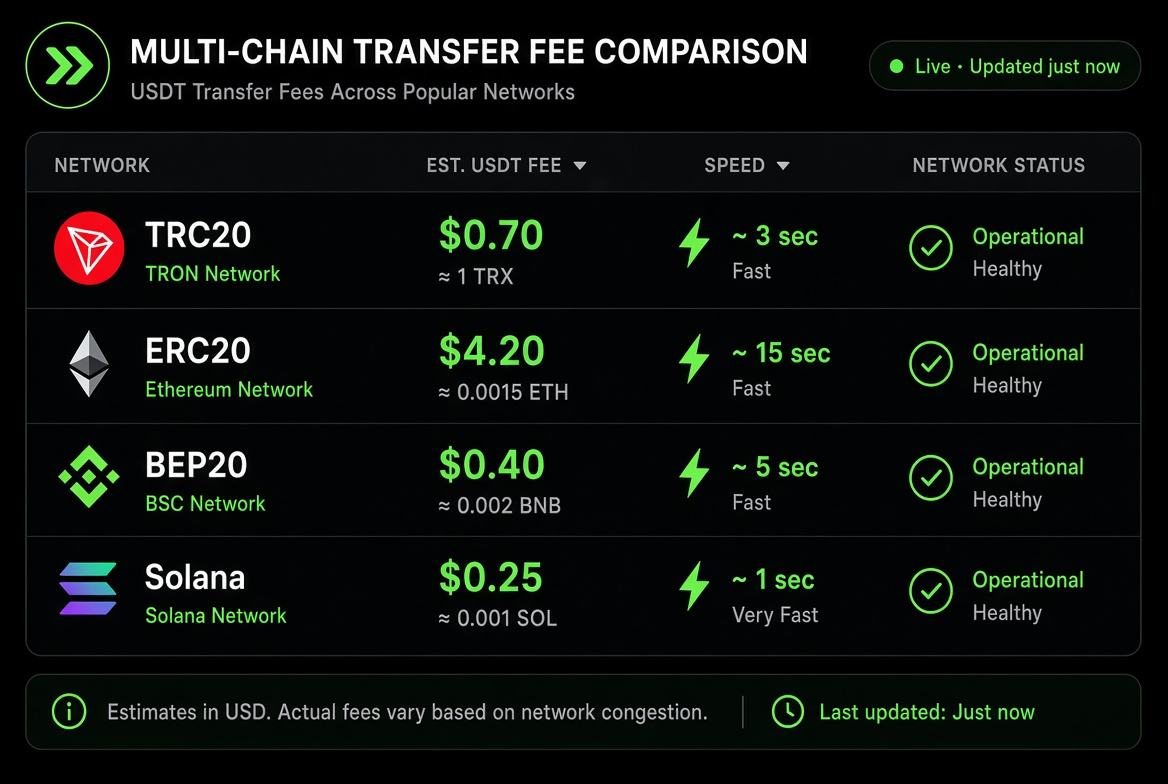
A multi-chain transfer fee comparison tool shows the live cost of sending funds over networks such as TRC20, ERC20, BEP20 and Solana, helping users pick a chain with lower fees and suitable speed when transferring USDT and other assets.
The same asset, USDT in particular, can cost vastly different amounts to transfer depending on which blockchain carries it. Comparing live fees across TRC20, ERC20, BEP20 and Solana lets users cut transfer costs effectively. The sections below explain, from a practical standpoint, how to read and apply this comparison data.
Fee characteristics of major networks
The stablecoin transfer networks used most often today are:
TRC20 (Tron): Usually the cheapest option, well suited to small and everyday transfers, with fairly fast confirmation.
ERC20 (Ethereum): High security and the most mature ecosystem, but gas fees swing widely and rise sharply during congestion.
BEP20 (BNB Smart Chain): Lower fees and good speed, a common middle-ground choice.
Solana: Extremely low fees with fast confirmation, and steadily growing usage in recent years.
Actual fees change in real time with network congestion, so a comparison tool is needed to check the latest figures.
How to check multi-chain transfer fees (step by step)
Open a tool that supports multi-chain fee lookup, or the withdrawal page of an exchange.
Select the asset to transfer (USDT is the most common).
Review the live estimated fees for networks such as TRC20, ERC20, BEP20 and Solana.
Check the estimated arrival time and network status (whether it is congested) at the same time.
Considering which networks the receiving address supports, choose the option with the best balance of cost and speed.
When sending from a wallet or exchange, confirm the selected network matches the network of the receiving address.
The steps are simple and help avoid extra costs caused by choosing the wrong network or transferring during an expensive period, a practical gain that top search results rarely explain systematically.
How to choose the right transfer network
Start with the networks the receiving address supports: choosing the wrong network can mean lost funds that cannot be recovered.
Small, everyday transfers: prefer TRC20 or Solana for lower fees.
Large amounts or high security requirements: ERC20 is worth considering, but check whether gas fees are currently elevated.
Looking for balance: BEP20 generally performs well between cost and speed.
Use live data: ERC20 fees can spike during congestion, and switching networks then is the cheaper move.
Points to keep in mind:
Fees are dynamic and may change between checking and actually sending.
Withdrawal fee policies differ by exchange and may add extra cost.
Network confirmation times are affected by congestion, so urgent transfers need buffer time.
Use cases and risk warnings
Everyday USDT transfers: compare options and pick the network with the lowest current fee.
Large fund movements: weigh cost against security.
Cross-platform withdrawals: confirm the supported networks of the destination platform in advance.
Risk warning: always confirm that the receiving address matches the selected network, since the wrong network can cause permanent loss of funds. Fee lookup results are for reference only, and the amount actually charged is the final figure shown by the wallet or exchange. Obtain data from trusted sources and verify addresses carefully.
FAQ
**Q1: What is the difference between sending USDT over TRC20, ERC20 and BEP20?**A: The main difference is the blockchain involved, which changes the fee, arrival speed and address format. The asset is USDT in every case, but it must be transferred on the matching network.
**Q2: Why are ERC20 fees sometimes especially high?**A: When the Ethereum network is congested, users compete for block priority and gas fees rise significantly. Other low-fee networks are worth considering at such times.
**Q3: Are Solana transfers really that cheap?**A: Yes, Solana network fees are usually extremely low and confirmation is fast, but you must make sure the recipient supports a Solana network address.
**Q4: What happens if I choose the wrong network?**A: The assets may never arrive and can be hard to recover. Always verify the network supported by the receiving address before sending.
**Q5: What should beginners pay most attention to when choosing a transfer network?**A: The first priority is confirming the network supported by the receiving address; comparing fees comes second.
Lettura consigliata
Visualizza altro