
Common Futures Trading Mistakes: 10 Errors Beginners Make Most
In futures trading, the vast majority of liquidations do not come from calling the direction wrong. They come from missing risk control and broken discipline. The data is blunt: traders who use more than 10x leverage survive 72 hours on average, while traders who apply strict stop-losses and position sizing keep their capital alive for six months or more. The traps beginners fall into cluster in three areas: risk habits, strategy thinking and psychology. Here are the ten most fatal mistakes.

Mistake 1: Opening a Position Without a Stop-Loss, Hoping It "Comes Back"
This is the number one fatal error in futures trading, and it sits behind roughly 90% of liquidation cases. When a position is underwater, the first instinct of many beginners is "let's wait, it will come back." A small loss grows into a deep one, and the position finally liquidates.
The biggest difference between futures and spot is this: on spot you can sit still and wait for the next bull market to bail you out, but futures carry leverage and funding fees. The longer you hold, the more your margin is eroded, and even if the direction eventually turns out right, you can still be forcibly closed out just before dawn.
The iron rule: no stop-loss, no position. A stop-loss is the seatbelt of futures trading, and trading without one means letting risk run uncontrolled.
Mistake 2: Abusing High Leverage, Casually Opening 20x, 50x or 100x
High leverage equals a high death rate. Leverage is a double-edged sword: a rocket when the market goes your way, an explosive when it does not. At 100x, a mere 0.5%-1% adverse move is enough to trigger liquidation.
One trader described the experience: 5,000 USDT at 100x doubled within minutes and made him feel invincible, then a single wick wiped out not just the profit but the entire principal. This is not a technical problem; it is the nature of leverage, where the margin for error is compressed to the limit.
Advice for beginners: start with 2-5x, consider 5-10x once you are experienced, and never touch ultra-high leverage above 20x.
Mistake 3: Heavy and All-In Positions, Betting the Whole Balance on One Trade
Opening more than 10% of total capital in a single position, or even going all-in, is a suicidal approach. In a heavy position the margin for error is zero, and a 1%-2% adverse move can reach the liquidation line. More importantly, oversized positions wreck your mindset: small fluctuations are amplified into large swings in money, rational judgement drops fast, and at the first sign of trouble you either panic-close or hold on stubbornly until liquidation.
The right approach: limit the risk on a single trade to 1-2% of account capital, and work the position size backwards from the distance to your stop-loss.
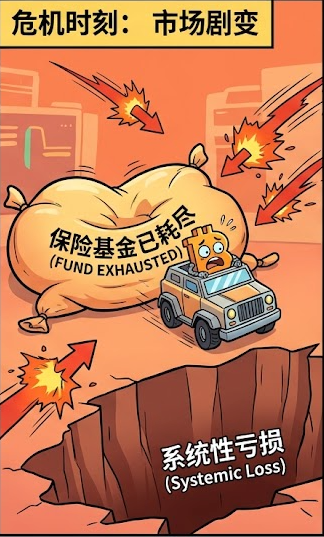
Mistake 4: Adding to Losers (Buying Every Dip, Shorting Every Rally)
On spot you can average down, but adding to a losing futures position just accelerates the path to zero. A loss means your judgement was wrong, and a wrong trade should be cut, not doubled to prove you are right. With leverage in play, adding against the trend grows the position geometrically and drains margin fast.
Many "big name" liquidation tragedies trace back to exactly this move.
The principle: add only to winners, and exit decisively when the position loses.
Mistake 5: Trading Against the Trend, Calling Bottoms and Tops
Counter-trend trades usually win less than 30% of the time. Seeing a big drop and going long because it "must be the bottom," or seeing a big rally and going short because it "must be the top," is fighting market trend with gut feeling, and the market specialises in punishing that stubbornness.
In a strong trend the "top" you see may only be a waypoint. Do not stand in front of a moving train; only after a trend clearly reverses should you consider trading the other way.
The principle: let the higher timeframe set direction, and the lower timeframe find the entry.
Mistake 6: Overtrading, Opening 5-10 Trades a Day
The core of futures trading is winning big and losing small, trading less and watching more, not gambling at high frequency. Overtrading hurts in three ways: accumulated fees eat into profits, emotional decisions raise the odds of mistakes, and most intraday movement is just noise that overinterpretation turns into confusion.
One trader summed it up: wait patiently for the signal; one good trade a week beats a dozen random ones a day.
Mistake 7: Taking Profits Early and Holding Losses, Small Wins and Big Losses
This is the classic beginner profit-and-loss structure: taking 1%-2% when you are right, but sitting through 10%-20% when you are wrong. Over time, no win rate can make up for that asymmetric risk-reward.
The saying to trade by: let profits run and cut losses short.
Mistake 8: Watching Only Lower Timeframes and Ignoring the Big Trend
Opening a position purely on 5-minute or 15-minute candle signals while ignoring the 4-hour or daily trend is exactly how market makers harvest retail traders. Lower-timeframe signals are usually noise inside the bigger trend, and what looks like a "reversal" on a small timeframe may be only a brief pullback.
The principle: judge the trend direction on the daily or 4-hour chart first, then use a smaller timeframe to pinpoint the entry.
Mistake 9: FOMO, Buying the Pump and Selling the Dump
When the market spikes up or crashes and everyone else seems to be making money while you hold nothing, jumping in blindly is the classic retail move. FOMO-driven trades tend to enter at emotional extremes, which leaves you holding the bag at the top of the mountain or buried at the bottom of the valley.
Better to miss an opportunity than to make a mistake.

Mistake 10: Revenge Trading After a Loss, Chasing Your Money Back
The moment you lose a trade you want to win it back immediately, ignoring your conditions and your system, adding to positions and raising leverage at random, and the losses compound into a vicious cycle. That "must get even now" mindset is the catalyst that blows up traders fast.
The advice: after two or three consecutive losses, pause trading, step away from the screen, review calmly, and only then re-enter.
Frequently Asked Questions (FAQ)
Q1: I used a stop-loss, so why was I still liquidated?
Possible reasons include slippage: in extreme conditions the actual fill price can be far below the stop trigger price. Another is manually cancelling the stop, since many traders, annoyed after being wicked out, cancel their stop and hold on until liquidation. A third is the mark price, because liquidation is based on the mark price rather than the last traded price, so it can differ from what you consider your "stop level."
Q2: How should a beginner set position size?
First decide the maximum loss for a single trade (for example 1% of the account), then work out the position size from the distance to your stop. The formula: position size = (account x 1%) / (entry price - stop price). That is more scientific than asking how much leverage to use.
Q3: Can futures trading deliver consistent profits?
For very few people, yes. Statistics show that fewer than 5% of futures traders are profitable over the long run. Futures is a negative-sum game, because fees and funding rates steadily drain the pool, and with high leverage and emotional interference, most participants end up losing. Beginners should enter with a "learn and practise" mindset, not a "get rich" mindset.
Q4: Where should a futures beginner start learning?
A three-step path: first build your understanding of price volatility in the spot market; then practise the workflow with a demo account or a small balance at low leverage; only then trade with real money. Going straight into futures with zero experience is almost a guaranteed liquidation.
Related tutorials:
Complete Guide to Futures Trading: From Basics to Risk Control
Leverage Trading Explained: Amplifying Both Returns and Risks
What Is Futures Liquidation? The Forced-Liquidation Mechanism and Liquidation Price Calculation
Cross Margin vs Isolated Margin: Differences and How to Choose
Recommended reading:
Lettura consigliata
Visualizza altro