
Top Metaverse Projects Explained: Decentraland, The Sandbox, and Otherside
What Are Decentraland, The Sandbox, and Otherside?
Decentraland is an open social virtual world governed by its community. The Sandbox is a content platform centered on no-code creation tools and voxel games. Otherside is a virtual world that Yuga Labs is building around BAYC, Otherdeed, and a multiplayer MetaRPG. All three use blockchain assets, but their product maturity, uses of land, creator entry points, and governance models differ.
Decentraland is better suited to studying DAOs, public spaces, and community events. The Sandbox offers a useful view of game editors, branded content, and the creator economy. Otherside stands out for strong intellectual property, Unreal Engine development tools, and large-scale multiplayer interaction. Here, “top” means representative of the industry, not a ranking by token price, land price, or investment return.
This article is based on verifiable official products and materials available through August 2026. Metaverse clients, rewards, asset utilities, and access conditions may continue to change. Check the latest official websites, documentation, and terms of service before participating.
Why Compare These Three Metaverse Projects?
Decentraland, The Sandbox, and Otherside represent three distinct development paths. Decentraland started with on-chain land and community governance. The Sandbox began with game-making tools and user-generated content. Otherside grew from NFT intellectual property, worldbuilding, and large-scale online experiences. Their differences show that “virtual land” does not describe a single type of product.
Decentraland: Focuses on an open social world, LAND, Wearables, events, and DAO governance.
The Sandbox: Focuses on VoxEdit, Game Maker, LAND, ASSET, SAND, and creator distribution.
Otherside: Focuses on Otherdeed, Koda, ODK, Koda Nexus, Yuga intellectual property, and MetaRPG experiences.
All three also face the same questions: Is there enough real demand for digital land? Can creators earn sustainable income? Will ordinary users stay for the long term? Can on-chain assets retain meaningful utility outside the platform? When researching a project, examine the product and its users before looking at land and tokens.
What Do the Three Projects Have in Common?
All three attempt to combine virtual spaces, digital identity, user creation, and on-chain ownership. Users enter through avatars, join games or social events, and may interact with land, characters, or items represented as NFTs. Wallets and marketplaces make assets verifiable and transferable, but the actual rights attached to them still depend on platform rules, smart contracts, and intellectual-property licenses.
Virtual spaces: Each provides a three-dimensional environment that users can explore or build in.
User identity: Avatars, names, wallets, and collectibles shape how users appear in the world.
Digital land: LAND or Otherdeed supports scenes, resources, permissions, or future development rights.
Creator content: Each platform encourages its community to make scenes, games, clothing, characters, or events.
On-chain assets: NFTs and ecosystem tokens are used for ownership records, transfers, payments, consumption, or governance.
Open-world vision: Each promotes some form of user ownership and creator economy, although interoperability varies.
What Is Decentraland?
Decentraland is a three-dimensional social virtual world built around blockchain assets and community governance. Users can explore Genesis City, attend events, and interact with others. They can also use Creator Hub and the SDK to create games, buildings, Wearables, and Emotes. LAND, NAME, and certain digital items are represented as NFTs, while MANA is used for ecosystem transactions and related functions.
Decentraland describes itself as a virtual world owned and shaped by its users, where people can explore community experiences, create content, and use digital collectibles. Source: Decentraland official introduction Its core value is not limited to land trading; it also lies in continued collaboration around public spaces, events, and creator content.
What Is the Difference Between Decentraland LAND and Worlds?
LAND consists of on-chain parcels at fixed coordinates on Decentraland’s main map, forming a continuous space with surrounding scenes. Landholders and authorized creators can publish buildings, games, shops, and events on these parcels. Adjacent parcels can be combined into an Estate. Location and nearby traffic may affect how a site is used, but neither guarantees commercial value.
Worlds are standalone scenes outside the Genesis City map. Decentraland’s creation documentation says that creators can publish to LAND or a WORLD. Worlds provide independent spaces that are not constrained by the shape of a main-map parcel, although access, capacity, and storage remain subject to specific rules. Source: Decentraland scene publishing documentation
Worlds reduce the barrier created by the idea that creators must buy LAND before they can build. A creator can develop an experience first and decide later whether a main-map location is necessary. LAND emphasizes a continuous world, coordinates, and public traffic, while Worlds resemble standalone game rooms or personal spaces.
What Are MANA, LAND, Wearables, and Emotes Used For?
Decentraland’s economy combines a payment medium, space, identity, and creator goods. MANA is a fungible token used to purchase LAND, NAME, and other digital assets. LAND represents parcels on the main map. Wearables and Emotes support appearance and expression, while NAME can be linked to an avatar identity or a World entrance.
MANA: Used for ecosystem payments, marketplace transactions, and certain governance-related functions; its price fluctuates with the market.
LAND: Grants the right to publish content at specific coordinates in Genesis City.
Estate: A group of adjacent LAND parcels that can support a larger scene.
Wearables: Avatar items such as hats, clothing, and accessories used for digital self-expression.
Emotes: Character movements and performances used in social activities, events, and creative content.
NAME: A readable virtual identity that can also be used to access Worlds and related features.
The Decentraland FAQ states that MANA can be used to purchase LAND, NAME, and other digital assets. Source: Decentraland 101 Buying an asset, however, does not guarantee stable returns or transfer complete copyright in related artwork, brands, or software.
How Do Decentraland Creators Earn Revenue?
Creators can produce Wearables, Emotes, scenes, games, performances, and branded events. Revenue may come from marketplace sales, commissioned projects, competition prizes, or community grants. LAND owners can build directly or give publication rights to other creators. The platform’s value depends on whether creators can keep attracting users, not simply on the number of parcels.
In 2025, Decentraland continued to improve creator tools, events, and grant processes. Its midyear recap highlighted creator earning opportunities, tool improvements, and content publishing among its key developments. Source: Decentraland 2025 midyear recap
Creator revenue depends on platform usage, market demand, review standards, production costs, and the price of MANA. Listing an item does not guarantee a sale, and landholders still need to invest in content and operations to generate traffic.
How Does Decentraland DAO Governance Work?
Decentraland uses a DAO to handle certain community proposals, public funds, names, and content policies. Governance allows participants connected to MANA, LAND, and NAME to express their views, but voting power, delegation, participation, and implementation processes all influence outcomes. A DAO does not mean the platform has no foundation, development team, or service operator.
Community governance allows rules and funding decisions to be discussed publicly. Its limitations include the possibility that participation will be concentrated among a small number of active or high-weight addresses. When evaluating the DAO, users should ask whether proposals can be executed, how voting power is calculated, who handles urgent security issues, and how responsibilities are divided between the foundation and the community.
What Are Decentraland’s Strengths and Risks?
Decentraland benefits from a long operating history, varied community events, multiple creation methods, and a relatively complete open-world structure combining LAND, digital goods, and DAO governance. Worlds and creator tools reduce some land-related barriers, making the platform useful for studying community culture, virtual events, and on-chain governance.
Product strength: An accessible virtual world, public creation tools, and ongoing events already exist.
Governance strength: The community can use the DAO to discuss some rules and public-fund allocations.
Creation strength: The platform supports scenes, an SDK, Wearables, Emotes, and standalone Worlds.
Main risk: User traffic is fragmented, some LAND remains underdeveloped, and demand for digital goods may fluctuate.
Asset risk: The prices of MANA, LAND, and collectibles do not necessarily reflect real utility.
Governance risk: Low participation, concentrated voting power, and implementation complexity may weaken community decisions.
What Is The Sandbox?
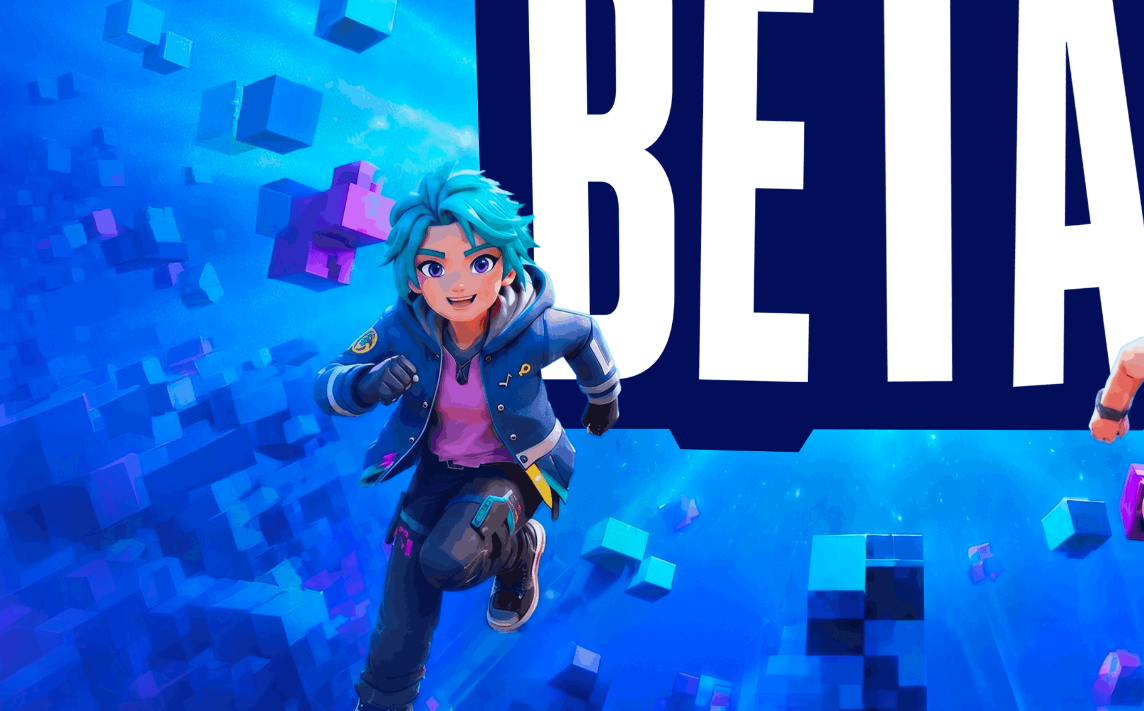
The Sandbox is a three-dimensional gaming and creation platform centered on voxel art, user-generated content, and blockchain assets. Users can enter community-made Experiences. They can also make models and animations with VoxEdit, combine terrain, characters, quests, and logic in Game Maker, and then publish an experience to LAND.
The Sandbox documentation describes it as a decentralized virtual world built by creators, players, and LAND owners, consisting of 166,464 on-chain LAND parcels. Source: The Sandbox official introduction Compared with Decentraland, its direction puts more emphasis on a game editor, voxel assets, and branded content.
What Do VoxEdit and Game Maker Do?
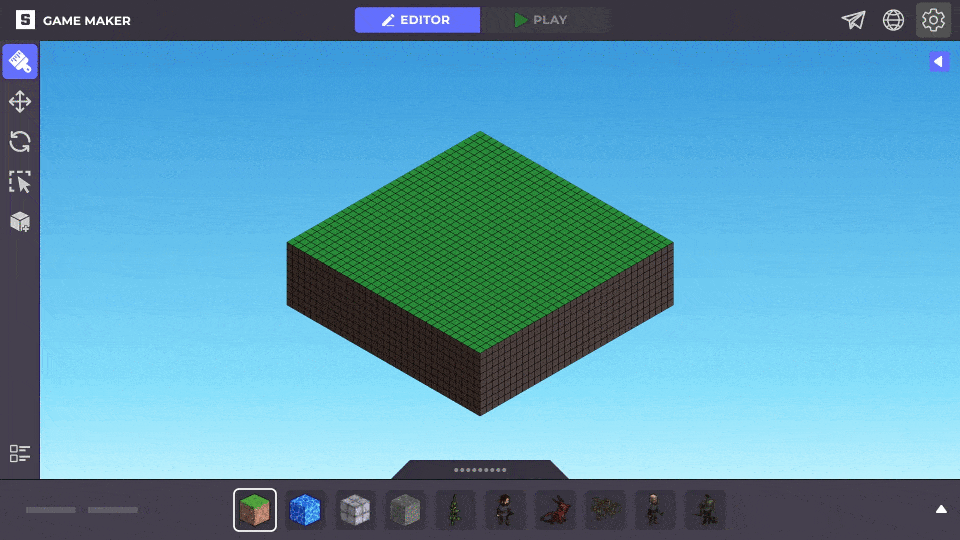
VoxEdit is used to create and animate voxel characters, props, and decorations. Game Maker combines assets, terrain, and game logic into a playable Experience. Creators do not necessarily need conventional programming skills: they can use drag-and-drop components, behaviors, and rules to build quests, combat, platforming, or social scenes.
VoxEdit: Creates voxel models, rigs, animations, and exportable digital assets.
Game Maker: Uses drag-and-drop tools and visual logic to create 3D games and interactive spaces.
LAND: Provides a publishing space and map location for an Experience.
ASSET: Digital content that can be used as a scene element, character, item, or decoration.
Catalyst: An ecosystem resource associated with asset rarity, attributes, and minting rules.
The Sandbox documentation describes Game Maker as a tool for creating Experiences with drag-and-drop design and preset logic. Source: The Sandbox Game Maker documentation The tools lower the barrier to entry, but a high-quality game still requires level design, artwork, testing, and ongoing operation.
How Do SAND, LAND, and ASSET Form an Economy?
SAND is the medium of exchange and utility token in The Sandbox ecosystem. LAND is virtual real estate used to publish an Experience, while ASSET refers to creator-made digital items used in scenes or games. Players consume content, creators produce experiences, landholders provide publishing space, and platform tools and marketplaces connect these groups.
SAND: Used for ecosystem payments, digital goods, certain rewards, and related functions.
LAND: Hosts games, events, branded spaces, and creator experiences.
ESTATE: A larger area made of adjacent LAND parcels for more complex content.
ASSET: Creator content such as characters, equipment, buildings, decorations, and game objects.
Experience: A playable scene built and published with Game Maker.
The Sandbox defines SAND as a medium of exchange that enables creators, players, and landholders to participate in its digital economy. Source: The Sandbox SAND documentation Whether that economy is sustainable still depends on player demand, content quality, and creator income, not merely on the supply of SAND or LAND.
How Do The Sandbox Creators Earn Revenue?
Creators may earn from producing ASSETs, building Experiences, joining Game Jams, receiving fund support, or providing development services to brands. The Sandbox Foundation’s Game Maker Fund and Creators Fund support content and game production, while seasonal events and creator challenges may award SAND or LAND.
The Sandbox provides free tools for creating and sharing content. Depending on platform rules, certain experiences may be offered for free, as free-to-play content, or under a paid model. Source: The Sandbox official documentation Reward campaigns are temporary incentives, however, and cannot replace sustainable player spending and content distribution.
In 2025, The Sandbox continued to promote creator content through Builders’ Challenge, Game Jam, and Alpha Season. It also announced its direction for The Sandbox 3.0, with plans to introduce AI-assisted creation, cross-platform distribution, and new Web3 infrastructure into its creator ecosystem. Source: The Sandbox 3.0 roadmap
What Are The Sandbox’s Strengths and Risks?
The Sandbox benefits from a clear creation toolchain, consistent voxel style, numerous brand collaborations, and a direct product relationship among LAND, ASSET, and Experience. Users can do more than purchase land; they can build actual games. Game Maker offers a relatively approachable entry point for creators without professional programming experience.
Tool strength: VoxEdit and Game Maker cover asset creation and scene construction.
Content strength: A consistent voxel style supports asset reuse and collaboration between communities and brands.
Distribution strength: Alpha Season, Game Jam, and fund programs can help selected work gain exposure.
Main risk: A fixed supply of LAND does not mean every parcel has players or commercial demand.
Economic risk: The value of SAND, ASSET, and LAND is affected by market sentiment and campaign rewards.
Platform risk: Tools, publishing rules, mobile support, and the Sandbox 3.0 roadmap may continue to change.
What Is Otherside?
Otherside is a MetaRPG and Web3 virtual world being built by Yuga Labs. It combines large-scale multiplayer role-playing, social spaces, NFT characters, and user-created experiences. It is closely connected to Yuga ecosystem assets such as Bored Ape Yacht Club, Mutant Ape Yacht Club, Otherdeed, and Koda, and it plans to let external creators build scenes and games through ODK.
Otherside describes the project as a new MetaRPG that combines MMORPG design with Web3 virtual-world mechanics. Source: Otherside official website Compared with Decentraland and The Sandbox, Otherside places greater emphasis on intellectual-property worldbuilding, characters, large-scale concurrent-player technology, and game-focused storytelling.
What Are Otherdeed, Koda, and ODK?
Otherdeed is a land-related NFT in the Otherside ecosystem. It is not merely a parcel image and may include environments, resources, or related properties. Koda is a character NFT within Otherside’s world. ODK, the Otherside Development Kit, is an Unreal Engine-based toolset intended to help creators build experiences that fit Otherside’s technical and visual systems.
Otherdeed: Represents a parcel and related ecosystem properties in Otherside; specific utilities are enabled according to the product’s development stage.
Otherdeed Expanded: An expanded form associated with the evolution and ecosystem functionality of Otherdeed assets.
Koda: A character NFT with its own appearance, lore, and related rights.
Vessel: An asset connected to the evolution and narrative system of the Koda ecosystem.
ODK: An Unreal Engine-based development toolkit that lets creators build Otherside experiences.
The Otherside FAQ states that ODK is a software development kit built on Unreal Engine. Source: Otherside official FAQ This may allow Otherside to support more sophisticated graphics and multiplayer content, but it can also make production costs, performance optimization, and technical requirements higher than on a simple no-code platform.
Can Users Enter Otherside Now?
Yes. According to the official FAQ, Otherside opened The Swamp Alpha to the public in July 2025 and launched Koda Nexus, a persistent social hub, in November 2025. Source: Otherside official FAQ Users should verify current entry points, regional availability, and device requirements on the official website.
Opening Koda Nexus marked a transition from limited early technical demonstrations toward a product that users can access continuously. The complete world, land resources, creator distribution, and additional game content still require further development. Access to a social hub does not mean that every land and economic feature described in the Litepaper has been implemented.
This is the most important boundary when analyzing Otherside: distinguish between experiences that are already live, tools currently in testing, and planned asset utilities. Roadmap features should not be priced into an asset as though they already exist.
How Is the Otherside Economy Designed?
The Otherside economy centers on Otherdeed, Koda, character items, creator experiences, and ApeCoin. Land and character NFTs provide identity, collectibility, and potential use cases. ODK allows developers to build content, while ApeCoin has been used for certain ecosystem payments and digital goods. Future economic value still depends on players, content, and executable utility.
Otherside’s land economy differs from ordinary virtual real estate because an Otherdeed may be linked to biomes, resources, and Koda lore. Asset properties only have practical value when game systems read them and give them a real function. If resources and gameplay are not yet live, market prices reflect expectations more than established productive capacity.
Users should also read the license for each NFT. Holding a Koda, Vessel, or Otherdeed does not automatically grant full commercial rights to every visual element, brand, or partner asset. Otherside provides separate license documents for different assets, and their rights may differ. Source: Otherside License
What Are Otherside’s Strengths and Risks?
Otherside benefits from established Web3 intellectual property such as BAYC, MAYC, and Koda. The Yuga Labs community has strong brand recognition, while ODK and multiplayer technology create potential for complex game experiences. After opening a public social space in 2025, the project gained a product that users could test directly rather than relying solely on land sales and demonstration events.
IP strength: BAYC, MAYC, Koda, and the wider Yuga ecosystem can build character and cultural identity.
Technical strength: ODK is based on Unreal Engine and aims to support high-quality multiplayer experiences.
Community strength: Existing NFT communities and brand collaborations may provide an early audience for content.
Main risk: The full content and land economy are still being built, so roadmap delivery requires ongoing verification.
Asset risk: The prices of Otherdeed, Koda, and ApeCoin may greatly exceed actual usage demand.
Barrier risk: The cost and technical requirements of high-quality Unreal content may exclude many individual creators.
Which Metaverse Project Has the Most Mature Product?
If the comparison is limited to continuously accessible public worlds, creator tools, and operating marketplaces, Decentraland and The Sandbox have more mature product structures. Decentraland has long provided a public social world, scene tools, and community governance. The Sandbox has established an ecosystem of VoxEdit, Game Maker, LAND, ASSET, and seasonal content.
Otherside became more verifiable after Koda Nexus opened in 2025, but its complete MetaRPG, land resources, creator economy, and broad ODK distribution still require further delivery. Its brand and technical vision are strong, while its actual product and economic functions should be checked individually against their current live status.
Greater maturity does not mean an asset is more attractive to buy. Mature platforms can still face low usage and idle land, while earlier platforms carry high execution risk. Users should choose according to their purpose for playing, creating, or researching instead of turning a product comparison directly into a price judgment.
Which Project Is Better for Ordinary Players?
Ordinary players should prioritize entry points that are free and do not require buying land or NFTs. Those who enjoy social interaction, events, and exploring an open city can start with Decentraland. Those interested in mini-games, voxel art, and community creation can try The Sandbox. Users familiar with BAYC lore and interested in MetaRPGs and high-quality multiplayer scenes can explore Otherside.
Social and event users: Decentraland’s community spaces, festivals, and Wearables are easy to understand.
Casual game users: The Sandbox offers many seasonal activities and voxel Experiences.
BAYC community users: Otherside can give Yuga ecosystem characters and collectibles additional contexts.
Complete beginners: Try an email or free account first; do not buy land merely to enter a world.
Mobile users: Verify each project’s current clients, regional availability, and device support separately.
Which Project Is Better for Creators?
Creators without programming experience who prefer voxel art and game building can start with VoxEdit and Game Maker in The Sandbox. Developers familiar with JavaScript, 3D scenes, or community events can explore Decentraland Creator Hub and its SDK. Teams experienced in Unreal Engine, multiplayer games, and high-quality 3D production are better positioned to evaluate Otherside ODK.
Low-code and voxel creation: The Sandbox has the clearest tool path, though work still competes on content quality.
Web and open-scene development: Decentraland offers visual tools and an SDK for different technical skill levels.
Unreal teams: Otherside ODK may support more complex experiences, but its cost and technical barriers are higher.
Event operators: Decentraland and The Sandbox have more established event and community distribution methods.
Brand and IP teams: All three may support partnerships, but their audiences, art styles, and publishing rules differ.
How Does Virtual Land Differ Across the Three Projects?
Decentraland LAND sits on the continuous Genesis City map, where coordinates, neighboring districts, and public events may influence traffic. The Sandbox LAND primarily hosts Experiences built with Game Maker, with voxel assets and game content at the center. Otherdeed in Otherside is also connected to biomes, resources, Koda lore, and future MetaRPG systems.
The value of digital land cannot be judged by scarcity alone. The real questions are whether a parcel can host content, how users reach it, whether its owner can build on it, whether the platform generates sustained traffic, and whether genuine buyers exist when the asset is sold. A scarce parcel without content or users may still have little utility.
Before purchasing land, answer five questions: What will you build? How much space do you need? Where will target users enter? What will operations cost? If the plan fails, can you withstand illiquidity? Treating land only as an image that may appreciate overlooks the fact that content and use are the foundation of a metaverse economy.
How Do the Three Creator Economies Differ?
Decentraland’s creator economy centers on scenes, events, Wearables, Emotes, and DAO grants. The Sandbox focuses on voxel ASSETs, game Experiences, Game Jams, and fund support. Otherside emphasizes IP characters, Otherdeed scenes, and ODK games. Each needs to connect creation tools, content distribution, and revenue settlement.
Decentraland’s advantage is its open community and range of digital goods. The Sandbox benefits from its toolchain and unified art style. Otherside benefits from Yuga intellectual property and high-spec game technology. Their shared challenge is that creator income cannot depend indefinitely on subsidies, competitions, and initial asset sales; it must gradually come from player spending, brand commissions, services, and sustained demand for content.
How Do Their Governance Models Differ?
Decentraland treats its DAO as an important part of ecosystem governance, allowing the community to comment on certain rules and public funds. The Sandbox is currently driven more by its platform team, foundation, creator programs, and product roadmap. Otherside is primarily built by Yuga Labs. Although it emphasizes community and user creation, its core product and asset utilities are still delivered by the team in stages.
No governance model is inherently superior. A DAO can increase transparency but may suffer from low participation and concentrated voting weight. Team-led development can produce more unified execution, but users have less control over rules. When researching a project, check who can modify clients, marketplaces, asset functions, creator revenue shares, and content policies instead of looking only for the word “decentralized.”
What Is the Hotcoin Six-Dimension Model for Evaluating Metaverse Projects?
Hotcoin Learn divides a metaverse project into six dimensions: product, users, creation, economy, governance, and openness. The model does not predict token or land prices. It helps users assess whether a virtual world has the foundations for sustained operation and whether its on-chain assets correspond to real product utility.
Product: Is there an accessible world, a stable client, clear core activities, and continued updating?
Users: Is there a real community, retention after campaigns, and participation not driven only by rewards?
Creation: Are the tools usable, is publishing accessible, and can content obtain distribution and revenue?
Economy: Do land, tokens, and items have demand and consumption, or does income depend on new buyers?
Governance: Who sets rules, manages funds, handles security incidents, and resolves user disputes?
Openness: Can identity, assets, 3D content, and development tools be externally verified or used across applications?
Under this model, Decentraland is more representative in governance and open communities, The Sandbox has a clearer toolchain and creator path, and Otherside stands out in intellectual property, game technology, and its multiplayer vision. This is a comparison of product structures, not an investment rating.
How Can Beginners Safely Try These Metaverse Projects?
Beginners should start with official websites and free entry points, experience scenes, games, and communities, and only then decide whether to connect a wallet. Do not assume that a parcel near a famous brand will inevitably receive traffic, and do not buy LAND, Otherdeed, or digital goods based only on historical sale prices. Use a separate wallet and a small amount of funds for initial on-chain activity.
Choose an objective: Decide whether the goal is social interaction, gaming, creation, or studying the land economy.
Verify official entry points: Use the project website for client downloads, Creator Hub, marketplaces, and help centers.
Use a free account first: If a world can be entered without buying an NFT, complete the basic experience and events first.
Create a separate wallet: Separate the wallet used for routine interactions from long-term storage and deposit only planned spending funds.
Check current asset utility: Verify what land, characters, and items can do today, not only what a roadmap promises.
Read licenses: Distinguish NFT ownership, in-game rights, commercial rights, and brand restrictions.
Test with a small transaction: Verify the network and contract before a first purchase, approval, bridge, or transfer.
Revoke unused approvals: Remove unnecessary token and NFT permissions after stopping use of a marketplace or DApp.
What Are the Risks of Participating in Metaverse Projects?
Metaverse assets combine product, market, platform, and blockchain risks. Continued project development does not mean that land or tokens will return to historical prices, and ownership of an NFT does not guarantee that its associated world will operate forever. Treat free participation, creator investment, and asset investment as three separate decisions.
Product risk: Delayed roadmaps, poor client performance, or slow content updates can reduce retention.
User risk: Campaigns and rewards may create temporary traffic without sustaining a long-term community.
Land risk: Parcels may lack content, visitors, and buyers; a listing price is not a sale price.
Token risk: MANA, SAND, and APE are affected by market volatility, unlocks, demand, and regulation.
NFT risk: Actual uses of LAND, ASSET, Otherdeed, and Koda may change with platform rules.
Wallet risk: Fake marketplaces, malicious signatures, exposed private keys, and unsafe approvals can cause theft.
Copyright risk: NFT ownership does not automatically grant full commercial rights to brands, models, or partner elements.
Governance risk: DAO or team decisions may change rewards, publishing, moderation, and asset utility.
Privacy risk: Voice, social, device, wallet, and behavior data may be correlated by platforms or attackers.
Frequently Asked Questions About Decentraland, The Sandbox, and Otherside
29.1 Which Project Is Best for a First Metaverse Experience?
Choose according to the type of content you prefer. Try Decentraland for a social city and events, The Sandbox for voxel mini-games and creation, or Otherside if you know the BAYC universe and want to explore a MetaRPG. Use free entry points first; there is no need to buy land or an NFT for an initial experience.
29.2 What Is the Main Difference Between Decentraland and The Sandbox?
Decentraland resembles an open social world built from community events, public spaces, scenes, and a DAO. The Sandbox is closer to a game-creation platform built around VoxEdit, Game Maker, and voxel assets. The former emphasizes community governance, while the latter focuses more on tools, game content, and creator distribution.
29.3 Is Otherside Officially Open?
Otherside opened The Swamp Alpha and Koda Nexus in 2025, and users can check currently accessible experiences through the official entry point. The complete MetaRPG, land resources, additional games, and creator economy are still being developed. Not every feature described in the Litepaper should be treated as live.
29.4 Must Users Buy Virtual Land to Enter These Projects?
Usually not. Ordinary users can first visit public scenes, attend events, or play games. Land is mainly for users who want to publish content, build a space, or participate in a specific asset system. Creators may also use Worlds, delegated publication rights, or other methods to avoid buying land at the outset.
29.5 Which Type of Virtual Land Is Most Worth Buying?
There is no universal answer, and no parcel is guaranteed to appreciate. Decentraland LAND, The Sandbox LAND, and Otherside Otherdeed correspond to different products. Before buying, examine current utility, construction plans, user access, operating costs, market liquidity, and the maximum loss you can afford.
29.6 Does Holding an NFT Grant Copyright in the Associated Content?
Not necessarily. An NFT can record token ownership, but rights to artwork, characters, brands, and commercial use are defined by license terms. Permissions differ among projects and assets, and partner-brand elements often have additional restrictions. Read the official license and terms before purchasing.
29.7 Are MANA, SAND, and APE Stablecoins?
No. They are volatile crypto assets with different ecosystem functions. Their prices are affected by supply and demand, broader markets, project progress, and liquidity. Continued operation of a game or metaverse does not guarantee stable value for its token.
29.8 Can NFTs From These Three Projects Be Used Interchangeably?
Interoperability cannot be assumed today. Even when NFTs use the same blockchain standard, a destination platform must still recognize the contract and adapt models, animation, statistics, rights, and moderation. Open standards can reduce technical barriers, but real cross-world use requires support from both products.
How Should a Web3 Wallet Be Used to Manage Metaverse Assets?
When managing LAND, Otherdeed, Wearables, ASSET, or ecosystem tokens, confirm the asset’s network, official contract, and marketplace entry point. Before signing, check whether the operation is a login, approval, purchase, or transfer. Never disclose a seed phrase, private key, or recovery password. Keep high-value assets separate from a wallet used for routine interactions.
You can use Hotcoin Web3 Wallet to manage multichain assets and DApp approvals, or download the Hotcoin App to learn about related Web3 services.
Conclusion
Decentraland, The Sandbox, and Otherside represent three paths toward an open metaverse: a community-governed public world, a tool-driven game-creation platform, and a MetaRPG driven by intellectual property and high-quality multiplayer experiences. All three use land and on-chain assets, but their product value ultimately depends on whether users stay, creators keep producing, and the economy has real demand.
Decentraland centers on community, events, and its DAO. The Sandbox centers on creation tools, content, and distribution. Otherside centers on Yuga intellectual property, ODK, and future product delivery. For ordinary users, the sensible order remains the same: try the product for free, learn what its assets actually do, and only then decide whether to accept on-chain transaction risk.
For an introduction to the economics and technical structure of virtual worlds, return to What Is the Metaverse? The Economic System and Technology Behind Virtual Worlds.
Visit the Hotcoin official website for more educational content about GameFi, metaverses, NFTs, and Web3.
Risk warning: This article is for education and information only and does not constitute investment, legal, or tax advice. MANA, SAND, APE, virtual land, and metaverse NFTs can be highly volatile and involve liquidity, development-delay, platform-closure, rule-change, smart-contract, wallet, intellectual-property, and regional-compliance risks. Conduct independent research and participate cautiously.
Lettura consigliata
Visualizza altro
service hotcoin.com
producthotcoin.com
businesshotcoin.com
casecnhotcoin.com