
Perpetual Futures vs Traditional Futures: What Crypto Traders Actually Pay For
When comparing Perpetual Futures vs Traditional Futures, the biggest difference isn't simply whether one contract expires. It's how traders pay to maintain their positions over time. Traditional futures usually include pricing through contract premiums and expiration cycles, while perpetual futures replace expiration with recurring funding payments that transfer value between long and short traders. Depending on market conditions, leverage, and holding period, perpetual futures can become either cheaper or significantly more expensive than traditional futures. Understanding these ongoing costs—not just trading commissions, is essential for improving long-term profitability
Why Most Articles Miss the Real Cost of Futures Trading
Search results discussing perpetual futures vs traditional futures often explain contract expiration, leverage, and funding rates. Most comparison articles focus on definitions rather than total ownership cost. They also overlook how multiple fees interact throughout the life of a trade.
Two major information gaps consistently appear across contents:
Gap 1: Hidden Holding Costs
Many guides explain that perpetual contracts charge funding rates but fail to calculate how repeated funding payments accumulate during volatile markets.
For swing traders holding positions for several weeks, funding payments may exceed the original trading commission.
Gap 2: Cost Layers Beyond Exchange Fees
Most comparisons between perpetual futures and traditional futures focus only on maker and taker fees, giving traders an incomplete picture of the true cost of trading. In reality, the total expense of maintaining a futures position extends well beyond exchange commissions. Traders must also account for recurring funding payments, bid-ask spread costs, slippage during volatile market conditions, liquidation risk associated with leveraged positions, the efficient use of trading capital, and the opportunity cost of keeping margin locked in open positions. When combined, these often-overlooked costs can significantly reduce overall returns and determine whether an otherwise profitable trade remains profitable after all expenses are considered.
Understanding How Both Futures Markets Work
Although both perpetual futures and traditional futures are classified as crypto derivatives, they are designed to serve different trading purposes and use distinct mechanisms to manage market exposure.
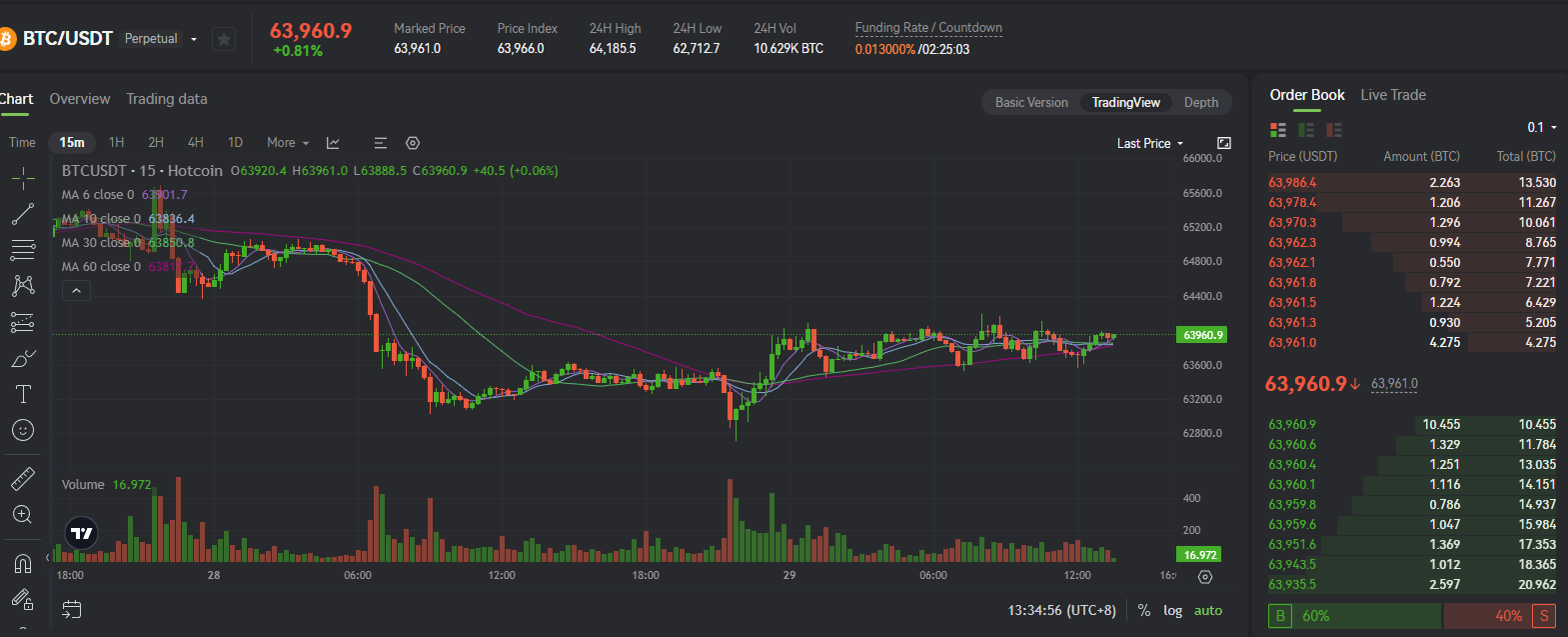
Traditional Futures Contracts
Traditional futures contracts require two parties to agree on buying or selling an asset at a predetermined price on a specific future date. Unlike perpetual contracts, every traditional futures contract has a fixed settlement or expiration date, making it a popular choice among institutional investors, hedgers, commodity producers, and portfolio managers who seek predictable pricing and structured risk management. When a contract reaches its expiration date, traders who want to maintain their market exposure must roll over their positions into a new contract. Depending on market conditions, this rollover process may involve additional costs if the new contract trades at a premium or discount. This expiration cycle is the primary reason traditional futures differ from perpetual futures.
Perpetual Futures
Perpetual futures were developed specifically for cryptocurrency markets to provide continuous market exposure without requiring contract expiration. Instead of expiring monthly or quarterly, these contracts remain open indefinitely as long as traders maintain sufficient margin. To keep perpetual contract prices closely aligned with the underlying spot market, exchanges use a perpetual funding rate mechanism. Rather than paying fees directly to the exchange, traders periodically exchange funding payments with one another. When perpetual contracts trade above the spot price, traders holding long positions typically pay funding fees to traders holding short positions. Conversely, when perpetual contracts trade below the spot price, short traders usually compensate long traders. This funding system replaces the expiration mechanism used in traditional futures while helping maintain price alignment with the spot market. Because funding payments can accumulate over time, understanding how perpetual funding rates affect trading profits is often more important than simply understanding leverage, particularly for traders who hold positions over extended periods.
Related Page: Perpetual Futures
The Real Costs Crypto Traders Actually Pay
Many beginners believe futures trading costs consist only of exchange commissions.
In reality, total trading cost comes from several layers working together.
Trading Fees
Every futures trade usually incurs either:
-
Maker fees
-
Taker fees
Maker vs taker fees in perpetual futures exchanges vary by platform and trading volume.
High-frequency traders often pay more attention to these commissions because they execute hundreds or thousands of trades each month.
For long-term position traders, however, commissions often represent only a small portion of overall trading costs.
Funding Payments
Funding payments exist only in perpetual contracts.
Unlike commissions, these charges continue accumulating while a position remains open.
During periods of strong bullish sentiment, funding rates may remain positive for extended periods, causing leveraged long positions to become increasingly expensive.
Conversely, traders holding short positions may actually receive funding income under favorable market conditions.
Funding exists to keep perpetual contract prices closely aligned with spot market prices without requiring contract expiration.
Leverage Costs
Leverage increases market exposure without requiring traders to commit the full capital value of a position.
However, leverage also magnifies:
-
Funding costs
-
Liquidation probability
-
Margin requirements
-
Risk exposure
Many new traders underestimate how leverage changes the cost of crypto futures trading because leverage amplifies every trading expense—not just profits and losses.
The "Total Holding Cost Framework"
One weakness in other existing contents are that it evaluates futures contracts one fee at a time.
A more practical approach is to calculate the Total Holding Cost (THC) before entering any leveraged trade.
Professional traders evaluate:
Total Holding Cost = Trading Fees + Funding Payments + Spread Cost + Slippage + Liquidation Risk Premium + Opportunity Cost
This framework shifts attention away from commission percentages and toward the complete economic cost of maintaining a position.
For example:
-
A perpetual contract with very low trading fees may ultimately become more expensive than a traditional futures contract if positive funding persists for several weeks.
-
Conversely, a trader closing positions within minutes or hours may barely notice funding costs and instead prioritize low maker/taker fees.
This broader perspective helps explain what traders really pay when trading perpetual futures, not just what exchanges advertise.
Decision Framework: When Should Traders Choose Perpetual Futures Over Traditional Futures?
Rather than selecting a futures contract based on popularity, traders should choose the option that best aligns with their trading objectives, holding period, and risk management strategy. Perpetual futures are generally better suited for active traders who execute intraday or short-term trades, require continuous market exposure without worrying about contract expiration, and frequently adjust their positions in response to changing market conditions. They can also be advantageous when funding rates remain relatively stable and high liquidity is a priority.
In contrast, traditional futures may be the better choice for traders who intend to hedge positions over several weeks or months, prefer predictable settlement dates, or want to avoid recurring funding payments. They are also well suited for strategies that emphasize structured risk management and clearly defined contract durations. Ultimately, the decision between perpetual and traditional futures depends on how long a position is expected to remain open, the prevailing market environment, and the trader's overall investment objectives.
Frequently Asked Questions
-
Do perpetual futures always cost more than traditional futures?
No. For short-term traders, funding payments may be minimal, making perpetual futures relatively inexpensive. However, traders holding positions over extended periods should evaluate cumulative funding costs alongside trading commissions and leverage expenses.
-
Why don't perpetual futures expire?
Perpetual futures use periodic funding payments instead of expiration dates. This mechanism encourages contract prices to remain close to the underlying spot market while allowing positions to remain open indefinitely.
-
Are funding payments paid to the exchange?
Generally, no. Funding payments are typically exchanged between long and short position holders according to the exchange's funding mechanism. Exchanges calculate and facilitate the transfer but do not usually retain the payment.
-
Can traditional futures become more expensive?
Yes. While they avoid recurring funding payments, traders may incur rollover costs, contract premiums, and transaction fees when extending positions beyond the contract's expiration.
-
Which futures product is better for beginners?
Many beginners start with perpetual futures because they dominate cryptocurrency exchanges and offer continuous trading. However, understanding leverage, funding rates, liquidation risk, and margin management is essential before trading either product.
The comparison between Perpetual Futures vs Traditional Futures extends far beyond contract expiration. The real question is how each product distributes costs throughout the life of a trade. Traditional futures concentrate costs around settlement and rollover, while perpetual futures distribute them through recurring funding payments that fluctuate with market conditions.
Successful traders evaluate more than advertised commissions. They consider leverage, funding rates, spreads, slippage, liquidity, and opportunity cost together before entering a position. By focusing on total holding cost rather than a single fee category, traders can choose the futures contract that best aligns with their strategy, risk tolerance, and investment horizon.
References
Bank for International Settlements (BIS). OTC Derivatives Statistics. Basel: BIS. https://www.bis.org/statistics/derstats.htm
Chicago Mercantile Exchange (CME Group). Bitcoin Futures and Options. Chicago: CME Group. https://www.cmegroup.com
Commodity Futures Trading Commission (CFTC). Customer Advisory: Understand the Risks of Virtual Currency Trading. Washington, DC: CFTC. https://www.cftc.gov
National Futures Association (NFA). Investor Education: Futures Trading Basics. Chicago: NFA. https://www.nfa.futures.org
U.S. Securities and Exchange Commission (SEC). Investor Bulletin: Margin Accounts. Washington, DC: SEC. https://www.investor.gov
University of Illinois Urbana-Champaign. Introduction to Futures Markets. Department of Agricultural and Consumer Economics. https://ace.illinois.edu
Lettura consigliata
Visualizza altro
What is a Blockchain Virtual Machine?
Basic Concepts

Quick Understanding of PoW and PoS Consensus Mechanisms and Their Differences
Basic Concepts
What is x402? The New Standard Powering Internet-Native Payments
Basic Concepts

E-mail del servizio clienti
Service@hotcoin.com
feedback sul prodotto
Product@hotcoin.com
cooperazione commerciale
Business@hotcoin.com
Casella di posta giudiziaria
Casecn@hotcoin.com
chi siamo
prodotto
Servire
supporto
©2017-2026